
Garage Door Installation & Replacement in Ruston, WA is often the smartest move when a door has moved past the point of sensible repair, whether it is a single-car door that rattles through every morning commute or a wide double door that no longer seals against the weather. Ruston is a small town with a big waterfront identity, and the garages here take a beating from damp air, salt-tinged wind off Commencement Bay, and long wet stretches from fall through spring. A door that works fine in a dry inland climate can show its age quickly on the Sound side of Pierce County. This page walks through how to tell when replacement is the right call, what materials and features make sense locally, and what to expect from a professional install.
Many homeowners in the 98407 area spend years patching a door, one spring or one sensor at a time, before they admit it is finished. Replacement is not always the answer, but when the panels are bent, the frame is soft, the tracks are out of alignment, and the opener has been replaced more than once, the math usually favors a new door. A fresh installation also gives you the chance to fix problems that repairs never touch, such as poor insulation, worn weatherstripping, or a mismatched opening that causes the door to strain. Whether you are dealing with storm damage, a remodel, or simply a door that looks tired from the street, a planned replacement lets you choose the outcome instead of reacting to the next failure. The sections below are written to help you make that decision with confidence.
Our technicians serve Ruston and the surrounding neighborhoods with the same approach we bring everywhere: honest assessments, clear written estimates, and installations that account for the conditions your door actually lives in. If you are not sure whether your situation calls for replacement, a site visit will give you a straightforward answer. Call (888) 799-3819 to talk through your options.
When Repairing an Old Door Stops Making Financial Sense
A repair is a good investment when a single failed part is the only problem and the rest of the door is solid. Replacing a broken cable, a worn roller set, or a cracked sensor usually costs far less than a new door, and many older doors have years of service left after a well-done fix. The trouble starts when repairs begin to stack up. If you have called for service several times in a single year, each visit may look reasonable on its own, but the total can climb past the cost of a new door without anything to show for it except a temporary fix.
Pay attention to the pattern rather than the individual bill. A door that needs a new spring, then new rollers, then a bottom seal, then a track adjustment is telling you that the entire system is wearing out together. Panels that have been dented, bent, or pulled loose from their hinges are difficult to restore to factory alignment, and a door that does not sit square in its opening will keep stressing the opener and the hardware. Sagging sections, gaps at the top or sides, and a door that drifts open on its own are all signs that the structure is working against the mechanism.
Keep a simple written record of each service visit, including the date, the parts replaced, and the cost. When you have three or four entries on that list, lay them side by side with a replacement quote. Many homeowners are surprised to find that a new insulated door with a modern opener costs less than the total of a few years of repairs on an aging unit. A replacement also resets the warranty clock, which is worth asking about in writing before you sign anything.
Warning Signs That Your Door Has Reached the End
Some symptoms are easy to dismiss because the door still opens and closes. Those quiet signals often matter most. Look for hairline cracks where panels meet, paint that has bubbled or flaked on a steel door, and any soft spots when you press along the bottom panel or the stiles. Each of these can indicate moisture getting into the core of the door, which in a wet climate can progress faster than most people expect.
Mechanical signs deserve attention as well. A door that shudders, bangs at the top of its travel, or lifts unevenly is putting uneven load on its springs and cables, and that is a safety concern as well as a nuisance. Torsion springs and cables are under very high tension, and any work on them should be left to a licensed technician with the proper tools. If you notice any of the following, schedule an inspection promptly:
- Visible rust streaks or flaking on steel panels, particularly along the bottom edge or near the hinges
- Rot or softness in wood trim, rails, or panels, often caused by water sitting against the base of the door
- Daylight showing around the perimeter when the door is closed
- Panels that are dented, buckled, or no longer lying flush in their channels
- A door that drifts open or closes on its own when it is not balanced correctly
- Noise that has grown steadily louder over several months
If more than one of these shows up at once, replacement is usually the more reliable path. Patching a rotted section or straightening a bent panel may look acceptable from the driveway, but it rarely restores the original strength or sealing performance. A new door gives you a known starting point, and a qualified installer can confirm that the opening, header, and track geometry are sound before the new panels go in.
Choosing Materials That Hold Up to Coastal Moisture
Material choice is where local conditions matter most. Insulated steel is the most common choice for good reason. Modern steel doors are typically built with a foam core bonded to steel skins, which resists dents and rot and holds its shape well over time. Galvanized steel with a quality factory finish handles the damp, salty air found near Commencement Bay better than bare or thinly coated metal. Ask about the galvanization and the paint system when comparing options, since those details decide how the surface will look after several wet winters.
Wood doors, including carriage-style designs in cedar or fir, offer warmth and character that many Ruston homeowners find hard to replace. They do demand regular maintenance in the Pacific Northwest. Wood needs a quality sealer or stain applied on a schedule, and the bottom edge and lower panels should be kept dry and well-ventilated. A wood door can last many years when it is cared for properly, but it is less forgiving of neglect than steel or aluminum. Be honest with yourself about how much upkeep you are willing to do before choosing wood.
Aluminum and glass designs suit homes with a more contemporary look. Aluminum frames resist corrosion well, and tempered or insulated glass panels can bring natural light into a garage that would otherwise be dim. The trade-off is that glass sections generally provide less insulation than solid steel or wood, and they can show water spotting or grime if they are not cleaned regularly. Many homeowners choose a hybrid approach, with insulated panels at the lower sections and glass at the top, to balance light and thermal performance.
Insulation, Energy Efficiency, and Winter Comfort
Ruston winters are mild by national standards, but they are long and damp, and a poorly insulated garage can still pull heat out of adjacent living spaces. If your garage shares a wall with the house, or if you use it as a workshop, gym, or hobby room, the door becomes a meaningful part of your home's thermal envelope. Insulated steel doors use a foam core that reduces heat transfer compared with single-skin doors, and they also reduce the drumming noise that thin doors make in wind.
When comparing insulation, ask for the door's R-value and confirm whether that number applies to the whole door or only to the panel core. Ratings are useful for comparison, but the installed result depends just as much on the seals. Replace the bottom weatherstripping, the side and top seals, and the threshold at the same time as the door, because a high-rated panel with a leaky perimeter will not perform the way the brochure suggests. Good sealing also keeps wind-driven rain from blowing under the door, which matters on exposed waterfront lots.
Consider how the garage is used before you decide how much insulation to pay for. A garage that houses only a car and a few bins may not need the highest-rated option, while a finished workshop or a garage with heating equipment will benefit from better insulation. Ask whether the door is designed with thermal breaks in the panels, since these reduce the path for heat to travel from the exterior skin to the interior. Those details are easy to overlook but make a real difference in comfort during a damp January.
Matching the Door to Your Home's Style
Ruston homes span a range of architectural styles, from older houses with traditional lines to newer builds with clean, modern facades. The garage door is one of the largest visual elements on the front of the home, so it should complement the rest of the exterior. A carriage-style door with divided panels and decorative hardware can add warmth to a traditional home, while a flush panel or glass-and-aluminum design may suit a contemporary build better. Take a photo of the front elevation and bring it to your consultation so the installer can help you match proportions and color.
Color and finish deserve careful thought because they interact with the Pacific Northwest light. Darker shades absorb more heat and can fade faster on south- or west-facing exposures, while lighter tones show dirt and water spotting more readily. Ask to see samples outdoors, in both bright and overcast conditions, before committing. Many people find that a mid-tone with a satin or low-gloss finish hides the everyday marks of a wet climate better than a high-gloss paint.
Hardware is a smaller detail with a big effect on the overall look. Handles, hinges, windows, and decorative hardware can be selected to match your entry door, mailbox, and exterior lighting. Keep in mind that some decorative features add weight or require specific track configurations, so mention your preferences early in the process. A good installer will tell you whether a particular look is practical for your opening and your opener.
Storm, Wind, and Rust Damage on the Waterfront
Storm season along Puget Sound brings strong gusts that can test a garage door in ways inland neighborhoods rarely see. Wind pressure can push a large door against its tracks, and a door with inadequate bracing or worn rollers may bend or pop out of alignment. If your door was damaged in a windstorm, look closely at the tracks, the header bracket, and the top section before assuming the panels can simply be swapped. Hidden damage to the frame or hardware can cause the replacement door to fail prematurely if it is installed on a compromised opening.
Salt air is a slower but equally serious threat. Homes near the water often show corrosion on hardware, springs, and steel panels sooner than homes farther inland. Hinges, roller brackets, and bottom brackets are especially vulnerable because moisture collects in their joints. When replacing a door in this area, ask whether the hardware is galvanized or coated for coastal conditions, and whether the installer will use corrosion-resistant fasteners. Those choices cost a little more up front but can prevent the same problems from returning within a few seasons.
Rust that appears in streaks, especially along the bottom panel and at the joints between sections, is a sign that the protective finish has been compromised. Light surface rust on a door that is otherwise sound may be treated, but deep pitting, perforation, or rust that has reached the interior core usually means replacement is the better choice. Document any damage with photos before the install, particularly if the storm was recent and an insurance claim may be involved. A licensed professional can help you separate cosmetic wear from structural failure.
Planning a Door Around a Remodel or Addition
Adding a garage door as part of a remodel or addition brings a different set of decisions. The new opening must be sized and framed correctly, the header must be adequate for the door's weight and wind loads, and the finished exterior should tie in neatly with the rest of the work. If you are converting a bay, extending a garage, or building a new detached structure, involve the door installer early so the framing crew knows the exact rough-opening dimensions, clearance requirements, and track space needed.
Think about how the door will be used once the project is finished. A single wide door may suit a narrow lot or a converted space, while a double door gives more flexibility for two vehicles and better access for larger items. Overhead clearance and side room matter as much as the door size itself, especially in older homes where ceiling joists or ductwork can limit the space. If you plan to add a ceiling-mounted storage system or a larger opener, confirm that the structure can handle the added load before construction begins.
Timing is worth considering too. Installing a door before interior finishes are complete can protect the garage from weather and reduce the risk of water damage during construction. Coordinate with your contractor so the door arrives when the opening is ready, and ask whether the crew can complete the installation in one visit. A tidy sequence reduces the chance that the new door sits exposed to rain while other work is underway.
What Happens During a Professional Installation
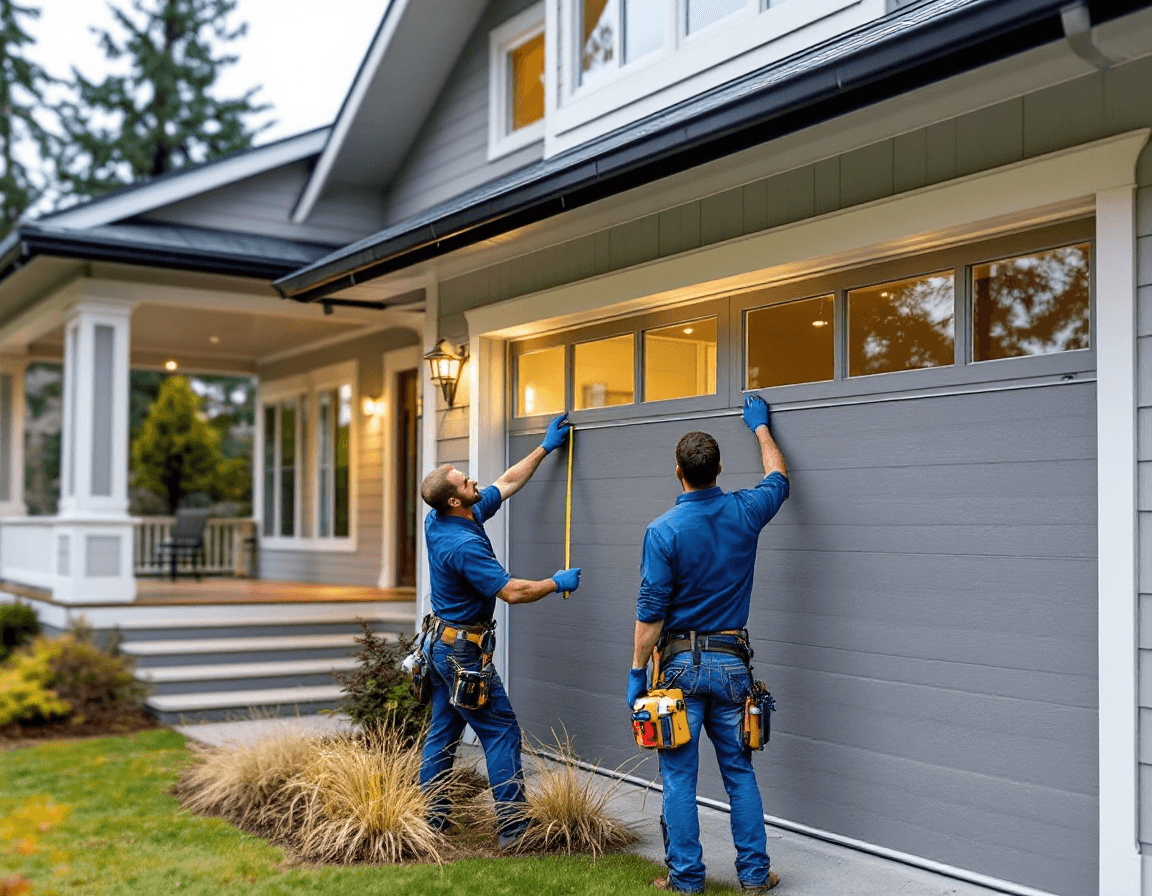
A professional installation begins well before the old door comes down. A technician will measure the opening at several points, check that the header and jambs are plumb and level, and inspect the existing tracks, springs, and openers for anything that will affect the new system. Measuring only once is a common mistake, because older garages often have openings that vary by an inch or more from top to bottom. Those variations determine how the door will track and how the seals will meet the frame.
Once the new door is on site, the crew will remove the old unit safely, which includes releasing spring tension using proper equipment. This is not a task for untrained hands, and it is one of the main reasons we recommend leaving spring and cable work to licensed professionals. The new door is then assembled, fitted into the opening, hung on the tracks, and balanced. Springs are set to the door's actual weight, and the opener is programmed and tested through a full range of motion, including safety reversal features.
A thorough installer will also walk you through the operation of the door, show you how to test the auto-reverse feature, and explain basic maintenance such as lubricating hinges and rollers and checking weatherstripping seasonally. Ask for a clear written summary of what was installed, including the door model, the spring type and rating where applicable, the opener, and any warranty terms. Keep that paperwork somewhere safe, since it will be useful for future service and for any resale documentation.
Understanding Installed Price Ranges
Installed pricing for new garage doors in our service area generally falls between $950 and $3,800 or more, depending on the door type, materials, size, and features. A basic single-car steel door with standard insulation will sit at the lower end of that range, while a large custom double door in wood, glass, or specialty aluminum with premium hardware will land higher. The final figure also depends on whether the opening needs structural work, whether the old door requires removal and disposal, and which opener and accessories you choose.
Several factors push the price up or down in predictable ways. Insulation levels, panel thickness, and factory finishes all affect cost, as do decorative elements such as windows, carriage hardware, and custom colors. Wider openings require heavier springs and larger panels, which adds to materials. An opener with a battery backup, a quiet belt drive, or smart-home integration will also change the total. Ask for an itemized estimate so you can see exactly what each choice adds.
Be cautious of any quote that seems dramatically lower than the range without a clear explanation of what is included. Low bids sometimes leave out sealing, proper spring rating, hardware upgrades, or disposal fees, and those gaps often show up later as unexpected charges or early problems. A transparent estimate that lists the door model, insulation rating, warranty details, and labor scope is a more reliable basis for comparison than a single bottom-line number.
Permits, Sizing, and Choosing a Qualified Installer
Some garage door projects require permits, particularly when the work involves structural changes to the opening, a new header, or an addition. Permit requirements vary by jurisdiction and project scope, so check with the City of Ruston or the appropriate local authority before scheduling work that changes the framing. If you live in a neighborhood with an association or design guidelines, review those requirements too, since exterior changes may need approval before installation.
Sizing is a critical part of planning. Measure the width and height of the rough opening, not the old door, and note any obstructions such as light fixtures, electrical boxes, or ductwork that could interfere with tracks or springs. Ask whether the installer will verify these measurements on site before ordering the door, because a custom door cannot be returned once it has been built to a specific size. Small errors at this stage can cause fit problems that affect both appearance and performance.
Choosing a licensed, bonded, and insured installer protects you and your property. Ask for proof of licensing and insurance, confirm that the company will handle permits where required, and request references you can contact. Look for clear communication, written estimates, and a willingness to explain options rather than push a single product. Our team is licensed, bonded, and insured, and we are happy to answer questions before you commit. You can reach us at (888) 799-3819 to schedule an assessment.
Caring for Your New Door Through Wet Pacific Northwest Seasons
A new door performs best when it receives simple, regular attention. Once or twice a year, wipe down the panels, check the bottom seal for cracks or flattening, and look at the weatherstripping along the sides and top. In the fall, before the heavy rains arrive, make sure the threshold is clear of debris and that water drains away from the base of the door rather than pooling against it. A few minutes of attention at these points can prevent most of the problems that send homeowners back for service.
Lubrication is another routine task. Use a silicone-based or manufacturer-recommended lubricant on hinges, rollers, and the tracks, and avoid heavy grease that attracts dirt. Wipe away excess lubricant so it does not collect grit. Keep an eye on the opener's safety features as well, testing the auto-reverse by placing a object in the door's path at the floor level, which should cause the door to stop and reverse. If the door fails that test, stop using the opener and call for service.
For wood doors, follow the finish manufacturer's recommended schedule for re-sealing, typically every year or two depending on exposure. Steel and aluminum doors need less intensive care, but they still benefit from periodic washing to remove salt residue and grime, especially on homes closest to the water. A little consistent maintenance keeps your door looking good and working smoothly for years, and it gives you a clear baseline if you ever need to compare performance later on.
If you are ready to replace an aging door, repair a damaged opening, or plan a new garage as part of a remodel in Ruston or nearby Pierce County neighborhoods, our team is ready to help. Call (888) 799-3819 to schedule a licensed, insured assessment and get a clear, written estimate for your project.