
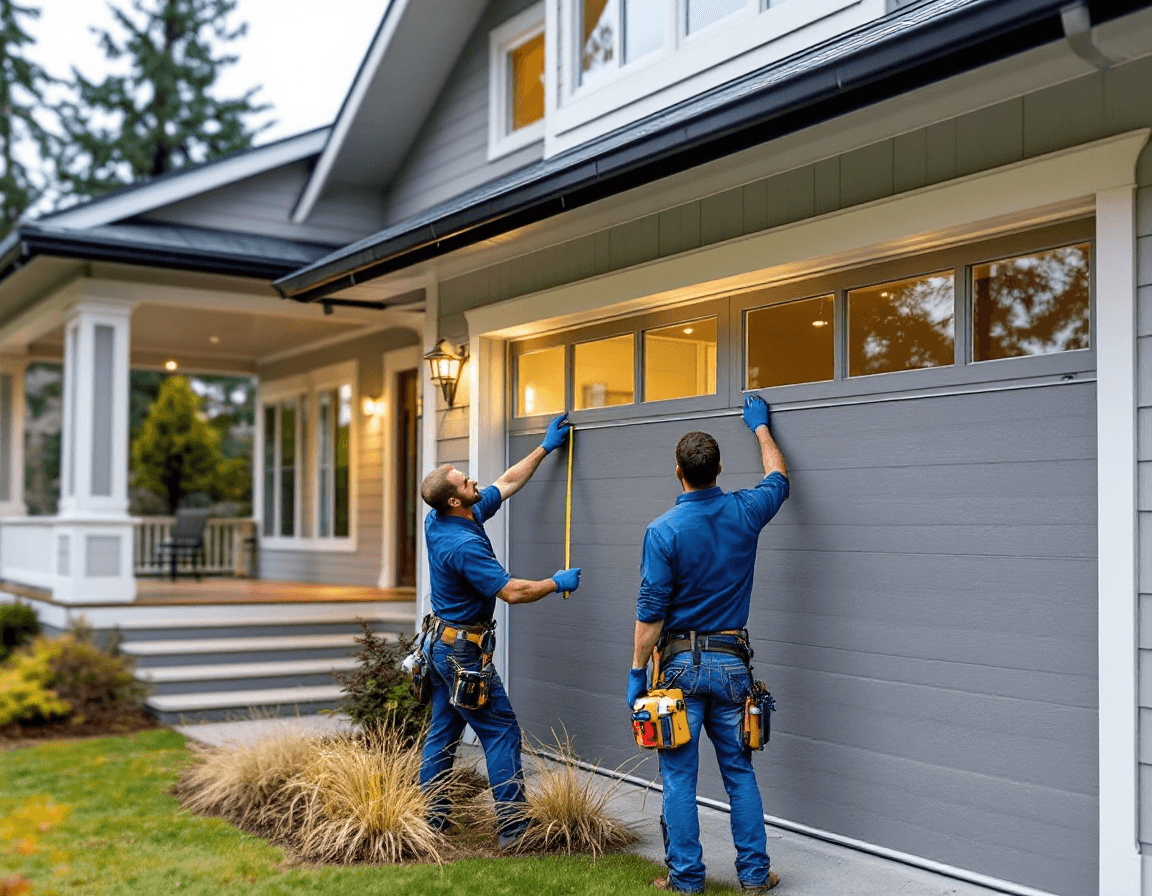
Garage Door Installation & Replacement in University Place, WA is a decision many homeowners face sooner than they expected, usually after a spring snaps, a panel cracks in a windstorm, or the door simply stops closing evenly. University Place sits on the Puget Sound shoreline just west of Tacoma, and its homes range from mid-century ranches near the Chambers Bay area to newer builds on the hillsides above the water. Each of those homes has a garage door that takes a beating from wet winters, salt-laden breezes, and the constant opening and closing of daily life. Choosing the right replacement door is one of the most visible upgrades you can make to a house, and it affects comfort, security, and how your home looks from the street.
This page walks through the practical questions local homeowners ask us before they commit to a new door. We cover how to tell when repair no longer makes sense, which materials hold up best in our climate, what really drives the $950 to $3,800-plus installed price range, and what to expect from the day the crew arrives to the first week you live with the new door. We also address the permitting and neighborhood questions that come up in University Place, along with the planning steps that matter if your project is tied to a remodel or addition. Our goal is to give you enough context to make a confident choice, whether you are replacing a single door on a older bungalow or upgrading a wide double door on a newer home.
Nothing here replaces an in-person measurement and inspection, because every opening is slightly different. Walls can be out of plumb, headers can vary, and the track layout that worked for the previous door may not suit a heavier insulated panel. Use the information below as a starting point, then schedule a visit so a licensed technician can confirm the details on your specific home.
Recognizing When Your Old Door Has Truly Reached the End
Many homeowners keep patching an aging door far longer than they should, partly because a single repair is cheaper than a new installation in the short term. The trouble is that a door can cost you in ways that are easy to overlook, such as drafts that make the garage and adjoining laundry room hard to heat, or repeated service calls that add up across a year. Knowing the difference between a problem worth fixing and a problem that signals the whole door is finished will save you money and frustration. A reliable technician can usually tell you within a single visit whether the panels, tracks, and hardware are still sound enough to justify repair.
Several warning signs suggest that replacement is the smarter path. These are the patterns our technicians see most often on older doors across the peninsula:
- Panels that are bent, cracked, or separating at the seams after a windstorm or a collision
- Rot in wood sections, especially along the bottom rail where rain and damp soil collect
- Rust that has eaten through the steel skin, particularly near the bottom edge and around hinges
- Daylight visible around the perimeter, or a door that lets in water and leaves a damp strip on the floor
- Repeated breakdowns within the same year, even when each individual repair seemed reasonable
- An opener that struggles to lift the door, or a door that feels heavy and unbalanced when operated by hand
If several of these apply, the cumulative cost of repairs often exceeds the difference between fixing and replacing. A door that is structurally compromised may also be unsafe, since failing panels or hardware can release unexpectedly under tension. Spring systems in particular store a great deal of energy, and any work on them should be handled only by a licensed professional with the proper tools.
How Puget Sound Weather Shapes the Material Decision
The Pacific Northwest climate is mild by many national standards, but it is hard on garage doors. Long stretches of gray, damp weather keep surfaces wet for months at a time, and moisture finds its way into seams, hinge pivots, and the bottom edges of panels that sit close to the ground. Homes closer to the water also deal with salt-laden air, which accelerates corrosion on exposed steel and hardware if the finish is not protected. Summers are generally comfortable, but the sun can still warp weak panels and fade paint on the street-facing side of a house.
These conditions influence which materials make the most sense. Steel doors with a quality galvanized base and a durable powder-coated or painted finish handle moisture well, provided the bottom seal and drainage are maintained. Wood doors offer a warm, classic appearance that suits many University Place homes, but they demand regular sealing and paint, and they need a careful installer who understands how to manage moisture movement. Aluminum resists rust but can dent more easily and may be less insulating unless it includes a thermal core. Glass and glass-and-aluminum designs bring in daylight and can look striking, though they require attention to privacy, glazing quality, and how the panels handle winter condensation.
When we talk through the options with homeowners, we always ask about wall exposure, whether the garage faces the prevailing wind, and whether the door sits under a covered area. Those details often matter as much as the material name on the brochure. A well-sealed insulated steel door on a sheltered wall may outperform a fancier product that sits in full exposure with no maintenance plan.
Matching the Door Style to Your Home and Neighborhood
Choosing a style is about more than personal taste. A garage door is one of the largest visual elements on the front of most homes, and it should look like it belongs to the architecture around it. Carriage-style doors, with their vertical plank look and decorative hardware, pair well with craftsman bungalows and traditional two-story homes. Flush or raised-panel steel designs suit ranch-style houses and more contemporary layouts. Glass-paneled options can give a modern entry or a garage with a finished interior space visible from the driveway.
Color and trim deserve just as much thought. Darker finishes can look sharp against light siding but show dust and water spots more readily, while lighter tones may hide weathering but can look washed out in strong sun. We often suggest bringing a sample of your siding, roofing, and trim to the consultation so we can help you narrow options that will still look balanced after a few years of Pacific Northwest weather. If your home has a covered porch or a narrow driveway, a shallower panel pattern can also keep the door from feeling visually heavy.
Neighborhood character matters too. Some University Place streets have a mix of older and newer homes, and a door that feels modern on one block may look out of place on another. There is no single right answer, but spending a few minutes looking at what your immediate neighbors have chosen can help you decide whether to match, complement, or deliberately stand out.
What Shapes the $950 to $3,800-Plus Installed Price
Our installed pricing for new single and double garage doors generally falls between $950 and $3,800 or more, and the spread is wide for good reason. Two doors that look similar on a showroom floor can differ substantially once you account for materials, insulation, hardware, and labor. Understanding those factors helps you compare quotes accurately and avoid paying for features that do not match your goals. Here are the elements that usually move the price up or down:
- Door width and height, since double doors and oversized openings require more material and heavier hardware
- Panel material and thickness, with insulated steel generally priced differently from wood, glass, or aluminum designs
- Insulation rating and core type, which affects both comfort and cost
- Hardware quality, including rollers, hinges, tracks, and bearings that determine how smoothly and quietly the door operates
- Spring system type and wind-load considerations for the local exposure
- Removal and disposal of the old door, and any framing, header, or track modifications needed to fit the new unit
- Whether you are adding an opener, upgrading an existing one, or keeping your current system
Quotes that look dramatically lower than the rest often omit something important, such as proper weatherstripping, quality tracks, or a full set of safety sensors. We encourage homeowners to ask each provider to list exactly what is included, including the warranty terms on panels, hardware, and labor. A good installation should leave you with a door that operates quietly, seals well against the floor and jambs, and comes with clear documentation.
Single Bays, Double Bays, and the Practical Limits of Narrow Lots
Many University Place homes were built with a single-car garage, while others offer a generous double bay. Replacing a single door is often straightforward, but it is still worth measuring carefully, because the rough opening, header height, and clearance above the door determine which track configuration will fit. Some older homes have shallow headroom or unusual framing that limits the type of door you can install without modifications. We check these conditions on every visit before recommending a specific product, because a door that looks perfect in a catalog may not clear a light fixture or a ceiling joist.
Double doors bring additional considerations. A wider door puts more weight on the springs, hinges, and tracks, so the hardware must be matched to the panel weight and size. Two single doors on one wide opening can sometimes be an option if a full-width door would be too heavy or costly, though it introduces a center post that changes the look of the front of the house. Homeowners who want a double door with a glass or carriage design should be prepared for a larger investment, but the visual payoff can be significant on a wider façade.
Measurements should be taken to the nearest eighth of an inch at the top, middle, and bottom of the opening, and any discrepancies should be discussed with the installer before ordering. Out-of-square framing is common in older construction, and it is something a skilled technician can often accommodate with careful shimming and track alignment. Ignoring it, however, leads to noisy operation and uneven seals that frustrate homeowners long after installation.
Working Through Permits, HOA Rules, and Local Expectations
Not every garage door replacement requires a formal permit, but some projects do, especially when the work involves structural changes to the opening, a new header, or electrical modifications for an opener. The rules can change, so the most reliable approach is to confirm requirements directly with the City of University Place before work begins. Our technicians can explain what they typically handle, and they can help you gather the information the city may request, but the final determination belongs to the local permitting office.
Homeowners in planned communities or condominium associations should also review any covenants that govern exterior appearance. Some associations specify approved colors, styles, or materials, and a door that does not meet those standards may require a formal application before installation. Taking care of this step early avoids the frustration of ordering a door that cannot legally be installed under the association rules. We are happy to provide product specifications and photos that make the approval process smoother.
Beyond formal requirements, it is wise to think about the practical side of the work. Installation day requires clear access to the driveway, a temporary plan for vehicles and trash bins, and a way to secure the garage interior if the old door is being removed. Letting your neighbors know about the work, especially if a crew will be using part of the street for a truck or equipment, is a courtesy that tends to pay off.
Planning a New Door Alongside a Remodel or Addition
Garage door replacement often happens at the same time as a larger project, such as converting part of the garage into a workshop or living space, expanding the footprint of the home, or updating the entire front elevation. When that is the case, the sequencing matters. The door opening, framing, insulation, and exterior finishes should be coordinated so that the new door fits correctly and the surrounding trim, siding, and weatherproofing are completed without damage. A door ordered too early can sit in storage while the rough framing changes, and a door ordered too late can hold up the rest of the project.
If you are adding insulation to a garage that will become conditioned living space, the door becomes a critical part of the thermal envelope. An insulated panel with a good seal can make a noticeable difference in how comfortable the adjacent room feels, while an uninsulated door can undo much of the work done on the walls. Discuss your long-term plans with your contractor before ordering, since the R-value you need for a workshop may differ from what you want for a finished room. Electrical planning is also worth reviewing early if you plan to add an opener, a wall control, or a pedestrian door.
Timing around weather is another consideration. Pacific Northwest winters can slow exterior work, so many homeowners schedule door installations for late spring through early fall when the forecast is more predictable. If the project must happen during a wet season, we plan for covered staging of materials and protect the new door from exposure until it is installed and sealed.
What to Expect on Installation Day
A typical replacement begins with a walkthrough to confirm the order, check the opening, and review the removal plan. The crew then safely removes the old door, which includes releasing the tension on the spring system. Spring work is hazardous, and it should only be performed by trained, licensed professionals who use the correct tools and procedures. Homeowners should never attempt to adjust, remove, or wind springs themselves, even if they have experience with other home repairs.
Once the old door is removed, the crew inspects the opening, tracks, and header, and makes any needed adjustments. The new door is then assembled, set into the opening, and hung on the tracks. Springs are installed and balanced, the opener is connected if applicable, and safety reversal sensors are aligned and tested. A quality installation includes checking the bottom seal, verifying that the door closes fully without binding, and confirming that the manual release works as intended. Finally, the technician should walk you through operation, maintenance, and warranty details.
Expect the process to take several hours for a standard single door and somewhat longer for a double or specialty design. Your technician should give you a realistic time estimate during scheduling and explain what could affect it, such as framing repairs or unexpected rot in the surrounding wood. Plan to stay nearby during the work so you can ask questions and approve any changes before they happen.
Caring for Your New Door Through Gray Winters and Salt Air
A new door performs best when it receives simple, regular care. In University Place, the most important habit is keeping the bottom seal and lower panel edges clear of debris, moss, and standing water. Wiping down the door every few months, especially on the side facing the water or a heavy tree canopy, helps prevent the buildup that can accelerate corrosion or rot. Rinsing away salt residue on homes near the shoreline is a sensible step, particularly after the wet season when salt spray and damp air linger.
Moving parts deserve attention too. A light application of a lubricant recommended by the manufacturer on hinges, rollers, and tracks keeps the door quiet and reduces strain on the opener. Check the weatherstripping along the sides, top, and bottom at least twice a year, and replace any sections that have flattened, cracked, or pulled away. If you notice the door drifting, grinding, or closing unevenly, call a professional rather than adjusting tension or hardware yourself, since those tasks involve the same spring and load risks described earlier.
Good maintenance also protects your warranty. Most manufacturers and installers outline care requirements in their documentation, and following them keeps coverage valid if a problem arises later. Keeping that paperwork in a single folder, along with your installation date and invoice, makes future service calls faster and easier for everyone involved.
Replacing a garage door is a significant investment, and it deserves a careful, well-planned installation. If you are weighing whether to replace a worn door in University Place, planning a remodel, or simply tired of a door that no longer fits your home, we are ready to help you compare materials, confirm measurements, and map out a realistic budget. Call Seattle Garage Door Fix at (888) 799-3819 to schedule an in-home consultation, and we will walk through your options with you, answer your questions, and provide a clear, itemized quote.