
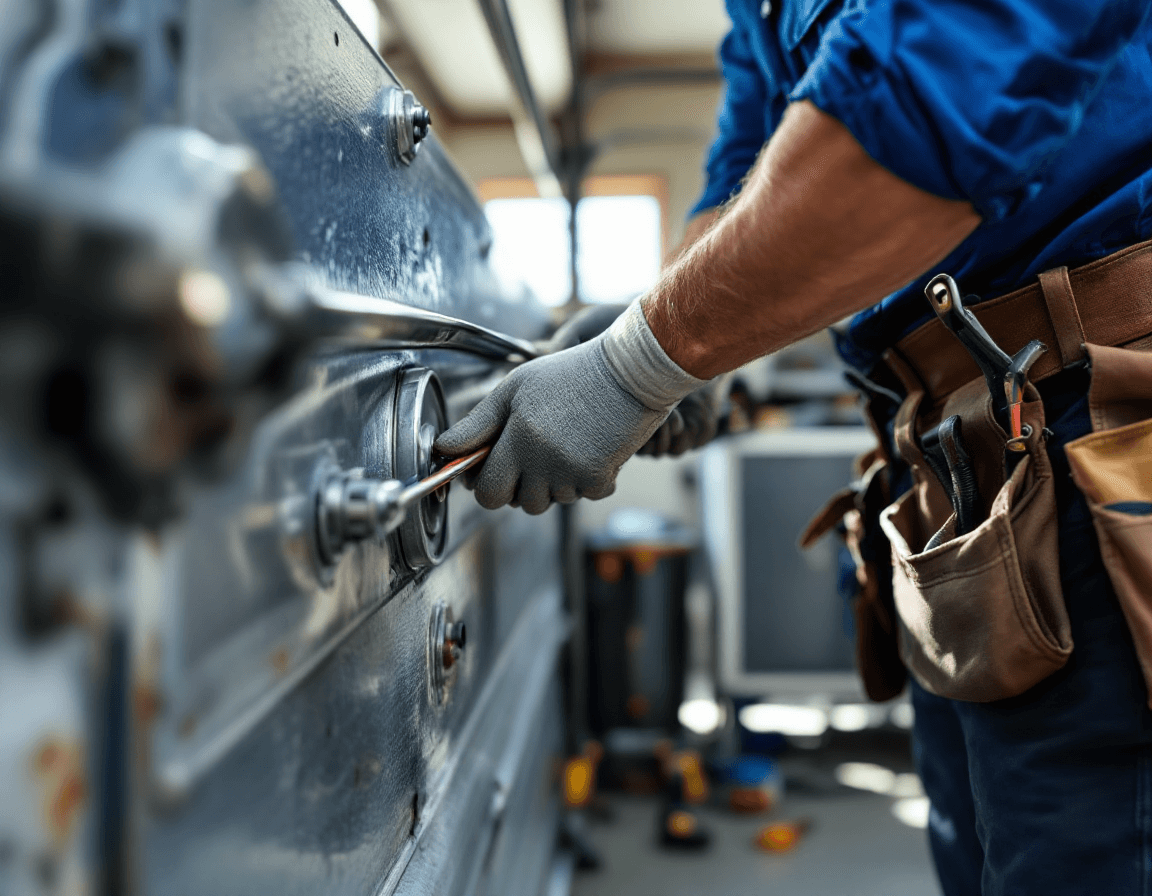
Garage Door Cable Replacement in University Place, WA is one of the most common repairs we handle for homeowners along the western edge of Pierce County. A lift cable that has snapped, frayed through, or jumped off its drum can leave a heavy door hanging crooked, refusing to move, or dropping unevenly without warning. Because the cables carry real tension and the door carries real weight, this is a repair that belongs in the hands of a licensed professional. Seattle Garage Door Fix sends trained, licensed, bonded, and insured technicians to University Place homes every week to diagnose the problem, replace the damaged cable, and check the rest of the lift system before the door goes back into service.
This page explains what the cables do, why they fail more often in our corner of the Puget Sound region, and what you can safely check on your own. It also walks through what a proper cable replacement involves, what affects the final cost, and how to choose a technician who will do the job correctly. If your door is stuck or you already know a cable has broken, skip ahead to the safety section and then call us at (888) 799-3819. The rest of the page will still be here when you have time to read it.
How the Lift Cables and Drums Actually Work
Most residential garage doors are lifted by a pair of steel lift cables, one on each side of the door, running from the bottom bracket up to a drum mounted on the horizontal shaft above the opening. As the shaft turns, the cable winds onto the drum and pulls the door upward in a controlled, even motion. When the door closes, the cable unwinds and the drum releases it back down the track. The two drums are fixed to the same shaft, so both sides should wind and unwind together, which is why a damaged cable on one side tends to show up as a lopsided or binding door.
The cables are not carrying the full weight of the door alone. In a typical torsion spring system, the springs mounted on the shaft do most of the lifting work, and the cables act as the connection that transfers that force to the door panels. That division of labor matters for safety, because it means the cables, drums, and springs are all under significant tension even when the door appears to be sitting still. A cable that fails under load can release that stored energy with a sharp crack and a sudden shift in the door. Understanding the system helps you recognize when something is wrong, but it is also the reason we treat every cable job as work for a trained technician rather than a weekend project.
Cable drums themselves are usually made of cast metal or molded nylon, and they have a helical groove that guides each wrap of cable so the strands stack neatly. Over years of use, the groove can wear, crack, or lose its grip on the cable. A replacement cable installed onto a worn drum may not seat correctly, which is why a proper cable service often includes inspecting or replacing the drum as well.
Why Damp Pacific Northwest Air Hits Cables Harder
Anyone who has lived in University Place through a few winters knows the weather here is persistently damp. Long stretches of gray, wet days, frequent drizzle, and humid mornings keep moisture sitting on surfaces that never fully dry out, especially in attached garages with limited airflow. Lift cables are made of galvanized or coated steel, and that protective layer can break down over time when water and minerals keep working on the same spots. Once surface rust starts, it tends to creep into the strands and weaken them from the inside, where you cannot see it.
Proximity to Puget Sound adds another factor. Salt-laden air drifts inland on the prevailing winds, and homes closer to the water or with open exposure to the west tend to show corrosion on hardware sooner than homes tucked further inland. Garage doors on these properties often carry a faint white or reddish film on the bottom brackets, cable ends, and drum surfaces well before the door itself looks worn. We see this pattern across the neighborhoods near the coast and in areas that catch steady onshore breezes.
Temperature swings also play a role. Cables expand and contract slightly through the seasons, and a steel cable that has been stressed by cold mornings and warm afternoons may develop fatigue over several years. Combined with moisture, that cycling can cause small broken wires that are easy to miss until the cable lets go. Regular visual checks, especially after a wet winter, can catch these problems before a snapped cable turns a routine morning into an emergency.
Warning Signs a Cable Is Failing Before It Breaks
Cables rarely fail without giving some notice. The problem is that the early signs are easy to attribute to something else, like a sluggish opener or a track that needs cleaning. Paying attention to how your door moves and looks can help you catch a failing cable while the repair is still a planned service rather than an urgent call.
Here are the signs our technicians most often see on University Place doors before a cable gives out completely:
- Visible fraying, where individual steel strands stick out or the cable looks fuzzy along its length
- Orange or brown rust spots, particularly near the bottom bracket, where the cable bends around the pulley
- A door that sits higher on one side than the other when it is partly open or fully closed
- A door that binds, catches, or jerks on one side during travel
- A cable that appears loose, slack, or sitting unevenly on the drum
- A faint popping or ticking noise during operation that was not present before
Any one of these signs deserves attention, and several together should prompt a prompt inspection. A door that has started hanging crooked is often one cable that has stretched, slipped, or partially failed. Waiting until the cable snaps can mean the door slams down on its track, which can damage the panels, the rollers, and the opener.
When a Cable Snaps or Comes Off the Drum
A loud snap followed by a door that suddenly stops or sags is one of the most alarming experiences a homeowner can have. The sound usually means a cable has parted, and the door may stay where it was, settle at an angle, or drop a short distance depending on where it was in its travel. Some homeowners hear a bang and see the door hanging by one side, which is a clear signal to stop operating the door entirely.
If a cable has come off the drum without breaking, the door may still look intact but will not lift evenly. The cable can wrap loosely around the drum, pile up in a tangle, or slip out of the groove entirely. Trying to force the door up or pulling on loose cable can make the situation worse, because the stored tension in the spring system can shift unexpectedly. We recommend leaving the cable exactly as it is and calling for service instead of attempting to rewind or reseat it yourself.
Keep children and pets away from the door and the area beneath it until a technician has inspected the system. Do not stand under a door that is hanging crooked or partially lifted, and do not attempt to lift a stuck door by hand. Those few precautions prevent most injuries we hear about from garage door incidents.
Safe Steps to Take Right Now
When a cable fails, the most useful thing you can do is stop and stabilize the situation. The steps below are the ones we recommend to University Place homeowners while they wait for a technician to arrive. They are intentionally limited because many of the more hands-on steps involve spring tension and should never be attempted by an untrained person.
- Stop using the garage door and the opener until the cable has been inspected and replaced.
- Keep everyone clear of the door's path, including the area directly underneath it.
- Do not attempt to lift, lower, or force the door manually, especially if it is hanging at an angle.
- Do not unwind, rewind, or try to reseat a cable on the drum yourself.
- Do not adjust or touch the torsion springs, the shaft, or the drum mounting hardware.
- If you use the emergency release cord, understand that releasing the opener from a door that is open or hanging can allow it to drop suddenly, so call a professional before trying it.
These steps keep the situation contained until a licensed technician can safely secure the door, measure the cable length, and replace the damaged components.
What a Professional Cable Replacement Involves
A proper cable replacement is more than swapping a piece of wire. A licensed technician starts by securing the door and releasing tension from the spring system using the correct tools and procedures. Once the system is safe, the technician removes the damaged cable, inspects the drum groove, checks the bottom bracket and pulley, and examines the shaft and mounting hardware for wear or misalignment. Only after that inspection does the new cable get measured, cut to the correct length, and fitted to the drum and bracket.
The replacement process generally follows a sequence like this:
- Securing the door and confirming the spring system is safe to work on
- Removing the damaged cable and inspecting the drum, bracket, and pulley
- Measuring and cutting the new cable to match the original length and fitting specifications
- Seating the cable correctly on the drum and attaching it to the bottom bracket
- Testing both sides of the door for even travel, balance, and smooth operation
- Checking the remaining lift components so the repair does not leave a weak link behind
Many cable jobs also reveal related wear. A drum that has cracked or lost its groove, a pulley that has seized, or a shaft that has bent should be addressed during the same visit. Replacing only the cable without checking these parts can lead to another failure within a short time, which is why thorough inspection is part of the standard service.
Understanding Pricing for Cable Work in University Place
Most cable replacements we perform fall within a range of $110 to $300, depending on the door and the scope of the work. That range reflects common residential setups, but the final figure depends on several factors that a technician can confirm once they see the door. We always prefer to explain what affects the price before any work begins so there are no surprises on the invoice.
Several things can push a job toward the higher or lower end of the range:
- The number of cables that need replacement, since a door with one failed cable may also have a cable that is close to failing
- Whether the cable drum is damaged and needs replacement along with the cable
- The door size, weight, and construction, which affect the cable length and handling
- Whether bottom brackets, pulleys, or related hardware also show wear that should be addressed
- Access to the work area and the condition of the door tracks at the time of service
Pricing for spring replacement or more extensive lift repairs is separate and usually higher, so a technician will tell you clearly if the inspection reveals a larger issue. You should never feel pressured to accept work beyond what the inspection supports, and a responsible technician will walk you through the options before proceeding.
Reading Crooked and Binding Doors Without Guessing
A door that hangs crooked or binds on one side is not always caused by a cable, but cable problems are a very common culprit. Because both lift cables are connected to the same shaft, an uneven cable can cause one side of the door to lift faster or slower than the other. Over time this can stress the rollers, twist the door panels, and make the opener work harder. Catching the imbalance early often prevents additional wear on other parts.
Track issues can mimic cable problems. A bent track, a loose bracket, or a roller that has worn flat can cause binding that looks like a lift problem from the outside. A technician will check the tracks, rollers, hinges, and springs alongside the cables so the diagnosis reflects the whole system. Skipping that step is one reason a cable can be replaced and the door still does not run right afterward.
If you notice a crooked door, avoid running it repeatedly to see how it behaves. Each cycle puts strain on the cable that is already compromised. Calling for an inspection sooner rather than later keeps a manageable repair from becoming a bigger one.
Practical Care Between Cable Service Visits
Routine care will not prevent every cable failure, but it can extend the life of the lift system and make problems easier to spot. The most useful habit is a quick visual inspection a few times a year, ideally at the start of spring and again in early fall. Look at the cables along their length, the bottom brackets, the drums, and the area where the cable meets the door. Note any rust, fraying, or unusual positioning and schedule service if something looks off.
Lubrication is also worth doing, but it has to be done correctly. Apply a light garage-door lubricant to the rollers, hinges, and track pivot points, and avoid spraying lubricant onto the cables themselves unless your technician has recommended a specific product. Excess lubricant can attract dirt and grit, which can accelerate wear on the drum groove. Never lubricate or adjust the torsion springs as a homemade maintenance step.
Keep the garage clean and dry where possible. Good ventilation, a dehumidifier in a particularly damp space, and prompt cleanup of any water tracked in from wet weather can all reduce the moisture that drives corrosion. These steps are simple, and they pay off in a longer-lasting lift system.
Serving University Place Neighborhoods Across 98466 and 98467
We provide cable replacement and lift system repair for homes throughout the 98466 and 98467 ZIP codes in University Place, along with the surrounding communities across our 60-plus city service area. Many of the homes we visit in University Place sit within a short drive of well-known landmarks such as Chambers Bay and the Bridgeport Village shopping area, which makes scheduling and orientation easier for both our team and our customers. Whether your home is near the water, tucked into a quieter residential street, or set back in a neighborhood with older garages, the same principles apply to diagnosing and repairing the cable system.
Older garages in the area sometimes have uneven floors, limited headroom, or tight side clearances that affect how the cables and drums are installed. A technician who has worked in similar homes will plan for these conditions before beginning the job. If you are unsure whether your ZIP code is covered, call us and we will confirm service availability for your address.
Choosing a Licensed Technician for Cable Work
Cable replacement is not the place to take chances on an unqualified installer. When you are evaluating a company, ask whether its technicians are licensed, bonded, and insured, and whether the company will provide that information before work begins. Seattle Garage Door Fix operates as a licensed, bonded, and insured garage door repair business, and our technicians are trained to handle spring and cable work safely. A reputable provider will also explain the diagnosis clearly, present pricing in advance, and avoid pushing unnecessary parts.
Ask a few direct questions before booking:
- Are your technicians licensed, bonded, and insured for garage door work in Washington?
- Will you inspect the drums, brackets, pulleys, and springs during a cable service?
- Can you explain the expected price range and what might change it?
- Will you test both sides of the door for balance and smooth travel before leaving?
- Do you stand behind your workmanship, and how do you handle any follow-up concerns?
A good technician will answer these questions plainly and without pressure. If a company is vague about licensing or insists that a dangerous spring job can be done quickly without proper tools, that is a reason to look elsewhere.
Cable failures are stressful, but they are also very manageable when they are handled by people who do this work every day. If your University Place garage door has a snapped cable, a cable off the drum, or a door that hangs crooked or binds on one side, do not wait for it to get worse. Call Seattle Garage Door Fix at (888) 799-3819 to schedule a licensed technician who will secure the door, replace the damaged cable correctly, and check the rest of the lift system so your garage gets back to working safely and smoothly.