
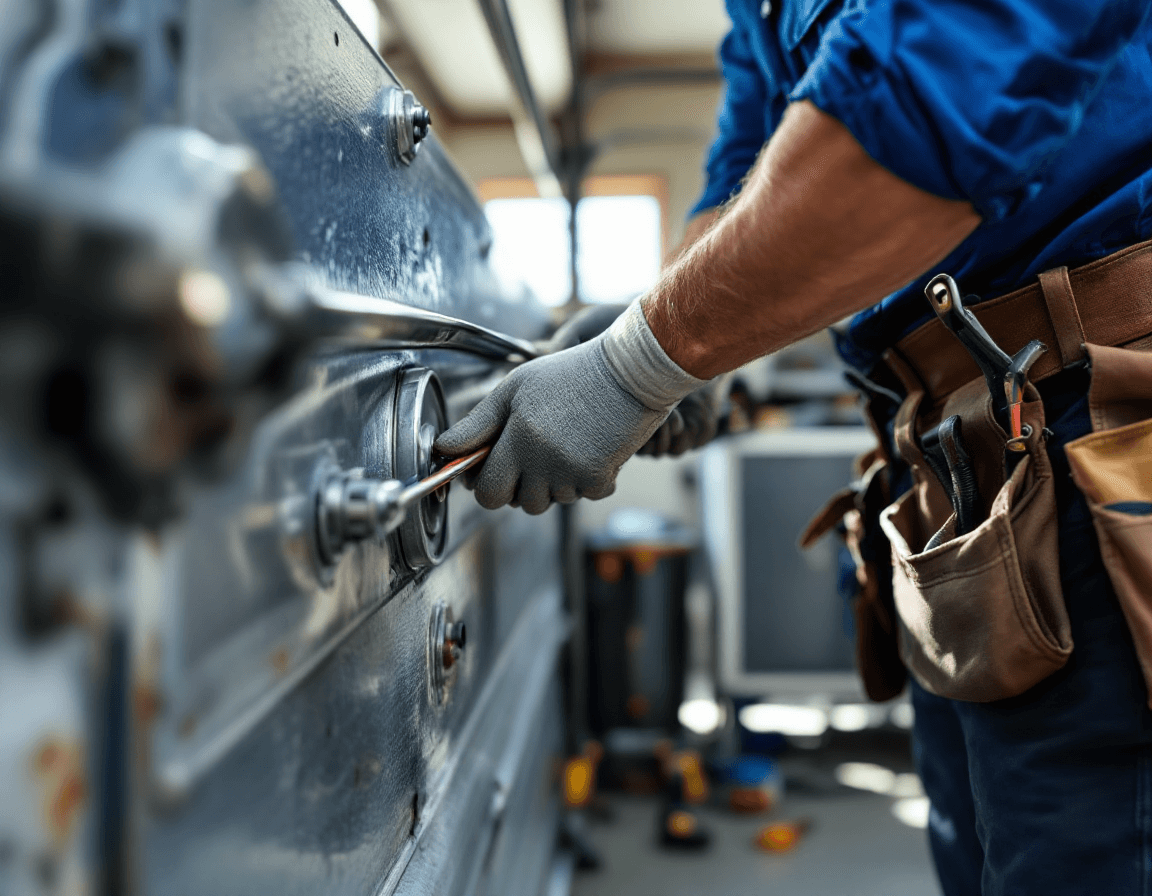
Garage Door Cable Replacement in Gig Harbor, WA is one of the most common repairs we are called out for across the Gig Harbor peninsula, and it is also one of the most important to handle correctly. The lift cables are the steel lines that run from the bottom bracket of each door panel up to the cable drum at the top corners of the door, and they carry a large share of the door's weight when the springs are doing their job. When one snaps, slips off its drum, or frays to the point of failure, the door can drop, twist, or stop moving altogether. Homeowners in Gig Harbor, from the older streets near the waterfront to newer subdivisions off the Highway 16 corridor, tend to notice the problem first as a loud bang followed by a door that will not open.
This page explains how lift cable problems show up, why our damp Pacific Northwest climate and the salt air drifting in from Puget Sound can make cables wear out sooner than expected, and what a proper repair involves. We also cover the drum, the cable routing, and the pricing range most homeowners see for a typical cable replacement, which generally falls between $110 and $300 depending on the door and the parts needed. Our goal is to help you understand what you are looking at before a technician arrives, so you can make a safe decision about your garage door.
Whether your home sits near Harborview Drive, in the Gig Harbor North area, out toward Rosedale, or anywhere else within the 98332 and 98335 ZIP codes, the core mechanics of your door are the same. The details, however, matter a great deal, and a cable repair is not a job to attempt yourself. Because lift cables operate alongside high-tension springs, a mistake during the repair can cause serious injury. Throughout this guide, we will point out where a licensed professional should take over, and we encourage you to call us at (888) 799-3819 whenever you are unsure.
Reading the Warning Signs Before a Cable Gives Way
Most lift cables do not fail without warning, although the warning is easy to overlook if you are only using the door a few times a day. One of the earliest clues is a door that rises unevenly, with one side climbing faster than the other or stalling briefly before continuing. You might also notice a faint popping or a rhythmic ticking sound as the door travels, which often points to a strand inside the cable beginning to break. Paying attention to these small changes can give you time to schedule a repair on your terms instead of waiting for an emergency call.
Visual inspection is the next step, and it can be done safely from the inside of the garage with the door fully closed and the opener disconnected. Look at the cables where they run over the drum and along the vertical track, checking for fraying, kinked strands, or bright spots where the coating has worn away. Rust-colored staining or a crust of corrosion along the cable is a strong sign that moisture has been working on the steel for a long time. If you see any of these conditions, the cable should be replaced rather than wiped down and left in service.
Keep in mind that a cable with visible wear is already compromised, even if the door still seems to work normally. A cable that looks fine on one side of the door may be weaker on the other, since the two lift cables carry different loads depending on how the door has been balanced over the years. Our technicians look at both cables, the drum surfaces, and the bottom brackets together because a problem on one side often reflects stress on the whole system. If you notice any warning sign, it is worth having the entire lift assembly checked rather than only the cable you can see.
Why Gig Harbor Garages Take a Beating From Damp and Salt Air
Living on the Gig Harbor peninsula means living with a lot of water in the air, and that moisture is hard on steel. Western Washington winters bring long stretches of rain, low clouds, and humidity that rarely drops far from saturation, and many of the garages we service are attached to homes that rely on wind and tide patterns off the Sound. Salt carried inland on those breezes settles on metal surfaces, and when it combines with condensation it accelerates the kind of surface corrosion that weakens lift cables from the outside in. Homes closer to the water often show this more quickly than homes further inland.
Temperature swings add another layer of stress. A garage that stays cool and damp through the winter, then warms during a dry spell, expands and contracts the door components and the cables that run through them, which can open small cracks in the protective coating. Those cracks then trap moisture, and the cycle repeats every season. Many Gig Harbor garages are also unheated or only lightly insulated, so the cables are exposed to the same humidity that settles on the rest of the home's exterior without the benefit of climate control.
Because of this, we recommend that homeowners in the 98332 and 98335 areas treat cable inspection as a seasonal habit rather than a once-a-decade job. A quick look every fall, before the wettest months arrive, can reveal early rust or fraying while the repair is still a straightforward cable swap. Waiting until spring, when many households finally open the garage and find the door refuses to lift, often means a more involved visit that includes the drum, the brackets, and sometimes the spring system as well.
What a Professional Cable Replacement Actually Involves
A proper lift cable replacement is more than swapping one length of steel for another. The technician first secures the door so it cannot drop, which typically means clamping the door to the track or using a locking pliers arrangement on the track below a roller. The tension on the spring system is then released or transferred in a controlled way, because the cables cannot be removed safely while the springs are still loaded. Only after the door is stabilized does the technician disconnect the old cable from the bottom bracket and unthread it from the drum.
The new cable is measured to the correct length for the specific door height, spring configuration, and drum size. It is then routed through the bottom bracket, fed onto the drum in the correct orientation, and secured with the appropriate fittings. The drum must be checked for wear, cracks, and proper seating on the shaft, and the cable must wind evenly as the door moves. Once both cables are installed, the door is tested through several full cycles to confirm it travels level, stops where it should, and does not bind on either side of the track.
Here is a simplified view of what a licensed technician typically checks during the job:
- Track alignment, rollers, and hinges on both sides of the door
- Condition of both lift cables, the bottom brackets, and the end fittings
- Drum surface, shaft connection, and set screws or pins
- Spring tension and whether the springs need professional adjustment or replacement
- Door balance, confirmed by testing the door in mid-travel after the repair
- Opener force settings, adjusted only after the mechanical side is correct
Each of these steps carries risk if handled without training and the right tools. This is why we never recommend that homeowners attempt the cable work on their own, particularly the parts that involve spring tension. Even when the cable itself looks simple, the forces at work can be significant, and the safest repair is always the one performed by a qualified professional.
Cables Off the Drum and What the Drum Is Telling You
A cable that has come off the drum is one of the most common reasons a Gig Harbor homeowner calls us after a sudden stop. When a cable slips from its groove, the door may lift unevenly, sag at one corner, or refuse to move at all. Sometimes you can see the cable hanging loose at the side of the track, or notice a kink where it has bunched up against the drum flange. In other cases the cable is still attached but has jumped into the wrong position, and the door will move only partway before binding.
The drum itself often explains why the cable came off in the first place. Drums are typically grooved to guide the cable in a neat spiral, and if those grooves have worn smooth, cracked, or been damaged by a previous repair, the cable has nothing to hold it in place. A drum that has slipped on its shaft can also let the cable wander sideways, and a loose set screw or pin is a common culprit that is easy to miss. Because the drum connects the cable to the spring system, a technician must inspect it carefully rather than simply replacing the cable and hoping for the best.
If you are dealing with a cable off the drum, do not try to pull it back into place while the door is at height or while the springs are under tension. The safest option is to keep people and vehicles clear of the door, avoid operating the opener, and call a licensed technician to secure the door and restore the cable. Even a door that appears stable can drop suddenly when the cable is handled incorrectly, so waiting for a professional is always the wiser choice.
Drum Service and Why Tangles Are More Than an Annoyance
Cable drum service covers a range of work, from cleaning and lubricating the drum to replacing it entirely when it shows wear. When a cable is tangled around the drum, the problem is not only cosmetic. A tangle means the cable is no longer winding evenly, which puts uneven stress on the door and the lift system. Over time that stress can fray the cable, crack the drum, or throw the door out of balance so badly that the opener struggles to lift it.
Tangles often develop after a cable has partially slipped and then been forced back onto the drum, or after a door has been slammed or subjected to a sudden impact. They can also appear when a drum is worn unevenly, causing the cable to pile up on one side of the spiral. A technician who finds a tangle will typically unwind the cable carefully, inspect the drum grooves, and decide whether the cable and drum can be reused or need to be replaced as a set. Reusing a damaged drum with a new cable is a common mistake that can lead to repeat failures within a short period.
Routine drum service is a good investment for homes in our service area, because the humidity and salt air described earlier can gradually corrode the metal. A technician can clean away buildup, check the drum for hairline cracks, confirm the set screws are tight, and apply appropriate lubrication to the moving parts. Keep in mind that lubricant should be used sparingly and only where recommended, since excess grease can attract dust and grit that wears the cable faster. When in doubt, ask the technician what they are applying and why.
Understanding Typical Pricing for Cable Replacement in Gig Harbor
Homeowners often want a straightforward answer about cost before they schedule any repair, and for most lift cable replacements in our area the typical range is $110 to $300. That range reflects the cable itself, the labor required to secure the door and install the new cable safely, and the testing needed to confirm the door runs level afterward. Simple single-cable jobs on standard residential doors usually fall toward the lower end, while more involved situations land higher. Those situations might include a drum that also needs replacing, a door that has several damaged components, or a cable that has to be matched to a specialty door.
Several factors shape the final quote. The height and weight of the door matter, because heavier or taller doors require more careful handling and sometimes a different cable gauge. The condition of the drum and brackets affects whether additional parts are needed, and the age of the spring system influences how much attention the technician must give to balance and safety. If the springs themselves are worn or fatigued, we will often recommend addressing them during the same visit, since a new cable on a weak spring setup may not perform as expected for long.
When you request a quote, ask the technician to explain exactly what is included. A clear estimate should describe the cable replacement, any drum or bracket work, the safety steps taken during the repair, and the final testing. Be cautious of any offer that seems dramatically cheaper than the typical range without a clear explanation, since a rushed job can cost you more later. Our goal is to give you a fair price and a repair that holds up through Western Washington winters.
Frayed and Rusted Cables: Catching Problems Early
Fraying is the most visible sign that a lift cable is nearing the end of its service life, but it is not the only one to watch for. Individual strands can break inside the cable while the outer surface still looks reasonably intact, so a close look along the full length is important. Run your eyes along the cable in good light, and if you can safely do so, feel for stiff or bristly spots that suggest broken wire. Any cable with broken strands should be replaced promptly, regardless of how well the door appears to be operating.
Rust deserves particular attention in our climate. Surface rust on a cable may look minor, but it signals that moisture has penetrated the protective layer and is attacking the steel. Rust can also form in the grooves of the drum and on the bottom brackets, creating rough surfaces that grind against the cable every time the door moves. If you notice rust, consider it a reason to schedule an inspection rather than a reason to clean the cable and hope it lasts another season.
Early attention matters because a cable that breaks during normal operation can cause damage to the door, the track, the opener, and nearby vehicles. It can also leave you without a usable garage until the repair is complete, which can be frustrating during a rainy week when you need access to the car. Replacing a frayed or rusted cable before it snaps is always less disruptive than dealing with the aftermath of a sudden failure.
When the Door Hangs Crooked or Binds on One Side
A door that hangs crooked, sits lower on one side, or binds as it travels is often reacting to a cable problem, though it can also point to track or spring issues. When one cable is stretched, frayed, or partially off its drum, the door no longer lifts evenly, and the side with the weakened cable may drag or catch on the track. Homeowners sometimes describe this as the door looking lopsided when it is partly open, or as the bottom edge not sitting flat when the door is closed.
Binding is especially concerning because it places extra strain on the opener, the rollers, and the hinges. An opener that keeps trying to push a binding door can wear its gears and trip safety reversal settings, which may make the door appear to be malfunctioning when the real cause is mechanical. If your door stops partway and reverses, or if you hear the motor straining, stop using the opener and have the system checked before the damage spreads.
It is worth noting that a crooked door is not always caused by the cables alone. Bent tracks, loose track brackets, worn rollers, and uneven spring tension can all produce similar symptoms. A licensed technician will test each component in sequence rather than assuming the cable is at fault, which is why an accurate diagnosis is worth the time. Replacing a cable on a door with a different underlying problem will not solve the issue, and it can waste money you could have spent on the actual cause.
Handling the Moment a Cable Snaps: Safety First
The sound of a cable snapping is startling, and many homeowners do not know what to do in the minutes that follow. Your first priority should be safety for everyone in and around the garage. Keep children and pets away from the door, and avoid standing beneath it or reaching into the track. If the door has dropped, do not attempt to lift it by hand, since the springs and the remaining cable may still be under load.
Once the area is clear, a few simple steps can help you manage the situation until a technician arrives:
- Do not run the garage door opener, since the motor may pull against a damaged cable and cause further injury or damage.
- Do not try to reattach the cable, unwind the drum, or adjust the springs yourself.
- Do not use the emergency release cord to force the door open if it has sagged or twisted, because a released door can drop suddenly.
- Park vehicles outside the garage if possible, and keep the path clear.
- Call a licensed professional and describe what you heard and what you see, including whether the door is level or tilted.
If the door has already come off its track or is resting at an angle, leave it where it is and call for help. Our technicians are trained to stabilize the door before they begin work, which is the only safe way to restore it. Acting quickly is important, but acting carefully matters more, and a few minutes of patience can prevent a serious injury.
Choosing a Licensed Technician for Gig Harbor Homes
Selecting the right technician for a cable replacement is one of the most important decisions you will make, because this repair involves forces that can injure people and damage property. Look for a company that is licensed, bonded, and insured, and do not hesitate to ask for proof of those credentials before work begins. A reputable technician will explain the repair in plain language, describe the parts being used, and be willing to answer questions about the process without pressure to upsell unnecessary services.
Local familiarity also helps. Technicians who regularly work across Gig Harbor, including the neighborhoods around Harborview, the Gig Harbor North corridor, and the Rosedale area, see the same moisture, salt, and building patterns repeatedly, and they know how those conditions affect garage doors over time. Whether your home is in the 98332 or 98335 ZIP code, a provider who understands the peninsula's weather and housing styles can often diagnose issues faster and recommend repairs that will last through our winters.
Our team at Seattle Garage Door Fix serves more than 60 cities across the greater Seattle and Western Washington area, and we bring that same licensed, bonded, and insured approach to every cable job we perform in Gig Harbor. We will never ask you to attempt spring or cable work yourself, and we will always explain what we find before we start. If you are unsure whether your situation calls for a cable replacement, drum service, or a broader inspection, we are happy to walk you through the options.
Extending the Life of Your New Lift Cables
Once your cables have been replaced, a few habits can help them last longer. Keep the door tracks clear of debris, since grit and small stones can scrape the cable at the bottom bracket and wear it from the outside. Periodic visual checks, particularly before and after the rainy season, give you a chance to catch early rust or fraying while the fix is still simple. Note any changes in how the door sounds or moves, because subtle shifts often appear before a more serious failure.
Ask your technician whether the drum and bracket surfaces should be lubricated, and follow the recommendation exactly. Over-lubricating can attract dirt and create a sticky film that accelerates wear, while under-lubricating leaves metal parts to grind against each other. Keep the garage as dry as practical, using ventilation, dehumidifiers where appropriate, and good weather sealing around the door, since reducing standing moisture slows corrosion across the entire lift system.
Finally, schedule an inspection every year or two, especially if your door is heavily used or if it has been several years since the last service. A licensed technician can check cable tension, drum condition, spring health, and track alignment in a single visit, giving you a clear picture of what the door needs next. Preventive attention is almost always less expensive and less disruptive than an emergency repair, and it keeps your garage safe for everyone who uses it.
If your garage door cable has snapped, come off the drum, or started to fray, please do not wait for the situation to worsen. Call Seattle Garage Door Fix at (888) 799-3819 to schedule a licensed technician who will secure the door, replace the cable correctly, and test the system before you rely on it again. We serve Gig Harbor and the surrounding communities, and we are ready to help you get your garage back into safe working order.