
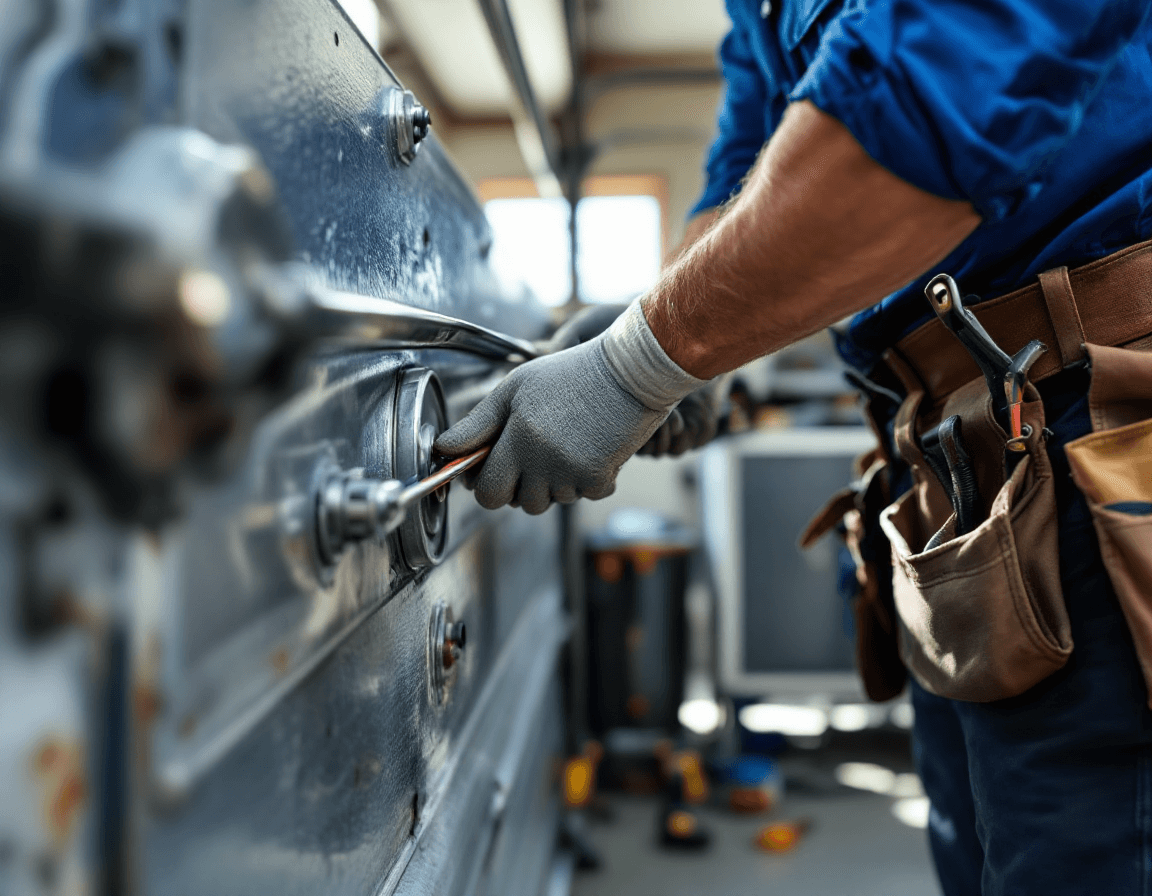
Garage Door Cable Replacement in Port Orchard, WA is a repair that rarely waits for a convenient moment. A lift cable can fray for months without anyone noticing, then let go on a damp morning when you are already late for work. Homeowners across Kitsap County, from the older blocks near downtown to the newer streets off the highway, deal with the same problem: a door that suddenly sags, binds, or hangs at an angle. This page explains how lift cables work, what the warning signs look like, why our local climate is hard on steel, and what to expect when a licensed technician comes out to fix the problem.
Seattle Garage Door Fix serves homeowners throughout the greater Seattle and Western Washington area, and our Port Orchard calls cover the 98366 and 98367 ZIP codes. We are a licensed, bonded, and insured garage door company, which matters here because cable work involves stored mechanical tension that can cause serious injury if handled carelessly. Many of the calls we answer in this part of the peninsula start with a homeowner who tried to fix a snapped cable with a pair of pliers and a YouTube video. Whether you are calling about a single broken cable or a door that is simply acting strange, the goal of this guide is to help you understand what is happening so you can make a confident decision about your next step.
What Lift Cables Do Behind Your Garage Door
Most residential garage doors rely on a pair of steel lift cables, one on each side of the door, that work together with the torsion or extension springs to raise and lower the panels. The cable wraps around a grooved drum at the top corner of the door and runs down through a track to a bottom bracket attached to the lowest section. When the spring releases or winds, it turns the drum, and the cable pulls the door up along the track while the spring does most of the heavy lifting. Because the two cables share the load, they need to be nearly identical in length and tension.
This arrangement is simple on paper but delicate in practice. Each cable is under constant load, and the spring system stores enough energy to cause real harm if it releases unexpectedly. That is why cable replacement is not a casual weekend project for most people. A cable that has come off its drum or snapped can leave a door hanging by one side, and attempting to lift or reset a door in that condition can cause a sudden drop or a spring release. A licensed technician knows how to relieve tension safely before touching the drum or the cable.
It also helps to understand what the cable is not doing. The cable does not usually carry the entire weight of the door on its own, and a door that drops quickly after a cable failure is often reacting to the release of the other side or the spring system. If you see a door sitting crooked, the cause may be a cable that has stretched, slipped out of its drum groove, or lost tension, and the fix involves more than just swapping one piece of wire. We always inspect the drum, the bottom bracket, and the spring pair before we call a job complete.
Reading the Warning Signs Before a Cable Lets Go
Cables rarely fail without warning, although the warnings are easy to dismiss if you do not know what to look for. Over time, strands in the cable break one at a time, creating frayed wires that catch on the drum groove or the pulley. You might notice a fuzzy look along the cable, small burrs under your fingertips, or a fine layer of rust at the points where the cable bends. Paying attention to these details can give you days or weeks to schedule service instead of hours.
Several symptoms commonly show up before a full failure. Here are the most frequent ones we hear about from homeowners in Port Orchard and nearby communities:
- The door hangs lower on one side than the other, or it looks visibly tilted when closed.
- A cable has come partly off the drum, leaving a loose loop or a visible gap in the wrapping.
- You hear a sharp snap or bang, followed by the door refusing to open or moving only a few inches.
- The door binds, scrapes, or catches on one side during the opening or closing cycle.
- You can see rust, flaking, or stiff kinks along either cable, especially near the bottom bracket.
If any of these appear, avoid using the opener repeatedly. Running a door with a damaged cable can pull the drum out of alignment, damage the track, or strain the opener motor. Many homeowners keep using the door for weeks because it still moves, and that is exactly how a small cable problem turns into a larger repair bill.
How Kitsap Damp and Salt Air Wear Down Steel
Port Orchard sits on the Kitsap Peninsula, surrounded by water and wrapped in the kind of mild, wet weather that Western Washington is known for. Rain can fall for days at a stretch in the fall and winter, and the humidity often stays high even when it is not raining. Steel cables handle moisture poorly, and a thin film of water that sits on the cable for long periods will start corroding the outer strands. Over several seasons, that corrosion weakens the wire and makes it far more likely to snap under load.
The coastal influence adds another layer of wear. Salt-laden air drifting off Sinclair Inlet and the surrounding waters can settle on garage door hardware, especially on homes that sit close to the water or have open exposure to prevailing winds. Salt accelerates rust, and it can creep into the bottom bracket, the drum bearings, and the cable clamps where moisture collects. Homes in Manchester, for example, often have garage doors that get a steady dose of this damp, salty air year-round, which means the hardware can age faster than the same door would inland.
Homes with shaded driveways or garages that stay cool and damp also deal with condensation on metal parts. Even a garage that feels dry inside can hold moisture that settles on the cables overnight. We frequently see rust concentrated on the lower portion of the cable and at the points where the cable bends around the pulley, which is where the strands flex the most. Inspecting those areas during routine seasonal checks gives you the best chance of catching trouble early.
Snapped Cable, Stuck Door: What to Do in the First Ten Minutes
When a cable snaps, the first thing to do is stop and stay calm. Keep children and pets away from the garage door, and do not try to lift the door by hand to see what happened. The door may be partly open, leaning, or hanging unevenly, and the spring may still hold a significant amount of stored energy. Stand clear of the area directly under the door, and avoid putting your hands near the springs, drums, or track.
Next, disconnect the opener if it is still attached, and try to determine which side of the door has failed. If the door is stuck in the open position, you can usually leave it there safely until a technician arrives, provided no one walks underneath it. Some homeowners in Port Orchard prefer to put a sturdy support under the bottom panel as a temporary measure, but that should only be done if you can do it without placing your body under the door. Taking photos of the drum, the cable path, and the door alignment can also help the technician diagnose the problem quickly.
Once the door is secure, call a licensed professional rather than attempting the repair yourself. Replacing a cable correctly requires releasing spring tension, removing the drum or bracket, threading the new cable through the proper path, and restoring balance to the system. A mistake at any step can cause the door to fall or the spring to release suddenly. Calling a qualified technician protects both your home and the people who live in it.
Why a Cable Off the Drum Is Not a DIY Job
A cable that has come off the drum is one of the most common repairs we see on the peninsula, and it is also one of the easiest to make worse. The drum is grooved to guide the cable in a precise spiral, and when the cable jumps out of that path, it can tangle, bunch, or wrap unevenly. Trying to pull the cable back into place by hand often causes additional strand damage or pulls the drum out of its mount. Sometimes the cable is wedged between the drum and the bracket, and forcing it free can bend the shaft.
The tension question is the real hazard here. Even when a cable appears loose, the spring may still be under tension, and loosening the wrong bolt or removing the wrong bracket can cause the door to drop. Licensed technicians use specialized winding bars and safety clamps to control the spring, and they follow a set sequence to avoid sudden movement. Those tools are not common in ordinary household toolboxes, and improvising with a screwdriver or a ladder is a good way to get hurt.
There is also the matter of balance. A door that has been out of alignment for some time may have stressed its track, rollers, or hinges. A technician who only replaces the cable without checking these components may leave you with a door that works for a week and then binds again. A complete service visit looks at the whole system so the new cable is not carrying a load it was never designed to handle.
Drum Service, Shaft Alignment, and Why Both Sides Matter
Cable drum service goes beyond swapping the wire. The drum itself can crack, wear down its grooves, or loosen on the shaft, and any of those problems can cause a new cable to slip or wear out quickly. During a drum service, a technician inspects the groove surface for burrs or flattened spots, checks the set screws, and confirms that the drum sits square on the shaft. If the drum is damaged, replacement is usually more cost-effective than repeated repairs.
Balance between the two sides of the door is equally important. If one cable is shorter or tighter than the other, the door will lean, and the opener will work harder to lift the heavy side. This is why we generally recommend replacing cables in pairs when the age or condition is similar on both sides, and why we check the second cable even when only one has failed. Replacing just one cable on an older door can create an uneven load that leads to a second failure within months.
Homeowners often ask whether cable work requires new springs. The answer depends on the condition of the springs, their cycle rating, and how long the system has been running. A technician can inspect the spring for stretching, gaps, or rust, and can recommend a spring replacement if the existing one is worn out. We believe in giving clear, honest recommendations, so you know exactly what is necessary and what can wait.
Neighborhood Notes: Downtown Port Orchard, Manchester, and McCormick Woods
Port Orchard covers a lot of different housing styles, and that variety shapes the garage door problems we see. Homes near Downtown Port Orchard are often older, with single-car garages and doors that have been in place for decades. Those doors may use older cable designs or drum styles that are harder to find parts for, so technicians sometimes need to match the original components carefully. Many of these homes also sit on tight lots with limited space for a second car, so the garage door gets used constantly.
Manchester has its own character, with homes that often sit closer to the water and to open coastal air. The salt exposure there can make hardware age faster, so cable and bracket corrosion is a frequent finding during service visits. Homeowners in that area may benefit from rinsing exposed metal hardware occasionally with fresh water and checking the cables twice a year. A little attention to the environment can extend the life of the entire door system.
McCormick Woods, with its planned community layout and newer homes, tends to have garage doors that look modern but still rely on the same fundamental cable and spring systems. Some homes in newer developments use higher-cycle springs or upgraded hardware, but the cables are still subject to wear from weather and daily use. We have found that families in these neighborhoods often run their doors many times a day, which means the cables experience frequent flexing. Regular inspection is a smart habit for busy households.
What a Typical Cable Visit Involves on the Peninsula
When you schedule cable replacement with Seattle Garage Door Fix in Port Orchard, the visit starts with an inspection rather than an immediate repair. The technician checks both cables, the drums, the bottom brackets, the spring pair, the track alignment, and the opener connection. This process usually reveals whether a single cable failure is the only issue or whether other parts are showing wear that should be addressed at the same time. Being thorough up front saves time and avoids repeat visits.
Once the diagnosis is clear, the technician explains the options in plain language and shows you the parts involved. A typical cable visit includes the following steps:
- Safely relieving spring tension using proper winding tools and safety equipment.
- Removing the damaged cable and inspecting the drum, bracket, and pulley for wear.
- Installing new cable or cables sized for your door, and routing them correctly through the track.
- Restoring balance, checking the door's travel, and confirming smooth operation through a full open and close cycle.
- Reviewing the spring condition and discussing any additional recommendations before the job is finished.
Every step is performed by a licensed technician, and we will tell you clearly what we found and what we did. If additional work is recommended, you have the right to ask questions and decide how to proceed.
Price Expectations Between $110 and $300
Homeowners often want a clear sense of cost before scheduling, so here is what we can say honestly. For most cable replacements, our pricing falls in the range of $110 to $300. Where a job lands within that range depends on factors such as the door size, the number of cables affected, the condition of the drum and bracket, and whether the springs also need attention. A standard single-car door with a straightforward cable swap typically sits toward the lower end, while larger doors or jobs that involve drum replacement can move higher.
We prefer to give you a clear quote after inspection rather than guess over the phone, because the visible symptoms do not always reveal the full scope of the repair. A door that looks like it needs one cable may need both, or may have a drum that has to be replaced at the same time. Transparent pricing means you know what the work involves before the technician begins. If additional repairs are needed, you will hear about them first and have the chance to approve or decline.
Avoid choosing a provider based solely on the lowest number you hear. Cable work involves safety-critical components, and a poor installation can cost far more in damage, injury risk, or repeat service. Ask whether the technician is licensed, bonded, and insured, and whether the warranty covers the parts and labor. A reputable company will answer those questions directly.
Keeping Cables Healthy Through Wet Kitsap Winters
Prevention is the best way to avoid an unexpected cable failure, and the Port Orchard climate makes regular checks especially worthwhile. Once or twice a year, typically before the wet season and again in late spring, take a few minutes to look over your cables. Check for fraying, rust, flattened sections, or kinks, and make sure the cable sits neatly in the drum groove. If anything looks off, schedule service before it turns into a snapped cable.
Keeping the garage dry and well ventilated helps reduce corrosion. Running a small dehumidifier in a damp garage or simply opening the door on dry afternoons can allow moisture to evaporate from the hardware. Wiping down exposed metal with a dry cloth after heavy rain or salt-air exposure can also slow rust. Avoid spraying heavy lubricants directly onto the cables, since they can attract dirt; a light lubricant on the drum bearings and rollers is usually the better choice, and a technician can recommend the right product.
Finally, pay attention to how the door behaves. A smooth, quiet, level door is usually a healthy one, while a door that suddenly sounds different, tilts, or hesitates deserves a closer look. Early attention keeps repairs small and predictable. If you are in Port Orchard, Manchester, McCormick Woods, or anywhere else on the Kitsap Peninsula and you notice any of the warning signs described above, call Seattle Garage Door Fix at (888) 799-3819 to schedule a licensed technician. We will inspect the cables, explain what we find, and help you get your door moving safely again.