
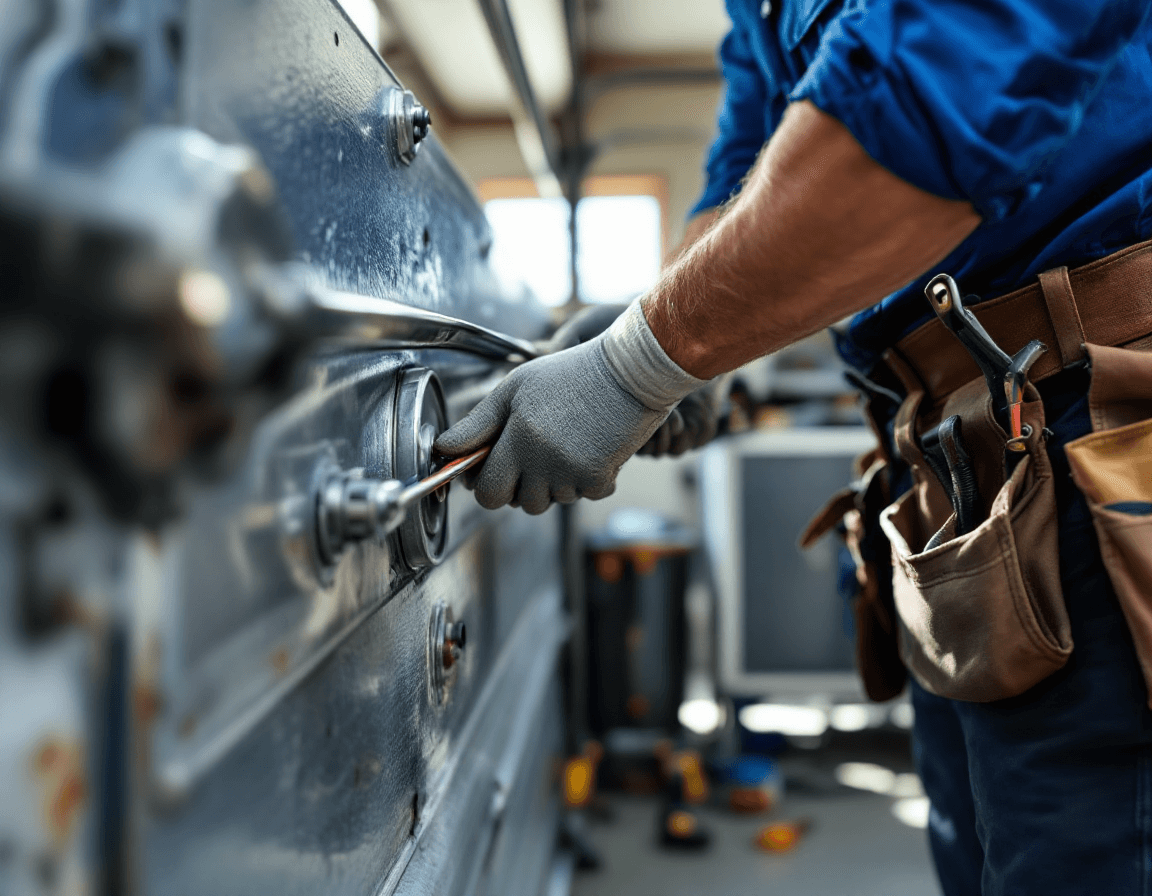
Garage door cable replacement in Bremerton, WA is one of the most common repairs we see on the Kitsap Peninsula, and it is also one of the easiest to overlook until the door stops working. Lift cables sit quietly above the tracks for years, carrying the weight of the door every time it opens and closes. When one fails, the door often drops, tilts, or refuses to move at all, sometimes with a loud bang that startles everyone in the house. Knowing what the cables do and how they wear will help you decide when to call for help.
Bremerton homes face a particular set of conditions. Our winters bring long stretches of rain, humid air off Sinclair Inlet, and temperature swings that cycle metal parts through expansion and contraction. Garages here also tend to double as storage rooms, workshops, and overflow space, so doors get opened and closed more often than many owners realize. Those factors add up, and a cable that looked fine in October may be fraying by February. This page explains the warning signs, the repair process, and what homeowners in East Bremerton, Manette, and the Kitsap Lake area should expect when they schedule service.
Our technicians work throughout Bremerton and the surrounding communities, including ZIP codes 98310, 98311, 98312, and 98337. We are licensed, bonded, and insured, and we treat cable work as a safety job first and a repair job second. The sections below walk through what to watch for, why local conditions matter, and how to get your door moving safely again. If you are unsure whether your door needs attention, reading through the symptoms below is a good place to start.
Why Bremerton Garages Wear Cables Faster Than You Might Expect
Cables do not fail only because they are old. They fail because they are repeatedly stretched, bent around a drum, and exposed to moisture and grit. On the Kitsap Peninsula, the damp months put extra strain on every metal part of the door system. Water that soaks into the garage floor and drips from wet vehicles carries salt and road grime that can settle on the cables and their drums. Over time, that film works its way into the strands and speeds up corrosion.
Bremerton also has a lot of older housing stock, and many garages were built before modern door hardware became standard. Some homes have doors that were installed decades ago and later retrofitted with newer openers without a full inspection of the lift system. A door that is heavier than it was when it was first installed, perhaps because of added insulation or a heavier panel, puts more load on the cables than the original design intended. Those mismatches are easy to miss, but they change how quickly cables wear.
Finally, the way a household uses its garage matters a great deal. A two-car garage that opens every morning and evening for commuters, school runs, and weekend projects will cycle the cables far more often than a single-bay garage used only for occasional storage. Every cycle is a small amount of wear, and in a busy household those cycles accumulate faster than people expect. That is why a cable that has lasted many years in one home may give out in another, even on a similar door.
Reading the Warning Signs Before the Door Quits
Most cable failures give some warning, even if the warning is subtle. The most useful thing a homeowner can do is pay attention to how the door behaves during normal use. A door that moves smoothly one week and hesitates the next is telling you something. Catching a problem early often means a simpler and less expensive repair, and it reduces the chance of a sudden drop.
Common early signs include:
- Frayed strands or small bits of wire visible on the cable, especially near the drum or the bottom bracket
- Orange or brown rust spots, or a dusty film that flakes off when you touch the cable
- The door closing unevenly, with one side reaching the floor before the other
- A cable that looks slack on one side while the other side appears tight
- Popping or scraping noises during operation that were not present before
If you notice any of these, avoid running the door repeatedly until it has been looked at. Continued use on a damaged cable increases the chance of a snap. A cable under load can break without much warning, and the force released can damage the door panels, tracks, or the opener itself.
What Happens When a Lift Cable Lets Go
When a lift cable snaps, the door loses one of its two lifting points. The remaining cable and the spring system can no longer balance the door evenly, so one side may drop while the other stays partially raised. Many homeowners describe a loud crack or bang followed by the door sagging at an angle or stopping halfway. Sometimes the door appears to be stuck when it is really just resting unevenly on its tracks.
Some owners try to force the door open or closed after a cable breaks. This is one of the most dangerous things a person can do in a garage. The door may shift suddenly, the track can bend, and the spring tension can release in unexpected ways. If your door is hanging crooked and the opener is straining, switch off the power to the opener, keep vehicles and people clear of the door path, and call a professional. The repair itself is usually straightforward for a trained technician, but the stored energy in the spring system makes it a job that should never be improvised.
It is also worth noting that a broken cable rarely fixes itself and often causes related damage. A door that has dropped on one side may have stressed the rollers, the track, or the bottom seal. Having the whole lift system inspected during the cable visit can prevent a second service call a few weeks later.
The Drum, the Tangle, and Why Drum Service Matters
Every lift cable wraps around a drum at the top of the door, and the drum controls how the cable spools in and out. Drums are usually made of metal and are fitted to a torsion or extension spring system. When a cable comes off the drum, it can bunch, twist, or wrap unevenly, and the door may tilt as a result. A tangled cable can also rub against the drum edge and wear quickly, so a drum that looks fine may still need attention.
Drum service involves checking that the cable seats correctly in the groove, that the drum is secured to the shaft, and that there are no burrs, cracks, or worn edges. Technicians look at the cable path from the drum to the bottom bracket and confirm the cable is not dragging on the track or the door panels. In some cases a drum needs replacing along with the cable, especially if the groove is worn smooth or the set screws have loosened over time.
If you see a cable hanging loosely, notice that it has jumped off the drum, or find loops around the drum, do not try to pull it back into place by hand. Even a small amount of tension can release suddenly. Keep the door closed if possible, and call for service so the drum and cable can be handled correctly.
Salt Air, Moisture, and the Kitsap Garage Environment
Living near the water brings beauty and a lot of character to Bremerton, but it also means salt and humidity are constant factors. Salt-laden air can accelerate corrosion on steel cables and hardware, even when the garage seems dry inside. Moisture that gets into a garage through a door seal or a gap at the floor line can sit on metal parts for weeks during the rainy season. That combination is hard on any lift system.
Homeowners can reduce some of this exposure with simple habits. Keeping the garage floor as dry as possible, wiping down vehicles that arrive wet, and making sure the bottom seal is in good shape all help. Some owners also rinse off the lower part of the door after storms that bring salt spray, though they should avoid spraying directly into the drum or spring area. Lubricating the moving hardware with a product recommended for garage doors, rather than household oil, can slow down wear on the rollers and hinges, which indirectly reduces stress on the cables.
These habits will not stop corrosion entirely, and they do not replace a professional inspection. A cable that has already begun to rust needs replacement, not cleaning. Scrubbing a corroded cable weakens the strands further and can hide the damage you need to see.
Uneven Closing and Crooked Doors: Clues from the Cables
Few symptoms are as frustrating as a door that closes unevenly. You may notice a gap at one corner, a door that binds on one side of the track, or a panel that sits lower than its neighbor. Sometimes the problem is in the rollers or the track alignment, but a cable issue is a frequent cause. A cable that has stretched, slipped, or frayed on one side will allow that side of the door to sag or lag behind the other.
A door that binds on one side during closing often has a cable or a spring problem on that same side. Binding can also come from a roller that has popped out of the track, so the cable inspection should include a look at every roller and every section of track. Technicians check the cable tension, the drum alignment, and the spring balance together, since a problem in one part often affects the others.
Do not try to fix an uneven door by adjusting the spring tension yourself. Spring adjustment is one of the most dangerous tasks in residential garage door work, and it is not a safe project for homeowners. A licensed technician can measure the balance and make the correct adjustment with the proper tools and training.
What a Typical Cable Replacement Involves
A standard cable replacement starts with a safety check. The technician confirms the door is secured, the opener is disconnected, and the spring system is handled according to the manufacturer's specifications and safe practice. From there, the old cable is released from the drum and bottom bracket, and the drum is inspected. If the drum is damaged or the groove is worn, it may be replaced at the same visit.
Next, the new cable is measured and installed to the correct length and routed through the drum and bottom bracket. The technician checks that the cable seats properly in the drum groove and that it runs straight without twisting. The door is then tested by hand and with the opener to confirm it lifts and lowers evenly. Balance, track alignment, and roller condition are checked again before the job is considered complete.
Many cable replacements are completed in one visit, though timing depends on the door type, the spring system, and whether additional parts are needed. We recommend asking the technician to walk you through the inspection results, including any other wear items they noticed. That conversation helps you plan ahead for future maintenance and avoid surprises.
Understanding the Price Range in Bremerton
For most cable replacements, our pricing falls in the range of $110 to $300. The final amount depends on several factors, including the length of cable needed, whether the drum or bottom bracket also needs replacement, the type of spring system, and the accessibility of the door. A simple single-cable replacement on a standard residential door will generally cost less than a job that involves multiple components or a more complex installation.
Some homeowners ask why the price varies so much. Cables are only part of the cost. The technician's time, the safety equipment and tools needed for spring work, and the inspection of related components all factor into the final quote. A thorough visit should include a check of the rollers, hinges, and track alignment, because a problem left unaddressed can lead to another repair soon after.
We recommend getting a clear explanation of the work before the technician begins. If additional parts are recommended, ask for the reasons and whether the work can be done during the same visit. Transparent communication is part of doing the job right, and it helps you make an informed decision about your home.
Why You Should Leave Spring and Cable Work to a Licensed Professional
Cable work and spring work are closely connected, and both carry real risks. The springs on a garage door hold a great deal of stored energy, and releasing that energy without the right tools can cause serious injury. Even experienced homeowners can be caught off guard by a spring that slips or a cable that whips when tension is released. For this reason, we always recommend that spring and cable work be performed by a licensed, bonded, and insured professional.
Some tasks are especially dangerous for homeowners. These include:
- Winding or unwinding torsion springs, which should never be attempted without proper winding bars and training
- Removing a drum or bottom bracket while the spring is under tension
- Trying to re-hang a cable that has come off the drum while the door is partly raised
- Adjusting the spring balance by guesswork or using the opener to force an uneven door
- Cutting or splicing a cable to a length you estimated
If you are ever unsure whether a task is safe, stop and call a professional. A short service visit is far less costly than an injury or a damaged door. Our technicians are trained to recognize when a door should be taken out of service and when it can be repaired safely on the spot.
Neighborhood Notes for East Bremerton, Manette, and the Kitsap Lake Area
Bremerton is a city of distinct neighborhoods, and the homes in each area have their own patterns. East Bremerton includes a mix of older homes and newer construction, and many garages in that part of town have been updated over the years, sometimes in stages. Homeowners there often mention that a door that worked well for years began acting up after an opener upgrade or a new insulation project. Those changes can shift the load on the cables, so an inspection after upgrades is a good idea.
In Manette, the proximity to the water and the bridge area means many homes deal with persistent dampness and salt exposure. Garages in that neighborhood often sit close to the street and receive heavy use during commutes, which means the cables cycle frequently. Homeowners in Manette may benefit from more frequent inspections, especially after long wet seasons.
The Kitsap Lake area has a different character, with many homes set back from the road and some garages attached to larger properties with extra storage. These homes may have heavier doors, multiple-bay setups, or garages used for hobbies and workshops. Because the doors may be larger or used more heavily, a periodic check of the cables, drums, and tracks can prevent a sudden failure during a busy weekend.
Scheduling Service and Preparing Your Garage
When you call to schedule a cable replacement, it helps to describe the symptoms you have noticed. Tell the scheduler whether the door is hanging crooked, whether you heard a snap, and whether the cable is visibly frayed or off the drum. Mention the door size, the number of bays, and whether the door has been recently upgraded. This information helps the technician arrive prepared with the right parts.
Before the visit, clear the area around the door and keep vehicles and tools away from the tracks. If the door is currently stuck or unevenly positioned, leave it as it is and do not try to move it. Keep children and pets out of the garage until the technician has finished. If you have a manual release cord, do not pull it while the door is unbalanced, as that can cause the door to drop unexpectedly.
After the repair, ask the technician to show you how the door should operate and what normal movement sounds like. Keep a record of the service date and any notes about parts replaced. Regular inspections every year or so, especially in a damp climate like ours, will help you catch wear before it becomes an emergency.
If your garage door is showing any of the signs described on this page, call Seattle Garage Door Fix at (888) 799-3819 to schedule a licensed technician for your Bremerton home. We serve ZIP codes 98310, 98311, 98312, and 98337 and can help you get your door balanced, safe, and running smoothly again.