
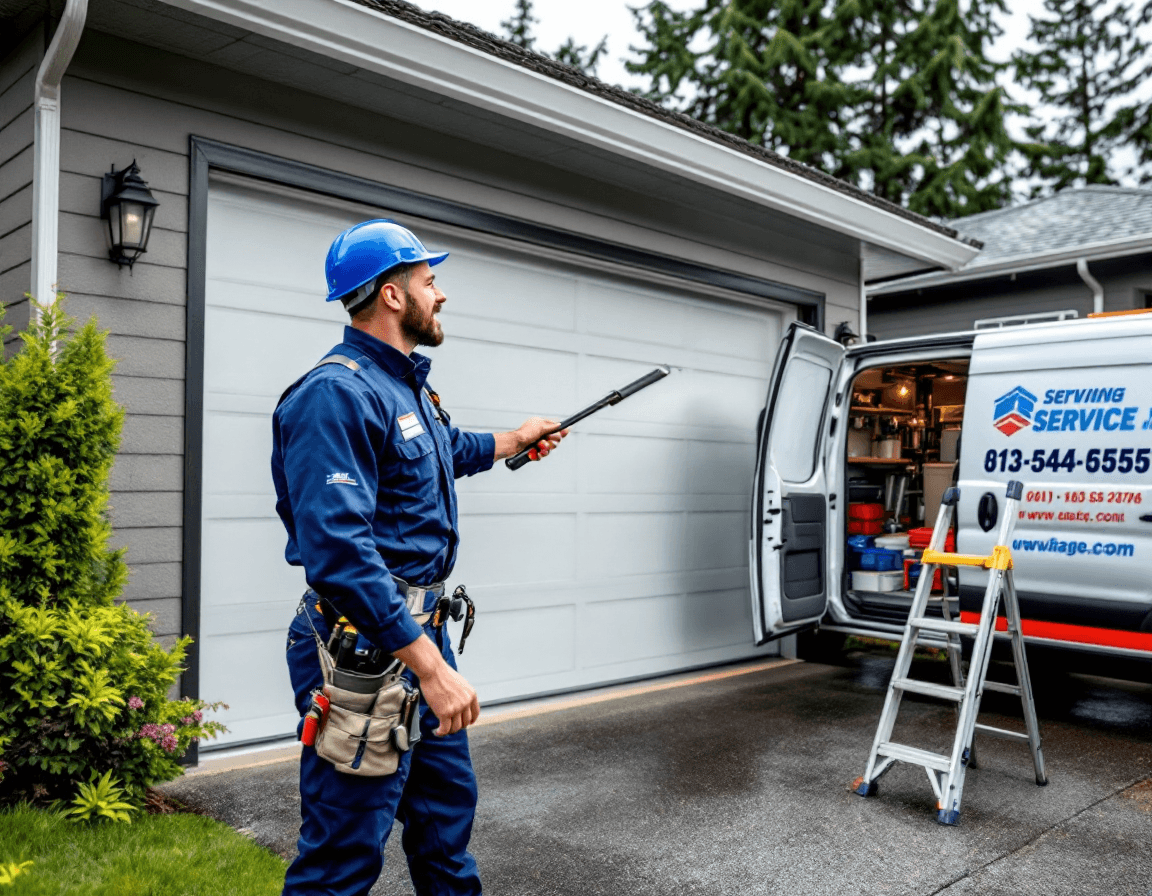
Garage Door Repair in Bremerton, WA is something many homeowners on the Kitsap Peninsula end up needing sooner than they expected. Between damp winters, salty air drifting off Sinclair Inlet, and the daily open-and-close routine of busy households, a garage door can go from quiet and reliable to stubborn and noisy in a matter of weeks. This page explains what tends to go wrong with residential doors around Bremerton, what the warning signs look like, and which fixes you can reasonably check yourself before calling in help.
Our technicians work on doors throughout Bremerton, including East Bremerton, Manette, and the neighborhoods around Kitsap Lake. We see the same patterns repeatedly: rollers that have worn flat, tracks knocked slightly out of alignment, openers that have lost their travel settings, and hardware that has corroded from years of moisture. The good news is that most of these problems are caught early by paying attention to how the door sounds and moves. The guidance below is meant to help you make a clear decision about what to do next, whether that means a quick adjustment or a full service call.
Why Bremerton Garage Doors Feel the Damp Weather More Than Most
Bremerton sits on the western edge of the Kitsap Peninsula, where marine air and steady Pacific Northwest rain are part of everyday life. Long stretches of gray, wet weather mean garages rarely dry out completely between storms, and humidity can stay high even on days without rain. Steel tracks, galvanized hardware, and the metal rollers on most residential doors respond to that moisture by slowly developing surface rust, especially at the bottom bracket bolts and along the lower track sections where water tends to pool.
Salt air adds another layer of wear. Homes closer to the water, and those on breezier ridges above town, often show corrosion sooner than inland properties because airborne salt settles on exposed metal and speeds up oxidation. Even a garage a few blocks from the shoreline can see white or orange residue on hinges and track brackets after a few seasons. Wooden and composite doors have their own issues, since moisture can swell panels and cause them to rub against weatherstripping or track edges.
Temperature swings also matter. A cold morning followed by a damp afternoon can cause metal parts to contract and expand, which affects how smoothly rollers ride in the track. Lubricants that flow freely in summer may thicken on cold mornings, leaving a door that moves fine by noon but groans when you first head out for work. Understanding these local conditions helps explain why a door can seem to misbehave seasonally, even when nothing is technically broken.
Recognizing the Warning Signs Before a Door Stops Working
Most garage door failures do not happen all at once. They usually begin with small changes that homeowners tend to dismiss, such as a slightly slower close, a faint rattle near the top corners, or a door that seems to hesitate for a second before lifting. Paying attention to these early signals can save you from a stranded car on a rainy morning and often keeps a simple repair from becoming a more expensive one.
Some of the symptoms we hear about most often in Bremerton include:
- The door will not open or close fully, or it stops partway and waits for you to press the button again.
- The door reverses direction before it reaches the floor, which is usually a safety sensor or travel-limit issue.
- Grinding, squealing, or banging noises appear during operation, especially at the start or end of travel.
- The door moves unevenly, sits visibly lower on one side, or looks crooked when it is partly open.
- The door sags, shows visible gaps around the perimeter, or has pulled partly out of its tracks.
- The remote or wall button produces no response, even though the opener light or motor sounds normal.
Any one of these symptoms can have a simple cause. Several together usually mean the door has been under strain for a while, and it is worth having a technician take a full look before the wear spreads to other parts of the system.
When the Door Reverses Before It Hits the Floor
A door that starts closing and then rises back up is one of the most common calls we receive. This behavior is almost always tied to the safety reversal system, which is designed to protect people and objects from being trapped under a closing door. Modern openers use photo-eye sensors mounted near the bottom of the tracks on each side, and if the beam between them is interrupted or misaligned, the opener assumes something is in the way and reverses.
In Bremerton, sensors are frequently knocked out of alignment by bikes, recycling bins, or shifting shelves inside the garage. Dirt, cobwebs, and spray from wet tires can also cloud the lenses, and sun glare through a side door can confuse the sensor on some installations. Start by checking that both sensors are facing each other, that their indicator lights are steady, and that nothing is blocking the path. Wipe the lenses with a dry cloth and make sure the wiring has not been pinched or chewed by pests.
If the sensors look aligned and clean but the door still reverses, the problem may be with the close-limit setting or the force adjustment on the opener. Those settings are designed to be changed carefully, and adjusting them incorrectly can create a genuine safety hazard. This is a good point to call a professional rather than experimenting. A technician can test the reversal system, confirm that it responds properly to an obstruction, and make sure the door meets safe operating standards before it returns to regular use.
Grinding, Squealing, and Banging: What the Noises Mean
Noise is often the first clue that something is wearing out. A high-pitched squeal usually points to dry or corroded rollers, hinges, or a bearing that needs lubrication. A deep grinding sound, especially when the door is lifting or lowering, may indicate worn gears inside the opener or a loose drive mechanism. A sharp bang at the top or bottom of travel often means a roller has come out of its track, a stop has shifted, or a panel is flexing against a loose bracket.
Bremerton's humid climate tends to make squeals worse in winter, when moisture and cold combine to stiffen old grease. Applying a silicone-based or white lithium spray to the rollers and hinge pivots can help in some cases, but avoid using heavy grease or penetrating oil on tracks and rollers, since those products attract dirt and can make the problem worse over time. Wipe the tracks clean before applying anything, and never spray lubricant onto the opener motor or belt.
Banging is more serious than squealing, and it should not be ignored. If you hear a loud clunk every time the door reaches the top or bottom, something may be coming loose or cracking. Check for visible damage to brackets, bolts, and track sections, but do not attempt to tighten or reposition high-tension components yourself. Loose hardware on a door under spring tension can cause injury, and a technician should evaluate the situation before anyone works near the springs or cables.
Doors That Stall Halfway, Jam, or Drift Out of Track
A door that stops midway and refuses to move is frustrating, but it is also a signal that something is restricting motion. Common causes include a track that has shifted slightly, a roller that has popped out of its channel, debris lodged in the track, or a tension imbalance that causes one side to bind. In older Bremerton homes, where tracks may have been installed decades ago and the house has settled over time, a small misalignment can gradually become a jam.
Start by looking at the tracks from inside the garage. They should be straight, parallel, and firmly attached to the wall and ceiling. Look for gaps between the track and the door, bent sections, or bolts that have backed out. Gently check the rollers to see whether any have jumped the track, but never force a door that is jammed, and never attempt to pry it open while the opener is still running. Disconnect the opener using the emergency release cord only when the door is closed, and keep hands clear of the track while doing so.
Jamming can also be caused by a door that is sagging or out of square. A visible gap at the top or sides, or a panel that looks bowed, often means the door has lost structural balance. Correcting that usually involves track adjustment, spring evaluation, or replacement of worn hardware, and it is not a do-it-yourself job for most homeowners. A licensed technician can measure the door, identify the source of the imbalance, and recommend the right repair.
Remote and Wall Button Problems: Check the Simple Things First
When the remote or wall button stops working, the cause is frequently something minor. Remote batteries are the most common culprit, especially for households with several fobs that get tossed into car consoles or kept near heat sources. Replace the battery in the remote before assuming anything is wrong with the opener. If the wall button is also unresponsive, the problem may be in the wiring or the control panel rather than the remote itself.
Before calling for service, run through a short checklist:
- Replace the batteries in every remote and confirm the indicator light flashes when pressed.
- Check that the opener's receiver lights are on and that the motor unit has power at the outlet or breaker.
- Test the wall button wiring by confirming that the wires are not frayed, pinched, or corroded from damp conditions.
- Make sure the opener's lock feature is not engaged, since some units disable remote operation when locked.
- Clear any debris from the safety sensors, because a blocked sensor can prevent the door from closing even when the controls are working.
If these basic steps do not restore operation, the opener's logic board or receiver may need repair or replacement. Those components are best diagnosed by a technician who can test the system under load. Attempting to open the opener housing yourself can expose you to electrical hazards and may void warranty coverage.
Slamming Shut and Uneven Movement: Why Speed and Balance Matter
A door that drops quickly or slams at the bottom is not just annoying. It can strain the opener, stress the panels, and create a safety concern for anyone standing nearby. Rapid closing is often related to a weakened or unbalanced spring system, worn cables, or an opener whose force settings have drifted over time. Some doors also slam because the close-speed control on the opener has been adjusted or because the travel limits have been reset incorrectly after a power outage.
Uneven movement is a related symptom. If one side of the door rises faster than the other, or if the door looks tilted when partly open, the rollers, cables, or springs on each side may be carrying different loads. Over time this imbalance can twist the door and bend tracks, which turns a simple adjustment into a larger repair. Keeping an eye on the door's level position, and noticing whether one side lags behind, gives you an early warning that something needs attention.
Because springs and cables store significant energy, any work that involves changing their tension should be left to a licensed professional. Even experienced homeowners can be seriously hurt when a spring releases unexpectedly. A qualified technician can measure the balance, test the springs, and replace worn parts using the correct tools and procedures.
Spring and Cable Repairs Belong in Licensed Hands
Torsion springs and lift cables are the most hazardous components of a garage door system. Torsion springs are wound under high tension, and a broken spring can release with enough force to cause serious injury. Lift cables carry a substantial load and can snap or unravel when they fail. For these reasons, we strongly recommend that homeowners in Bremerton never attempt spring or cable repair on their own, regardless of how handy they are.
A broken spring is usually recognizable. You may hear a loud bang from the garage, see a gap in the spring coil, or notice that the door will not lift even though the opener runs. Do not try to open the door manually if the spring is broken, and keep children and pets away from the area until a technician arrives. A door with a broken spring can drop unexpectedly if the opener is disengaged, so treat the situation as urgent.
Licensed professionals have the training and equipment to wind, unwind, and replace springs safely. They also inspect the rest of the system, including cables, drums, bearings, and bottom brackets, so that the repair addresses the root cause rather than just the visible failure. If you are unsure whether a spring is damaged, call for an inspection instead of testing it yourself.
What Repairs Typically Cost in and Around Bremerton
Pricing for garage door repair depends on the type of door, the specific part involved, and how much labor the job requires. For most residential repairs, our typical range is $95 to $450. Simple jobs such as sensor realignment, roller replacement, or opener programming usually fall near the lower end, while more involved work like track replacement, opener repair, or spring service sits higher on the scale. Every door is different, so the final quote depends on what the technician finds during the visit.
It helps to know what affects cost. Older doors with discontinued parts can take longer to repair because the correct components may need to be sourced. Doors with heavier insulated panels or unusual sizes may require more labor to handle safely. Emergency calls outside normal hours may also carry different scheduling considerations, so it is worth asking about timing when you first reach out. A clear estimate before any work begins should be part of every service call.
Keep in mind that repairing a worn component is often more economical than waiting until a larger failure occurs. A roller that squeaks today may be inexpensive to replace, but if it wears through and damages the track, the repair can become significantly more involved. Addressing small issues early is one of the most practical ways to control the total cost of ownership for your garage door.
Serving Bremerton, East Bremerton, Manette, and Kitsap Lake
Our team provides garage door repair across Bremerton and the surrounding communities, with service available in ZIP codes 98310, 98311, 98312, and 98337. Whether your home is near the downtown waterfront, tucked into a residential street in East Bremerton, located across the bridge in Manette, or closer to the trails and water around Kitsap Lake, we understand how local weather and terrain affect garage doors. Technicians who know the area can anticipate common issues such as moisture-related corrosion, salt-air wear, and the seasonal stiffness that shows up after long wet spells.
Bremerton homes vary widely, from mid-century ranches with single-car garages to newer two-car designs with insulated doors and smart openers. Each style presents its own quirks, and the best repair plan takes those details into account. We work on steel, wood, aluminum, and composite doors, and we are familiar with the common opener brands found in the region. If you are not sure what kind of door you have, describe what you are seeing and a technician can help you identify the right next step.
When a door stops working, the goal is to restore safe, reliable operation as quickly as possible without cutting corners. Whether the problem is a stubborn sensor, a noisy roller, or a spring that needs professional attention, a clear diagnosis is the foundation of a good repair. We encourage Bremerton homeowners to address warning signs early, to avoid DIY work on springs and cables, and to rely on licensed professionals for any repair that involves tension or electrical components.
Garage doors in Bremerton take a steady beating from damp winters, salt air, and daily use, so a small problem today can become a larger repair tomorrow. If your door is stuck, noisy, reversing, slamming, crooked, or refusing to respond to its remote, call Seattle Garage Door Fix at (888) 799-3819 and describe what you are seeing. Our team will help you understand the cause, explain your options, and get your door moving safely again.