
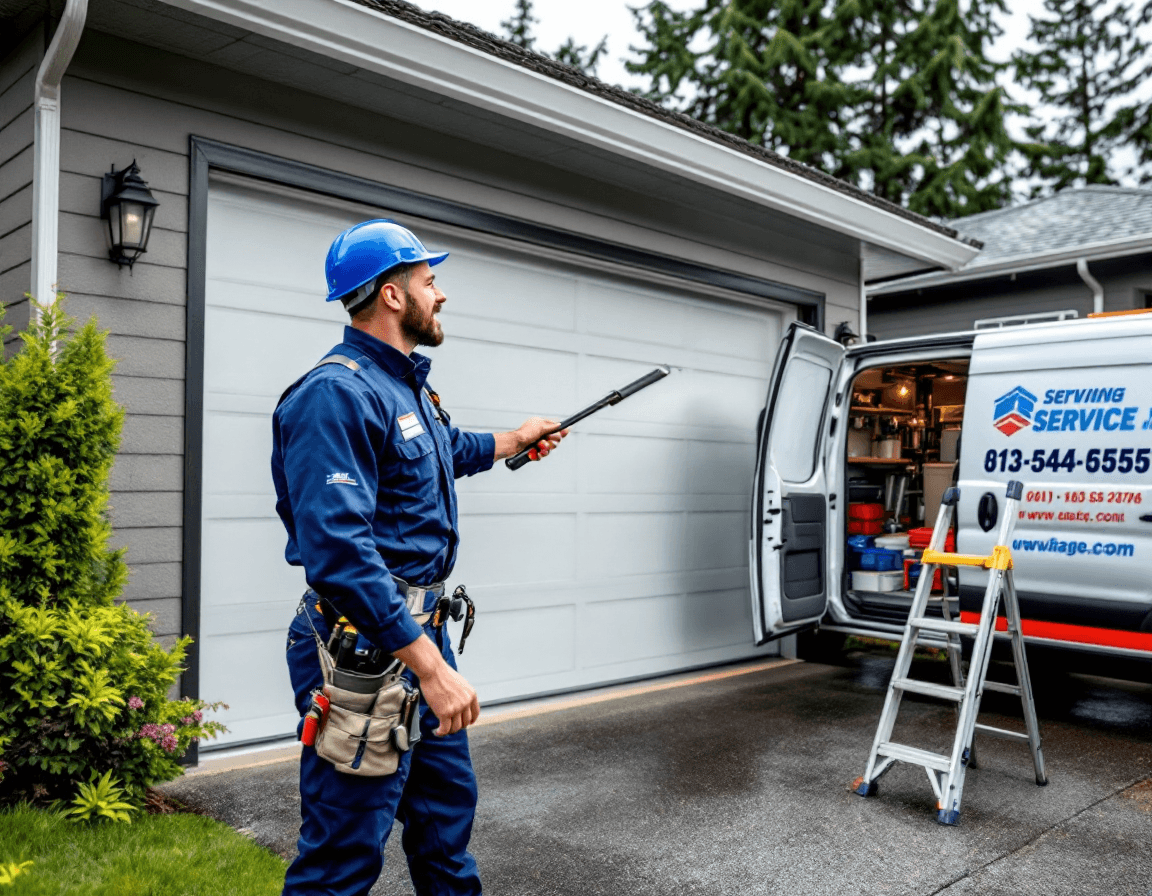
Garage Door Repair in Bainbridge Island, WA is one of the most common calls we take from homeowners who need a door back in working order without a long wait. A garage door that won't open, closes unevenly, or makes a sudden racket can disrupt the whole household, especially when the car is inside and the morning commute is already tight. Our team serves Winslow, Lynwood Center, Rolling Bay, and the residential neighborhoods spread across the island, and we know that the door problems we see here often have a local flavor. Damp winters, salt air, and older construction all leave their marks on hardware and openers.
Bainbridge Island's weather rarely gives a garage door a break. Long stretches of drizzle, cool humidity from October through May, and the occasional windy storm off Puget Sound all work on metal tracks, rollers, and weatherstripping. Many island homes were built with attached or detached garages that have been modified over the years, so a door that worked fine a decade ago may now be fighting a slightly different alignment. Understanding how these conditions affect your door is the first step toward a repair that lasts instead of a quick fix that brings the problem back by the next rain.
This page walks through the symptoms we hear about most often on the island, explains what they usually mean, and outlines what a typical repair involves. You will also find a realistic sense of pricing, with most residential repairs falling between $95 and $450 depending on the parts and labor required. We also explain where the line sits between a task a careful homeowner can check safely and the work that belongs to a licensed professional. Read through the sections that match your symptoms, and call us if you would rather have someone look at the door in person.
Why Island Garage Doors Wear Differently
Most garage doors on Bainbridge Island face a combination of moisture and temperature swings that inland homes often avoid. Coastal humidity seeps into the wood framing around the door, swells the jamb, and can shift the header just enough to throw off the track alignment. Metal components, especially steel hinges, roller bearings, and bolts, begin to oxidize faster when salt-laden air settles on them through the winter. Over a few seasons, that corrosion makes rollers stick, hinges bind, and the door travel slow and uneven.
Older homes near Winslow and some of the established neighborhoods around Lynwood Center often have garages with settled foundations or slightly out-of-square openings. A door that was installed correctly decades ago can drift out of level as the structure moves with the soil and seasons. Hillside driveways, which are common on parts of the island, can also put uneven stress on the door and its tracks when the garage floor is not perfectly flat. None of this means your door is doomed, but it does mean that a periodic inspection tailored to coastal conditions pays off.
When we inspect a door on the island, we look at the whole system rather than a single component. We check whether the tracks are plumb and parallel, whether the rollers are seated and rolling freely, and whether the hinges and brackets show early rust or loose fasteners. We also evaluate the opener's force and limit settings, because a door that works fine in dry weather can behave differently once the wood and metal shift with humidity. Catching these issues early usually keeps a repair in the simpler price range.
When the Door Reverses Before Reaching the Floor
A door that starts down, then lifts back up before it touches the ground is one of the most frustrating symptoms we see. In most cases, the opener is doing exactly what it was designed to do: it senses an obstruction or a force problem and reverses for safety. The most common triggers on the island are a misaligned photo-eye sensor pair, a bent sensor bracket after a bumped car or a stray bicycle, or debris such as leaves, cobwebs, or moss on the sensor lenses. Wet winter weather can also knock sensors slightly out of alignment when the mounting brackets loosen.
Start by looking at the two small sensor units mounted near the floor on either side of the door. The lenses should be clean, and the indicator lights should be steady rather than blinking. If one light is off or flashing, the sensors are not communicating, and gently adjusting the bracket until both lights remain solid often fixes the problem. Wiping the lenses with a dry cloth is safe and free, and it helps more often than people expect after a damp week.
If the sensors look fine but the door still reverses, the force settings on the opener may be too tight for the door's current weight and balance. Adjusting force is a delicate task, and an incorrect setting can create a real safety hazard, so we recommend having a technician confirm the limits. A door that has become heavier or harder to lift due to worn rollers or a weakened spring will often reverse because the opener is working harder than its settings allow. A proper diagnosis will show whether the fix is a sensor adjustment, a force recalibration, or a mechanical repair.
Grinding, Squealing, and Banging Noises
Noise is the symptom that often sends homeowners searching for help late at night, and the sound itself offers useful clues. A high-pitched squeal usually points to dry or corroded rollers, hinges, or a bearing that needs lubrication and possibly replacement. A grinding noise that comes from the opener or the trolley typically means worn gears or a stripped drive component, while a sharp bang at the top or bottom of travel often signals loose brackets, a worn cable drum, or a limit setting that lets the door slam into its stops. Each of these sounds has a different cause, so listening carefully helps narrow down the repair.
Rollers deserve special attention on Bainbridge Island because moisture and salt air can dry out their factory lubrication or cause the steel races to pit. Nylon rollers are common on newer doors, and they can crack or flatten over time, creating a rumble as they roll along the track. Lubricating tracks and hinges with the correct product is a reasonable maintenance task for most homeowners, but we recommend avoiding heavy grease on tracks since it attracts grit. A light silicone or lithium-based lubricant applied to the rollers and hinge pivots is usually the safer choice.
Banging at the top or bottom of the door often traces back to the opener's travel limits or to loose hardware that has worked itself free over time. Tightening bolts on the track brackets, the bottom bracket, and the header plate can eliminate a surprising amount of noise. If the banging continues after tightening, the door may be hitting its stops too hard, or a component may be fatigued. A technician can check these parts quickly, and most of these repairs stay within the lower end of our pricing range.
- Squealing from the rollers or hinges usually means lubrication or worn roller replacement.
- Grinding from the opener often points to gear or trolley wear that should be inspected soon.
- Sharp banging at the limits suggests travel settings or loose brackets rather than a failed opener.
- Rattling along the full length of the track can signal loose track bolts or a track that has shifted.
Door Stuck Halfway or Jammed in the Track
A door that stops partway up or down and refuses to move can be alarming, especially if it happens with the car parked underneath. Often the cause is a stuck roller that has popped out of its track, a bent track section that is pinching the rollers, or an obstruction such as a loose piece of trim, a bike hook, or a shelf bracket that has moved into the door's path. Oddly enough, cold snaps can also play a role, since metal contracts and the lubrication thickens, making a previously smooth door stiffer than usual.
The safest first step is to stop trying to force the door. Make sure no one is in the path of the door, disconnect the opener by pulling the emergency release cord if your model has one, and check the tracks visually. Look for a roller that has jumped out of the track, a track section that is visibly bent or kinked, or a gap where the track has pulled away from the wall. If you see any of these conditions, it is best to leave the door in place and call a technician rather than attempting to pry the rollers back into place yourself.
Jammed doors are also a sign that the balance system may be under strain. When a spring or cable has weakened, the door can become unbalanced and jam because one side is lifting faster than the other. Spring and cable work is one of the most dangerous tasks in garage door repair because the components carry extreme tension, and we strongly advise against attempting it without professional training and equipment. A licensed technician can safely assess the spring, cable, and track alignment and recommend the correct repair.
Door Moves Unevenly or Looks Crooked
A door that rises at an angle, lifts faster on one side, or sits visibly out of level tends to leave homeowners uneasy. Uneven movement usually points to a cable that has slipped off its drum, a broken or stretched cable, a torsion spring that has lost balance, or a track that has shifted out of plumb. On the island, shifting frames and seasonal moisture can gradually throw off track alignment, so a door that was perfect at installation may show uneven travel a few years later. Ignoring the problem tends to put extra stress on the opener and the other side of the door.
Look at the bottom edge of the door when it is closed. Measure the gap between the bottom seal and the floor at both ends, and note whether one side sits noticeably lower. Then open the door slowly and watch whether one side climbs faster, or whether the top panels lean. Keep a tape measure handy and take photos at different heights, since photos make it easier for a technician to see where the problem begins.
Do not attempt to adjust cables, drums, or springs yourself. These components store significant energy, and mistakes can cause severe injury. A licensed professional will check the cable routing, the drum condition, the spring balance, and the track alignment before recommending any repair. In many cases, the fix involves replacing a single cable, realigning a track bracket, or rebalancing the spring, which keeps the job within the typical pricing range we quote on the phone.
Remote and Wall Button Not Responding
When the remote or wall button does nothing, many homeowners assume the opener has failed. In practice, the cause is often much simpler. Remote batteries lose power over time, and a dead battery is the first thing to check. Wall buttons can fail when wiring connections loosen, when a button gets stuck after humid weather, or when the opener's power cord has been bumped out of its outlet. Some openers also have a lockout or learn mode that can be triggered accidentally, which makes the remote appear dead when it is simply disabled.
Work through the basics before calling for service. Replace the remote battery, check that the opener is plugged in and that the outlet has power, and confirm that the wall button is not stuck in its housing. Look at the opener's light indicator, since a blinking or missing light can indicate a fault code or a power problem. If your opener has a wireless keypad, check whether it has been locked or reset. These quick checks solve a surprising share of calls before a technician ever leaves the shop.
If the remote and wall button still fail after these checks, the problem may be the receiver board, the wiring between the wall station and the opener, or the safety sensors that prevent operation when they detect a fault. Island homes that have been rewired or remodeled over the years sometimes have wiring routed in ways that make troubleshooting harder. A technician can test the circuit, confirm the receiver is functioning, and replace any worn components. Keeping the opener's manual nearby helps, since it lists the fault codes and indicator patterns for your specific model.
Door Slams Shut Too Fast
A garage door that drops quickly or slams at the end of its travel is more than an annoyance. It can damage the floor, the bottom seal, the tracks, and the opener, and it creates a real pinch risk for hands and fingers. Fast closing usually traces to a spring that has lost tension, a worn or misadjusted close limit on the opener, or a damaged cable that is letting the door drop unevenly. Damp weather can also make rollers and hinges stick briefly and then release suddenly, which contributes to the slam effect.
The door's natural weight and balance are supposed to keep it under control, so a door that drops hard usually means the balance has changed. Spring tension is not a homeowner adjustment, and we do not recommend attempting it. A licensed technician can measure the spring, check the cable, and confirm whether the door is properly balanced. They can also adjust the opener's close limit and force settings so the door closes smoothly without reversing unnecessarily.
Ask a technician to check the bottom seal as well. A worn or cracked seal may not be the source of the slam, but it can make the door appear to hit the floor harder. Replacing a bottom seal is typically a straightforward repair and helps keep out drafts, moisture, and pests during the wet season. Combining seal replacement with a balance check and limit adjustment usually gives the best result for a door that closes too aggressively.
Salt Air, Moisture, and Hardware Maintenance
Maintaining a garage door on Bainbridge Island means accounting for the effects of coastal air. Salt, moisture, and temperature cycles accelerate corrosion on springs, brackets, hinges, and fasteners, and they can attack bolts that look fine from a distance. Stainless or galvanized hardware is more resistant, and when replacing components on the island, we often recommend upgrading to corrosion-resistant parts where appropriate. Keeping the door's exposed metal clean and dry during the rainy months also extends its life.
A simple seasonal routine helps. Once or twice a year, wipe down tracks, hinges, and rollers with a clean cloth to remove grit and salt residue, then apply a light lubricant designed for garage door components. Check bolts on brackets and track supports and tighten any that have loosened. Look for orange or brown spots on steel parts, since these indicate rust that may need treatment or replacement before it weakens the component. Inspect the weatherstripping along the sides and top of the door for cracks, since failing seals let wind-driven rain and moisture reach the hardware.
Moisture can also affect the wood framing and the door panels themselves, particularly on older wooden doors. Swelling and warping can change how the door fits into the opening and can make the tracks feel tighter at certain times of year. Painting or sealing wood doors and keeping the garage well ventilated helps reduce these effects. A technician can evaluate whether the door's frame has shifted and recommend adjustments that keep the door running smoothly through the wet season.
Scheduling a Visit on the Island
Bainbridge Island's location means that service timing can depend on travel and on the rhythms of island life. Many homeowners find it helpful to describe the symptoms clearly when they call, including whether the door is stuck open or closed, whether the car is inside, and whether any noise or movement is ongoing. This information helps our dispatch team decide how quickly a technician can respond and what tools to bring. If the door is stuck open and the house is exposed, mention that as well so we can prioritize the call.
Plan for a short inspection window when possible. Having a clear path to the garage, moving vehicles and stored items away from the door, and keeping pets and children out of the work area all help the technician work efficiently. If you have the opener's model number or the manufacturer's name handy, share it during the call, since parts availability and compatibility differ between brands. Photos of the door, the opener, and any damaged components can also speed up the diagnosis.
We understand that many island households work from home or juggle school runs, so we aim to keep visits practical and respectful of your schedule. Ask about the estimated arrival window when you book, and confirm the work you have approved before the technician starts. A clear plan, with the cause of the problem explained in plain language, makes it easier to decide whether to repair or replace components.
What Repairs Typically Cost on Bainbridge Island
Most residential garage door repairs we perform on the island fall between $95 and $450, depending on the parts, labor, and complexity of the job. Simple tasks such as sensor realignment, limit adjustments, remote programming, or minor hardware tightening usually sit at the lower end of that range. Roller replacement, cable repair, seal replacement, and track realignment typically fall in the middle, while larger jobs involving multiple components or opener replacement may approach the upper end. Every door is different, so the final price depends on what the technician finds once the door is inspected.
Several factors shape the cost. The door's size and weight matter, as do the age and condition of the springs, cables, and tracks. The make and model of the opener influence part availability, and some specialized components cost more than standard ones. Corrosion can add time, since rusted bolts or brackets sometimes need careful removal or replacement. Clear communication before work begins helps avoid surprises, so we recommend asking for a written explanation of the repair and the expected cost before approving anything beyond the initial diagnosis.
It is also worth thinking about repair versus replacement. A door with a single failed sensor or a worn roller set is usually a good candidate for repair. A door with severe rust, multiple damaged panels, or a failing spring system may be more economical to replace, though that decision depends on the door's condition and your long-term plans for the home. A technician can explain the tradeoffs honestly and help you decide without pressure.
Safety Limits: Springs and Cables Belong to Licensed Pros
Garage door springs and cables are among the most hazardous components in any home. Torsion springs and extension springs store enormous amounts of energy, and a sudden release can cause serious injury even when the door appears to be stationary. Cables under tension can snap, and drums can unwind unexpectedly. For these reasons, we are firm in recommending that homeowners leave spring and cable work to licensed, trained professionals who have the proper tools and safety procedures.
There are still several safe steps homeowners can take. Keep the area around the door clear of people and objects, test the auto-reverse feature periodically by placing a flat board on the floor, and avoid standing in the door's path when it is moving. Never attempt to wind springs, remove tension from a spring, or disconnect cables while the door is under load. If you notice a broken spring, a frayed cable, or a door that drops suddenly, keep everyone away from the door and call a licensed technician promptly.
Our approach is to explain clearly what we find and what we recommend, and to make sure you understand the safety implications before work begins. We always prioritize the safe operation of the door, and we will not recommend a repair that puts you or your household at risk. If the door needs spring or cable work, we will explain the process, the expected cost within our typical range, and the steps we take to protect everyone in the home.
Garage door trouble on Bainbridge Island is easier to solve when you have a trusted local team ready to respond. If your door won't open or close, reverses before reaching the floor, makes grinding or banging noises, moves unevenly, sticks halfway, ignores the remote, slams shut, or sits visibly off its tracks, call Seattle Garage Door Fix at (888) 799-3819. We serve Winslow, Lynwood Center, Rolling Bay, and the surrounding island neighborhoods, and we will give you a clear diagnosis and a straightforward price before any work begins.