
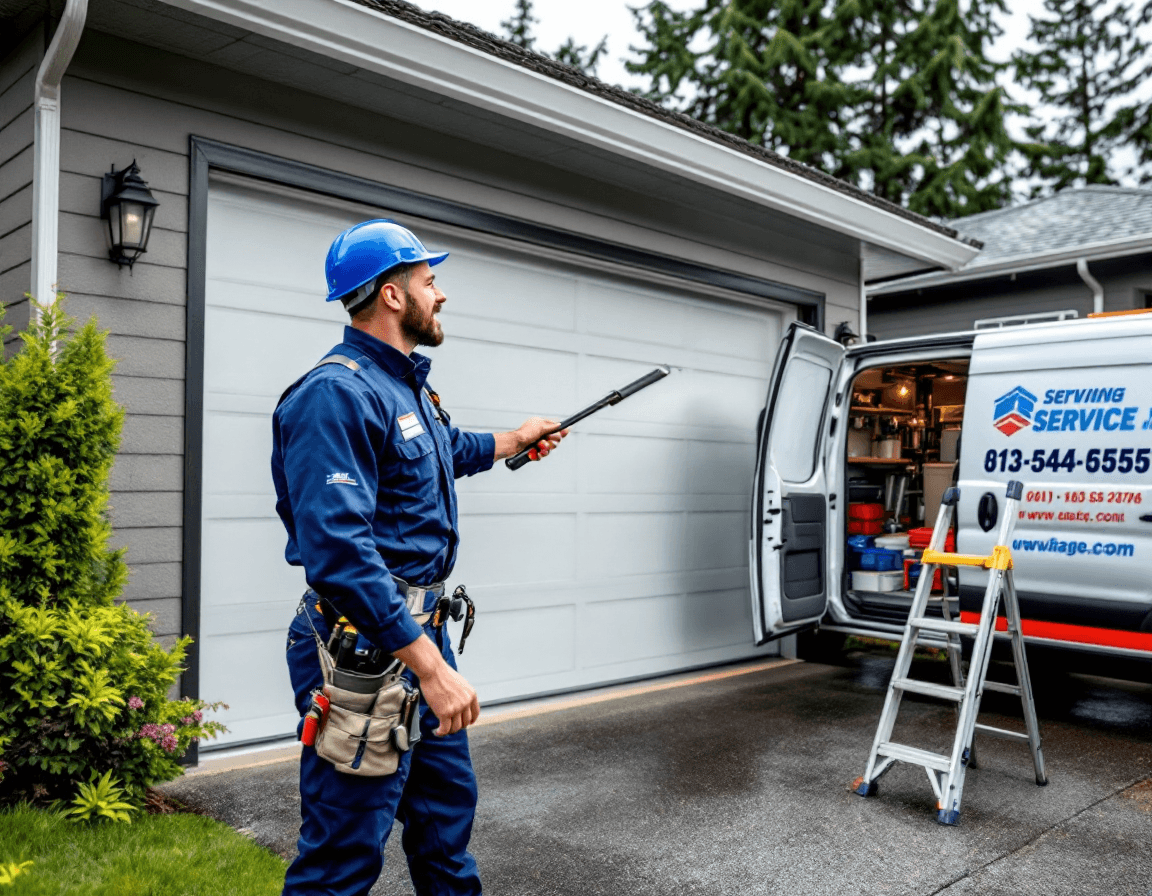
Garage Door Repair in Poulsbo, WA is a service most homeowners don't think about until the morning their door refuses to lift. Your garage door works harder than almost any other moving part on the house, cycling up and down daily while absorbing wind, rain, and temperature swings that change with the seasons. On the Kitsap Peninsula those conditions are especially persistent, so a door that has run quietly for years can suddenly start grinding, sticking, or going silent. Seattle Garage Door Fix is a licensed, bonded, and insured company serving Poulsbo and the surrounding Kitsap County communities, and this page explains what tends to go wrong here and what you can reasonably check yourself.
Poulsbo sits on the shore of Liberty Bay, and that proximity shapes how a garage door ages. Salt-laden air drifts inland on onshore breezes, settling on steel tracks, hinges, and roller bearings, and where it lands without regular cleaning it encourages surface rust and corrosion. Combined with the damp, mild winters typical of Western Washington, moisture can work its way into the mechanisms that are supposed to glide smoothly. Many of the calls we hear from homes near Downtown Poulsbo and the waterfront streets trace back to parts that spent years in a humid, weather-exposed environment. Understanding these local pressures makes it easier to catch early warning signs before a small squeak becomes a door that won't close at all.
Whether your problem is a dead remote or a door that has drifted partly off its tracks, the sensible first step is a careful, honest inspection. Some issues are simple adjustments or a sensor realignment that a technician can finish in one visit, while others involve components under high tension that should never be touched by an untrained homeowner. This page walks through the most common symptoms we see, explains the likely causes in plain language, and outlines what repairs typically cost, with most residential jobs falling between $95 and $450 depending on parts and labor. Read the sections that match your situation, and call (888) 799-3819 when you're ready for a professional look.
Why Poulsbo Garage Doors Struggle After Damp Seasons
Doors in our part of the Pacific Northwest tend to show their age in a predictable pattern. Autumn rain and winter humidity keep metal surfaces wet for long stretches, and once moisture sits on a track or hinge for weeks, the protective finish begins to break down. A door that opened smoothly in July may start catching in November, not because anything broke overnight but because friction has slowly increased across several components at once. Homeowners often assume the opener is failing when the real culprit is a set of dry, rusted, or grit-filled parts along the door's path.
The most frequent moisture-related issues we see around Poulsbo include the following:
- Surface rust on track sections, especially near the bottom bend where water collects
- Dried or hardened lubricant on rollers, hinges, and the center bearing
- Weatherstripping that has cracked or pulled loose, letting water and salt-laden air reach the bottom panel
- Loose hardware that shifts when metal expands and contracts through damp cold snaps
- Wood or composite panels that swell, adding weight and drag to every cycle
Catching these conditions early usually means a simpler and less expensive fix. A thorough cleaning, a proper lubricant, and replacement of worn rollers can restore a door that feels like it is fighting back every morning. Ignoring the same symptoms often leads to bent track sections or stressed springs, which turns a routine service into a larger repair.
When the Door Reverses Before It Reaches the Floor
A door that starts down, then immediately rises again, is doing exactly what it was designed to do. Modern residential openers are equipped with photo-eye sensors mounted near the floor on each side of the opening. These sensors project an invisible beam across the doorway, and if the beam is interrupted during closing, the opener reverses to protect people, pets, and vehicles. The system is an important safety feature, and it should never be disabled or bypassed.
Most reversing problems come down to the sensors rather than the door itself. Sun glare coming through a garage side window can confuse the receiver, and a spiderweb, a dusty lens, or a bumped bracket can break the alignment just enough to trigger a reversal. Look for a small indicator light on each sensor, often green when aligned and amber or red when something is wrong, and check whether the two lenses face each other squarely. Wiping the lenses with a soft dry cloth and gently nudging the brackets back into line resolves many cases in minutes.
If the sensors look clean and aligned but the door still reverses, the issue may be wiring damage from the humidity we experience or a closing force setting that has drifted out of range. Damaged wire runs near the ceiling or along the track can intermittently cut the signal, and that fault is easy to miss without a proper test. A licensed technician can check the sensor circuit, confirm the closing force limits, and determine whether the door's balance is causing the opener to read extra resistance. Repeated reversing should be treated as a clear signal to call for service rather than something to ignore.
Grinding, Squealing, and Banging: Reading the Noise
Sound is one of the best diagnostic tools a homeowner has. Each type of noise points toward a different component, and paying attention to when the sound happens can narrow the problem considerably. A door that squeals only in the morning is often reacting to cold, stiff lubricant, while a door that bangs at the top of its travel usually has loose or misaligned hardware. Describing the noise accurately to a technician helps them arrive prepared with the right parts and tools.
Common noises and their typical sources include:
- A high-pitched squeal during travel, usually from dry rollers or hinges that need lubrication
- A rough grinding sound, often pointing to worn bearings or debris caught in the track
- Sharp banging at the end of travel, commonly caused by loose track brackets or a worn stop
- A rattling or clunking when the door starts moving, which can mean loose hardware or a worn cable drum
- A deep groan from the opener itself, which may indicate the door is heavier than the opener was rated for or that the drive is under strain
Lubrication is a helpful first step, but it has limits. Spraying a generic penetrating oil onto the track may quiet a squeak for a few days, yet it often attracts dust and grit that make the grinding worse over time. Use a lubricant recommended for garage door components, apply it sparingly to the rollers, hinges, and bearings, and wipe away any excess. If the noise persists after cleaning and lubrication, the sound is telling you something about wear or alignment that a technician should inspect in person.
Crooked Doors and Tracks That Have Wandered
A garage door should rise and fall in a straight, level path. When one side lags behind the other, the door may appear tilted, bind against the tracks, or leave a visible gap at the top corner. This condition is often called an out-of-level door, and it can develop slowly after years of use, after a minor impact from a vehicle, or after a loose bracket allows a section of track to shift. Left alone, uneven travel places extra stress on rollers, cables, and the opener, and it can eventually cause a jam.
Homeowners can perform a simple check by closing the door and looking at the gap between the bottom seal and the floor from both sides. If one end sits noticeably lower, or if the top section of the door sits higher on one side, the track alignment or the cable tension may be off. Do not attempt to force the track into position or hammer on it while the door is under load. Track adjustments involve tension and weight that can cause sudden movement, and a shifting door can injure hands and fingers quickly.
Tracks that have pulled away from the wall or come partly out of their channels are a more serious situation. This condition often involves damaged rollers, bent track sections, or a cable that has slipped from its drum, and it should be handled by a licensed technician with the right equipment. Poulsbo homes built with older framing or with wall materials that have shifted over time may need custom bracket solutions, which is another reason a professional assessment matters before any reinstallation.
Remote Silent? Work Through the Simple Checks First
A remote or wall button that suddenly does nothing is frustrating, but the cause is frequently something easy to check. Before calling for service, rule out the basics. Start with the remote itself, since its battery is the most common point of failure. Many people overlook the possibility that the wall button wire has come loose, that a breaker has tripped, or that the opener has lost power, so it is worth walking through each possibility in order.
A practical checklist for a silent system includes these steps:
- Replace the battery in the remote and try a different button to confirm it is not a single failed key
- Check whether the opener's indicator light is on and whether the outlet or breaker feeding the opener is working
- Look at the wall button for signs of damage, moisture, or loose wiring, and test it with the cover removed only if you are comfortable doing so safely
- Confirm that the opener's learn button and any recent programming changes have not cleared the remote code
- Test the outdoor keypad, if you have one, since moisture can corrode its contacts over time
If the remote and wall button both fail to respond and the opener shows no light, the problem may be the power supply, the logic board, or the internal motor control. Those components are not something to troubleshoot with the cover off while the power is connected. Our technicians can diagnose the failure quickly, replace the faulty part, and reprogram the system so the remote and keypad work reliably again.
Doors That Slam Down or Stop Halfway
Two of the most unsettling garage door behaviors are a door that drops with a heavy thud and a door that stops partway through its travel and refuses to move. Both symptoms indicate that the balance between the door's weight and its counterbalance system has been disrupted, or that something in the drive or track is obstructing movement. The door is not designed to fall freely, so a sudden drop means the lifting system has lost its ability to control descent.
A door that slams shut may have a closing force setting that is too aggressive, a worn drive belt or chain, or a counterbalance component that has lost tension. Adjusting the opener's limit and force settings is sometimes within a homeowner's reach, but these settings must remain within safe ranges and should be reviewed by a technician if the door continues to behave erratically. A door that stops halfway often has a jam caused by debris in the track, a bent section, or a roller that has come out of its channel. Stop using the door when this happens, keep people and pets clear, and avoid pulling on the door by hand.
In either case, the safest response is to stop operating the door and schedule service. A hanging or unbalanced door is a hazard, and attempting to force it open or closed can make the situation worse. Our technicians arrive with the tools and experience to determine whether the fault lies in the opener, the track, the rollers, or the balance system, and they will explain each finding before making any repair.
Springs and Cables Belong in Licensed Hands
Every garage door in our area relies on a counterbalance system, usually torsion springs mounted on a shaft above the opening or extension springs running along the track. These springs store a large amount of energy, and they hold that energy even when the door appears to be at rest. Lift cables wind around drums at either end of the shaft and carry the door's weight during operation. When a spring breaks or a cable frays, the stored force can release suddenly and with real danger to anyone nearby.
For that reason, spring and cable work should never be attempted by a homeowner, no matter how handy they are. Even experienced DIYers can be seriously injured by a torsion spring under tension, and mistakes during winding or removal are a common cause of injuries. Seattle Garage Door Fix recommends that any spring or cable replacement be performed by a licensed, insured technician who has the correct winding bars, safety equipment, and training. If you see a gap in a spring, a cable hanging loose, or a door that has suddenly become much heavier, keep the door closed and call for service.
Homeowners should also understand the emergency release cord that hangs from the opener's trolley. Pulling this cord disconnects the door from the opener so it can be operated manually. It is useful when the power is out, but it can also cause a door to drop suddenly if the springs are weak or broken. Use it only when necessary, keep the door closed when possible, and have a professional inspect the springs before the door is used again.
What a Typical Repair Visit Looks Like Around Poulsbo
A good repair visit begins with a clear conversation about the symptoms you have noticed. A technician will ask when the problem started, whether it happens every time or only in certain conditions, and whether any recent changes or impacts occurred near the door. From there, the inspection covers the opener, sensors, tracks, rollers, hinges, cables, springs, and the door panels themselves. Many issues can be identified in a single pass, which helps keep the process efficient for busy households.
Once the inspection is complete, the technician explains the findings and provides a quote before any work begins. Most residential repairs we perform fall between $95 and $450, depending on the parts required and the amount of labor involved. Simple tasks such as sensor realignment, lubrication, or a replacement remote may sit at the lower end of that range, while roller replacement, opener repairs, or track work typically fall in the middle. Larger jobs that involve more complex components will be quoted separately after the technician confirms the scope. Your quote should always reflect the actual condition of your door rather than a one-size-fits-all estimate.
Homeowners in Poulsbo often appreciate a straightforward explanation of options. Sometimes a repair is clearly the right choice, while in other cases the cost of a major component on an older door may suggest a discussion about longer-term value. Our goal is to present the facts clearly so you can decide what makes sense for your home, your budget, and your timeline. We believe a repair visit should leave you informed, not pressured.
Keeping the Door Dependable Through Kitsap Seasons
Routine care is the most effective way to prevent the problems described throughout this page. A few minutes of attention each month can extend the life of rollers, hinges, and bearings, and it helps catch small issues before they become expensive. Because of Poulsbo's damp winters and salty breezes, a seasonal routine is especially worthwhile. Plan a quick review each spring and fall, and pay attention to any changes in how the door sounds or moves.
A simple maintenance routine might include the following steps:
- Wipe down tracks and remove grit, leaves, and salt residue with a dry cloth
- Apply a garage-door-appropriate lubricant to rollers, hinges, and the center bearing, not to the tracks themselves
- Inspect weatherstripping and the bottom seal for cracks or gaps, and replace them when they fail
- Check that hardware such as bolts, brackets, and bearing plates is snug without overtightening
- Test the auto-reverse function by placing a flat object on the floor in the door's path and confirming the door reverses
- Look for visible wear on cables and springs from a safe distance, and schedule service if anything appears frayed or gapped
Keeping the garage door in good condition protects more than convenience. A reliable door helps keep your home secure, reduces strain on the opener, and maintains the appearance of your property along Poulsbo's residential streets. If you notice any of the symptoms described here, or if your door simply does not feel right, a professional inspection is a smart investment.
If your Poulsbo garage door won't open, won't close, reverses early, makes grinding or banging noises, sits crooked, or has gone off track, Seattle Garage Door Fix is ready to help. Our licensed, bonded, and insured technicians provide fast, reliable residential repair across Poulsbo and the surrounding Kitsap County area, with most repairs falling between $95 and $450 depending on the work needed. Please do not attempt spring or cable repairs yourself, and avoid forcing a jammed door. Call (888) 799-3819 today to schedule your inspection and get your garage door moving smoothly again.