
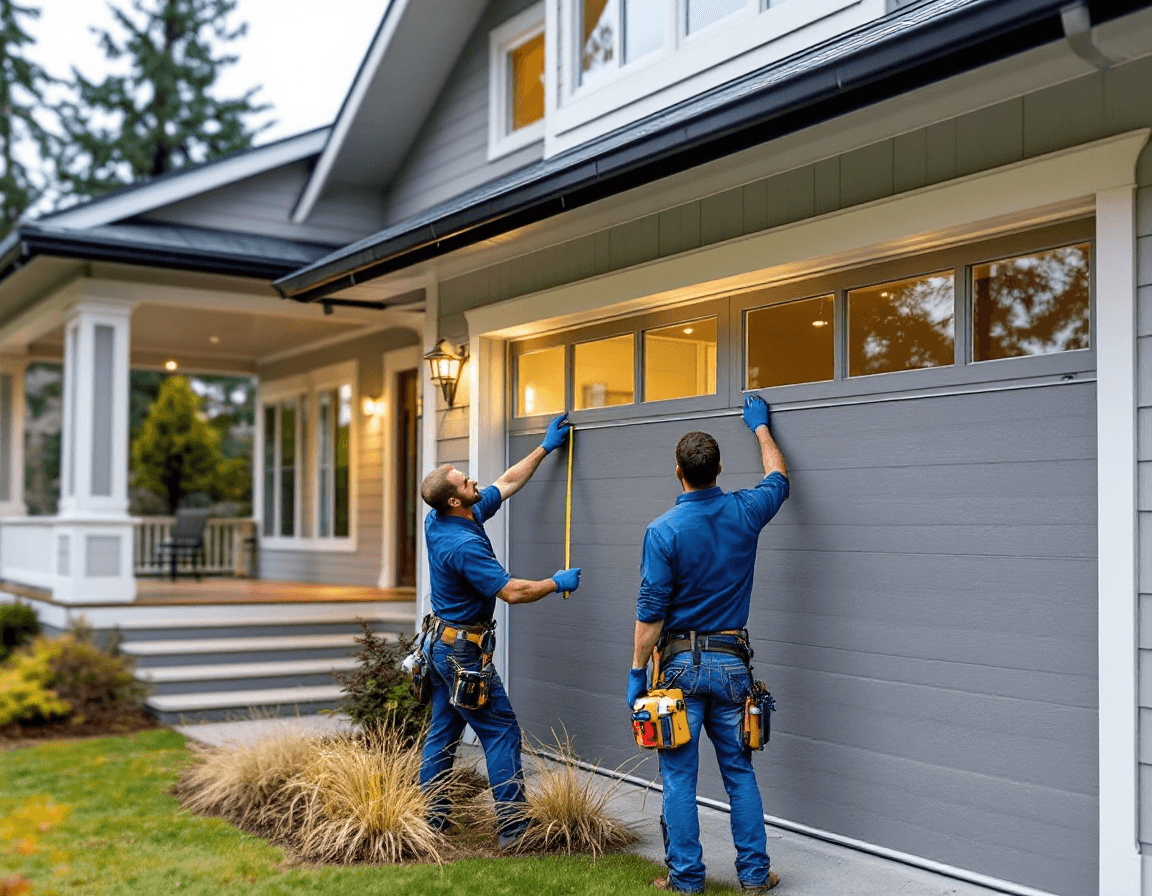
Garage Door Installation & Replacement in Bremerton, WA is a decision most homeowners make only once or twice in their lives, and it shapes how the house looks, how warm the garage stays, and how safely the family gets in and out every day. Bremerton sits on the western shore of Sinclair Inlet across from the Puget Sound, and its housing stock runs from mid-century ranch homes in older neighborhoods to newer subdivisions with wider two-car garages. Those differences matter when you choose a door, because a door that suits a 1960s carport conversion may be the wrong fit for a 2010s build with a bonus room over the bay. This page explains how we approach replacement work for Bremerton homeowners, what drives the cost, and how to tell whether your existing door should be repaired or replaced.
Seattle Garage Door Fix is a licensed, bonded, and insured garage door company serving more than 60 cities across the greater Seattle and Western Washington area, and our Bremerton and Kitsap County crews work with the same standards we apply everywhere else. Installed prices for new single and double garage doors typically run from about $950 to $3,800 and up, depending on the door style, materials, insulation, hardware, and the condition of the opening. We will walk you through those options in plain language, and we will tell you when a repair is the smarter spend. If you are weighing a replacement right now, call (888) 799-3819 and describe what the door is doing today.
When a Door Has Crossed the Line From Fixable to Finished
Not every noisy or sluggish door needs replacing, and a good technician should be willing to say so. A worn roller, a frayed cable, or a misaligned track can often be corrected for a modest amount, and the door keeps its useful life. The situation changes when the door panels themselves are compromised, when the frame has rotted out around the tracks, or when every repair you pay for seems to expose another failing component. At that point you are no longer maintaining a door; you are paying to keep an aging assembly alive.
Several signs in Bremerton homes point toward replacement. Steel panels that have dented in more than one place may no longer hold their shape under spring tension, and a bent section can bind the track every time it cycles. Wood doors that have soaked up winter rain may warp, split along the stile, or develop soft spots at the bottom rail that no amount of sealing will reverse. When repeated breakdowns cluster within a single season, the cumulative cost of parts and service calls often approaches the price of a new door that comes with a fresh warranty and modern hardware.
Storm damage deserves its own assessment. Windstorms that roll across the Kitsap Peninsula can push debris into a door, bend the bottom section, or pull a panel out of its channel. If a panel is cracked, bowed beyond its channel, or its insulation core is exposed to moisture, replacement is usually the honest answer. We document the damage carefully so that homeowners understand exactly what was affected and why the repair math has changed.
Salt Air, Wet Winters, and What Rust Looks Like Near Sinclair Inlet
Bremerton's coastal position creates a particular set of challenges for garage doors. Homes in East Bremerton and near the waterfront experience salt-laden air that settles on exposed metal, and the constant moisture of Pacific Northwest winters keeps surfaces damp for long stretches. Galvanized steel and painted finishes resist these conditions better than bare metal, but no coating lasts forever, especially on a door that faces south or west and takes the brunt of driving rain.
Rust on a steel door usually starts in predictable places: along the bottom edge where water pools, at the seams between panels, around hinge and roller brackets, and where the paint has chipped from a previous impact. Surface rust can be sanded and treated, but once corrosion travels into the panel core or begins to eat through the back skin, the door loses structural integrity. Rust near the bottom bracket also tends to seize the rollers, which strains the opener and shortens its life.
Aluminum doors handle salt air well because the metal forms a protective oxide layer, but the finish and the hardware still need attention. Stainless or coated fasteners hold up better than plain steel screws, and we recommend them for coastal installations. Wood doors are the most vulnerable of all in this climate. They need consistent sealing and good drainage at the threshold, and many homeowners who choose wood do so with the understanding that they will commit to regular maintenance. Glass-inset doors add their own concern, since the seals around the glass can fail and let moisture collect between panes if the door is exposed to heavy rain without adequate overhang protection.
Insulated Steel Versus Wood, Glass, and Aluminum: Matching the Material to the Microclimate
Choosing a material is really a question about how you use the garage and how much maintenance you are willing to do. Insulated steel is the most common choice for Bremerton homeowners who want energy efficiency, durability, and predictable performance. A typical insulated steel door has a polyurethane or polystyrene core sandwiched between two steel skins, and the core is what drives thermal performance. Steel doors also come in a wide range of textures and colors, and modern finishes can mimic wood grain without the upkeep.
Wood doors remain popular for their character, especially on homes with cedar siding or craftsman detailing. They can be beautiful and custom, but in our climate they require a stronger commitment to finish care and a careful eye on the bottom seal. Many owners choose a composite or engineered wood product that handles moisture better than solid timber. If you love the look of wood, ask us about materials specifically rated for wet conditions before you commit.
Aluminum and glass doors suit modern homes and contemporary remodels. Aluminum frames are lightweight and resist corrosion, which makes them practical near the water, although they usually provide less insulation than insulated steel unless you specify thermal-break construction. Full-view glass panels admit abundant daylight into the garage, which is pleasant for a workshop or a home gym, but glass lets heat escape faster in winter and adds sun load in summer. We usually recommend a frosted or tinted glass option and a thermally efficient frame if you want glass in a Kitsap County home.
Carriage-Style Doors and the Look Your Street Is Asking For
Carriage-style doors have become one of the most requested designs in Western Washington, and for good reason. They imitate the swing-out barn doors of an earlier era, with horizontal grooves, decorative hardware, and window grids that give a garage the appearance of a converted carriage house. On a Bremerton street lined with craftsman bungalows or farmhouse-style two-stories, a carriage-style door can transform the front elevation more than almost any other exterior update.
Carriage-style designs are available in insulated steel, composite, and wood, and the choice affects both the look and the long-term care. A steel carriage door with a woodgrain finish gives you the visual warmth of timber with the thermal and moisture performance of insulated metal. Faux hinges and handles add the traditional appearance without changing how the door operates, since most are fixed decorative elements attached to a sectional door that rolls up on tracks. Homeowners sometimes assume carriage-style means a swing-out door, and that is not always true. Confirm the operating mechanism with us before you order so the door fits your driveway and your opening.
Color and window placement deserve attention too. Dark exterior colors absorb more sunlight, which can warm the panels and affect the seal in summer, while very light colors may show dirt and salt film more quickly near the water. Window grids and decorative hardware should be proportioned to the width of your door and the size of your house. A good installer will look at the surrounding trim and roofline and suggest a design that looks deliberate rather than tacked on.
Reading the Energy Label Without Getting Lost in Jargon
Energy efficiency is one of the most common reasons Bremerton homeowners replace a garage door. A garage that is attached to the living space, or that houses a heat pump, water heater, or freezer, can leak a surprising amount of warmth through an old single-pane or poorly sealed door. The numbers on a manufacturer's spec sheet can be confusing, so it helps to know what to look for and what the figures actually mean for your home.
The most useful figure is the R-value, which measures resistance to heat flow. Higher numbers indicate better insulation, and insulated steel doors are typically rated higher than uninsulated doors. Manufacturers test their products under standardized conditions, so use the figures to compare doors within the same category rather than expecting real-world performance to match the label exactly. Air leakage and weather sealing matter as much as the core rating, because a well-insulated door with a gap at the bottom will still lose heat.
Here is what we check when we evaluate efficiency for a Bremerton home:
- Whether the garage is attached to living space, and whether a shared wall or ceiling is already insulated
- The quality and condition of the bottom weather seal and the side and top seals
- Whether the door will be installed in a sealed, well-fitted opening, or whether the frame needs adjustment first
- The type of insulation core and its stated thermal rating
- Whether windows or glass panels are included, and how they are glazed and framed
Insulation is only one part of comfort. An insulated door also dampens noise, which many homeowners notice right away when a loud, rattling old door is replaced.
Remodels, Additions, and Adding a Second Bay in Older Bremerton Homes
Remodels create some of the most interesting installation projects we see in Bremerton. A homeowner might convert a detached garage into a family room, enclose a carport, extend a footprint to add a bedroom, or build a second bay for a boat, trailer, or workshop. Each of these changes affects the opening, the framing, and the clearance needed for the door, and it is worth bringing a garage door specialist into the planning process early.
Older homes in the neighborhoods around East Bremerton and Manette sometimes have openings that are out of square, framing that has settled over decades, or headers that were sized for a lighter door than would be used today. A new door may need a different track configuration, a heavier-duty spring system, or a modified header to carry the load safely. We measure the opening carefully and tell you whether the existing structure can accept a standard size or whether modifications are needed before the door arrives.
Adding a second bay raises questions about clearance, slope, and driveway layout. A double door needs enough wall space on each side and enough headroom for the tracks and the opener. Where the garage sits on a hill, which is common in parts of Bremerton, the slope of the driveway and the grade of the floor can affect how the door operates and how water drains at the threshold. Plan for these conditions early and you will avoid a costly change order later.
Sizing, Openings, and the Measurements We Take Before Ordering
An accurate measurement is the foundation of a successful installation. A door that is an inch too wide will not fit, and a door that is an inch too short will leave a gap that lets rain and cold air in. We measure the width and height of the opening at several points, check for square, and note the available headroom, sideroom, and backroom needed for the tracks. We also confirm whether the existing opener will work with the new door or needs to be replaced as part of the project.
Measurements should be taken at the framed opening, not at the old door, because the old door may have been installed with gaps or shims that hide the true dimensions. Before you order, it helps to gather a few basic details so that we can plan the work accurately. Having these on hand speeds up the estimate and reduces the chance of a surprise on installation day.
- The width and height of the rough opening, measured at the top, middle, and bottom
- The distance from the top of the opening to the ceiling, which determines headroom
- The space on each side of the opening, which determines sideroom
- The depth of the garage from the door to the back wall, which determines backroom
- The make and model of your existing opener, if you plan to keep it
- Any slope in the driveway or floor that could affect the door's operation
What a Typical Installation Day Looks Like in Manette and East Bremerton
Installation day for a new garage door is more involved than many homeowners expect, and it is best to set realistic expectations. Our crew arrives with the door, tracks, hardware, and tools, and we begin by protecting the driveway and the garage floor. The old door is removed carefully, and the opening is inspected for rot, damage, or framing issues that need attention before the new door goes in. In older Manette homes we sometimes find wood framing that has softened from years of moisture, and we discuss repair options with the homeowner before continuing.
Once the opening is ready, the tracks are mounted and leveled, the door sections are assembled and hung, and the springs are installed and tensioned. Springs are the most hazardous part of the job because they store a large amount of energy, and they must be handled only by trained professionals with the proper tools. After the springs are set, we install the opener if applicable, adjust the travel limits, test the safety reversal system, and confirm that the door balances properly. Weather seals and trim are finished last.
Most single-door replacements can be completed in a single day, while double doors, custom carriage designs, or openings requiring framing work may take longer. We walk the homeowner through the operation of the door, the safety features, and the basic maintenance steps before we leave. Expect to keep vehicles and children clear of the work area and to plan for the garage to be unusable while the door is being fitted.
Spring Tension, Cables, and Why Installation Belongs to Licensed Hands
We want to be direct about one point: garage door springs and cables should be installed, adjusted, and replaced only by licensed, trained professionals. Torsion springs and extension springs are under very high tension, and a mistake during winding or removal can cause serious injury. Cables carry loads that can snap or recoil with force. Homeowners who attempt these tasks with improvised tools or without training take risks that are not worth the savings.
Replacement doors usually come with new springs sized for the door's weight and dimensions, and the spring system is one of the most important parts of the installation. A spring that is undersized will strain the opener and cause the door to slam down, while an oversized spring can make the door hard to lift and wear out components faster. Our technicians balance the door after installation so that it stays put when released halfway and moves smoothly under the opener.
If you ever notice a broken spring, a frayed cable, or a door that drops suddenly, keep everyone away from the door and avoid trying to fix it yourself. Disconnect the opener if it is safe to do so, and call a licensed professional. We would much rather hear from a worried homeowner early than have the problem escalate into an injury or a damaged door.
Budgeting Between $950 and $3,800-Plus Without Surprises
Installed prices for new garage doors in our service area typically range from about $950 for a basic single door to $3,800 or more for a premium double door with insulated carriage styling, glass, or specialty hardware. Several factors drive where a project falls within that range. Door size and material are the largest variables, followed by insulation rating, window configuration, finish, and hardware quality. The condition of the opening, any framing work, and whether a new opener is included also affect the total.
A few common cost drivers are worth understanding before you request an estimate. Wider openings need heavier doors and larger springs, which increases material cost. Custom or non-standard sizes may take longer to manufacture. Carriage-style hardware, decorative windows, and specialty colors add to the price but also change the look dramatically. Opener replacement is a separate line item, and a smart opener with battery backup and remote monitoring costs more than a basic model. Removal and disposal of the old door are typically included, but confirm this in your estimate.
We believe the best budget decision is the one you understand fully. Ask for a written estimate that breaks out the door, the installation labor, any framing or trim work, the opener if needed, and removal. If a number seems too low, ask what is excluded. If a number seems high, ask which options are driving it so you can make an informed choice about where to spend and where to save.
Warranties, Permits, and Keeping Your New Door Working in Kitsap Weather
A new door comes with two kinds of coverage: the manufacturer's warranty on the door itself and the installer's workmanship warranty on the labor. Manufacturer warranties vary widely by material, finish, and component, so read the terms carefully and note what is covered, for how long, and what voids the warranty. Coastal exposure and improper maintenance are common reasons claims are denied, so the care instructions matter as much as the paperwork.
Depending on the scope of your project, your city or county may require a permit, especially if the work involves structural changes, enlarging an opening, or converting part of a building. We confirm permit requirements for your specific address before work begins and tell you clearly whether any approvals are needed. Homeowners associations and historic district guidelines may also affect color, style, and window placement, so check those requirements early if they apply to your property.
Keeping a new door working well in the Kitsap climate is mostly a matter of consistent, simple care. Rinse the exterior periodically to remove salt film, especially after winter storms. Check the weather seals each season and replace them when they flatten or crack. Lubricate rollers and hinges with a silicone-based product rather than heavy grease, which attracts grit. Watch for early signs of trouble such as uneven movement, new noises, or light showing around the edges, and call a professional before small issues become large ones.
---
Whether your garage door is beyond repair, costing too much to keep patching, showing rust from the salt air, or simply needs a modern look and better insulation for a remodel, our Bremerton team is ready to help you compare materials, measure your opening, and plan a clean installation. Call Seattle Garage Door Fix at (888) 799-3819 for a straightforward estimate and honest advice about whether replacement is the right move for your home.