
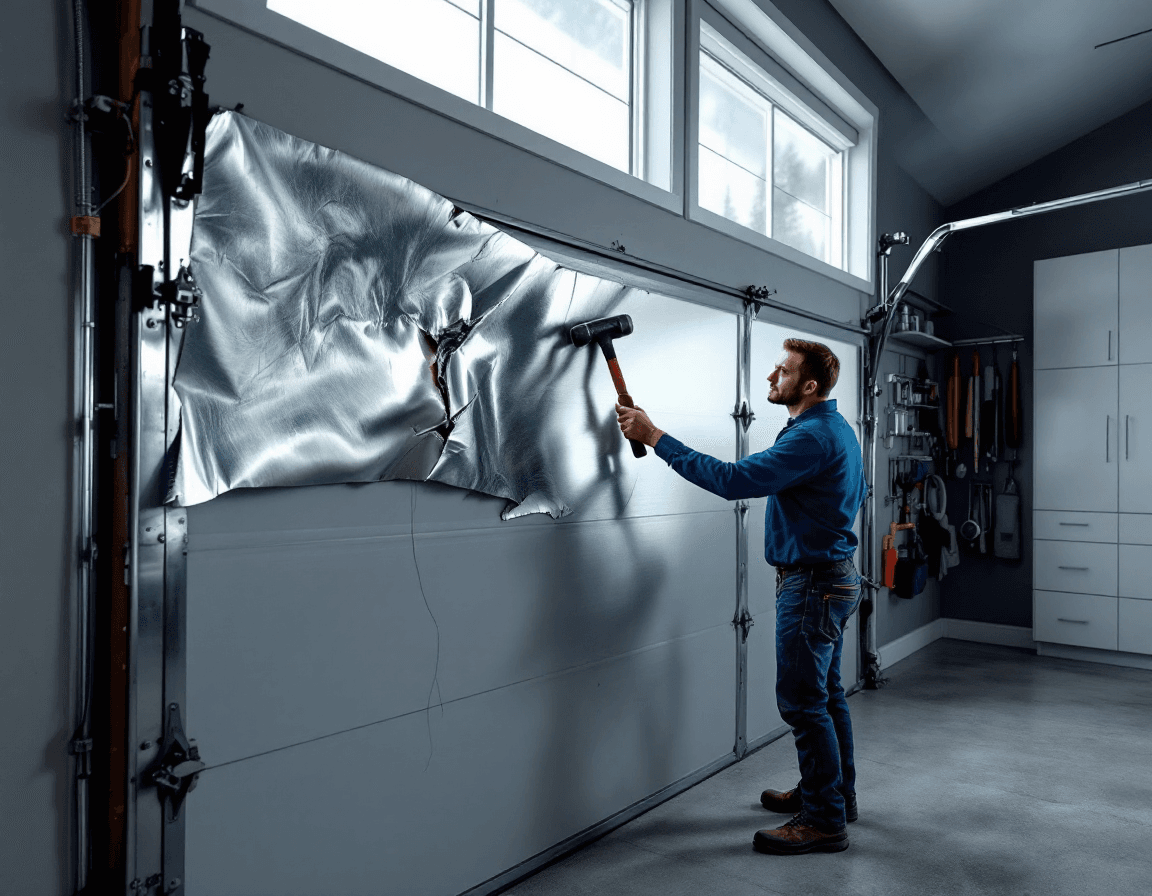
Garage door panel replacement in Bremerton, WA is often the most sensible fix when one section of your door is damaged but the rest still works well. Bremerton homes sit close to Puget Sound, and the mix of salt air, long wet winters, and older steel doors means panels here tend to wear out in patterns you won't see far inland. A dented bottom panel, a rusted rail section, or a cracked window insert can make a door look neglected and leave you wondering whether the whole thing needs to go. In most cases it doesn't, and swapping only the damaged section can restore both the appearance and the security of the door for a fraction of the cost of a new one.
This page explains how panel replacement works for homeowners across Bremerton, from the East Bremerton neighborhoods near the older commercial strips to the Manette area across the bridge and the homes around Kitsap Lake. We cover what damage is worth replacing, what it costs, how we match a panel that's no longer manufactured in the same color, and how to decide between repair and full replacement. We also explain where a homeowner should stop and call a licensed technician, because a panel job sometimes touches parts of the door system that carry real spring tension and real risk.
Seattle Garage Door Fix is a licensed, bonded, and insured garage door repair company serving more than 60 cities across the greater Seattle and Western Washington area, including Bremerton and the surrounding Kitsap County communities. Whether your door was damaged by a bumped backing car, a winter storm that drove water under the seal, or simple age and corrosion, our technicians can assess the panel, explain your options plainly, and tell you when a repair makes more sense than a replacement. You can reach us any time at (888) 799-3819.
Why Bremerton Garage Doors Wear Panels Out Differently
Bremerton's climate is mild by national standards, but it is hard on steel and painted surfaces. Marine air carries salt and moisture from the Sinclair Inlet and Puget Sound, and that moisture lingers because the region rarely gets a long dry spell in the cooler months. A garage door in a Bremerton driveway may spend weeks in a cycle of damp mornings, drying afternoons, and wet nights, and that cycle is exactly what breaks down clear coats and primer at the edges of steel panels. Once the finish is compromised, corrosion can start at seams, rivet points, and the bottom edge where water collects.
Many older homes in East Bremerton and parts of Manette were built with single-wall steel or early insulated doors that were never designed for the coastal environment. Those doors often have thinner panels, and when a dent or puncture breaks the finish, the exposed metal starts to rust sooner than it would in a dry climate. Homeowners sometimes assume a small scratch is cosmetic, but in a damp coastal setting that scratch can become a rust spot within a single wet season. Catching it early keeps the repair small.
Kitsap Lake and the surrounding wooded lots add another layer. Tree debris, moss, and needle buildup can trap moisture against the lower panels, especially on doors that face north or sit in shade for most of the day. If your door is tucked under a tree canopy, check the bottom two sections more often than you would in a sunny driveway. A panel that stays damp all winter will eventually fail, even if the rest of the door looks fine from the street.
Recognizing a Panel That Needs Replacing
Not every mark on a garage door calls for a new panel, so it helps to know the difference between cosmetic wear and structural damage. A panel that has lost its paint but is still flat, solid, and attached firmly to its neighbors is usually a candidate for refinishing or touch-up rather than replacement. A panel that is bowed, cracked, punctured, or no longer sits flush with the sections above and below it almost always needs to be replaced, because it affects how the door tracks, seals, and distributes weight.
Look closely at the seams between sections as well. If a panel has pulled away from its hinges or the edge has deformed, the door may start to rub against weather seals or drag on the track during operation. You might hear a new scraping sound, notice a gap at the bottom corner, or see daylight at the seam when the door is closed. These are signs that the damage has moved beyond the panel surface and into the structure that holds it.
Here are the signs we most often see in Bremerton homes that point toward panel replacement rather than a simple cosmetic fix:
- A dent deep enough to create a visible crease or ridge that catches light
- A crack in a steel or composite panel, or a split along a factory seam
- Rust that has gone through the paint and created pitting or flaking metal
- Water staining or soft, spongy wood at the base of a wood-composite or wood panel
- A panel that no longer sits level with its neighbors or leaves a gap at the top or bottom edge
- A window insert that is cloudy, cracked, or loose in its frame
If you find any of these, take a clear photo of the damage from several angles in daylight. Photos help a technician judge whether the panel can be swapped alone or whether the surrounding sections are also compromised. They also make it easier to describe the problem accurately when you call.
Dents, Cracks, and Impact Damage From Backing Accidents
Backing accidents are one of the most common reasons a single panel needs replacing on a Bremerton garage door. A bumper clipping the door while reversing, a trash bin rolled into the bottom section, or a basketball hoop or bicycle leaning against the door can all leave a dent that looks minor at first and gets worse over time. Steel panels hold a dent until it is replaced, and the creased metal around a dent is weaker than the surrounding panel, which means it can crack under the next cycle of spring tension.
When a vehicle makes contact with the door, the impact often transfers force into the hinges and the adjacent panels as well. A panel that looks dented may also have a bent hinge or a stressed roller that is causing the section to ride unevenly. A good technician will inspect the hardware on either side of the damaged panel before recommending a replacement, because replacing a panel without fixing the cause of the misalignment just sets up a second failure. Ask whether the hinges and rollers were checked during the visit, and whether any part of the door needed adjustment.
Cracks after an impact deserve prompt attention. A crack that appears to stop at the edge of a panel can continue to spread through repeated flexing, particularly in cold weather when metal and coatings contract. If a crack runs through a window insert or along a seam, moisture can get in and begin corrosion on the inside of the panel where you cannot see it. Replacing the panel while the crack is still contained is almost always cheaper than waiting for it to spread into the neighboring sections.
Water Damage and Rot Along the Bottom Section
The bottom panel takes more punishment than any other section on a garage door. It sits closest to the driveway, catches splashback from rain and runoff, and sometimes stays in contact with standing water after a heavy storm. In Bremerton, where wet weather can continue for weeks at a stretch, the bottom section is often the first to show water damage. Stains that run down from the bottom edge, bubbling paint, and soft or discolored material are all common signs.
On wood and wood-composite doors, water that gets into the bottom section can cause swelling, delamination, and eventually rot. This is one of the most important reasons to address damage promptly, because rot can spread upward into the framing and hardware if left alone. If you press on the bottom panel and it feels soft, or if the edge has crumbled or separated from the core, replacement is usually the right move. A panel that has lost its structural integrity cannot be reliably repaired with filler or paint alone.
Water damage can also come from the threshold and weather seal, not just from the panel itself. If the seal has hardened, split, or pulled away from the floor, water can run under the door and wick into the bottom section from the inside. Before replacing a water-damaged bottom panel, inspect the seal and the threshold. Replacing the panel and leaving a failed seal in place will just expose the new section to the same problem.
Rust Spreading Through Steel Panels
Rust is slow, quiet, and persistent, and it is the reason many Bremerton homeowners end up replacing a panel that looked fine a year earlier. Surface rust on a steel panel may look like a cosmetic spot, but it often means the protective coating has already failed underneath. Once rust takes hold, it spreads outward beneath the paint, lifting the finish and creating bubbles that break open and expose more metal. On a coastal door, this process can accelerate quickly.
The areas most prone to rust are the seams where two panels meet, the edges where a panel was cut or trimmed, and any spot where a fastener or hinge has scratched the finish. Check these points on a dry day, when you can see the metal clearly. Light brown streaks, orange flecks, or a rough texture under the paint are early warnings. If the rust has penetrated all the way through the panel, creating pits or holes, the panel has lost its ability to resist weather and should be replaced.
Some rust is worth treating rather than replacing. A small patch of surface corrosion on an otherwise solid panel can often be cleaned, primed, and repainted, especially if the damage is caught early. The key is to remove all loose rust, neutralize what remains, and seal the metal before the next wet season. Anything more than that, particularly rust that has perforated the panel or weakened its seam, usually points toward replacement.
Matching a Panel When the Original Door Is Years Old
Matching a replacement panel is one of the trickier parts of the job, especially in older Bremerton neighborhoods where the original door may have been installed decades ago. Manufacturers change colors, profiles, and panel thicknesses over time, and some models are no longer in production. A panel that was once a common stock size may now have to be sourced differently, and the color may have faded in the sun and salt air in ways that make a fresh panel stand out.
The first step in matching is to identify the door's manufacturer, model, and approximate year of installation. The label is often printed on the inside of a panel or along the bottom rail, though it can be painted over or worn away. If the label is unreadable, technicians can usually identify the profile by measuring panel height, rib spacing, and the pattern of the embossing. Accurate identification is what makes a panel fit correctly, so do not skip this step even if the replacement looks similar at a glance.
Color matching is more art than science, and weathering complicates it. A panel that has been exposed to Puget Sound air for fifteen years will be slightly different from a new one, even if they started out identical. Sometimes the best result is a panel that is close enough in color, with the rest of the door refinished to blend. In other cases, replacing an entire side or matching a section on both sides of the door gives a more uniform look. Be honest with yourself about your expectations, and ask the technician to show you options before you commit.
Repair or Replace: A Practical Decision Guide
Deciding between repairing a panel and replacing it depends on the type of damage, the age of the door, and how many sections are affected. A single dented panel on a solid, relatively new door is usually a strong candidate for replacement, because the cost of one section is modest and the rest of the door remains sound. A door that is already showing rust across several sections, sagging hardware, or worn springs may be a better candidate for a broader conversation about full replacement, because repeated panel work can add up.
Here is a simple way to weigh the options before calling for a quote:
- Replace a single panel when the damage is confined to one section, the rest of the door is square and operating smoothly, and the panel is still available in a reasonable match.
- Repair in place when the damage is limited to cosmetic scratches, minor surface rust, or a small chip that can be cleaned, primed, and painted without weakening the metal.
- Consider replacing several sections when multiple panels show rust, water damage, or cracks, because the cost of repeated visits may approach the cost of a more comprehensive upgrade.
- Talk about full door replacement when the door is very old, the panels are no longer available, the insulation has failed, or the structure is compromised beyond individual sections.
No single rule fits every door. A technician who inspects the whole door, rather than only the damaged panel, can give you the most honest answer. Be wary of any recommendation that pushes a full replacement without first explaining why a panel swap would not be enough.
What a Single Section Typically Costs in Kitsap County
Panel replacement pricing generally falls in the range of $250 to $800 per section, depending on the door. That range reflects the variables that matter most: the panel's size and material, whether it is a standard stock profile or a custom match, whether it includes a window insert, how difficult it is to access, and how much labor is needed to remove the damaged section and fit the new one. Insulated panels cost more than single-wall steel, and wood or composite panels often differ from steel in both material cost and labor time.
Several factors can push a job toward the higher or lower end of that range. A matching panel that must be ordered from a manufacturer may add to the cost and to the wait time, while a common stock panel can often be installed the same day. If the damage has spread to hinges, rollers, or the track, those repairs are priced separately and can change the total. Ask for an itemized estimate so you can see what you are paying for and which parts of the job are required versus optional.
We do not promise a specific total without seeing the door, because a quote based on a phone description can be misleading. A technician on site can measure the panel, check the surrounding hardware, and give a clear figure. If you are comparing estimates across Kitsap County, look at whether each one includes the panel, the labor, the removal of the old section, and any adjustments needed to make the door operate properly afterward.
Working Safely Around Springs, Cables, and the Opener
Panel replacement looks like a simple task, but it can involve parts of the garage door system that store large amounts of mechanical energy. Torsion springs and extension springs are under high tension, and cables carry significant load. Even a small mistake during disassembly can cause a spring to release violently or a cable to snap. For that reason, any work that requires removing sections from the track, disconnecting the door from the opener, or touching the spring system should be performed by a licensed professional.
A homeowner can safely inspect the panel from outside the garage, photograph the damage, check the seals, and note any unusual sounds or movement. Do not attempt to lift the door off its tracks, unbolt rollers, or loosen hinges while the door is under tension. Disconnect the opener only if you know how to do so safely and only when the door is fully closed. When in doubt, leave the door closed and call a professional.
Our technicians are licensed, bonded, and insured, which matters when a job involves springs and heavy panels. If your panel replacement requires any work on the spring system, cables, or tracks, we will tell you clearly before we start and explain what that work involves. Please do not try to save money by attempting spring or cable work yourself, because the potential for serious injury is real and the consequences are rarely worth the savings.
Protecting Your New Panels Through Bremerton's Wet Seasons
Once a new panel is installed, a little routine care helps it last through Bremerton's damp winters and salty summers. Wash the door at least a few times a year with a mild soap and fresh water, paying particular attention to the lower sections and the seams where salt and grime collect. Rinsing the door after a stretch of wet weather or a visit to the coast helps remove residue before it can work into the finish. Avoid abrasive pads or harsh chemicals that could strip the protective coating.
Keep the area around the door clear of debris, moss, and fallen needles, especially if your home sits in the shade of tall evergreens near Kitsap Lake or in wooded East Bremerton lots. Trim back branches and shrubs that hold moisture against the bottom panels. Check the weather seal and threshold every season, looking for cracks, flattening, or gaps that let water in. A damaged seal is one of the most common reasons a new bottom panel starts to show water staining within a year or two.
Touch-up paint is a worthwhile habit as well. Keep a small amount of the matching color on hand, and address chips and scratches as soon as you notice them. Clean the spot, apply a primer suited to steel or the panel material, and finish with a matching topcoat. Small, prompt repairs prevent the kind of spreading corrosion that leads to another panel replacement down the road.
Scheduling a Panel Visit Across Bremerton and Nearby ZIPs
If you are searching for garage door panel replacement in Bremerton, our service area includes the ZIP codes 98310, 98311, 98312, and 98337, along with the surrounding Kitsap County communities. Whether your home is near the older neighborhoods of East Bremerton, the hillside streets of Manette, or the homes around Kitsap Lake, we can schedule a visit to inspect the damaged panel, measure it, and walk you through the options. Arrange a time that works for you, and have photos of the damage ready if you have them.
When you call, tell us the make and model of your door if you know it, approximately how old it is, and where the damage is located. Mention whether the door opens and closes normally, whether you have heard unusual noises, and whether there has been any recent impact or water intrusion. This information helps us bring the right parts and set realistic expectations before the technician arrives. If the panel can be matched from stock, we will say so; if it requires a special order, we will explain the timeline.
Garage door panel replacement is a practical way to bring a damaged door back to good condition without replacing the whole system. Whether the damage came from a backing accident, a winter of rain, or years of salt air, a qualified technician can help you decide what makes sense for your home and your budget. For a clear assessment and a straightforward estimate in Bremerton and across Kitsap County, call Seattle Garage Door Fix today at (888) 799-3819.