
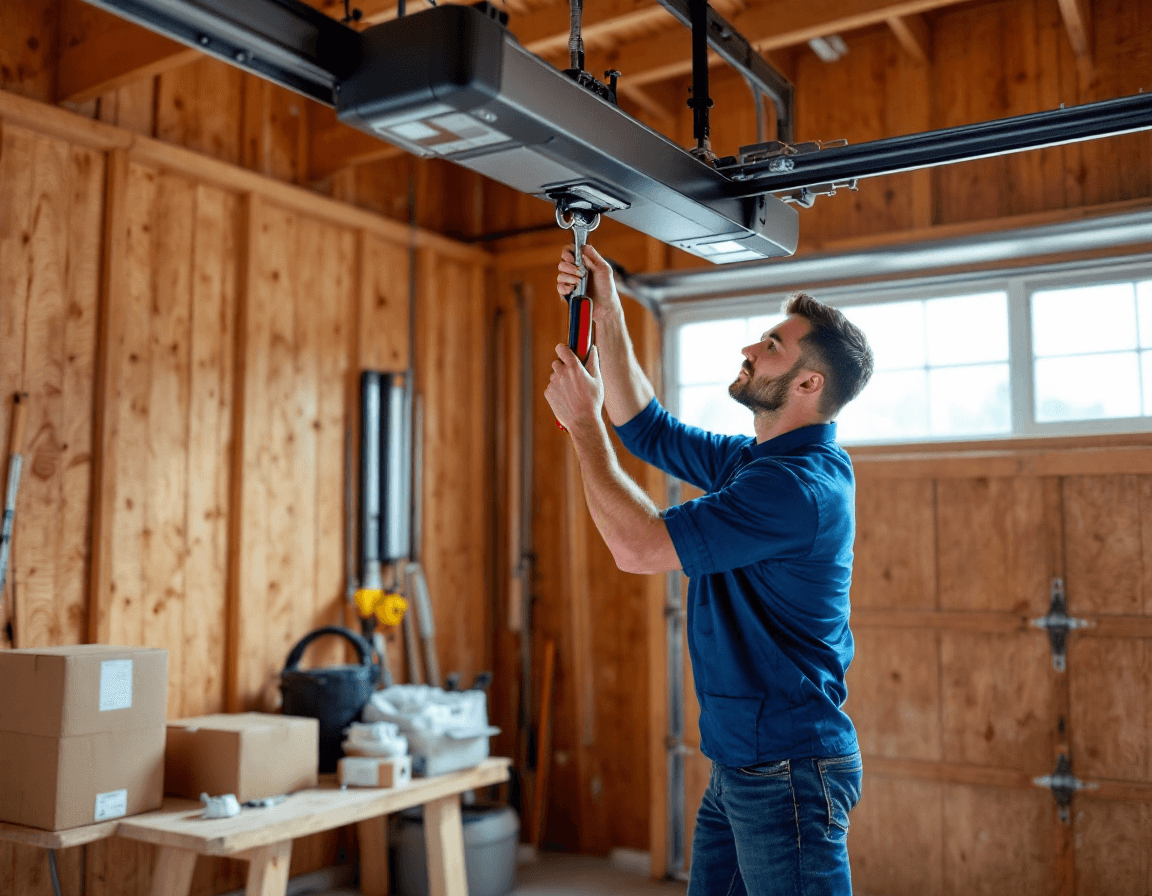
Garage Door Opener Installation & Replacement in Bremerton, WA is one of the most practical upgrades a homeowner on the Kitsap Peninsula can make, and it often takes less than a day. Whether your current motor is groaning every morning, refusing to reverse, or simply too old to be worth another service call, a properly matched replacement can restore smooth, dependable operation to your garage. Our technicians work throughout Bremerton, including the 98310, 98311, 98312, and 98337 ZIP codes, and we install belt-drive, chain-drive, and wall-mount openers with battery backup and smart controls. Installed pricing typically runs between $275 and $650, depending on the model you choose and the condition of your existing track and hardware.
Many Bremerton homeowners wait longer than they should before replacing an opener. The motor may still lift the door, so it seems fine until the day it fails at the worst possible moment, such as when you are late for a ferry or trying to get the car in before a winter downpour. Replacing an aging opener on your own schedule lets you compare options, avoid rushed decisions, and pick hardware that fits how your household actually uses the garage. This page explains what to look for, how we approach an installation, and how to think about cost, security, and convenience before you commit.
Above all, this is a job that rewards careful planning. A new opener must be matched to the weight of your door, the height of your ceiling, the type of track you have, and the way your power supply behaves during storms. We walk through each of those factors below so you can have a clear, informed conversation with our team, whether you are calling from a home near Kitsap Lake or from a townhouse off the main roads in East Bremerton.
Why Bremerton Garages Put More Strain on Openers
Bremerton sits on a peninsula with a damp, mild climate, and that combination is harder on garage hardware than most homeowners realize. Long stretches of gray, wet weather keep moisture in the air for months at a time, and salt-laden breezes drifting in from Sinclair Inlet and Dyes Inlet can speed up corrosion on exposed metal. Your opener's motor housing, mounting brackets, and drive rail all live in that environment, and the cumulative effect shows up as sticky movement, stiff gears, and electrical connections that slowly degrade. A unit that performed well in a drier inland climate may feel sluggish within a few years here.
Temperature swings also matter. Cold mornings thicken lubricants and make the door heavier to lift, while the warmer, damp spells that follow can cause wood sections and weatherstripping to swell and bind. Your opener is the component that has to deal with all of those changes at once, and it works hardest when the door is out of balance. That is why an opener replacement is often the moment to inspect the whole system, including the springs, rollers, and tracks, because a new motor pushing against a worn assembly will not last as long as it should.
Many Bremerton homes also have garages that double as workshops, storage rooms, or the everyday entrance for kids, bikes, and recycling bins. Those uses mean the door may cycle many times a day, and the opener's duty cycle and motor quality become more important than they would in a garage that opens only a few times a week. Being honest about how often your door moves is one of the best ways to match the right replacement to your needs.
Warning Signs Your Current Opener Has Reached Its Limit
Not every noise or delay means you need a new opener, but certain symptoms point clearly toward replacement, especially when several of them appear together. A loud, grinding, or rattling motor is often the first sign, particularly if the noise is worse at startup or when the door reaches the top of its travel. A door that moves noticeably slower than it used to, stops partway through its cycle, or needs a second press of the remote before it responds may also indicate that the motor and gearing are wearing out. Intermittent failures are especially frustrating because they can appear after a good week and vanish again, making the problem hard to pin down without a proper test.
Other signs involve the safety system. If the door reverses unexpectedly, fails to reverse when it meets an obstacle, or the photo-eye sensors seem to work only sometimes, the opener's safety logic may be failing. Those issues deserve prompt attention, because a door that does not stop and reverse reliably is a hazard to people, pets, and vehicles. If you notice the lighting on the opener flickering, the unit overheating after short use, or a burning smell near the motor, shut off power to the opener at the breaker and call a technician rather than attempting repairs yourself.
Finally, consider the age and availability of parts. Older openers may use obsolete logic boards, proprietary remote systems, or mechanical components that are no longer stocked. When a repair estimate approaches the cost of a new installed unit, replacement usually makes more sense, since you also gain warranty coverage, updated safety features, and a motor designed for today's usage patterns. A quick comparison between the repair quote and the installed price of a current model often makes the decision much clearer.
- Grinding, rattling, or unusually loud operation, especially at startup or near the top of travel
- Door pauses, stalls, or moves noticeably slower than it did a year or two ago
- Remote or wall button works only on some attempts, or the opener needs repeated presses
- Auto-reverse or photo-eye behavior has become inconsistent or stops working entirely
- The motor runs hot, emits a burnt odor, or the light and control board show erratic behavior
Belt Drive, Chain Drive, or Wall Mount: Matching the Drive to Your Garage
Choosing the right drive system is the first real decision in an opener replacement, and it depends on how your garage is built as much as on your budget. Chain-drive openers use a metal chain running along a rail, which is durable and cost-effective, and they handle heavy or large doors well. The tradeoff is noise, since the chain makes a distinct clatter that can carry into bedrooms or living spaces above or next to the garage. For a detached garage, a workshop, or a household that does not mind a bit of sound, chain drive remains a reliable choice.
Belt-drive openers use a reinforced rubber belt in place of the chain, and the difference in sound is substantial. Belt-drive systems run much more quietly, which makes them a popular choice for homes with attached garages, rooms above the bay, or families who park close to a bedroom window. Belts also avoid the metal-on-metal vibration that chains can transmit into the header and framing, and they tend to feel smoother during the first few feet of travel. Belts do require a bit more care around temperature extremes and should be kept clear of debris, but in a typical Bremerton garage they perform very well.
Wall-mount openers attach the motor to the side wall rather than the ceiling, freeing up overhead space and simplifying installation in some situations. They are a strong option when the garage ceiling is low, when you have a high-lift or vertical-lift track that leaves little room for a ceiling bracket, or when the ceiling joists are not in a good position for mounting. Wall-mount units can also reduce vibration transferred to the ceiling, which some homeowners appreciate. Our technician will measure your headroom, track configuration, and wall structure before recommending one style over another.
Rolling-Code Security and Why an Old Opener Leaves the Door Exposed
One of the strongest reasons to replace an older opener is security. Early garage door openers used fixed codes, meaning the remote sent the same signal every time it was pressed. Anyone with a cheap scanning device could capture that signal and replay it later to open the door. Modern openers use rolling-code technology, which generates a new code for each press, so a captured signal becomes useless almost immediately. If your opener predates rolling codes or the manufacturer has stopped supporting its security features, your garage is considerably more vulnerable than it needs to be.
Rolling-code systems also make it easier to manage remotes and keypads. When a remote is lost or a family member moves out, you can erase it from the opener's memory and program a new one in minutes, rather than leaving an old fob active indefinitely. Many current models include built-in keypads or allow you to set up a secure smartphone account, giving you a clear record of who is using the door and when. Those features are particularly useful in neighborhoods where garages are often accessed by house-sitters, delivery drivers, contractors, or teenagers coming home at unpredictable hours.
Security is not only about signal capture. We also check the safety reversal system, the status of the door's lock or manual latch, and whether the opener's light and motor housing are securely mounted, since a loose installation can be pried or manipulated more easily. Tuning the opener's force settings during installation helps ensure that it stops and reverses correctly if something interferes with the door. A new opener is an excellent moment to review the whole set of entry points for your garage and address any weaknesses at the same time.
Smart Control with myQ and Wi-Fi Without the Hassle
Smart garage door control has become one of the most requested upgrades in Bremerton, and for good reason. A Wi-Fi-enabled opener lets you check whether the door is open from your phone, close it after you have left the house, and receive alerts when it moves. Systems such as myQ, which is available on many Chamberlain and LiftMaster models, let you connect the opener to a smartphone app and integrate it with compatible home automation platforms. For households with changing schedules, such as shift workers at the Naval Base Kitsap or families juggling school pickups, that flexibility can take a lot of stress out of daily routines.
Smart features do require attention to your home network. A reliable Wi-Fi signal at the garage is essential, and in some older Bremerton homes with thick framing or a detached garage at the back of the lot, the signal may be weak. We test signal strength during the visit and can recommend a range extender or mesh node if needed. Setting up the app account, pairing the opener, and confirming that alerts and remote commands work correctly are steps we complete before we leave, so you do not have to troubleshoot the connection later on your own.
It is also worth thinking about who should have access. Smart apps allow you to share control with household members or guests, and you can usually revoke access at any time. Use strong, unique passwords for your account and enable two-factor authentication if the platform offers it. A smart opener is a convenience only when it is set up thoughtfully, and we are happy to walk you through privacy and sharing settings during installation so the system works for everyone who needs it.
Battery Backup for Winter Storms and Unexpected Outages
The Pacific Northwest is known for winter windstorms, and on the Kitsap Peninsula a strong gust or heavy rain can knock out power for hours at a time. When that happens, a standard opener cannot lift or lower the door, and you may be left with a car stuck inside or no way to secure the garage overnight. A battery backup unit solves that problem by providing enough stored power to operate the door several times during an outage. Many models also include a light that stays on during power loss, which helps when you are navigating the driveway in the dark.
Battery backup systems vary in capacity and in how many cycles they can handle, so it helps to consider your typical use. A household that expects occasional short outages may be satisfied with a basic backup, while a family that relies on the garage as its main entrance may want a unit that handles more cycles or charges quickly. The battery is typically housed in the opener's motor unit or a companion module, and it charges automatically when mains power is restored. We will explain the expected run time and recharge behavior for the specific model we install so you know what to expect.
A backup battery is also useful for manual planning. Know where the emergency release cord is located, and make sure every household member understands how to use it safely. Our technicians will show you the release procedure, review how the backup battery indicators work, and recommend an appropriate test schedule. Keeping that routine simple means the system will be ready when you need it most, whether the outage lasts an hour or the better part of a night.
What Happens During a Bremerton Installation Visit
A typical installation begins with an inspection of the existing door, track, springs, and opener mounting points. Our technician confirms the door's weight and size, checks the condition of the rollers and hinges, and assesses whether the ceiling or wall can safely support the new motor. We also review your remote controls and keypads so you know which accessories will work with the new unit and which ones need replacing. This assessment takes place before any parts are removed, so you receive a clear explanation of what the job involves and what it will cost.
Once the new opener is selected and confirmed, the installation proceeds with mounting the motor, attaching the rail, connecting the drive, and wiring the safety sensors and control panel. The technician sets the travel limits, adjusts the force settings for the door's weight, and tests the auto-reverse function to confirm the system responds correctly to an obstacle. Programming the remotes, wall control, and any smart features comes next, followed by a demonstration so you can operate the door confidently. Each step is verified before we move on, which helps prevent problems that might otherwise appear days later.
Before we leave, we review the warranty information and explain basic maintenance for the new opener. We also discuss any additional repairs that we noticed during the visit, such as a worn cable that should be addressed by a licensed spring specialist, and we give you a clear recommendation without pressure. Our goal is for every Bremerton homeowner to finish the day with a secure, quiet, and reliable door and a full understanding of how the system works.
Pricing Between $275 and $650 and What Moves the Number
Installed pricing for an opener replacement in our service area generally falls between $275 and $650, and the exact number depends on the model and the scope of the installation. Entry-level chain-drive units are at the lower end of that range, while quiet belt-drive openers, wall-mount configurations, and models with built-in battery backup or advanced smart features sit toward the upper end. Because prices vary by model and by the condition of your existing hardware, we confirm the final figure during the inspection rather than quoting a flat number over the phone.
Several factors can affect the total. If your current track or hardware is in poor condition, replacing a worn bracket, reinforcing a header, or swapping out a damaged safety sensor may be necessary before the new opener can perform reliably. A door that is out of balance or has aging springs may need additional attention, and those repairs are handled by a licensed technician with the appropriate training. Some installations also require a modified mounting approach because of unusual ceiling heights or structural conditions, which can add time and materials.
We believe the best value comes from matching the opener to your real needs rather than buying the most expensive unit by default. A quiet belt drive may be worth the premium if your bedroom sits above the garage, while a dependable chain drive may be the smart choice for a detached workshop. Ask us to explain the differences between models so you can see exactly what each feature adds and decide which options matter most to your household.
Neighborhood Notes for East Bremerton, Manette, and Kitsap Lake Homes
Homes in East Bremerton often include mid-century and later construction, with garages that may have been built before modern safety standards and smart features existed. Many of these homes have modest ceiling heights or older tracks that need careful measurement before a new opener is selected. Our technicians are familiar with the layouts common in the area, and we plan the installation around the specific headroom and mounting conditions you have. If your garage was converted or expanded over the years, we pay close attention to how the door and framing interact.
Manette has its own mix of housing styles, from older homes close to the waterfront to newer residences on quieter streets. Homes near the water may see more salt exposure, so we often recommend a closer look at fasteners, brackets, and exposed metal components during installation. Those small details matter, because hardware that resists corrosion keeps the new opener mounted securely and reduces the chance of premature wear. Whether your home sits near the shoreline or further inland, we tailor the installation to your exact conditions.
Homes around Kitsap Lake range from older residences to newer builds on larger lots, and many have detached or semi-detached garages that can be farther from the house. A detached garage often means a longer run for the Wi-Fi signal and a greater need for a reliable backup power plan, since the door may be the only thing standing between your belongings and the weather. We check signal strength at the actual location, not just at the house, and we design the smart-control setup accordingly. Our service team covers all of these neighborhoods and the surrounding ZIP codes, so you can expect the same careful attention wherever you live in Bremerton.
Safety Checks We Never Skip and What to Leave to Professionals
Garage doors are heavy, and the springs that counterbalance them store a great deal of energy. For that reason, we always recommend licensed professionals for any spring or cable work. Torsion springs and extension springs can cause serious injury if they are adjusted, wound, or removed without the proper tools and training, and a broken spring or cable can drop a door with enough force to cause harm. If your door needs spring replacement, cable repair, or track realignment, those tasks belong to a qualified technician, not a do-it-yourself project.
During an opener installation, our technicians perform a series of safety checks that go beyond simply making the door move. We test the photo-eye sensors to confirm that they stop and reverse the door when the beam is interrupted, and we verify that the auto-reverse mechanism responds to contact with an object on the floor. We also confirm that the emergency release works properly and that the door can be operated manually if needed. Those checks are not optional; they are part of how we make sure the system protects people and property.
Homeowners can help by keeping the area clear of obstacles and by never walking under a moving door. Do not attempt to repair or adjust the opener's internal components, and disconnect power at the breaker before opening the motor housing for any reason. If you notice that the door is out of balance, lifts unevenly, or makes unusual popping or snapping sounds, stop using it and call a professional. A short call early can prevent a far more expensive and dangerous failure later.
Caring for Your New Opener in the Pacific Northwest Climate
A new opener performs best when it is maintained regularly, and the Bremerton climate makes a few habits especially worthwhile. Wipe down the rail, track, and exposed hardware periodically to remove the grime and moisture that build up during wet months, and use a lubricant recommended by the manufacturer on the moving parts that call for it. Avoid spraying heavy oils or penetrating products into the motor, since they can attract dust and interfere with the drive. A simple seasonal check helps you catch small problems before they grow.
Pay attention to the weatherstripping along the bottom of the door and the seals along the sides. Damp weather can cause seals to swell or harden, which can make the door feel heavier and place extra strain on the opener. Replacing worn weatherstripping is a modest expense that helps the system run smoothly and keeps out drafts and moisture. Also check that the door remains level and that the tracks are firmly fastened, since loose hardware can gradually shift and cause binding.
Finally, test your opener's safety features and battery backup every few months. Confirm that the door reverses when it meets resistance, that the photo eyes are clean and aligned, and that the backup battery holds a charge. Keep the remotes and keypad codes organized, and remove any access you no longer need. A short test routine takes only a few minutes, and it gives you confidence that your garage will work the way it should on a stormy night or a busy weekday morning.
Replacing a tired opener is one of the most satisfying upgrades you can make to a Bremerton home, bringing quieter operation, stronger security, and dependable performance that suits the Kitsap Peninsula climate. If your door is loud, slow, unreliable, or running on outdated security, call Seattle Garage Door Fix at (888) 799-3819 to schedule an inspection. Our licensed, bonded, and insured technicians will help you choose the right belt-drive, chain-drive, or wall-mount opener, explain the battery backup and smart-control options, and give you a clear installed price between $275 and $650 before any work begins.