
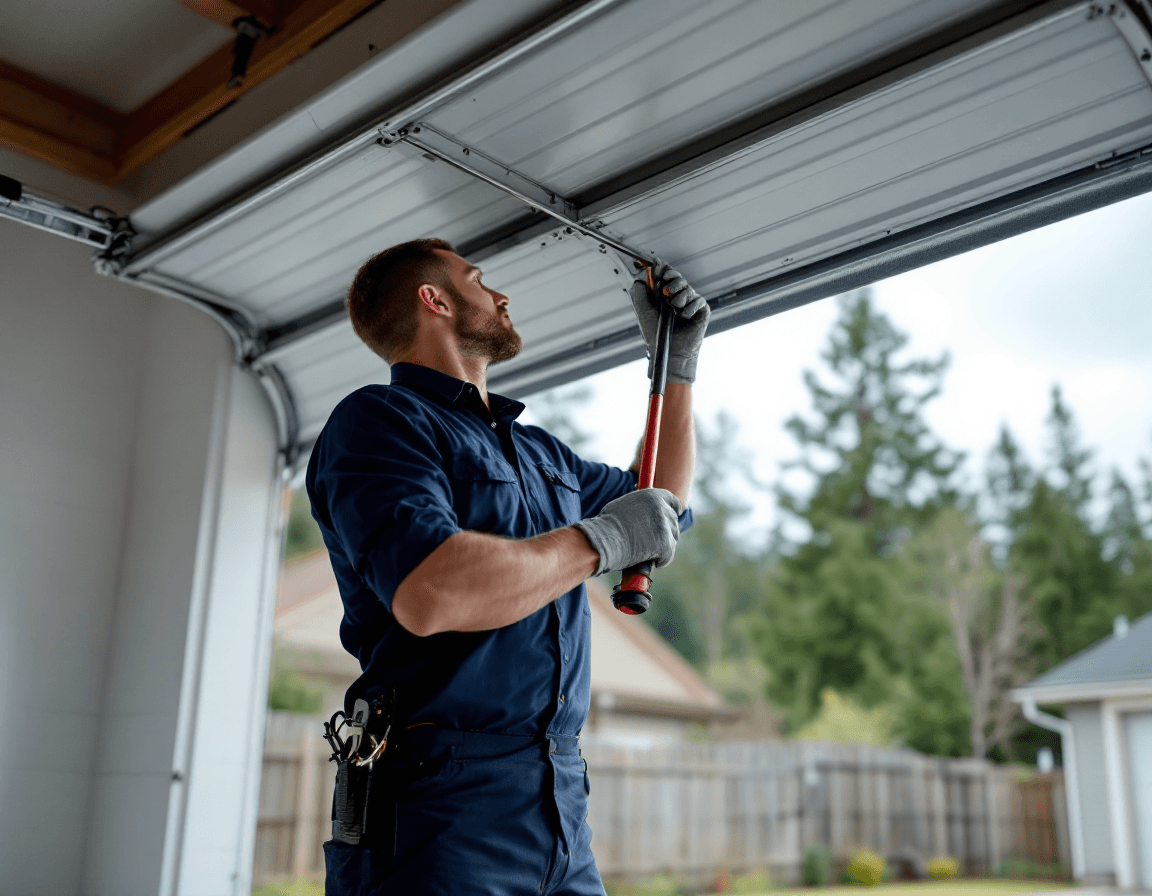
Garage Door Spring Replacement in Bremerton, WA is one of the most common repairs we handle across Kitsap County, and it is also one of the most important to get right. The garage door spring carries most of the weight of your door, often well over a hundred pounds on a standard two-car door, so when it fails the effects are immediate and sometimes dramatic. Homeowners in Bremerton usually call us after a sudden noise, a door that refuses to lift, or an opener that strains without moving the door at all.
This page explains what spring failure looks like in our part of the Pacific Northwest, why it happens more often here than in drier climates, and what a proper replacement involves. We serve homes across East Bremerton, Manette, the neighborhoods around Kitsap Lake, and surrounding communities in ZIP codes 98310, 98311, 98312, and 98337. Our technicians are licensed, bonded, and insured, and we treat every spring job as the safety-critical work it is.
If your door is currently stuck, damaged, or making a sound you don't recognize, keep reading. The sections below walk through the warning signs, the spring types you are likely to find on Bremerton homes, the balancing and cable work that follows a replacement, and the realistic cost range. Knowing what to expect will help you make a confident decision when you call.
Why Springs Wear Out Faster Along the Kitsap Shoreline
Bremerton sits on the Kitsap Peninsula with Puget Sound on multiple sides, and that position shapes the weather we live with year-round. Salt-laden air drifts inland, rain falls for long stretches between October and April, and humidity rarely drops far in the shoulder seasons. Those conditions gradually attack the steel in garage door springs, and rust that forms on the coils weakens the metal over time. Many of the springs we replace in Manette and East Bremerton show surface corrosion long before they actually break.
Cold snaps add another layer of stress. When temperatures drop suddenly, the steel contracts and the spring becomes more brittle, which is why we often hear from customers after a cold morning rather than a warm afternoon. Metal fatigue builds with every open and close cycle, and a spring that has been quietly nearing the end of its life can give way on the first chilly day of the season. Homes that sit near wooded lots or tree-lined streets also collect more moisture and debris in the garage, which accelerates the same process.
Understanding this local pattern helps homeowners plan ahead. If your door is more than about seven years old, or if you can see orange or brown coloring along the coils, it is worth having a technician inspect the springs before winter. A quick assessment costs far less than an emergency call on a rainy night, and it gives you the chance to schedule a replacement on your own timeline rather than the spring's.
Hearing the Bang: What a Snapped Spring Sounds Like
A broken torsion or extension spring usually announces itself with a loud bang that can be startling, especially in a quiet house. Many Bremerton homeowners describe it as a sharp crack, similar to a rifle shot or a heavy piece of metal dropped on concrete, and they often assume a vehicle hit the garage. The sound comes from the spring coil releasing its stored tension all at once. In most cases, the noise happens while the door is closed or partially open, which can be unsettling if you were not expecting it.
After the bang, the door may look normal at first glance, but a closer look usually reveals the problem. You may notice the door sits lower than usual, or it refuses to rise when you press the opener button. Some homeowners see a gap in the torsion tube where the spring used to be, or a loose cable hanging near the track. If you hear the bang and then nothing happens when you try to operate the door, stop using the opener right away, since forcing a broken system can damage the opener motor and the track.
It is also common for a spring to make a smaller pop or ping before it fully fails. Those early sounds are easy to dismiss, but they often signal that the coil is already compromised. If you have noticed a new noise over the last few weeks, especially on cold or damp mornings, mention it when you schedule service. We can usually identify a weakened spring during a visit before it becomes a larger problem.
When the Door Stalls Halfway or Feels Impossibly Heavy
Not every spring problem comes with a dramatic sound. Some of the most frustrating calls we receive involve doors that open a few inches and then stop, or doors that seem to weigh a ton the moment you touch the handle. These symptoms point to spring tension that has dropped below what the door needs to balance, so the opener is asked to do work it was never designed to handle. Over time that strain can burn out the opener's gears or motor, turning a moderate repair into a more expensive one.
Several distinct warning signs often appear together. Look for any of the following when you run a quick check:
- The door rises a few inches, then stops or reverses on its own
- The door feels extremely heavy when lifted by hand, even with the opener disengaged
- The opener motor hums or strains loudly, but the door barely moves
- The door closes faster than normal or drops suddenly toward the floor
- One side of the door sits higher or lower than the other
Any one of these signs deserves attention, and several together almost always mean the springs need replacement. Please do not try to test the door by lifting it repeatedly or by disconnecting the opener while the door is partly open. A door that is off balance can drop without warning, and that is precisely the kind of situation that leads to injuries in garages across the region.
Torsion Versus Extension Springs in Older East Bremerton Homes
Bremerton's housing stock is varied, with many mid-century ranch houses in East Bremerton alongside newer builds closer to the Kitsap Lake area. That variety means we encounter both torsion and extension spring systems regularly, and the right replacement depends on which type your door uses. A torsion system mounts a long steel bar above the door opening, with springs wound around it and cables running down to the bottom brackets. An extension system uses pairs of springs that stretch along the horizontal tracks on either side of the door.
Older homes in East Bremerton often have extension springs, particularly on single-car doors or on doors installed before torsion systems became the standard for residential garages. Extension springs are typically less expensive to replace, but they carry a distinct safety consideration because they can fly toward the operator when they fail. Torsion springs, by contrast, store their energy in a rotating bar and are generally considered safer in failure but require much more careful handling during installation. Both types need proper tension calculations, and neither should be adjusted by an untrained person.
When we inspect a door, we identify the spring type first, then measure the door's weight, height, and track configuration before recommending a replacement part. Matching the wire gauge, inside diameter, length, and cycle rating to your specific door is what keeps the new spring working correctly for years. Installing a spring that is merely similar in size can lead to imbalance, premature wear, and recurring service calls.
Choosing High-Cycle Springs for Busy Households
Standard springs are rated for a certain number of open-and-close cycles, commonly measured in the range that suits an average household. Families who use the garage constantly, such as those with teenagers driving in and out, home businesses that run deliveries through the garage, or households that use the door as a main entry, may wear through standard springs faster than expected. High-cycle springs are designed with heavier wire and improved coil geometry, which allows them to handle more repetitions before fatigue sets in.
In Manette and the surrounding neighborhoods, we often talk with homeowners who commute on the ferry or work irregular schedules that mean the garage door gets used several times a day. Those patterns put real demand on the springs, and a high-cycle upgrade can be a sensible investment. The added cost is usually modest compared with the expense of a second emergency call later, and it gives you a longer service interval between replacements.
High-cycle options are not automatically the right choice for every door, though. The best recommendation depends on how often the door is actually used, the weight of the door panels, whether the door has insulation or glass, and the condition of the rest of the hardware. A technician should evaluate those factors on site instead of pushing an upgrade for its own sake. We would rather explain the trade-offs clearly and let you decide than sell you a premium spring you do not need.
Balancing the Door After the New Spring Goes In
Replacing a spring is only part of the job. Once the new spring is installed, the door must be balanced so that it stays put when released halfway up and lifts smoothly with minimal help from the opener. A properly balanced door should feel controlled, with no sudden drop and no sticking. Balance is what protects the opener, extends the life of the cables and rollers, and keeps the door from slamming shut or drifting open unexpectedly.
Balancing involves adjusting spring tension to match the door's actual weight, which can change over time as hardware wears or as the door absorbs moisture. Doors in our humid climate sometimes become heavier after long wet seasons, particularly wood doors or doors with insulated panels that trap moisture. A good technician checks the balance during every spring service and makes fine adjustments as needed. Skipping this step often leads to repeated complaints about the door closing too fast, closing crooked, or straining the opener.
Crooked closing deserves special mention. When one side of the door drops more quickly than the other, the cause is often a balance issue, a worn cable, or a roller problem rather than the spring alone. Left unaddressed, this condition can twist the door panels and damage the track. Ask your technician to check the entire system during a spring replacement, not just the spring itself, so the door operates evenly on both sides.
Cables, Drums, and the Loose Line After a Break
When a torsion spring breaks, the cables that connect to the drums often go slack, and in some cases the cable slips off the drum entirely. This is one of the most common secondary problems we see after a spring failure. A loose cable can kink, fray, or jump the drum track, and it may keep the door from operating safely even after the spring has been replaced. Cable and drum inspection should always accompany spring work, since a damaged drum can cause the new spring to be out of alignment from the start.
Inspecting cables means looking for fraying, rust, flattened sections, or any kinks where the strands have been bent sharply. Drums should sit square on the shaft and be free of cracks or worn grooves that would let the cable wander. If a cable has been stretched or has fallen off during a break, replacing it is usually the safest course. Attempting to reseat a cable on your own can be dangerous because the tension stored in the system can release unexpectedly during handling.
Some Bremerton homeowners try to fix a loose cable by tightening it or by hanging the door back on the track themselves. We strongly discourage that approach. The door may appear to function briefly, then fail again under load, sometimes with more force than the original break. A licensed technician can assess the cable, drum, and bottom bracket together and restore the system to proper working order.
What a Typical Bremerton Spring Replacement Involves
Every job is different, but most professional spring replacements follow a predictable sequence. Knowing the general steps can help you ask informed questions and recognize when a technician is cutting corners. A thorough visit typically includes the following stages:
- A visual inspection of the springs, cables, drums, rollers, hinges, and track alignment
- Measurement of the door's weight and dimensions to select the correct replacement spring
- Safe release of the existing tension using proper tools and procedures
- Removal of the broken spring and any damaged cable or hardware
- Installation of the new spring, cable, and drum components with correct winding and alignment
- Balance testing and fine adjustment of spring tension
- A full operational check, including opener function, safety reverse testing, and door travel
Each step matters. Skipping the balance test or the safety reverse check can leave a door that looks fine but operates unsafely. Ask your technician to walk through the test results with you before they leave, so you understand what was checked and what, if anything, you should monitor over the coming weeks.
Realistic Costs and What Affects the Final Price
Most spring replacements in our service area fall in the range of $180 to $450, though the final figure depends on several factors. The spring type, the door's size and weight, whether one or both springs need replacement, and whether cables or drums also need work all influence the total. High-cycle springs cost more than standard ones, and doors with heavy insulated panels may require a heavier-duty spring than a basic residential door.
Accessibility and timing can also affect the estimate. An emergency visit on a holiday weekend or a late evening call may carry different pricing than a scheduled daytime appointment. Homes where the garage is cluttered or where the opener needs separate attention may take longer to service, which can change the scope of work. A reputable technician should explain these variables clearly before starting, so you know what you are agreeing to.
We encourage Bremerton homeowners to request a clear written estimate before work begins. Ask what is included, what is excluded, and whether any follow-up adjustments are covered. An honest provider will be glad to answer those questions in plain language without pressuring you into upgrades you do not need.
Staying Safe: What Homeowners Should Never Attempt
Garage door springs store enormous amounts of energy, and that stored energy is the reason spring work belongs in the hands of licensed professionals. Winding bars can slip and strike with force, springs can release without warning, and a door that is partly disconnected can fall. Injuries from DIY spring repairs are well documented across the country, and they are not limited to people who lack experience. Even confident homeowners with good tools can be hurt when a spring lets go unexpectedly.
Please avoid removing or adjusting springs, reinstalling cables, disconnecting the opener to move a door by hand while it is under tension, or applying lubricant that might mask a developing problem. Keep children and pets away from the door while a spring is broken or the system is damaged. If the door is stuck in an open or partly open position, do not try to force it closed. Instead, call a licensed technician and let them secure the door properly.
There are safe, simple things you can do while you wait for service. Keep the area around the door clear, avoid running the opener repeatedly when the door is stuck, and make a note of the symptoms you observed, including what time they occurred and what the weather was like. That information can help the technician diagnose the problem faster and arrive prepared with the right parts.
Booking a Visit That Works for Your Bremerton Schedule
Many of our customers in Bremerton juggle busy commutes, school runs, and weekend plans, so flexibility matters when a spring fails. Whether you live near the waterfront, out toward the Kitsap Lake area, or in the quieter streets of Manette, we aim to schedule visits that fit your day. Describing the sound you heard, the way the door is behaving, and the type of opener you have will help us prepare the right tools and replacement parts before we arrive.
If the door is currently stuck or unsafe, let the scheduler know so the appointment can be prioritized. Keep the door closed if possible, avoid using the opener, and keep vehicles and people away from the garage until a technician has inspected the system. Once the work is complete, ask for a short walkthrough of the new spring, the balance results, and any maintenance recommendations for the coming seasons.
Our team serves ZIP codes 98310, 98311, 98312, and 98337 and the surrounding communities across Kitsap County. Whether your door has a torsion system, an extension system, or a high-cycle upgrade on the way, we can assess the situation and explain your options clearly. If your garage door has gone quiet in the wrong way, or if it is refusing to lift or close safely, call Seattle Garage Door Fix at (888) 799-3819 and let a licensed technician take a look before the next cold morning arrives.