
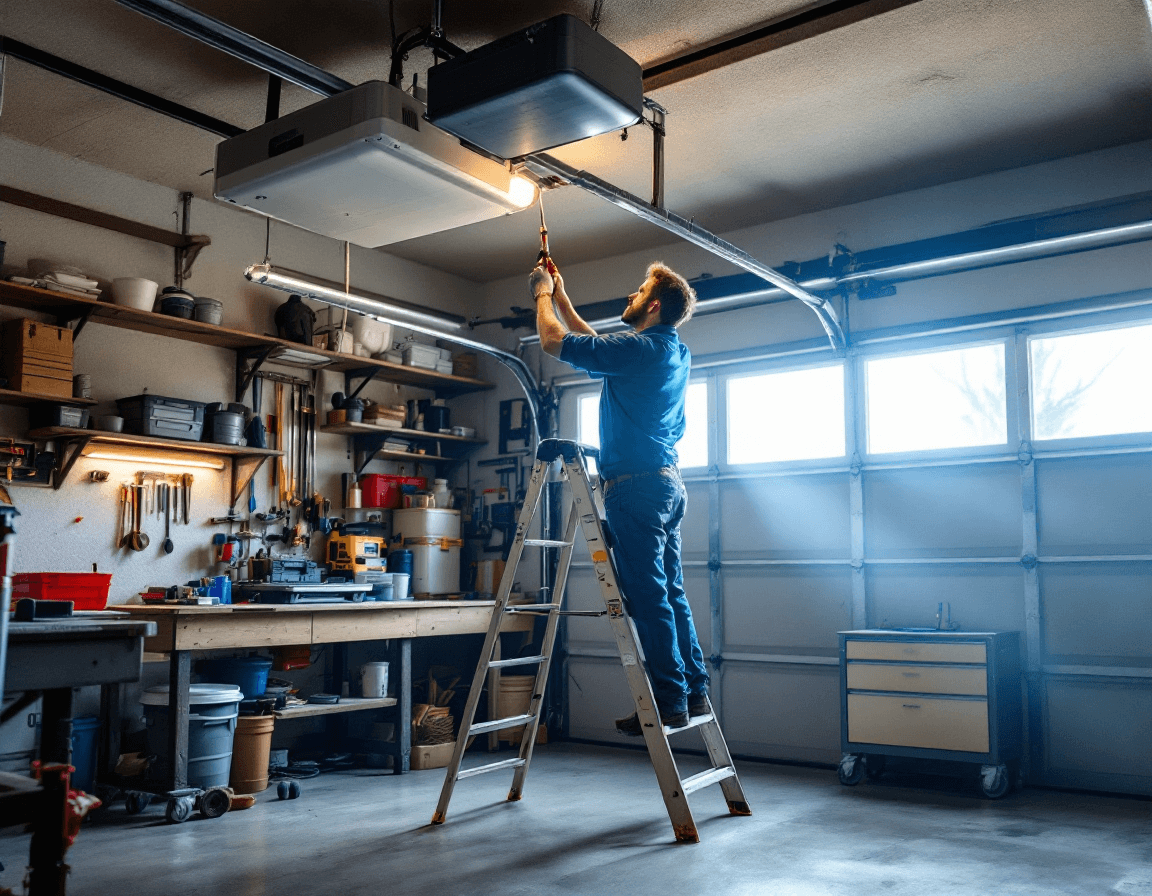
Garage Door Opener Repair in Bremerton, WA is a service many homeowners need sooner than they expect, especially in a city where damp winters and salty air work steadily against metal, wiring, and moving parts. Whether your opener hums without lifting the door, ignores your remote, or stops halfway through a close, the underlying cause is often something a trained technician can identify in a single visit. Seattle Garage Door Fix provides troubleshooting and repair for motors, gears, circuit boards, and travel-limit settings across every major opener brand in the Bremerton area.
Most Bremerton homeowners first notice a problem on a weekday morning, when the door refuses to open just as they need to leave for work or drop kids at school. That moment is stressful, but it is also the best time to pause and observe what the system is doing. The sounds, lights, and behavior of the door tell a technician a great deal before any parts come off the shelf. Taking a few notes before you call can shorten the diagnosis and help you understand what you are paying for.
This page walks through the most common opener problems we see in Bremerton, East Bremerton, Manette, and the neighborhoods surrounding Kitsap Lake. It explains what each symptom usually means, what a repair typically involves, and which tasks should always be left to a licensed professional. Our goal is to give you clear, practical information so you can make a confident decision about your garage door.
Reading the Clues Before You Call
The first step in any opener diagnosis is simply watching the door through a full cycle. Notice whether the motor starts immediately, whether it strains, whether the door moves a few inches and stops, and whether the lights on the opener blink. Each of these behaviors narrows the list of likely causes considerably. A motor that runs with no door movement points in a different direction than a door that never receives the signal at all.
Pay attention to the timing as well. If the problem appears only in the morning after a damp night, condensation or corrosion inside the opener housing may be involved. If it happens randomly throughout the day, a loose connection or a failing control board becomes more likely. Writing down the time, the weather, and what you pressed can be surprisingly useful when you speak with a technician.
Keep the following observations handy when you describe the problem to our team:
- Does the motor run, hum, or stay completely silent when you press the button?
- Does the door move at all, even briefly, before stopping or reversing?
- Do the opener's indicator lights stay solid, blink steadily, or flash in a repeating pattern?
- Does the problem happen with both the remote and the wall button, or only with one?
- Has the door been struggling for days or did it fail suddenly without warning?
The Motor That Hums But Will Not Lift
A motor that hums or clicks while the door stays put is one of the most frustrating symptoms, because it sounds like the system is working. In most cases, the motor is receiving power and attempting to turn, but the force never reaches the door. The usual suspects include a worn drive gear, a disconnected trolley, a failed clutch assembly on certain models, or a release cord that has been pulled and left disengaged. Each of these can produce nearly identical sounds from the outside.
Our technicians check whether the trolley is still attached to the door arm and whether the release mechanism has been accidentally activated. They then examine the drive components inside the head unit for stripped teeth, slipped belts, or a motor shaft that has lost its grip. This process takes a methodical approach because replacing the motor when the real problem is a disengaged trolley wastes money and time. A correct diagnosis protects your budget as much as your door.
Motor repairs range from simple reconnection to full replacement, depending on the brand and age of the opener. Many older chain-drive and belt-drive models can be restored with a new capacitor, a fresh gear set, or a clutch adjustment. Newer units sometimes require a control board or motor assembly, and in those cases we will explain the options clearly before doing any work. For most opener repairs in our service area, pricing falls within our standard $95–$375 range, with the final figure depending on the components involved.
Remote Silence in Kitsap Humidity: Receivers, Batteries, and Wall Buttons
When the door ignores the remote but responds to the wall button, the problem usually lives in the transmitter or the receiver rather than the motor. Remote batteries are an obvious first check, and many homeowners discover that a weak battery was the entire issue. Still, Kitsap County humidity can also affect the small circuitry inside handheld remotes, especially those that spend their lives clipped to a car visor or stored in a damp jacket pocket. Corrosion on battery contacts is a common and easily overlooked culprit.
The receiver mounted in the opener head is the next place to investigate. Its antenna wire can become kinked, pinched, or disconnected during previous service calls or when a ceiling fixture was installed nearby. Interference from nearby electronics, new LED garage lights, or a neighbor's signal can occasionally block the receiver, though this is less common than most people assume. Our team tests the receiver's response and inspects the antenna path before recommending any replacement.
If the wall button also fails, the fault may sit in the low-voltage wiring between the button and the opener, or in the wall control itself. Wiring that runs along exterior walls or through unsealed penetrations can develop moisture-related faults over time. Once we isolate the failure point, we can usually repair or replace the affected component in a single visit, and we will walk you through how to reprogram remotes if a new receiver was installed.
Stripped Gears, Grinding Heads, and the Sound Nobody Wants to Hear
A grinding or clattering noise coming from the opener head is a clear signal that something inside is wearing down or has already failed. The most common cause is a stripped worm gear or drive gear, typically made from nylon or a similar polymer on many residential units. Once the teeth begin to shear, the motor may continue to turn while the output shaft barely moves, and the door may start and stop unpredictably. Continuing to operate the door in this condition can damage the motor and other components.
Gear failures often follow years of heavy use, but they can also result from a door that has become harder to lift because of worn rollers, a bent track, or an unbalanced spring system. Because the opener is working harder to compensate, the gears absorb the extra stress. This is why a responsible repair includes a look at the door's overall condition, not just the opener in isolation. Our technicians check the track alignment, roller condition, and general balance before recommending a gear replacement.
If you hear grinding, we recommend stopping use of the opener until it has been inspected. Pressing the button repeatedly can turn a modest repair into a larger one. In some cases, a gear set replacement restores the opener to reliable service at a cost well within our typical range, while a worn motor or heavily damaged head may call for a full unit replacement. We will always explain which path makes sense for your specific model and the age of your system.
Doors That Reverse at the Last Inch: Force Settings and Travel Limits
Few things are more irritating than a door that descends most of the way and then reverses just before it reaches the floor. This behavior usually comes from the safety reverse system, which is designed to protect people and objects in the doorway. Modern openers include photo-eye sensors near the floor and force-sensing logic that detects resistance. When either system believes an obstruction exists, the door reverses. The problem is that a misaligned sensor or an incorrect force setting can trigger the reversal even when nothing is in the way.
Travel limits are equally important. The opener uses the limit settings to know exactly where the door should stop when fully open and fully closed. If those limits drift because of a changing door balance, a loose adjustment, or a board that has been reset, the door may stop short or attempt to push beyond the floor. Bremerton homes with uneven garage floors or slightly settling slabs sometimes experience limit drift more often than homes built on perfectly level pads.
Our technicians check sensor alignment, wiring continuity at the photo eyes, and the force and limit settings on the control board. We clean the sensor lenses, since dust, spider webs, and salt residue can interrupt the infrared beam. We never bypass safety sensors, even temporarily, because they protect children, pets, and vehicles. When a setting needs correction, we make the adjustment and verify the full travel several times before leaving the job.
When the Indicator Lights Count Out a Code
Many modern openers use the blinking pattern of their indicator lights to communicate faults. A repeating sequence of flashes can point to a sensor problem, a limit error, a remote lockout, or a control board fault, depending on the brand. Owners often assume the lights are simply decorative, but the pattern is actually a diagnostic message. Reading it correctly is one of the fastest ways to narrow down a problem.
Unfortunately, these codes vary widely between manufacturers and even between model generations. The number of blinks, the speed of the flashing, and whether the lights alternate can all change the meaning. Consulting the owner's manual is a good starting point, but the manual is not always easy to find, especially for homes where the previous owner moved out years ago. Our technicians maintain experience with a broad range of opener brands and can interpret the code quickly on site.
We recommend photographing or writing down the light pattern before the technician arrives. Note how many times the light blinks, how long the pauses are, and whether the pattern repeats continuously. This information helps us confirm the diagnosis faster and reduces guesswork. Once the code is identified, we will explain what it means in plain language and recommend only the repairs that address the actual fault.
Chain, Belt, and Rail Problems on Older Bremerton Garages
Many homes in Bremerton and the surrounding Kitsap neighborhoods were built decades ago, and some still have chain-drive or belt-drive openers that have operated through many wet seasons. Chains can stretch, loosen, or jump off the sprocket, particularly when the door is heavier than the opener was designed to handle. Belts are quieter and more common on newer units, but they can slip, fray, or become misaligned on the pulley if the rail is bent or the tension is wrong. A loose or derailed drive is a serious issue because it can cause the door to drop unexpectedly or cause the opener to strain.
Rails deserve attention too. A rail that has been bent by a prior impact or sagged over time can throw the carriage out of its proper path. Loose mounting brackets, worn trolley arms, and damaged rail sections all contribute to this problem. Moisture and road salt tracked into the garage can accelerate corrosion on exposed hardware, which means periodic inspection is more valuable here than in drier climates.
Chain and belt tensioning is a task we perform as part of an opener repair, and we will check the entire drive system before closing a service call. If a chain has come off, we reseat it, inspect the sprocket and chain for damage, and correct the tension. Please avoid attempting to reconnect a derailed chain or belt yourself while the door is partly raised, since a sudden release can injure hands and fingers. Our team handles these repairs with the proper tools and a careful approach to the door's weight.
Why Intermittent Openers Fail Only on Damp Mornings
Some of the most puzzling calls involve openers that work reliably most of the time but fail unpredictably. A door might open perfectly on Tuesday, refuse the remote on Wednesday morning, and work again by afternoon. Intermittent operation often points to a loose wire connector, a failing solder joint on the control board, a weak capacitor, or a sensor that loses alignment as the building shifts. The pattern can be especially confusing in the Pacific Northwest, where the seasonal swings in humidity and temperature cause materials to expand and contract throughout the year.
Condensation is a notable factor for Bremerton homeowners. Overnight dew, sea-air moisture drifting in from the Sound, and wet weather that lingers for days can all create an environment where small electrical contacts oxidize slowly. Garages are rarely climate-controlled, and temperature swings between night and day encourage moisture to form on cold metal surfaces inside the opener housing. Over time, this moisture can interrupt weak connections and cause the symptoms to come and go.
Diagnosing intermittent faults takes patience. Our technicians inspect every visible connection, look for signs of corrosion or heat damage, test voltage under load, and check the control board for failing components. Where appropriate, we seal or replace damaged wiring and recommend simple steps such as improving ventilation and keeping the area free of standing water. When the root cause is a failing board or motor, we will explain the options so you can choose the approach that best fits your budget and the age of your system.
What a Typical Bremerton Opener Repair Involves and What It Costs
Homeowners often want a clear sense of what they will pay before a technician arrives, and that expectation is reasonable. For most opener repairs, our pricing falls between $95 and $375, depending on the parts required and the complexity of the diagnosis. Simple adjustments such as reconnecting a trolley, correcting travel limits, or cleaning sensors tend to fall toward the lower end of that range. Replacing a circuit board, motor, or gear assembly generally moves the cost upward, and we will always discuss the expected range before starting any work.
Several factors influence the final price. The make and model of the opener matters because some brands use proprietary boards and components that cost more to source. The age of the system and the availability of parts also play a role, particularly for discontinued models. Access can affect labor time too, since openers mounted high in a cramped garage or in a home with limited clearance may take longer to service. Finally, whether the door itself needs balancing or spring work, which we refer to a licensed specialist, can change the scope of the job.
Here are the factors that most commonly shape an opener repair estimate in the Bremerton area:
- The specific opener brand and model, including whether parts are readily available
- The component involved, such as a logic board, motor, gear set, sensor, or remote receiver
- Whether the repair is a simple adjustment or requires replacing a major assembly
- The condition of the door's rollers, track, and hardware, which can affect the opener's workload
- Accessibility of the opener head and wiring within your garage
Staying Safe Around Springs, Cables, and Heavy Doors
Every garage door opener repair involves a heavy, moving door, and safety must come first. The opener itself is generally safe to diagnose, but the torsion springs and lift cables that counterbalance the door carry tremendous stored energy. A broken spring or a cable that snaps under tension can cause serious injury, even when the door appears to be sitting still. For that reason, any work on the springs, cables, or drums belongs exclusively to a licensed and insured professional.
Homeowners should never attempt to adjust, wind, or remove torsion springs with household tools. Doing so is one of the most common causes of severe garage door injuries. Likewise, do not try to disconnect the door from the opener while the spring system is under load unless you have been trained to do so, and do not stand under a door that is partially raised with the opener disengaged. If you suspect a spring or cable problem, keep the door closed, disconnect power to the opener at the outlet or breaker if you can do so safely, and call a licensed technician.
Our team includes trained professionals who understand the forces involved in residential doors. When a problem extends beyond the opener into the spring or cable system, we will tell you plainly and recommend the appropriate service. We take this responsibility seriously because a garage door is often the largest moving object in a home. Safety is never a compromise we are willing to make.
Choosing a Technician Who Knows Bremerton Homes
A good opener technician does more than swap parts. They listen to the symptoms, ask questions about the household's routine, inspect the door as a system, and explain each recommendation in terms you can evaluate. Bremerton homeowners benefit from a provider who understands local conditions, including damp winters, salt-tinged air near the waterfront, and the mix of older residential garages and newer construction found across East Bremerton, Manette, and the areas near Kitsap Lake. Those conditions shape which parts fail first and how often a system needs inspection.
Seattle Garage Door Fix is a licensed, bonded, and insured company serving more than 60 cities across the greater Seattle and Western Washington region, including Bremerton and the surrounding ZIP codes 98310, 98311, 98312, and 98337. We work on every major opener brand and approach each repair with a clear diagnosis before recommending work. Our goal is to restore your door safely and to give you the information you need to make a confident decision.
If your opener is humming without lifting, ignoring the remote, grinding, reversing, flashing a strange light pattern, or running unpredictably, we are ready to help. Call (888) 799-3819 to describe what you are seeing and schedule service. Our team can discuss likely causes, explain pricing within our typical $95–$375 range for most opener repairs, and get your Bremerton garage door working reliably again.