
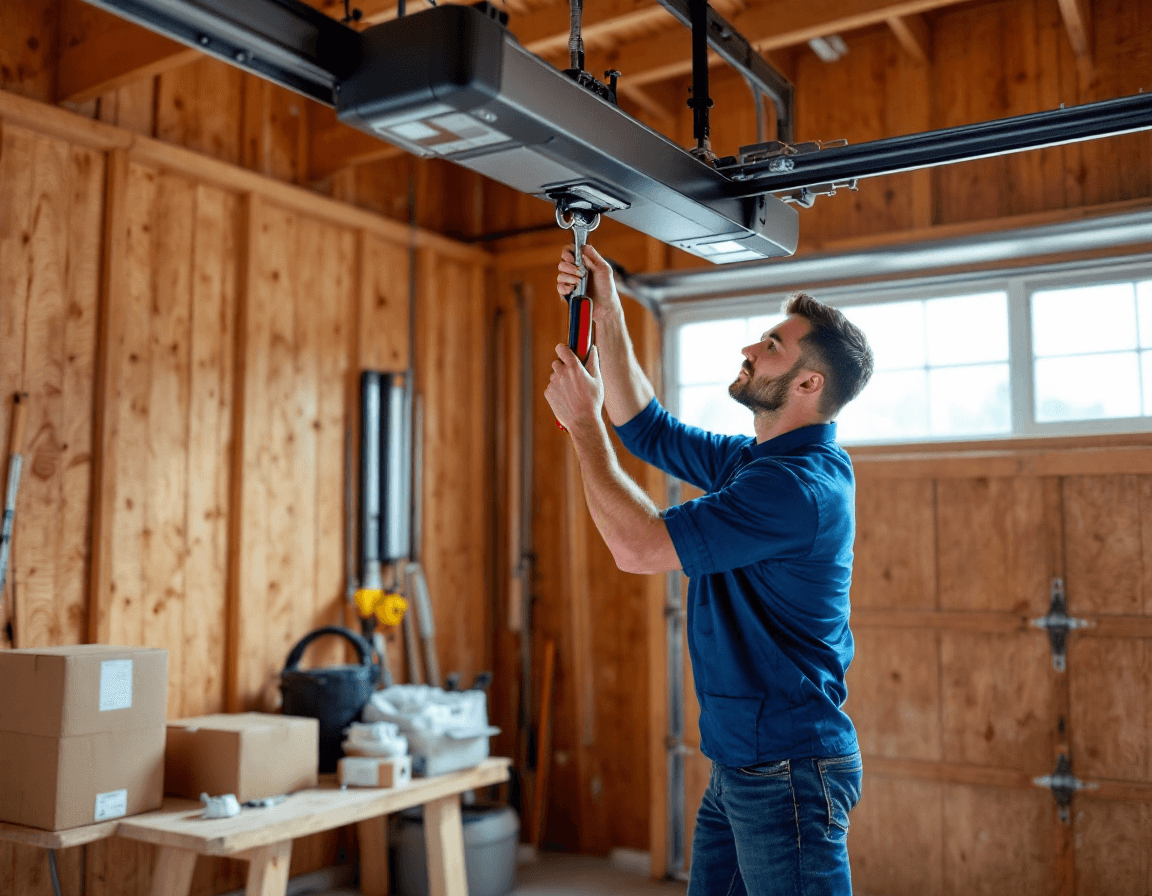
Garage Door Opener Installation & Replacement in Gig Harbor, WA is one of the most practical upgrades a homeowner can make, especially when the existing unit has become loud, sluggish, or simply unreliable. Many homes around the harbor still run openers that were installed a decade or more ago, and those units often struggle with the damp, cool mornings and the occasional winter windstorm that rolls up from the Sound. A well-matched replacement can restore quiet, dependable operation and bring your door up to current security standards.
Our technicians serve Gig Harbor and the surrounding Pierce County neighborhoods, including homes in the 98332 and 98335 areas. We work with belt-drive, chain-drive, and wall-mount smart openers, and we can install battery backup systems so your door still moves when the power goes out. Installed pricing typically falls between $275 and $650, depending on the opener model, the drive type, and any extras such as a Wi-Fi bridge or a second remote kit. Every quote we give is tied to the specific unit and the work your door actually needs.
If you are weighing whether to repair or replace, this page walks through the common warning signs, the differences between drive types, the security and smart-home features worth considering, and what happens during a professional visit. We also explain why the spring and cable components on your door should always be handled by a licensed professional, even when the opener itself is the focus of the job. Read on for a practical, local guide written from the perspective of technicians who work on these doors every week.
Reading the Signs Your Opener Has Given Up on the Door
Most openers do not fail overnight. They give off a series of signals over months or years, and homeowners often learn to tolerate them until one morning the door refuses to close. Recognizing those early signs can save you from being stranded in the driveway with a car on the wrong side of the threshold. It can also help you schedule a replacement on your own terms instead of during a rainy weekday emergency.
Common symptoms include a motor that sounds like a blender, a door that stops halfway and reverses for no clear reason, or a unit that takes noticeably longer to open than it used to. Some openers begin to click repeatedly before starting, which often points to a worn relay or a failing logic board. Others work fine when the weather is dry but become erratic after a damp spell, which is a frequent pattern in our region. A remote that works only when you stand in a particular spot can also indicate a receiver that is losing sensitivity.
- Loud grinding, rattling, or squealing during normal travel
- Door reversing or stopping without an obstruction present
- Remote range shrinking or working only intermittently
- Opener running but the door moving slowly or unevenly
- Lights flickering or failing on the motor housing
- Repeated clicking without the motor engaging
- Visible rust, corrosion, or loose mounting brackets on the rail
Some of these symptoms are caused by simple adjustments, such as limit settings or a dirty track, while others indicate that the motor itself is nearing the end of its service life. A technician can usually tell the difference within a single visit. If the opener is the source of the problem and the cost of repair approaches the cost of a new unit, replacement is often the more sensible path.
Belt Drive, Chain Drive, or Wall Mount: Matching the Motor to Your Bay
Choosing a drive type is one of the most important decisions in any opener replacement. Chain-drive openers use a steel chain running along the rail, which is durable and cost-effective but tends to be louder because metal contacts metal as the trolley travels. Belt-drive openers use a reinforced rubber belt, which runs much more quietly and is often the preferred choice for attached garages where bedrooms or living spaces share a wall with the bay. Wall-mount openers attach to the side wall rather than the ceiling, which can be useful when ceiling joists are weak, the door is unusually tall, or headroom is limited.
In many Gig Harbor homes, the garage sits close to living areas, and quiet operation becomes a real priority. A belt-drive unit is usually the right answer for those houses, particularly when the door is insulated and the owner works from home or keeps a young child asleep on the other side of the wall. Chain-drive units remain a sensible choice for detached shops, workshops, or garages where noise is less of a concern and the budget is tight. Wall-mount options fit well in older craftsman-style homes that have limited ceiling space or a high-lift door.
- Belt drive: quietest operation, ideal for attached garages and living-area walls
- Chain drive: rugged and budget-friendly, well suited to detached or utility bays
- Wall mount: space-saving solution for low ceilings or unusual door configurations
Before selecting a model, a technician will measure the door height, check the track configuration, confirm the weight of the panels, and look at the existing ceiling bracing. These measurements determine the horsepower rating and the rail length you need. Choosing a motor that is underpowered for a heavy insulated door is a common mistake that leads to early failure, so matching the opener to the door matters as much as matching it to your preferences.
Rolling-Code Security and Why Older Openers Are a Risk
Older openers often used fixed-code remotes, meaning the signal sent from the transmitter never changed. A determined person with a simple code grabber could capture that signal and replay it later to open the door. Modern openers use rolling-code technology, which changes the transmitted code every time the remote is pressed. A captured code becomes useless almost immediately, which greatly reduces the risk of unauthorized entry through the door.
If your opener was installed before rolling-code security became standard, replacement is one of the most effective upgrades you can make to your home's perimeter. This matters in neighborhoods where garages are often full of tools, bicycles, paddleboards, and kayaks that people would rather not lose. It also matters for homes near busy roads or in areas where visitors, contractors, and delivery drivers come and go frequently. Rolling-code systems do not make a home impenetrable, but they remove one of the easiest weak points.
Security is not only about the remote. A good installation also includes proper photo-eye alignment, auto-reverse testing, and a review of any wall-mounted keypad or keyless entry system you plan to use. We recommend changing default passwords on any Wi-Fi-connected unit and removing old remotes that belonged to former tenants or family members. These steps take only a few minutes but close gaps that many homeowners overlook.
Smart Wi-Fi and myQ Control Without the Guesswork
Smart openers have changed how people use their garage doors. With a compatible app, you can check whether the door is closed from the office, open it for a delivery driver, or receive an alert when it has been left open overnight. Many systems also support scheduled closing and integration with voice assistants. For busy households in Gig Harbor, where schedules often revolve around ferry timing, school pickups, and weekend boat trips, that convenience can be genuinely useful.
Connectivity depends on your home network, so it is worth thinking about placement before you buy. A garage that sits far from the main router may need a Wi-Fi extender or a dedicated bridge to maintain a reliable connection. Concrete and steel framing can also weaken signals, and many older homes have routers tucked into closets or corners that do not reach the garage well. A technician can test signal strength during the site visit and recommend a practical solution rather than leaving you to troubleshoot after installation.
Compatibility matters as well. Some smart features require a particular opener platform, and some third-party accessories may not integrate smoothly. Before purchasing, confirm which app ecosystem you use at home and whether the opener supports it. A quick conversation about your devices can prevent the frustration of owning a feature that never quite works the way you expected.
Battery Backup and Keeping the Door Working Through Winter Outages
Power outages are a real part of life in Western Washington, particularly during the wind and rain events that can knock out lines for hours or even days. When the power fails, a standard opener is useless, and the only way in or out may be a manual release cord. Battery backup systems solve that problem by keeping the opener running for a limited number of cycles while utility power is down. For households that rely on the garage for daily access, medical equipment storage, or an electric vehicle that needs to leave the house, backup power is more than a luxury.
Battery backup units vary in capacity, and the number of cycles they provide depends on the model, the door weight, and the battery age. Some units are designed to power the opener for a handful of openings, while others offer more. It is wise to choose a backup that matches your household's habits, and to plan for periodic battery replacement, typically every few years depending on use and conditions. Batteries that sit in a cold, damp garage through a long winter can lose capacity faster than those kept in milder environments.
- Confirm the expected number of cycles on backup power for your specific door
- Check whether the backup system includes a low-battery alert or app notification
- Plan a battery replacement schedule rather than waiting for failure
- Keep the manual release cord accessible and labeled for every household member
Installing a backup system also requires attention to wiring and safe placement, so it should be part of a professional installation rather than a DIY afterthought. A technician can route the connection, verify that the charger functions correctly, and demonstrate the manual release so everyone in the house knows how to use it safely.
Salt Air, Damp Winters, and What They Do to Your Opener
Homes near the water in Gig Harbor face a set of conditions that can shorten the life of garage door hardware. Salt-laden air, persistent humidity, and the cool, wet months from late autumn through early spring all contribute to corrosion on brackets, rail hardware, and exposed electrical connections. Openers mounted in garages with poor ventilation can experience condensation inside the motor housing, which can affect circuit boards and wiring over time. These conditions are not unique to the harbor, but they are more pronounced in the coastal neighborhoods where salt spray and moisture linger.
Good installation practice accounts for this environment. We look for stainless or coated hardware where appropriate, check that electrical connections are sealed and protected, and make sure the opener is mounted securely so that vibration does not loosen fasteners over time. Routine maintenance such as lubricating the rail and moving parts, inspecting the cable and chain tension, and keeping the track clear of debris will extend the life of any opener. Homeowners who park vehicles inside the garage should also watch for moisture buildup that can migrate toward the opener over time.
Ventilation and sealing make a meaningful difference too. A garage that traps humid air is more likely to develop problems than one with proper airflow and a sound door seal. If your garage door is letting in water or air, the seal and threshold deserve attention alongside the opener, because a worn seal can allow moisture to reach the motor area during heavy rain.
Neighborhood Notes from Gig Harbor North, Rosedale, and Harborview
Gig Harbor is not a single uniform community, and the homes in different areas present different opener challenges. In newer developments in the Gig Harbor North corridor, many attached garages are built with wall-facing bedrooms and compact layouts, which makes belt-drive operation especially appealing. Homeowners there often ask about smart controls and quiet motors because the garage is close to living spaces and the household may run on busy, app-driven schedules. Our installers take those layout details into account when recommending a unit.
Rosedale and the surrounding rural-leaning parcels often include detached garages, workshops, and outbuildings where chain-drive openers remain a practical and cost-effective choice. Some of these structures were built decades ago, and the framing may need reinforcement or adjustment before a new opener can be mounted safely. Technicians familiar with older construction in the area know to check header condition, track alignment, and the weight of heavier doors before installation begins.
Homes around Harborview and the older parts of town often feature traditional door styles, varied ceiling heights, and garages that were not originally designed for modern equipment. Wall-mount openers can be a good fit in these settings because they avoid the need to rely on a single ceiling anchor point. Whatever the neighborhood, the goal is the same: a quiet, secure, reliable opener that fits the way you actually use your garage.
What a Professional Installation Visit Looks Like
A typical replacement visit begins with an inspection of the door, the track, the springs, the cables, and the existing opener. The technician checks whether the door is balanced, whether the rollers and hinges are in good condition, and whether the photo eyes and safety reversal system are working correctly. This assessment is important because a new opener cannot compensate for a door that is out of balance or binding in the track. If the door needs additional work, the technician will explain what is needed and why before proceeding.
Once the opener is selected, the installer mounts the rail, connects the power, programs the travel limits, and sets the force settings so the door reverses properly if it contacts an obstruction. Remotes, keypads, and any smart-home integration are configured and tested. The installer also confirms that the emergency release works and demonstrates how to use it. Clear instructions and a walkthrough with the homeowner are part of the process, because a well-installed system is only as useful as the person operating it knows how to use.
Before leaving, the technician should verify safe operation through several full cycles, check that the door stops and reverses correctly when tested, and confirm that all mounting hardware is tight. Homeowners should expect a clear explanation of what was done, what was tested, and what routine care the new system will need. If anything about the installation seems unclear, it is perfectly reasonable to ask questions before the technician leaves.
Repair or Replace: An Honest Conversation About Cost
Deciding whether to repair an old opener or replace it comes down to age, condition, parts availability, and how often the unit fails. If the motor is still relatively new and the problem is a worn remote, a faulty sensor, or a loose connection, a repair may be the most economical choice. If the motor is aged, the logic board is failing, or the opener is repeatedly needing service, replacement often delivers better value because you get modern safety features, quieter operation, and a fresh warranty period.
Installed replacement pricing in our service area generally ranges from $275 to $650, depending on the opener model and the features included. Entry-level chain-drive units usually sit at the lower end of that range, while belt-drive models with smart connectivity and battery backup tend to fall toward the upper end. Additional costs can arise if the door needs spring or cable work, if the track requires adjustment, or if structural reinforcement is necessary. A reputable technician should explain those possibilities before any work begins and should never pressure you into unnecessary upgrades.
- Repair may make sense if the opener is relatively new and the fault is isolated
- Replacement often makes sense if the unit is aged, unreliable, or lacks rolling-code security
- Ask for a written estimate that separates the opener cost from any door hardware work
- Compare warranty terms on the motor, the logic board, and the labor
Safety Before, During, and After Any Opener Work
Garage doors are heavy, and the springs and cables that counterbalance them store a great deal of energy. Work on spring tension and cable systems can cause serious injury if handled improperly, which is why those components must always be serviced by a licensed, trained professional. Homeowners should never attempt to wind springs, remove tension, or disconnect cables themselves, even when the goal is simply to make the opener installation easier. A door that falls unexpectedly can cause severe harm, and no opener upgrade is worth that risk.
Opener installation also depends on working safety systems. Photo eyes should be aligned and clean, the auto-reverse feature should be tested with a safe object, and the door should stop and reverse when it contacts resistance. Keep children and pets clear of the door during operation, and never allow anyone to walk under a moving door. If the door behaves unpredictably after installation, disconnect power from the opener and contact a licensed technician rather than continuing to use it.
Ongoing care is part of safety too. Check the emergency release cord periodically to confirm it is accessible and in good condition. Inspect the door for visible wear on cables, rollers, and hinges, and schedule professional service if you notice fraying, popping sounds, or uneven movement. A well-maintained system is safer, quieter, and more dependable for years to come.
Ready to get a quiet, secure, and dependable opener in your Gig Harbor garage? Call Seattle Garage Door Fix at (888) 799-3819 to schedule an inspection and receive a clear, itemized quote for installation or replacement. Our licensed, bonded, and insured technicians will help you choose the right drive type, features, and battery backup for your home.