
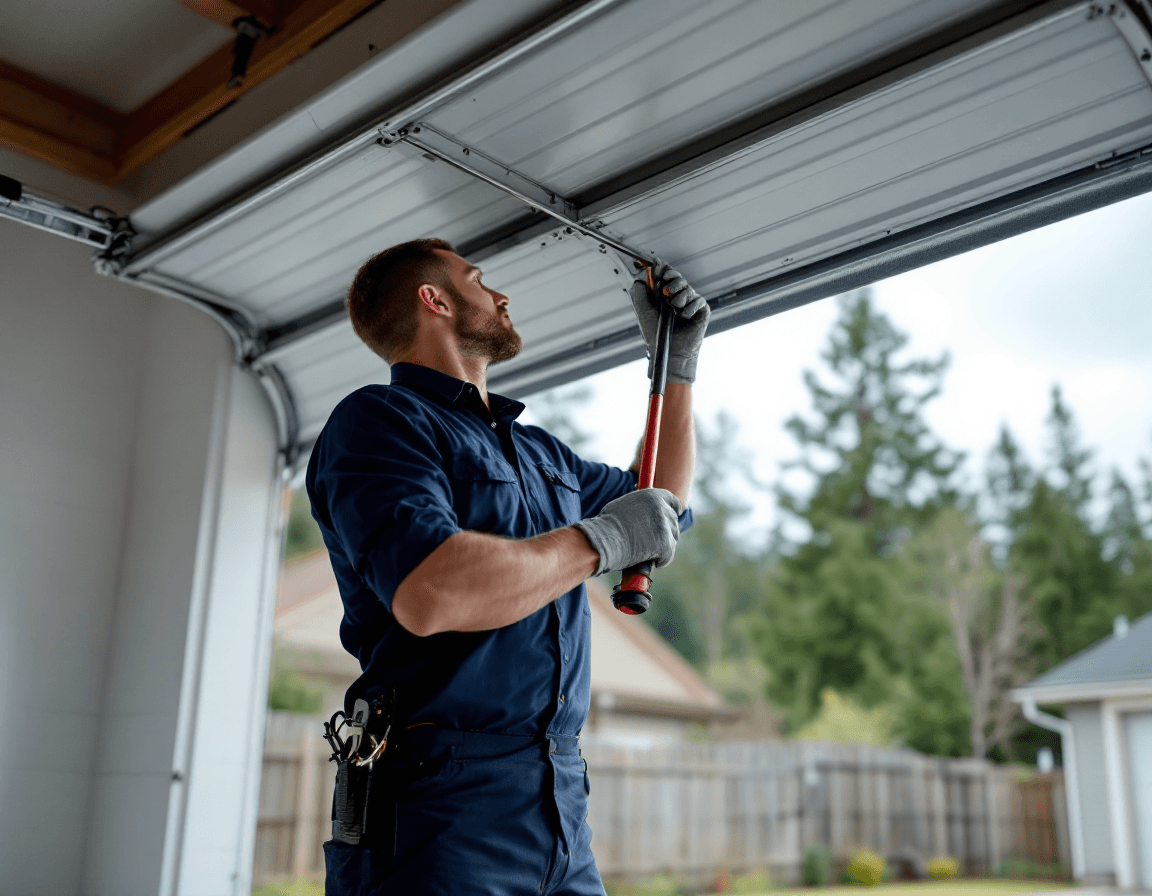
Garage door spring replacement in Gig Harbor, WA is one of the most common repairs we handle on the Key Peninsula side of Pierce County, and it is also one of the most important to get right. The garage door's springs carry most of the door's weight, so when one fails, the door can go from smooth to nearly immovable in a single morning. Homeowners in 98332 and 98335 often notice the failure only when they reach for the remote and hear a sharp crack from the ceiling or find the door sitting partly open.
Our crews serve Gig Harbor year-round, and the coastal weather here shapes how springs wear out. Puget Sound air carries moisture and salt, winters bring long stretches of cold rain, and summers are mild enough that doors go through repeated temperature swings without much relief. Those conditions don't cause a spring to break on their own, but they speed up the fatigue that every spring experiences over thousands of cycles. This guide explains what to look for, what the repair involves, and why a licensed technician should handle the work.
If your door has stopped working properly, you do not need to understand every component to make a good decision. You do need to know which symptoms point to a spring, which ones point somewhere else, and what a responsible repair looks like. The sections below walk through those questions in the order most homeowners encounter them, from the first warning sounds to the final balance check.
Why Springs Wear Out Faster in the Gig Harbor Area
Springs are rated by their expected number of cycles, and each open and close of the door counts as one cycle. A typical household that uses the garage for daily trips in and out, plus weekend projects and trash runs, can accumulate a meaningful number of cycles in just a few years. Gig Harbor's climate doesn't change the mechanical math, but it does affect the metal and lubricant that keep the spring working smoothly. Constant damp air encourages surface corrosion, and corrosion creates tiny pits that become starting points for cracks.
Many homes on the peninsula sit close to the water, and salt-laden air can settle on hardware and garage door tracks even when the house itself seems dry. Over time, that residue combines with dust and old grease to form a sticky film that makes the spring work harder during each cycle. Garages in older neighborhoods around the harbor also tend to be less insulated, so temperature changes between a cold January morning and a warm afternoon can cause metal to expand and contract repeatedly. None of this means a spring is doomed, but it does mean that inspection and lubrication matter more here than in drier regions.
Seasonal rain adds another factor. Water that runs down a sloped driveway or pools near a threshold can reach the bottom bracket and the lower section of the track, where it encourages rust on the mounting hardware. When those brackets loosen, the spring and its cables carry uneven loads, which accelerates wear on the spring itself. Keeping the garage floor dry and checking the hardware once or twice a year is a small habit that pays off in longer spring life.
Reading the Warning Signs Before a Spring Lets Go
Most springs don't fail without warning, although the warnings are easy to dismiss. A door that feels slightly heavier than usual, makes a faint grinding sound on the way up, or seems to rise unevenly may be telling you that a spring is losing tension. Many homeowners assume the opener is getting old, when the real issue is a spring that has already lost much of its strength. Paying attention to how the door behaves at both ends of its travel is often the earliest clue.
Visual signs can be just as useful. A torsion spring is the coiled bar mounted above the door opening, and a healthy one looks uniform from end to end. Gaps between coils, a stretched or slanted appearance, or visible rust-colored flakes on the metal all suggest the spring is near the end of its life. Extension springs, which run along the sides of the track, may show a loose coil, a visible kink, or a spring that sags lower than its neighbor when the door is closed.
Common early warnings include:
- A door that feels noticeably heavier when lifted by hand, especially at the start of the travel
- A sharp pop or clicking sound from the ceiling when the door starts to move
- Visible gaps or stretched coils on the torsion bar above the opening
- One side of the door rising higher or faster than the other
- The opener running longer than normal before the door begins to move
If you notice any of these, avoid using the opener repeatedly. Each extra cycle on a weakened spring increases the chance of a complete break, and a broken spring can take the cables and drum with it.
The Loud Bang: What a Snapped Spring Actually Means
A snapped spring is unmistakable. Most homeowners describe it as a loud bang, similar to a gunshot or a heavy object dropped on the garage floor, and many report that it startled the whole house. The sound comes from the spring releasing its stored tension all at once. Sometimes the coil stays intact but splits along its length, and other times the break is clean and the spring drops slightly on one side.
After a break, the door often stops working entirely. It may sit a few inches off the ground, refuse to lift at all, or drop sharply when you disengage the opener. The door should never be forced open or pushed past its normal range, since the remaining spring and cables may be under uneven loads. Keep people and pets away from the door, and avoid standing under the track while you assess the damage.
Once the break is confirmed, the safest step is to disconnect the opener and arrange for a technician. Attempting to lift the door manually to shut it or move a vehicle can cause the cables to slip off the drums and the door to fall. Our crews arrive with replacement springs sized to the door and the tools needed to release the remaining tension safely, which is far safer than trying to make a quick fix with household equipment.
Torsion and Extension Springs: Matching the Right System to Your Door
Not every garage door uses the same spring design, and getting the right replacement depends on identifying which system you have. Torsion springs mount on a steel shaft above the opening and wind or unwind to lift the door evenly. They are the more common choice on modern residential doors because they distribute weight across the full width and tend to last longer under typical use. Extension springs sit alongside the horizontal track and stretch as the door opens, and they are usually found on older or lighter doors.
Each system has its own failure pattern and its own safety considerations. Torsion springs store a large amount of energy in a compact space, so they require winding bars, precise measurements, and a careful sequence of steps. Extension springs are often replaced in pairs and require attention to the safety cables that run through their centers, which keep the spring from flying across the garage if it snaps. A technician who handles both types can identify the right replacement based on the door's weight, height, and cable drum size.
Replacing a spring with the wrong type or the wrong wire size can leave the door unbalanced and place extra strain on the opener. For that reason, we measure the door before recommending any part, and we explain the differences in plain language so you understand what is being installed and why.
High-Cycle Springs for Busy Gig Harbor Households
Standard springs are rated for a set number of cycles, but many families now use their garage door far more than that rating anticipates. Households with teenagers driving in and out, home businesses that receive frequent deliveries, or garages used as a primary entrance can wear through a standard spring faster than expected. High-cycle springs are designed with a heavier wire gauge and a longer expected service life, which can be a practical upgrade for those households.
High-cycle springs cost more up front than standard springs, but the difference can make sense if your door opens and closes many times a day. The decision also depends on your door's weight, the type of track, and whether you plan to stay in the home for many years. A technician can explain the cycle rating of each option and help you weigh the price against how often the door is used. There is no single correct answer for every home, and we would rather you choose the option that fits your routine than pay for features you won't use.
It is also worth remembering that a spring upgrade doesn't replace the need for regular maintenance. Even high-cycle springs benefit from periodic lubrication, cable inspection, and a check of the bracket hardware. Pairing a stronger spring with routine care gives the door the best chance of smooth operation through Gig Harbor's wet seasons.
Why a Door That Stops Halfway Usually Points to a Spring
A door that opens a few inches and then stops is one of the more puzzling symptoms, and it is often misdiagnosed as an opener problem. In many cases, the opener is working correctly but the door cannot be lifted because the spring no longer has enough tension to support the weight. The opener reaches its limit, the safety mechanisms engage, and the door halts. Replacing the opener in this situation wastes money and leaves the real problem untouched.
Another related symptom is an opener that strains, hums, or clicks while the door barely moves. This usually means the motor is trying to lift a load that exceeds what the weakened or broken spring can handle. The motor may overheat or wear out sooner than it should if this condition continues. Anyone hearing these sounds should stop operating the door and schedule an inspection rather than assuming the opener is failing.
Doors that seem to resist movement in only one section can also point to a spring that has lost tension unevenly. A door that tilts, rises at an angle, or feels stuck on one side deserves a closer look at both springs and the cables. Correcting these issues early prevents the door from binding in the track and protects the rollers and hinges from additional damage.
Cables, Drums, and Hidden Damage After a Spring Break
When a torsion spring breaks, the cables attached to the drums can loosen, slip, or snap. The cables are under tension for much of the door's life, and a sudden release of that tension can cause them to unwind unevenly. In some cases, a cable comes completely off the drum, leaving the door unsupported on that side. Even if the cable stays attached, it may have frayed strands or kinks that need replacement.
The drums themselves deserve attention too. Drums hold the cable as it winds and unwinds, and damage to the drum can cause the cable to bunch or ride off the groove. Our technicians inspect the drums, the lift cables, and the bearing plates during every spring service. Replacing a worn cable at the same time as the spring helps avoid a second service call, and it reduces the chance of a fresh cable failing under the new spring's tension.
If you notice cables hanging loosely, a drum that looks cracked, or a door that jerks while opening, stop using the opener and keep the area clear. These signs mean the cable system needs immediate attention, and the spring repair should be completed as one coordinated job.
Balancing the Door: The Step Most DIY Attempts Skip
A replacement spring installed without proper balancing can make a door look fixed while it still performs poorly. A balanced door stays in place when you lift it halfway and release it, and it rises and lowers with minimal help from the opener. An unbalanced door may creep upward, drop suddenly, or close too fast. These problems can damage the opener, the rollers, and even the door panels over time.
Balancing requires adjusting the winding of the torsion spring or the tension of the extension springs until the door's weight is evenly supported. Each adjustment changes how the door behaves at different points in its travel, so the process is part check and part fine-tuning. Technicians test the door several times, observing how it reacts at the bottom, middle, and top of the track. Closing too fast or crooked is often a balance issue rather than a cable issue, so a careful balance test is essential after every spring replacement.
We perform balance tests as a standard part of every spring service. Once the door is balanced, we confirm that the opener's force settings and safety reverse features work correctly. These steps protect both the door and the people using it.
What Spring Replacement Costs in Gig Harbor
Most standard spring replacements fall in the range of $180 to $450, but the final price depends on several factors. The type of spring, the door's size and weight, and whether cables or drums also need replacement all affect the total. High-cycle springs, specialty door designs, and extra hardware can raise the price, and an inspection may reveal additional worn parts that should be addressed during the same visit.
Homeowners often ask whether it makes sense to replace both springs at once. The answer depends on the age and condition of the remaining spring. Springs are installed as a set on many torsion systems, and a worn spring on the opposite side often breaks within a short period after its partner fails. Replacing both at the same time can reduce the chance of a second emergency call, although the decision should be based on the inspection rather than guesswork.
Here are the main factors that influence the final quote:
- The spring type and cycle rating you choose
- The weight and height of your door
- Whether cables, drums, or bearing plates need replacement
- The condition of the opener and its safety sensors
- Any additional balancing or track adjustments required
We provide a clear explanation of the work before beginning, so you know what is included and what is optional.
Safety First: Why Spring Work Belongs to a Licensed Technician
Garage door springs are among the most hazardous components in a residential home. A torsion spring carries enough tension to cause serious injury if released improperly, and extension springs can recoil with force if a safety cable fails. Winding bars can slip, and a single mistake during adjustment can send the bar flying. These risks are the reason professional training and proper equipment matter so much.
As a licensed, bonded, and insured company, we follow established safety practices for every spring job. Our technicians release tension in the correct sequence, use the right winding equipment, and check every connection before the door returns to service. We also wear appropriate protection and keep the work area clear of bystanders. If a problem appears that goes beyond the spring itself, we tell you plainly and explain the options.
We strongly recommend against attempting spring or cable repair yourself. Online tutorials can make the process look simple, but they rarely explain the tension release sequence or the balancing steps that keep the door safe. A brief professional visit costs far less than an injury, a damaged vehicle, or a door that fails again within weeks.
Scheduling Your Spring Repair Near Harborview, Gig Harbor North, and Rosedale
Our crews serve homes throughout Gig Harbor, including the residential streets near Harborview, the commercial and residential areas of Gig Harbor North, and the neighborhoods around Rosedale. Each area has its own mix of older garages, newer builds, and detached workshops, and we bring equipment that fits the variety of doors you are likely to see here. Whether your home is a short drive from the waterfront or tucked into a quieter residential street, we plan visits so that technicians can reach your property efficiently.
When you call, have a few details ready: your garage door's approximate width and height, the brand if you know it, whether the door uses a torsion bar or side springs, and the symptoms you have noticed. Photos of the spring or the cable area can help us prepare, but they are not required. We will confirm the appointment window and explain what to expect when the technician arrives.
If the door is currently stuck, disconnect the opener, keep the area clear, and avoid lifting the door by hand. Those simple steps protect your family while you wait for service. Our team is ready to help you get the door working safely again.
To schedule garage door spring replacement in Gig Harbor, WA, call Seattle Garage Door Fix at (888) 799-3819. We will confirm your location, explain the repair options, and help you get your door back to smooth, safe operation.