
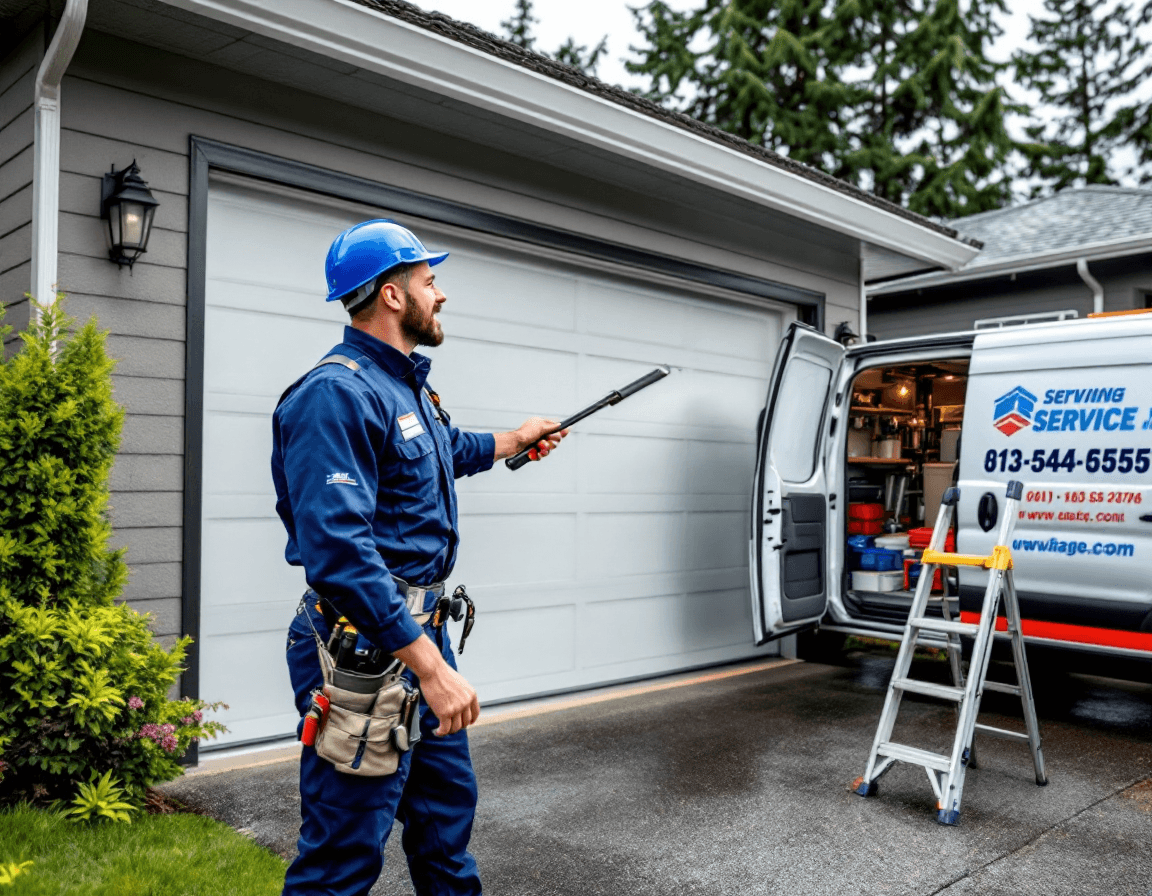
Garage Door Repair in Gig Harbor, WA is a common need for homeowners across the peninsula, especially when a door that worked fine last week suddenly refuses to open, stalls partway up, or closes with an alarming thud. Gig Harbor sits on the west side of the Tacoma Narrows, where Puget Sound air, steady rain from October through April, and cool summer mornings all put extra strain on the moving parts of a residential garage door. Seattle Garage Door Fix handles these calls every week for homes in ZIP codes 98332 and 98335, from waterfront streets near the harbor to newer subdivisions farther up the hill. Most problems are simpler than they look, but they still deserve a careful diagnosis.
This page explains what tends to go wrong with garage doors in Gig Harbor, what you can check safely before calling, and where the line sits between a homeowner's quick inspection and work that belongs to a licensed technician. Many of the symptoms below overlap, so a door that reverses and also grinds may have two separate causes. Knowing how the symptoms relate will help you describe the problem accurately when you call (888) 799-3819, which often speeds up the visit and the repair itself. Typical residential repairs we handle in this area fall in a range of $95 to $450, depending on the parts involved and how much labor the fix requires.
Throughout this guide, you will see references to springs and cables. Those components store a great deal of energy, and working on them without proper training and equipment can cause serious injury. Treat them as off-limits for do-it-yourself work. Everything else described here can be approached with patience, good light, and a clear head, provided you disconnect the opener power first and keep your hands away from moving parts.
Why Coastal Moisture Changes the Way Your Door Behaves
Gig Harbor's climate is mild by national standards, but it is persistently damp, and dampness is hard on steel. Salt-laden air drifts inland from the water, and the wet season keeps garage door hinges, rollers, and track sections wet for long stretches. Over time, that moisture creates light surface rust on exposed hardware, which increases friction and makes the door work harder than it was designed to. Homes near the harbor, the Rosedale corridor, and anywhere with a clear view of the bay often show this wear sooner than homes tucked under heavy evergreen cover.
Temperature swings matter as well. A cold October morning followed by a mild afternoon can change how a steel spring tensions, and the door's balance can shift slightly with it. Many homeowners notice that the door feels sluggish on the first cold day of the season and then seems to behave again once the garage warms up a little. That pattern does not always mean something is broken, but it often points to lubrication that has thickened, or to a balance adjustment that was already marginal and is now tipping past its tolerance.
Because moisture and temperature work together, the best defense is routine attention rather than emergency repair. Wiping down tracks, keeping the garage reasonably dry, and checking hardware for orange or brown spots every few months will catch problems early. A little silicone-based or lightweight garage door lubricant on hinges, rollers, and pivot points, applied sparingly, goes a long way. Avoid heavy grease on tracks, since it collects grit and dust that gums up the rollers. If you notice rust blooming on a hinge or a roller stem, mention it to a technician, because corroded hardware often needs replacement rather than cleaning.
When the Door Refuses to Open or Close
A door that will not move at all is the symptom that generates the most urgent calls, and it is often the easiest to narrow down. Start by checking whether the opener has power. Look at the light on the opener unit, confirm the outlet is live by plugging in a lamp, and make sure the breaker has not tripped. Many Gig Harbor garages share circuits with freezers, dehumidifiers, or outdoor lighting, so a tripped breaker during a heavy storm is more common than people expect.
If the opener has power but the door stays put, the next step is to check the emergency release cord, the red handle hanging from the rail near the opener trolley. Pull it once to disconnect the door from the opener, then try lifting the door by hand at the bottom panel. A door that lifts smoothly by hand points toward the opener or its travel settings. A door that feels extremely heavy, or that will not budge, suggests a broken spring, a bent track, or a jammed roller, and that requires professional help. Do not attempt to force the door or repair the spring yourself.
Here are the quick checks we recommend before scheduling a visit:
- Confirm the opener light is on and the wall button or remote shows a steady indicator.
- Check the breaker panel and reset any tripped breaker once, then stop if it trips again.
- Pull the emergency release cord and try lifting the door gently by hand.
- Look for obvious obstructions such as a bicycle, a bag of gravel, or a child's toy that has landed in the door's path.
- Listen for a clicking motor with no movement, which often indicates a stripped gear or a worn drive component.
If none of these steps restore normal operation, call a technician rather than continuing to push the opener. Repeated attempts can strip gears or overheat the motor, which turns a modest repair into a larger one.
Reversing Before the Floor: Sensors and Travel Limits
When a door goes down, reaches a few inches above the concrete, and then rises again, the most likely culprit is the safety sensor pair mounted near the bottom of the track on each side. These photo eyes send an invisible beam across the opening, and if that beam is interrupted during closing, the opener is designed to stop and reverse. The system exists to prevent the door from crushing a pet, a child, or a bag of groceries, and it is a federal safety requirement on modern openers. A reversing door is doing exactly what it was built to do, even though it is frustrating.
Sensor problems in Gig Harbor often come from simple causes. Spider webs, dust, or a film of road grime can cloud the lenses, and sunlight glaring through a west-facing garage window can wash out the signal in the afternoon. Sensors also drift out of alignment when a door is bumped, when a broom or a trash bin brushes against the bracket, or when the mounting screws loosen with vibration. Check that both sensors are mounted at roughly the same height, usually within a few inches of the floor, and that their indicator lights are solid rather than blinking. Wipe the lenses with a soft dry cloth.
Sometimes the travel limit settings are the real issue, especially after a new opener is installed or a door has been adjusted. An opener that was set too tightly may interpret normal resistance as an obstruction. Adjusting limits involves small screws or buttons on the opener unit, and while many homeowners can locate them in the manual, incorrect settings can cause the door to close with too much force or fail to close fully. If your door reverses consistently even after the sensors are clean and aligned, have a technician confirm the force settings and test the reversal function. A proper test is part of any reliable repair, and it protects the people who use the garage every day.
Grinding, Squealing, and Banging: Reading the Noises
Garage doors speak in their own language, and learning to recognize a few common sounds can save you time and money. A high-pitched squeal usually means dry metal, most often at the hinges or the roller stems. A grinding noise that rises and falls with the door's movement suggests worn rollers, a loose bracket, or gear teeth in the opener that have lost their smoothness. A sharp bang at the top or bottom of travel often indicates a loose cable, a track that is slightly out of square, or a stop that has shifted.
In Gig Harbor, a squeal that appears in the rainy season often comes from hardware that has picked up moisture and is starting to corrode. Lubricating the hinges and rollers can quiet it for a while, but if the noise returns quickly, the rollers themselves may be worn or the nylon tips may have flattened. Steel rollers tend to last longer on coastal homes, but both types can deteriorate, and a roller that has cracked or lost its shape will drag along the track and place extra load on the opener. Replacing rollers is a routine repair that many technicians complete in a single visit.
Banging deserves more caution. A loud crash when the door reaches the top of its travel can mean the door is hitting its stop too hard, which may be a limit setting or an imbalance. A bang when the door starts moving can signal a loose or damaged cable, and a frayed or slipping cable is a serious concern because it can drop the door unexpectedly. If you hear a sharp snap, see a cable hanging loose, or notice the door sitting crooked at one side, stop using the door and call for service. Those symptoms are not safe to test with the door in motion.
Crooked Movement, Uneven Lifting, and a Door That Sticks Halfway
A door that rises unevenly, with one side racing ahead of the other, is one of the most telling symptoms a technician can see. The usual causes are a broken or stretched spring on one side, a cable that has slipped off its drum, or a track section that has been knocked out of alignment. Because the two sides share the lifting load through the torsion or extension springs, a failure on one side forces the other side to carry more weight than it was designed for. Left alone, this can damage the opener, bend tracks, and make the door unpredictable.
Stuck halfway is a different pattern. A door that stops mid-travel and sits there may be jammed by a roller that has popped out of the track, a bent section of track, or an object lodged in the path. It can also happen when the door's balance has shifted, so the opener cannot lift the full weight and gives up at a certain height. Pull the emergency release, then check the tracks visually from inside and outside the garage. Look for gaps where a track has separated from its bracket, or for a roller that is sitting above or beside the track rather than inside it.
Do not try to hammer track sections back into place or pry rollers in with a screwdriver. Those actions can bend the track further or cause the roller to jump violently when the door is released. A technician will check track alignment with a level and a straightedge, assess whether the springs are still sized correctly, and confirm the cable is seated properly on the drum. Many uneven-movement problems come down to a worn spring, which is a job reserved for trained professionals, but a good technician will explain the full picture before any parts are ordered.
When the Remote or Wall Button Stops Responding
A remote or wall button that does nothing is often the simplest problem on the list, but it can be frustrating when you are standing in the rain with groceries. Begin by replacing the batteries in the remote, since a weak battery can work intermittently before it fails entirely. Check that the wall button wiring has not been chewed by a pet or pinched behind drywall, and confirm the button is not stuck. If the opener's indicator light flashes when you press the remote, the signal is reaching the unit, which points toward a programming issue rather than a dead opener.
Programming can be lost after a power outage, a storm that causes a surge, or a change in household electronics. Many openers have a learn button on the motor unit, and reprogramming a remote involves pressing that button and then the remote within a set time window. The exact steps depend on the brand and model, so consult the manual or the label on the motor housing. Wireless keypads and smartphone-connected systems add another layer, since their Wi-Fi or Bluetooth connections can drop after a router reset or a change in internet service.
Radio interference is another factor on the peninsula. Some homes near busy roads, fire stations, or large commercial sites experience intermittent signal problems, particularly with older opener models that use lower-frequency remotes. If the remote works from the driveway but not from the street, or only works when the car is parked at a certain angle, the receiver antenna may need repositioning or replacement. A technician can test the signal strength and recommend an upgrade if the existing system is no longer dependable.
Slamming, Sagging, and Springs That Need a Licensed Hand
A door that drops quickly, slams at the bottom, or sags visibly from the top panel is often telling you that a spring is no longer doing its job. Torsion springs mounted above the door carry most of the weight, and extension springs running along the sides do the same job on certain door designs. Over years of cycling, springs lose tension, fatigue, or snap entirely. A door that slams shut may have a spring that has weakened unevenly, or it may be missing its balance because the cable has stretched or the drum has slipped.
Sagging is the visible sign that the door's weight is no longer evenly supported. You might see a horizontal gap between the top section and the frame, or notice that the bottom seal no longer meets the floor. Sagging doors also put extra stress on the opener and can cause the door to bind in the track. Because spring tension is stored energy, a broken spring can release that energy suddenly and violently, which is why spring replacement must be performed by a licensed, trained technician with the right tools and safety procedures.
Homeowners sometimes ask whether they can replace a spring themselves to save money. We strongly advise against it. Winding bars slip, springs can release under load, and the risk of serious injury is real even for people who consider themselves handy. If you suspect a spring problem, keep the door closed, disconnect the opener, avoid standing under the door, and schedule a professional inspection. A licensed technician will test the balance, measure the spring, and replace it with a correctly matched pair when needed.
Off-Track Doors and Visible Gaps Around the Frame
When a door comes off its track, it is an urgent safety issue, and the door should not be operated until a technician has inspected it. A door that has jumped its track may hang at an angle, lean inward or outward, or sit with one side noticeably lower than the other. Gaps around the perimeter, especially at the top corners or along the sides, can also indicate that the door is no longer seated in its tracks or that the frame has shifted. Do not attempt to lift a door that is off track by hand, and keep children and pets clear of the area.
Gaps that appear gradually often have several causes working together. Weatherstripping that has hardened, split, or pulled loose allows light, drafts, and wind-driven rain to enter, and in a marine climate that moisture can creep into the garage and affect the wood framing around the door. Gaps at the bottom may come from a worn or missing bottom seal, or from a floor that has settled unevenly over time. Many older Gig Harbor homes have slab foundations that have shifted slightly, which can change the clearance between the door and the concrete.
Some gap repairs are simple enough for a homeowner: replacing a section of weatherstripping, for example, or installing a new bottom seal. Others involve track alignment, hinge replacement, or door panel repair, and those belong to a technician. A good inspection will identify whether the gap is cosmetic, whether it affects operation, and whether it introduces safety concerns. Addressing gaps early can prevent the door from warping further and can keep the garage warmer and drier through the wet months.
Notes for Harborview, Gig Harbor North, and Rosedale Homes
Garage doors in different parts of Gig Harbor face slightly different conditions. Homes in the Harborview area, many of them close to the water or on sloped lots with long driveways, tend to experience stronger wind exposure and more salt in the air. Doors on these properties benefit from regular hardware inspections, and wind-driven rain can push water behind weatherstripping faster than it does inland. A slightly heavier-gauge track or reinforced bracing may be worth discussing with a technician if the door sees frequent gusts.
Gig Harbor North includes a mix of newer residential construction, retail corridors, and multifamily housing. Many homes here have attached two- and three-car garages with larger doors, which weigh more and place greater demand on springs and openers. Multi-door garages sometimes have sensors and openers that were installed at different times, so compatibility and synchronization matter. If you share a garage with a neighbor or manage a property with several bays, a technician can review each door's setup and recommend a consistent maintenance schedule.
The Rosedale area and surrounding neighborhoods often feature single-family homes with a range of door ages, from original builder-grade installations to replacement doors added within the last decade. Older doors may use components that are no longer common, which can make certain repairs slower to complete. Many homes in this part of the peninsula also have trees overhanging the driveway, so debris, pine needles, and moss can accumulate in the tracks. A simple quarterly sweep of the track and a check for loose fasteners will prevent many of the problems described above.
What a Typical Repair Visit Looks Like and What It Costs
A repair visit with Seattle Garage Door Fix begins with a conversation about what the door is doing and when the problem started. Tell the technician whether the symptom is constant or intermittent, whether it occurs in cold weather or after rain, and whether any unusual sounds accompany the movement. That information shortens the diagnosis because it helps the technician test the most likely causes first. The technician then inspects the door, tracks, springs, cables, rollers, hinges, opener, sensors, and wiring, and explains what was found in plain language.
Most residential repairs in our service area fall within a price range of $95 to $450, depending on the parts required and the labor involved. Simple jobs such as sensor realignment, remote programming, or a roller replacement sit toward the lower end, while spring replacement, cable repair, or opener replacement typically cost more. Every repair should begin with a clear explanation of the problem and the recommended fix, so you can decide how to proceed before any work begins. Ask questions, and expect straightforward answers.
Here is what you can expect at a typical appointment:
- A walk-through of the symptoms you have observed, including noises, timing, and any recent changes.
- A visual and functional inspection of the door, tracks, springs, cables, and opener.
- A safety check of the sensors and force settings, with a test of the reversal function.
- A written or verbal explanation of the recommended repair and any alternatives.
- Completion of the approved work, followed by a test cycle to confirm smooth operation.
If you are in Gig Harbor, Harborview, Gig Harbor North, Rosedale, or the surrounding area and your garage door is stuck, noisy, crooked, or refusing to respond, call Seattle Garage Door Fix at (888) 799-3819. Our licensed, bonded, and insured technicians will diagnose the problem, explain your options clearly, and handle spring and cable work safely so your door can get back to reliable daily use.