
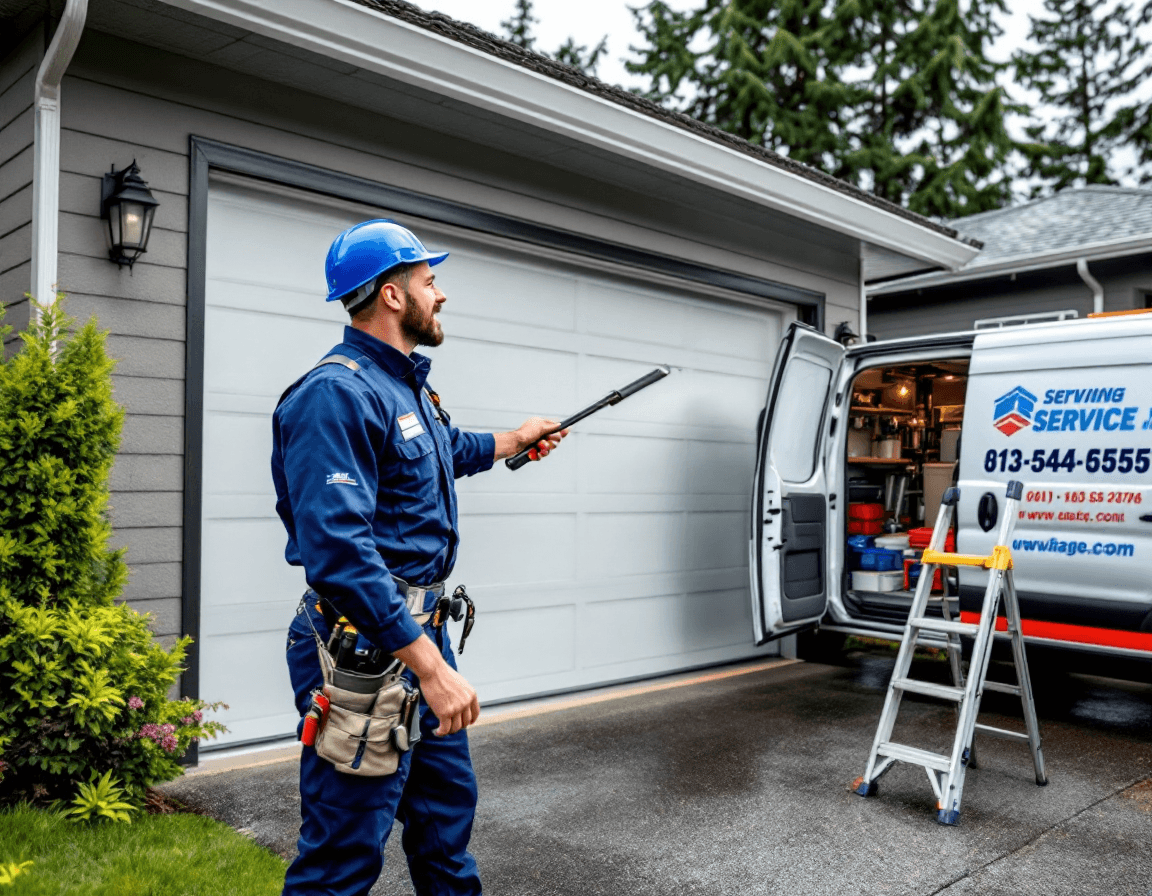
Garage doors in Ruston, WA take a lot of abuse from the local climate and from the way homes here are built. If your door won't open, closes only partway, or has started making a sound it never made before, you need someone who understands both the hardware and the conditions around it. Our technicians handle garage door repair across Ruston and the surrounding Tacoma neighborhoods, and we aim to get your door safely moving again on the first visit whenever the parts allow. A repair that holds up through a wet Pacific Northwest winter starts with an accurate diagnosis, not a guess.
Ruston sits right on the water along Commencement Bay, with the waterfront and redeveloped Point Ruston area within walking distance of many homes. That location brings sea air, wind off the Sound, and long stretches of drizzle that never quite dry out a garage floor. Many of the houses here are older, and some have detached garages, sloped approaches, or driveways that tilt toward the street. Each of those details affects how a door opens, closes, and balances over time. We know these conditions well, and we plan our repairs around them.
This page walks through the most common problems we see on residential doors in the area, explains what each symptom usually means, and describes what a proper repair involves. It also covers the safety reasons spring and cable work should always be left to trained professionals, and it gives a realistic picture of pricing. Most residential repairs fall between $95 and $450, depending on the parts needed and the complexity of the job. If you are dealing with a door right now, read through the sections that match what you are seeing, and call us if you want a technician to take a look.
Why Ruston Garage Doors Wear Out Sooner Than Expected
Salt-laden air from the Sound is hard on steel, and garage doors are mostly steel. Springs, hinges, rollers, track brackets, and the bolts that hold everything together are all exposed to moisture that carries a little salt with it. Over several years, that combination causes surface rust, which leads to stiffness, seized rollers, and weakened fasteners. Homes a few blocks inland can see the same problems, but doors closer to the water tend to show them earlier.
Rain and humidity add another layer of wear. Wood-framed doors can swell and warp, and the weatherstripping along the bottom and sides can compress, crack, or pull away. When the door's weight is no longer distributed evenly, one side works harder than the other, which is often the first hint of a larger issue. Many Ruston garages are also used for storage, so they stay closed for long periods and then get opened on damp mornings, which keeps metal parts cycling between cold and wet.
Because of this, we recommend checking your door more often than you might for a home farther from the water. A quick look at the rollers, hinges, and track every season can catch corrosion before it turns into a failed part. Wiping down hardware and keeping the door's moving parts lightly lubricated with a silicone-based or garage-door-specific lubricant (not heavy grease, which attracts grit) goes a long way. If the surface rust has already started, our technicians can tell you whether it is cosmetic or whether it is weakening a component that needs replacement.
Reading the Early Warning Signs Before a Door Quits
Garage doors rarely fail without warning. Most of the time, the first signs are small: a slight pause when the door starts to lift, a section that looks a little higher than the others, or a remote that needs to be pressed twice before it responds. Catching these early usually means a simpler and less expensive repair, because the damage has not yet spread to other components.
Pay attention to changes in how the door feels as well as how it sounds. A door that used to rise smoothly but now hesitates, shudders, or seems heavier on one side is telling you something about its balance or its moving parts. A door that stops at odd heights, or that stays up a few inches when it should close, may have a safety sensor or travel-limit issue rather than a mechanical failure. Each of these symptoms points toward a different part of the system.
If you notice several of these signs at once, it is worth scheduling service before the door fails outright. A door that is stuck open can leave your home exposed, and a door that drops unexpectedly can damage a vehicle or cause injury. Our team can inspect the full system in one visit, so you are not paying for multiple separate trips to chase related problems.
When the Door Reverses Before It Reaches the Floor
One of the most common complaints we hear is a door that goes down, then suddenly reverses and goes back up before it closes. This is almost always a safety feature doing its job. Modern openers are designed to reverse if they detect an obstacle, and they rely on two systems to do this: a pressure-based force setting and a pair of photo-eye sensors mounted near the floor on either side of the opening.
The photo-eye sensors are the most frequent culprit. They are small, and they are exposed to dust, spider webs, rain blowing in under a door, and the occasional bump from a bicycle or a trash bin. If the sensors are misaligned, dirty, or damaged, the opener thinks something is in the way and reverses. You can often spot the problem by checking that both sensor lights are steady and that the sensors face each other squarely. Wiping the lenses with a soft cloth and removing any debris often resolves the issue on its own.
If the sensors look fine, the door may be out of balance, or the opener's close-force setting may be too sensitive for the door's current weight. A door that has corroded hinges, a worn roller, or a sagging panel can present more resistance than the opener expects, triggering a reversal. These are repairs we handle regularly, and in most cases they involve adjustment or a single replacement part rather than a full system overhaul.
Grinding, Squealing, and Banging: Decoding the Noise
A garage door should not sound like a machine falling apart, but it does make some noise. The trick is knowing which sounds are normal and which ones indicate a failing part. A steady, low hum from the opener motor is typical. Sharp squeals, metallic grinding, or heavy banging are not.
Squealing usually comes from dry or corroded rollers and hinges. Nylon rollers can wear flat, and steel rollers can seize as their bearings dry out or rust. Grinding often points to a worn gear inside the opener or to rollers that have lost their smooth movement inside the track. Banging, especially a sharp thud at the top or bottom of travel, can mean loose track brackets, a worn bearing plate, or a panel that has shifted out of alignment.
Some noises are more urgent than others. A loud crack or snap, especially when paired with a door that suddenly drops or hangs unevenly, can signal a broken spring or cable. Stop using the door in that case and keep people and vehicles clear of the opening. Do not attempt to lift the door manually to test the spring. Call a licensed technician, who can secure the door and replace the damaged components safely.
Crooked Doors, Uneven Travel, and Off-Track Panels
A door that looks crooked, rises unevenly, or sits lower on one side is a sign that the two sides of the system are no longer working together. In most cases, one spring is weaker than the other, one cable has stretched or frayed, or a roller has come out of the track on one side. Each of these problems causes the door to bind, which strains the opener and accelerates wear.
Off-track doors are more serious. When a roller jumps the track, the door can tilt, catch, or come partly loose from its guide. If you see a visible gap between the top panel and the header, or if the door has come out of its channel, stop operating it immediately. Trying to force it back in can bend the track, damage the panels, or injure someone. A technician will need to realign the track, replace damaged rollers, and check the cables and springs before the door is used again.
Uneven travel also shows up as a door that stops at different heights on each side or that makes a scraping sound along one edge. Hillside driveways and slightly settled foundations, which are common in parts of Pierce County, can contribute to this by changing how the door sits in its opening. Our technicians check the level of the track, the plumb of the door, and the tension of the springs to bring everything back into balance.
Stuck Halfway: What Jams Look Like on Hillside Driveways
A door that stops halfway, whether open or closed, is one of the most frustrating problems a homeowner can face. The door may be jammed by a single failed part, or it may be the result of several small issues that combined to create resistance. Ruston's sloped driveways and older garage openings can make a jam more likely, because the door has less room for error.
Common causes include a bent track, a roller that has slipped out of its channel, a broken cable, or an obstruction in the track such as a loose bolt, a piece of debris, or a damaged bracket. The opener may also be on a limit setting that has shifted, so that the motor stops before the door reaches its full travel. If the door has stopped and the opener is making a humming or clicking sound, the motor is trying to move the door but cannot, which is a sign the mechanical system is blocked.
Never try to free a stuck door by pulling on it with your hands or a vehicle. The tension in the springs can cause serious injury even when the door appears to be at rest. If the door is stuck and you need access to your home or car, use the emergency release cord only if you know the door is not under a spring-driven load that could move unexpectedly. When in doubt, call a technician. We can secure the door, clear the blockage, and restore normal operation without putting you at risk.
Dead Remotes and Silent Wall Buttons: Power Versus Hardware
When the remote or wall button does nothing, the first question is whether the problem is in the controls or in the opener itself. Start with the simple checks. Replace the batteries in the remote, confirm the wall button is receiving power, and make sure the opener's power cord is plugged in and the breaker has not tripped. A surprising number of service calls begin and end with a tripped breaker or a remote whose battery died.
If those checks do not solve the problem, look at the opener's indicator lights and the wall control's wiring. A flickering light, a button that works intermittently, or a remote that responds only when you stand close to the door can point to a weak transmitter, interference, or a failing receiver board. Some openers also have a learn button that can be used to reprogram remotes, but it should be used carefully and according to the manufacturer's instructions. If the opener does not respond at all, the motor or control board may have failed.
Remote problems can also come from outside the garage. Nearby electronics, new wireless devices, or even a neighbor's similar opener can sometimes interfere with the signal. We can test the frequency, replace the receiver or the remote, and check the wiring to determine whether the fault is in the controls or the drive unit. That way you are not replacing parts you do not need.
Slamming Shut: Why a Fast Close Is a Problem
A door that closes too quickly, or that seems to drop instead of lowering smoothly, is not just unpleasant. It is a sign that the balance or the control system is out of specification. Springs that have lost tension, cables that have stretched, or a damaged drum can all cause the door to fall faster than it should. A dropping door can injure a person or damage a vehicle, and it puts stress on every component that is trying to slow it down.
Fast closing is often linked to a worn or broken spring. When one spring fails, the door becomes heavier to lift and may descend with uncontrolled speed on the side that has lost tension. This can also cause the door to come off the track or to bind on one side. If you notice a sudden change in how fast the door comes down, treat it as a safety issue and schedule service promptly.
The opener's down-force and close-speed settings can also be adjusted, but adjustments should never be used to compensate for a failing spring or a damaged cable. Those components store significant energy, and working with them without the right tools and training is dangerous. Our technicians inspect the full system, measure the tension, and replace components as needed so the door closes at a controlled, safe speed.
Why Springs and Cables Belong to a Licensed Professional
Torsion springs and lift cables are the heart of a garage door's balance system, and they store a great deal of energy. A torsion spring can hold enough tension to cause serious injury if it releases unexpectedly. Even experienced homeowners can be hurt by a spring that slips or a cable that snaps under load. For that reason, spring and cable work should never be attempted as a do-it-yourself project.
Professional technicians have the right winding bars, the correct safety equipment, and the training to release spring tension safely and replace components correctly. They also know how to check the condition of the drums, the bearings, and the center bracket, all of which must be in good shape for a new spring or cable to perform properly. Installing a spring with the wrong specification or with worn supporting parts can lead to premature failure and new safety risks.
If you are unsure whether a spring or cable is the cause of your problem, call a licensed technician rather than inspecting it up close yourself. We are licensed, bonded, and insured, and we will explain what we find in plain language. Safety is always the first priority, and it is the reason we recommend professional service for any work involving springs or cables.
What a Typical Ruston Repair Visit Involves and What It Costs
Most residential garage door repairs in Ruston range from $95 to $450, depending on the part needed, the door's size and weight, and how much labor the job requires. A simple sensor realignment or a roller replacement will usually fall near the lower end of that range. A spring or cable replacement, a track repair, or an opener replacement will typically be higher, because those jobs involve more parts and more time.
During a service visit, the technician will begin by inspecting the door and opener to identify the problem. That usually includes checking the balance, the track alignment, the rollers and hinges, the springs and cables, the sensors, and the opener's settings. We will explain what we found and give you the options before doing any work, so you know what is needed and what it will cost. If a part must be ordered, we will tell you how long it is likely to take.
We believe in straightforward service. If a repair is minor, we will tell you so and avoid unnecessary upselling. If a component is worn out and will fail soon, we will explain why and what it will take to replace it. Our goal is to get your door working reliably and safely, not to sell you work you do not need. Pricing for your specific situation will depend on what the inspection reveals, and we will always confirm the details with you before proceeding.
Keeping Your Door Working Through Ruston's Wet Winters
Preventive care is one of the best ways to avoid emergency repairs, especially in a damp coastal climate. A few simple habits can extend the life of your door and catch problems while they are still small. Doing them twice a year, ideally before the wet season and again in late spring, is usually enough for most homes.
- Check the weatherstripping along the bottom and sides, and replace any sections that are cracked, compressed, or pulling away from the door.
- Wipe the photo-eye sensor lenses and confirm both lights are steady, then clear away cobwebs and debris around the sensor brackets.
- Inspect rollers, hinges, and track brackets for rust, looseness, or wear, and tighten any visible bolts with the correct tools.
- Lightly lubricate the rollers, hinge pivot points, and the track with a garage-door-specific lubricant, wiping off any excess to avoid attracting grit.
- Test the auto-reverse feature by placing a flat object, such as a piece of wood, in the door's path and confirming the door reverses when it contacts the object.
- Watch for changes in sound, movement, or balance, and schedule service if anything seems different from normal operation.
Avoid doing spring or cable work yourself, and never stand under a door while it is being operated or repaired. If something seems wrong, it is better to call a technician early than to wait for a failure. A door that is serviced regularly is less likely to surprise you on a cold, rainy morning when you need to leave for work or get the car out in a hurry.
Your garage door works hard every day, and in Ruston it works in some of the most demanding conditions in Western Washington. Whether you are dealing with a door that reverses, grinds, sags, or refuses to move, our licensed technicians are ready to diagnose the problem and restore safe, smooth operation. Call (888) 799-3819 today to schedule your repair, and let us get your Ruston garage door back on track.