
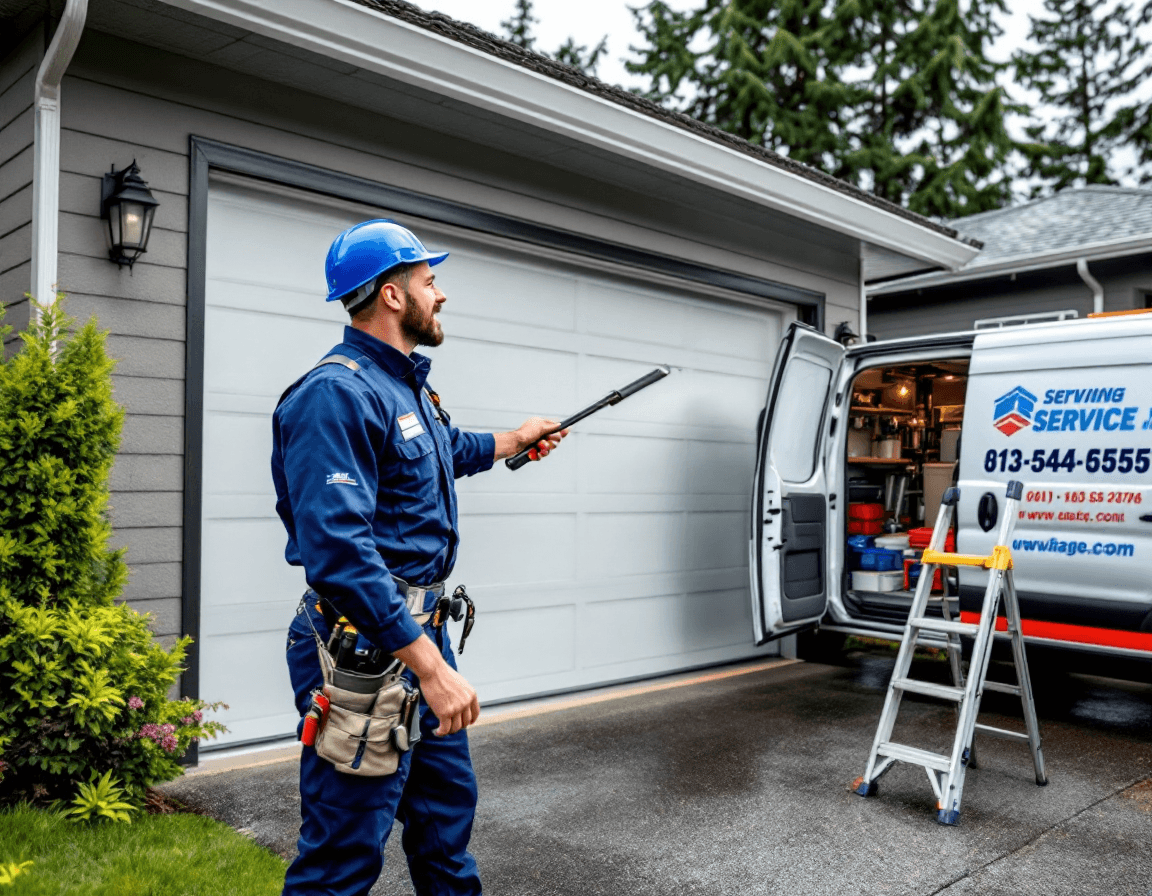
Garage Door Repair in Fircrest, WA is a practical need for many homeowners on the west side of Tacoma, where a garage door that sticks, stalls, or refuses to close can throw off an entire morning. Fircrest is a small, close-knit city in Pierce County, and most of its homes were built with a single or double garage that gets used every day for parking, storage, and a main entrance to the house. When that door stops behaving, it affects everything from getting kids to school to keeping the house secure overnight. This page explains what commonly goes wrong with residential doors in the 98466 area, what the warning signs look like, and what a typical repair involves.
Our technicians see the same patterns repeatedly across Fircrest, and most of them are not mysterious once you know what to look for. A door that drifts crooked, grinds on the way up, or reverses halfway down usually has an identifiable cause, often something related to tracks, rollers, sensors, or balance. Catching these issues early tends to keep a simple adjustment from becoming a larger failure that leaves you stuck outside. The sections below walk through the most common symptoms, what they usually mean, and how a licensed technician approaches each one.
Our goal is to give you enough information to make a confident decision about your door, whether you want to try a quick check yourself or simply call for help. Typical residential repairs we handle in this area fall in the range of $95 to $450, depending on the part and labor involved. Nothing here replaces an on-site inspection, but understanding the basics can save time and help you describe the problem clearly when you call.
How the Puget Sound Climate Quietly Wears Down Your Door
Western Washington winters bring long stretches of rain, humidity, and cool temperatures, and those conditions have a real effect on garage doors. Moisture finds its way into steel hinges, roller bearings, and the mounting brackets that hold the track to the framing. Over time, surface rust forms on exposed hardware, and the lubricant that once allowed smooth travel gets washed away or turns gummy. Wood doors can also swell slightly during wet months and then tighten up as the weather dries, which changes how the panels sit within the tracks.
Fircrest's location near Commencement Bay and the wider Puget Sound means many properties see damp air that lingers well into the morning, even on days that are not raining. That moisture accelerates corrosion on springs, drums, and cables, and it can cause the vinyl or rubber weatherstripping along the bottom seal to stiffen and crack. Homeowners often notice that a door which moved beautifully in August begins to complain in November, and that seasonal pattern is usually a clue. Pay attention to when a noise or stall first appears, because the timing often points toward moisture, temperature swings, or a lubricant that needs replacing.
Cold snaps, which do occur in the region from time to time, can also thicken old grease and make the opener work harder than it should. A door that struggles during a chilly morning and then runs fine by afternoon is often showing a lubrication or balance issue rather than a failing motor. Our technicians look at hardware condition as part of every visit because the climate affects the whole system, not just one component. A thorough inspection in this area usually includes checking for rust, worn rollers, and seal damage alongside the immediate problem you called about.
When the Door Refuses to Open or Close at All
A door that will not move at all is one of the most common reasons homeowners call for same-day help. Before assuming the worst, it is worth checking the simplest possibilities, such as whether the power is on at the outlet, whether the breaker has tripped, and whether the opener's lights blink when you press the wall button. Many openers also have a manual release cord, usually a red handle hanging from the rail, and pulling it disconnects the door from the opener so you can lift it by hand. If the door moves freely when released but not when connected, the problem is likely in the opener or its connection rather than the door itself.
When the door is stubborn in only one direction, the cause is often different. A door that opens partway and then stops may have an obstruction in the track, a damaged roller, or a travel limit that has drifted out of adjustment. A door that closes only halfway may be triggering safety features because something is interrupting the photo-eye sensors near the floor. Those sensors are small but important, and a bit of cobweb, dust, or a bumped bracket can keep them from aligning properly. Always check that the sensors face each other and that their indicator lights are steady before assuming a larger fault.
If you have ruled out power and sensors and the door still will not travel, it is time to call a professional rather than attempting repairs. Opener gear, logic boards, and track alignment all require proper tools and training, and a mistake can damage the door or injure someone nearby. Our technicians arrive prepared to test the opener, the travel settings, and the drive mechanism, which usually resolves the issue in a single visit. Most straightforward fixes in this category fall within our typical residential price range, and we will explain what we found before doing any work.
- Confirm the outlet has power and the breaker has not tripped.
- Look for blinking or steady indicator lights on the opener and the wall control.
- Make sure the sensor lenses are clean, unobstructed, and aligned.
- Check that the manual release handle is in the locked (connected) position.
- Note whether the door moves smoothly by hand when disconnected.
Why the Door Reverses Before It Reaches the Floor
A door that starts to close and then bounces back up before touching the ground is trying to protect someone from injury, and that is a good thing. Modern openers are designed to reverse if they detect resistance, and the most common trigger is the photo-eye sensors described earlier. Even a small misalignment, such as a sensor bracket that has shifted after someone bumped it with a bicycle or a ladder, can cause the door to think something is blocking its path. Check the sensors first, and make sure the wires are not pinched or loose at the connection points.
A second common cause is the closing force setting, sometimes called the down-force or travel-limit adjustment. Over time, the balance of the door can change as springs age or hardware loosens, and an opener that once had enough strength may now detect the extra effort as an obstruction. Some openers also have a sensitivity setting that becomes too tight after a service call, which can make the door reverse on minor bumps or small debris on the floor. Adjusting these settings is a task for someone who understands the specific model, because the wrong change can make the door unsafe.
Reversing can also point to a door that is out of balance, meaning its weight is not evenly supported by the springs. If you lift the door by hand to the halfway point and it stays put, the balance is probably fine, but if it drifts up or down on its own, the springs or cable system need attention. This is where safety becomes critical. Springs under tension can cause serious injury if handled improperly, so balance adjustments and spring replacement should always be left to licensed professionals who have the right equipment. We recommend a full inspection so the source of the reversal is identified rather than guessed.
Grinding, Squealing, and Banging Sounds Explained
Garage door noise is one of the most useful diagnostic tools a homeowner has, because each type of sound tends to point toward a specific problem. A high-pitched squeal usually means dry or unlubricated metal, often at the rollers, hinges, or the torsion or extension springs. A grinding noise that comes from the opener itself, particularly as the door starts or stops, often indicates worn gears, a failing trolley, or a belt or chain that needs adjustment. A deep, hollow bang when the door reaches the top or bottom of its travel is frequently a sign of loose hardware or a track that has shifted slightly out of alignment.
Rattling and clicking during operation can result from loose brackets, worn bearings, or a track that is not fully tightened to the wall and ceiling supports. Homeowners in older Fircrest homes sometimes find that the track was installed with fewer supports than current recommendations call for, which allows movement under load and leads to noise over time. Tightening fasteners is a reasonable step to take, but only when the door is fully closed and the opener is disconnected, and only if you are comfortable working at that height. Overtightening can strip screws or crack the track, so the work should be gentle and methodical.
If the noise is accompanied by vibration, uneven movement, or a smell of burning, stop using the door and call for service. These symptoms can indicate a problem that could worsen quickly, such as a damaged drive belt, a motor overheating, or a broken roller that is dragging the panel sideways. A technician can identify the exact source with a few targeted checks, and many of these repairs are routine parts and labor within our $95 to $450 residential range. Early attention to unusual sounds almost always costs less than waiting until the door fails completely.
Crooked Doors, Uneven Travel, and Panels Coming Off the Track
A door that looks crooked when it closes, or that rises faster on one side than the other, is not just unattractive. It places uneven stress on the springs, cables, rollers, and opener, and it can cause the bottom seal to lose contact with the floor along one edge. The most common cause is a broken or worn spring or cable on one side, which leaves the other side to carry more of the load. Sometimes the problem is a bent track or a roller that has jumped out of its channel, and in more serious cases a door panel can pull partly off the track entirely.
Homeowners sometimes assume that a crooked door can be fixed by adjusting the opener, but the opener only controls travel and force, not the physical balance of the door. A door that is off its tracks should not be operated at all, because continued movement can damage the panels and create a hazard for anyone walking beneath it. If you see a gap between the top section and the track, or a roller sitting outside its channel, do not try to force the door back into place. Stay clear of the opening, keep children and pets away, and call for service.
When our technicians realign a door, they check each roller, track section, hinge, and bracket for wear and proper seating. They also look at the cable drums and spring tension to determine whether one side has failed or whether the door has simply shifted over time. Realignment is often a reasonable repair, but if a spring or cable has broken, the work must be done by licensed technicians with specialized tools. Please do not attempt spring or cable work yourself. The stored energy in these components is significant, and even experienced homeowners have been seriously hurt by a single mistake.
A Door Stuck Halfway or Jammed Solid
Few things are more frustrating than a door that stops partway up or down and refuses to budge. This symptom usually has one of a handful of causes, including an obstruction in the track, a snapped cable, a broken spring, or an opener that has reached its force limit. Start by looking for anything that might be lodged in the track, such as a stray tool, a child's toy, or accumulated debris from a windy storm. If nothing is blocking the path, check whether the door is hanging at an angle, because that often indicates a cable has slipped off its drum or a spring has failed.
A door that is stuck halfway also deserves careful handling. If the cable is broken or slack, the door may feel unstable or may drop suddenly when you try to move it. Do not climb under a suspended door or attempt to support it with your body, and do not try to force it open or closed with the opener. Instead, disconnect the opener using the manual release, keep everyone at a safe distance, and call a licensed professional. A stuck door can often be secured temporarily, but permanent repair requires proper parts and an inspection of the entire system.
Once the cause is identified, the repair is often less dramatic than the symptom suggests. A dislodged cable may be re-seated, a bent track section may be straightened or replaced, and a worn roller may be swapped in a few minutes. Spring replacement is more involved, but it is routine work for a trained crew. We provide clear explanations before any repair begins, and we will tell you if the job requires a part that changes the final cost. Most jammed-door repairs fall within our standard residential pricing, though a broken spring replacement typically sits toward the upper end of that range.
Remotes and Wall Buttons That Stop Responding
When a remote or wall button does nothing, the cause is often simpler than homeowners expect. Remote batteries are the most common culprit, and a fresh coin cell or AA battery can solve the problem instantly. Check whether the remote's indicator light flashes when you press the button, since that confirms the transmitter is working. If the light does not flash, replace the battery before doing anything else, and try a second remote if you have one to help isolate the issue.
If the remote works in some locations but not others, or if the wall button is unresponsive, look at the receiver and wiring. The opener's antenna wire, usually a short dangling wire near the motor unit, should hang straight and not be coiled or taped against metal surfaces. Wall control wiring can loosen or corrode over time, particularly in damp garages, and a broken wire inside the wall can stop the button from communicating with the opener. Exterior interference from new wireless devices, neighboring systems, or even a change in the rolling code can also cause intermittent response.
Some remote issues require reprogramming, particularly after a battery swap on certain models or after a power outage that reset the receiver. A technician can resynchronize your remotes and keypads and test each one to make sure the system is communicating properly. Because remote and keypad work is usually quick and inexpensive, it is often one of the more affordable visits we handle. If the problem turns out to be a failing logic board or a damaged wall control, we will explain the options and the expected cost before making any changes.
Doors That Slam Shut Too Fast
A door that drops quickly, slams against the floor, or closes with alarming speed is a safety concern, both for the people walking nearby and for the door itself. Most modern openers have a closing speed setting, and sometimes the issue is simply a setting that has drifted or been changed. More often, the speed problem relates to the balance of the door. If the springs are weakened or unevenly tensioned, the door may fall faster than it should once the opener releases its hold, and the bottom seal and floor can take a beating as a result.
Worn rollers and tired hinges can also contribute to fast closing. When rollers no longer turn smoothly, they can drag and then suddenly release, creating a jerky or accelerated motion. Loose brackets or a track that has shifted slightly can produce the same effect. Listening carefully to the door as it closes often reveals a rhythm or thump that matches the damaged component. Document the sound and the timing, because that information helps the technician locate the source more quickly.
It is worth noting that a door which slams shut may be showing a spring that is near the end of its service life. Springs are rated for a certain number of cycles, and in a busy household that might be reached sooner than expected. If a spring has begun to fail, replacing both springs at the same time is often recommended, because the other one is likely to follow soon. Spring work is dangerous and should always be performed by licensed technicians. We are happy to inspect your system and explain whether a simple adjustment will suffice or whether a spring replacement is the wiser investment.
Sagging Sections, Visible Gaps, and Worn Hardware
Over the years, garage doors can develop visible sagging, gaps between sections, or a bottom seal that no longer touches the floor evenly. Sagging often stems from worn or stretched hinges, loose bolts, or panels that have been bent by impact or by an unbalanced load. Gaps can allow drafts, water, pests, and dust into the garage, and they can reduce the effectiveness of insulation in attached garages that share a wall with living space. In a region that gets as much rain as western Pierce County, a gap at the bottom can also allow water to pool near the threshold.
Hardware deserves particular attention in this area because of the moisture discussed earlier. Hinges, rollers, and brackets that show surface rust should be inspected for structural weakness, not just appearance. Bolts that have backed out or cracked brackets can cause the door to shift over time, leading to the noise, crookedness, and reversal problems described throughout this page. Replacing worn hardware before it fails completely is usually more economical than waiting for a larger breakdown, and it often improves the door's quiet operation.
Weatherstripping and bottom seals are relatively inexpensive to replace and make a noticeable difference in comfort and moisture control. A new seal should fit snugly against the floor without binding the door, and the side and top seals should prevent light and air from passing through. Our technicians check each seal during a routine visit and can recommend replacement when the material has hardened, split, or pulled away from the frame. Sealing these gaps is one of the more cost-effective upgrades for a Fircrest home that deals with persistent damp weather.
What Repairs Cost in Fircrest and What Shapes the Quote
Most residential garage door repairs we perform in the Fircrest area fall between $95 and $450. The final number depends on the specific part needed, the accessibility of the door, the type of opener, and how much diagnostic time is required before the root cause is clear. Simple tasks such as sensor realignment, remote programming, or a worn roller replacement tend to sit at the lower end of the range. Repairs involving springs, cables, or opener components typically land higher, because they require more labor and more specialized parts.
Several factors influence what you will pay. The door's size and weight matter, as do the style of the track system and whether the door is a standard steel panel design or a custom wood or insulated model. The age of the opener and whether replacement parts are still widely available can also affect cost. Emergency visits outside normal scheduling may carry different pricing, and we will always explain those differences before work begins. Our goal is to give you a clear estimate rather than surprising you with charges after the job is complete.
When you call, describe the symptoms in as much detail as possible. Mention whether the noise happens on opening, closing, or both, whether the door reverses, and whether the problem began suddenly or developed over several weeks. That information helps us prepare the right tools and parts and often shortens the time needed on site. A well-described problem usually leads to a more accurate quote and fewer return visits, which keeps your repair cost as predictable as possible.
- Simple sensor, remote, or wall control work usually sits at the lower end of our range.
- Roller, hinge, and track repairs commonly fall in the middle of the range.
- Spring, cable, and opener component repairs typically fall toward the upper end.
- Doors that require extended diagnostic time may carry a higher total.
- Weather-related seal and hardware replacement is often a modest, preventive expense.
Why Springs and Cables Belong in Licensed Hands
Springs and cables are the most dangerous components of a garage door system, and they are also among the most commonly damaged. Torsion springs, which mount above the door, and extension springs, which run along the sides, store a large amount of energy when the door is closed. If a spring breaks or is released improperly, that energy can cause serious injury, including broken bones and lacerations, and it can damage vehicles and property. For this reason, we treat spring and cable work as a job reserved for licensed, trained technicians who have the correct tools and follow established safety procedures.
Homeowners sometimes consider replacing a spring themselves to save money, but the risks far outweigh the savings. Winding bars can slip, tension can release unexpectedly, and improper installation can cause the door to fall or fail soon after the repair. A licensed technician will measure the door, select the correct spring rating, set the tension safely, and test the balance before leaving. That professional approach protects your household and extends the life of your door.
If you see a broken spring, a frayed cable, or a door that will not stay balanced, do not attempt a repair. Keep the door closed if possible, disconnect the opener, and keep children and pets away from the area. Call our office at (888) 799-3819 so a licensed professional can assess the situation and recommend the right course of action. Safe, reliable service is always the priority, and we would rather explain the options clearly than see someone get hurt trying to save a few dollars.
Whether your Fircrest garage door is refusing to open, grinding through its travel, reversing before it reaches the floor, or sitting crooked on its tracks, a prompt and careful inspection will usually reveal what is happening. Our team serves homeowners throughout the 98466 area and nearby neighborhoods, including those close to Fircrest Park, with fast and dependable residential repairs. Call (888) 799-3819 to describe your symptoms, schedule service, and get a clear explanation of what your door needs before any work begins.