
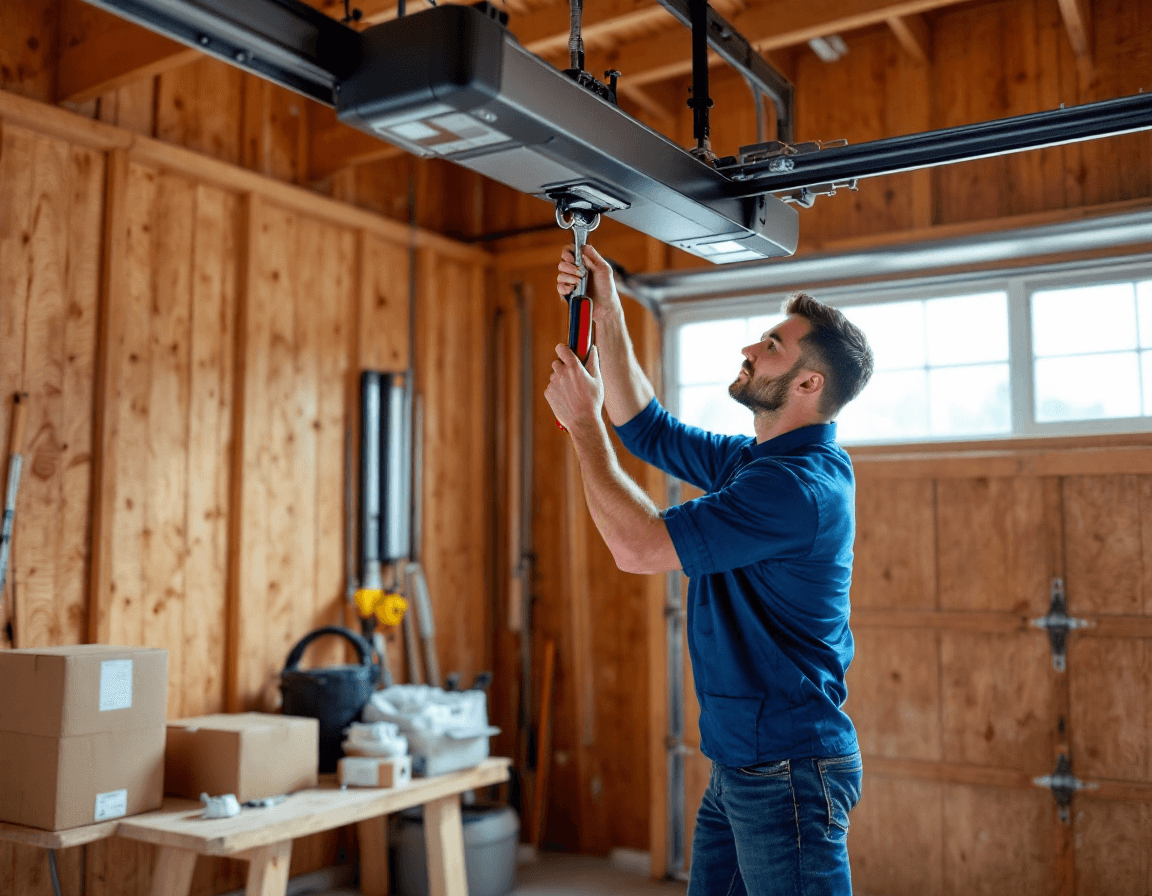
Garage door opener installation and replacement in Puyallup, WA is one of the most practical upgrades a homeowner can make, and it is often more affordable than people expect. Puyallup sits in the Puyallup River valley in Pierce County, where damp winters, occasional hard windstorms, and busy family schedules all put extra strain on the motor, rails, and electronics that run a garage door. An opener that worked fine five or ten years ago may now be loud, sluggish, or unreliable in ways that make every trip out the driveway a small gamble. Replacing it can restore quiet, dependable operation and bring your garage into the era of smartphone control.
Seattle Garage Door Fix installs belt-drive, chain-drive, and wall-mount smart openers for homes across Puyallup and the surrounding Pierce County communities, including the neighborhoods that fall within ZIP codes 98371, 98372, 98373, 98374, and 98375. Our technicians are licensed, bonded, and insured, and we handle the full job from removing the old unit to programming remotes and testing safety sensors. Installed pricing generally falls between $275 and $650, with the final number depending on the opener model, the drive type, and whether any additional hardware or backup power is included. If you are weighing your options, the sections below walk through what to look for and what to expect.
If you are unsure whether it is time for a change, you are in good company. Many Puyallup homeowners only start thinking about their opener after a failure, usually on a cold morning when the door refuses to budge. Planning the swap on your own schedule gives you time to compare drive types, consider features like battery backup, and avoid rushed decisions. The rest of this page is designed to help you make that call with confidence.
Why Puyallup Garages Are Asking for a New Opener
Puyallup has a mix of housing that makes garage door service a varied business. You will find older ranch-style homes near the older parts of town, split-level houses on the hillsides, and newer subdivisions where builders often install a standard opener as part of the original construction. Each of these situations can end with a different story about why the old opener is no longer working well. In older homes, the original unit may be decades old and still running on an antiquated control system. In newer builds, the opener may have been a budget model chosen to keep construction costs down.
Local weather plays a role too. Western Washington winters bring long stretches of rain, humidity that lingers in attached garages, and temperature swings that cause metal parts to expand and contract. Moisture can work its way into wiring connectors, trolley housings, and wall-mounted control panels over time. Summer is typically milder, but the damp season is when many openers begin to show their age. A unit that struggles to lift the door in February may simply be reacting to the cold and wet conditions that have been building all winter.
Puyallup is also a community where people value their vehicles, tools, and stored belongings, so security tends to be a concern. A garage that opens with a predictable signal can be a weak point, and many homeowners realize this only after they hear about a neighbor's car being broken into. Upgrading the opener is one of the most direct ways to address that vulnerability, which is why it appears so often alongside requests for smart controls and modern encryption.
Reading the Warning Signs Your Current Opener Is Done
A garage door opener rarely dies without warning. Most units show a series of symptoms that build over months or years, and recognizing them early can save you from being stranded with the car inside. The most common complaint is noise. A grinding, rattling, or squealing opener is often a sign of worn gears, a failing motor bearing, or a trolley that has lost its lubrication. While a basic tune-up can sometimes quiet an opener for a while, persistent noise usually points to internal wear that will only grow worse.
Slow operation is another clue. If the door takes noticeably longer to open or close than it used to, or if it stops partway and then resumes, the motor may be overheating or struggling to draw enough current. Intermittent behavior is especially worrying because it can mean an electronic board is beginning to fail. A door that works perfectly one day and refuses to respond the next is not something to ignore, particularly if the failure happens when you are leaving for work or returning late at night.
Other signs deserve attention as well. Remote controls that need to be pressed several times before they respond, a wall button that flickers or stops working, or a light on the opener that no longer illuminates can all indicate a failing receiver or power supply. Older units may also lack modern safety features, which is a serious concern if you have children or pets in the household. When several of these symptoms appear together, replacement is usually more sensible than chasing one repair after another.
- Loud grinding, rattling, or squealing during normal operation
- The door pauses, reverses unexpectedly, or moves noticeably slower than before
- Remotes and wall buttons require repeated presses or stop responding entirely
- The opener light or motor cuts out during use
- The unit hums or smells hot after a short run
Belt, Chain, or Wall-Mount: Choosing the Drive That Fits Your Home
The drive system is the heart of how your opener moves the door, and the choice between belt, chain, and wall-mount designs affects noise, maintenance, and price. Chain-drive openers use a metal chain running along a rail, which is durable and typically the most budget-friendly option. They are also the loudest of the three, because metal links clatter against the rail as the door travels. For a garage that sits beneath a bedroom or next to a living area, that noise can become a daily annoyance.
Belt-drive openers use a reinforced rubber belt in place of the chain. The result is a much quieter operation, which is why many Puyallup homeowners with attached garages choose belt drive when they are replacing an older unit. The belt also tends to run more smoothly, which can reduce vibration through the framing of the house. Belt-drive models generally cost a bit more than chain-drive units, but for many households the reduction in noise is worth the difference. It is one of the most noticeable upgrades you can make to daily routines.
Wall-mount openers attach to the wall beside the garage door rather than to the ceiling, which can be an advantage in garages with limited headroom or unusual layouts. They can also free up overhead space for storage or lifts, which is useful in smaller two-car garages common in many Puyallup neighborhoods. Wall-mount designs are available in both belt and chain configurations, so the right choice still depends on your priorities. A technician can measure your ceiling clearance, rail length, and wall structure to recommend the best fit before any hardware is ordered.
Rolling Codes, Wi-Fi, and Keeping Your Puyallup Garage Locked Down
Security is one of the most important reasons to replace an older opener. Many units manufactured before rolling-code technology use a fixed code, meaning the signal between your remote and the opener is the same every time you press the button. A device capable of capturing that signal can potentially reuse it to open the door. Rolling-code systems change the transmitted code with each use, making that kind of replay attack far less practical. If your current opener does not use rolling codes, replacing it is one of the simplest ways to improve your home's security.
Smart features add convenience, but they should be considered alongside security. Wi-Fi-enabled openers, including models compatible with myQ-style smartphone apps, allow you to open, close, and check the status of your door from anywhere. You can receive alerts if the door has been left open, grant temporary access to a family member or house sitter, and review activity history. These features are especially useful for people who travel, work irregular hours, or simply want the reassurance of knowing they can check the garage from their phone.
When you enable smart features, take a few steps to protect your network and accounts. Use a strong, unique password for your opener app, turn on two-factor authentication where it is available, and keep the app and opener firmware updated. Make sure your home Wi-Fi network uses current encryption, and consider placing the opener on a separate guest or IoT network if your router supports it. Smart access is only as secure as the accounts and networks behind it, so treat it with the same care you would give your front door key.
Battery Backup for Power Outages on the Puyallup Plateau
Power outages are a real consideration in Pierce County, especially during the windstorms that occasionally sweep through during fall and winter. When the electricity goes out, a standard opener cannot lift the door, and you may find yourself stuck inside or outside depending on where the door was when the power failed. Many homeowners learn this lesson on a dark evening when they need to drive out for medication or a family emergency. A battery backup accessory can prevent that situation by providing enough power for several door cycles during an outage.
Battery backup kits work with compatible openers and typically include a rechargeable battery that sits near the unit and keeps the door operating when the grid fails. Capacity varies by model, so it is worth asking how many cycles the battery supports and how long a full charge takes to recharge. Some systems also provide a status indicator or alert through the smartphone app, letting you know when the battery needs attention. Keep in mind that a backup battery needs periodic checks just like smoke detectors, and an old battery may not hold a charge as well as it did when new.
Battery backup is an optional upgrade, not a requirement, and whether it is worth adding depends on how often your household depends on the garage for access. If you have a single vehicle, rely on the garage for daily entry, or keep medical equipment that requires quick access, the peace of mind can be substantial. Our technicians can discuss whether a backup kit fits your opener model and how it affects the total installed price, which generally falls within the $275 to $650 range depending on the configuration.
What Installation Involves, Start to Finish
A professional opener installation follows a sequence designed to get the new unit mounted securely, aligned correctly, and tested for safe operation. The process begins with an inspection of the existing door, tracks, springs, and wiring. The technician verifies that the door is balanced, the rails are straight, and the mounting surfaces are sound. This inspection matters because a new opener cannot compensate for a door that is sticking, unbalanced, or damaged, and installing a strong motor on a faulty door can cause additional wear or safety problems.
Next, the old opener is removed, and the new unit is assembled and mounted to the ceiling or wall according to the manufacturer's specifications. The rail is attached, the header bracket is secured to the structure, and the trolley is connected to the door's operator arm. Wiring is run to the wall control and to the safety sensors, which are mounted near the floor on each side of the door opening. Accurate alignment of these sensors is essential, because they are what tell the door to stop and reverse if something blocks its path.
Once the hardware is in place, the technician sets the travel limits, programs the remotes and keypads you want to use, and configures any smart features or battery backup. The door is then cycled several times to confirm smooth movement, proper stopping points, and correct force settings. Safety reversal is tested with an object placed in the door's path, and the sensors are checked to make sure they interrupt motion as designed. You should leave the appointment understanding how to operate the system, how to reprogram a remote, and what routine checks to perform.
Realistic Pricing: What the $275–$650 Range Covers
Pricing for opener installation depends on several variables, and it helps to understand what is driving the number before you request a quote. The opener model itself is the largest factor. Entry-level chain-drive units cost less than premium belt-drive or wall-mount models with smart features and battery backup. Labor is generally consistent across similar jobs, but complications such as a damaged rail, outdated wiring, or a door that needs adjustment before installation can add time and parts.
For most Puyallup homeowners, a standard chain-drive installation sits toward the lower end of the range, while a quieter belt-drive or smart-enabled model moves the total upward. Adding battery backup or a wall-mounted configuration can increase the price further, depending on the kit and the layout of your garage. The figures we quote assume a standard residential single-door installation. Two-door setups, unusual ceiling heights, or additional accessories will be priced individually after an on-site look.
Before you agree to any job, ask for a written estimate that lists the opener model, drive type, included accessories, labor, and any warranty terms. A reputable company should explain what is covered and what is not, and should be willing to answer questions about the equipment. Our team is licensed, bonded, and insured, and we will walk you through the options so the final price matches the value you actually want.
Replace or Repair? Knowing When an Opener Is Beyond Saving
Not every opener problem requires a full replacement, and in some cases a targeted repair is the right call. A failed remote, a worn wall button, a blown fuse, or a misaligned safety sensor can often be fixed for a modest cost. If the opener is relatively young, the symptoms are isolated, and the rest of the system runs smoothly, repair may give you several more years of service. A good technician will tell you honestly whether a repair makes sense rather than pushing you toward a sale.
Replacement becomes more sensible when the opener has multiple failing components, when parts are no longer available, or when repair costs begin to approach the price of a new unit. Motors that overheat repeatedly, gear assemblies with significant wear, and circuit boards that fail intermittently are common reasons homeowners choose replacement. Age also matters. An opener that is well past its expected service life may continue to function, but it may also lack modern safety features, rolling codes, and energy-efficient motors that make daily use more reliable.
Think about the total picture when deciding. If you are already planning to upgrade for quieter operation, smart control, or battery backup, a repair on an aging unit may simply delay an inevitable purchase. Conversely, if the door itself is in good shape and the opener is the only issue, replacing it can restore smooth operation without any changes to the door or tracks. Ask your technician to explain the trade-offs clearly so you can decide based on facts rather than guesswork.
Keeping Your Opener Running Through Puyallup's Wet Winters
Maintenance is the simplest way to extend the life of a garage door opener, and it matters even more in a climate with long, damp winters. Moisture can corrode metal fittings, wiring connections, and mounting hardware, while cold temperatures can make lubricants thicker and reduce the efficiency of the motor. A few routine checks each season can catch small problems before they become expensive failures. Keeping the garage reasonably dry and ventilated also helps protect the opener from the humidity that often builds up in attached garages during Puyallup's rainy months.
Start with the visible components. Look for rust on the rail, loose bolts on the header and trolley, and any frayed wiring near the wall control. Check that the door moves smoothly by manually disconnecting the opener and lifting the door halfway, which should feel balanced rather than heavy or jerky. Keep the rail clean and lightly lubricated according to the manufacturer's instructions, and avoid using the wrong type of lubricant on belt or chain components. If you notice unusual noise or movement, stop using the door until a technician can inspect it.
Be aware of what is and is not a homeowner task. Changing the battery in a remote, cleaning photo sensor lenses, and testing the auto-reverse function are reasonable maintenance steps. Adjusting the force settings, working near torsion springs, or attempting to repair cables is a different matter and should be left to a licensed professional. Spring and cable systems store substantial energy, and mistakes during service can cause serious injury. If your opener work reveals an issue with the door hardware, schedule a professional visit rather than attempting the repair yourself.
Safety Features and Why Spring Work Belongs to a Pro
Modern openers are designed with several safety features that protect people and property. Photo-eye sensors mounted near the floor detect objects in the door's path and reverse the door before it can close on them. Auto-reverse force settings stop the door if it encounters resistance, and many units include a manual release that lets you disconnect the door from the opener during a power failure. Testing these features after installation and periodically thereafter is essential, because a sensor that has been knocked out of alignment may stop protecting the door as intended.
It is important to understand where the responsibility for safety work lies. Torsion springs and extension springs are under high tension, and cables and drums carry significant load. Working on these components without the proper tools and training can result in serious injury, even when the job appears simple. This is why we recommend that all spring, cable, and drum work be performed by a licensed professional. A technician who installs your opener should also verify that the door is balanced and that the hardware is in good condition before the system is put back into daily use.
When you talk with your installer, ask them to demonstrate the safety features and explain how to check them. Ask how the manual release works and what to do if the door behaves unexpectedly. A well-installed opener should feel controlled, quiet, and predictable, and it should give you confidence every time you use it. If anything about the door or opener seems off, pause operation and call for service rather than trying to force the system to work.
Replacing a garage door opener in Puyallup is a manageable project when it is handled by a team that understands local conditions, safety requirements, and the features that matter most to your household. Whether you want a quieter belt drive, a smart Wi-Fi controller, rolling-code security, or battery backup for those windy nights, the right setup can make your garage feel more secure and more convenient. Our licensed, bonded, and insured technicians serve Puyallup and the surrounding Pierce County communities, and we will walk you through the options with straightforward pricing in the $275 to $650 range depending on the model you choose. Call (888) 799-3819 today to schedule an inspection, ask about your opener options, or get a clear estimate for your garage.