
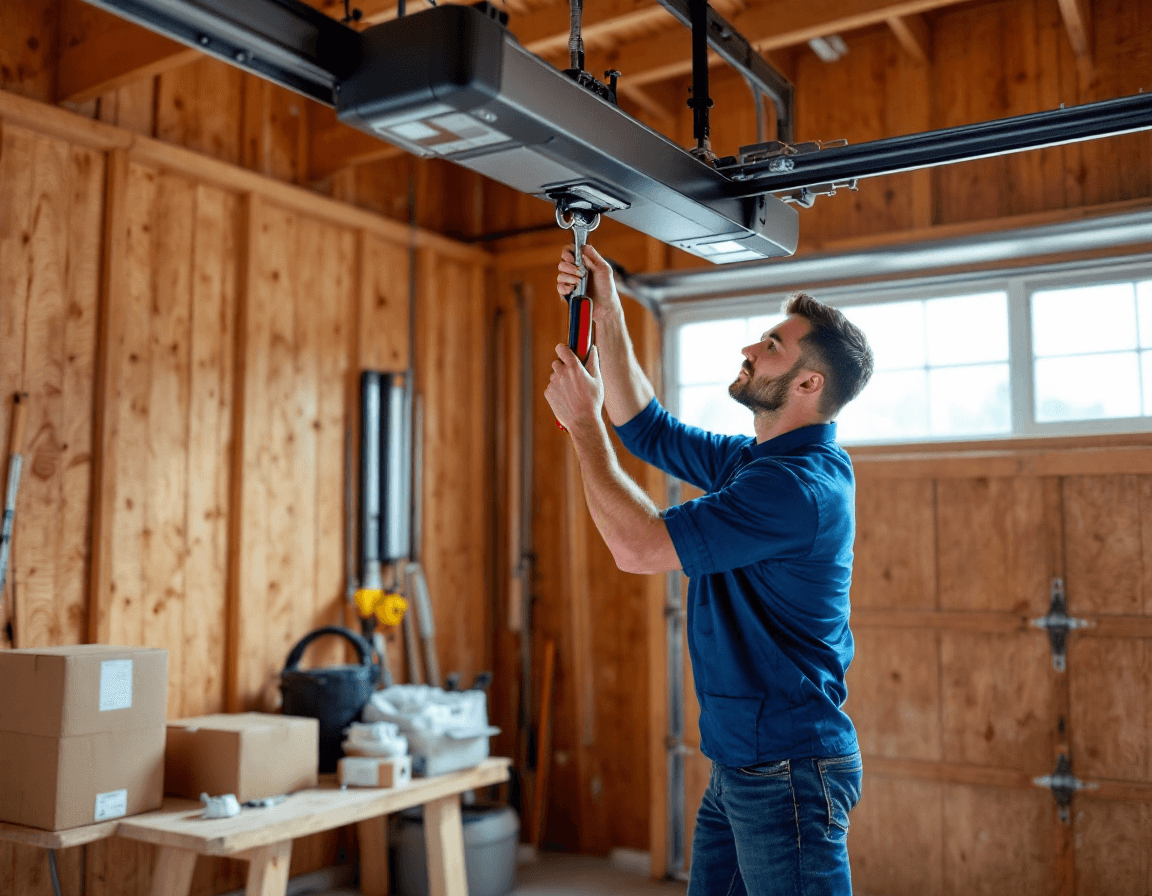
Garage door opener installation and replacement in Edgewood, WA is one of the most practical upgrades a homeowner can make, and it is often overdue. The opener is the motor that lifts, lowers, and locks your door every day, yet most people don't think about it until it starts grinding, stalling halfway up, or refusing to respond to the remote on a rainy morning. At Seattle Garage Door Fix, we install and replace belt-drive, chain-drive, and wall-mount smart openers for homes across Edgewood and the surrounding Pierce County communities. Installed pricing typically runs from $275 to $650, with the final number depending on the drive style, horsepower rating, and features you choose.
Edgewood sits in the 98372 ZIP code, and many of the homes here were built in waves that match the region's growth over the past few decades. That means we see a wide mix of openers, from original units that have carried a family through twenty winters to newer models that connect to a phone app. Whether your home is a single-story ranch with a detached two-car garage or a newer two-story with a wide attached bay, the right opener depends on the door's weight, the track layout, and how you actually use the space. This page walks through the signs that replacement makes more sense than repair, the differences between drive types, the security and smart-home features worth considering, and what the installation process looks like from start to finish.
If you're reading this because your current opener is loud, slow, or unpredictable, you're in good company. A short consultation can usually tell us whether a new opener is the right call or whether a simple adjustment will buy you more time. Our goal is to give you a straight answer and a clear quote, not to push a unit you don't need.
When an Aging Opener Stops Being Worth Fixing
Most garage door openers were designed to run for roughly ten to fifteen years under normal use, though how hard your opener works matters just as much as its age. A household that opens the door four or five times a day puts far more cycles on the motor than a home where the car rarely leaves the garage. Pacific Northwest conditions add another layer of wear, since the damp winters that define Edgewood's seasons can corrode exposed wiring, loosen mounting brackets, and cause the logic board to fail after years of condensation and temperature swings. An opener that has been quietly struggling through several wet seasons may be closer to the end of its useful life than its appearance suggests.
The clearest sign of an opener approaching the end is a repair estimate that approaches the cost of a new unit. If a technician needs to replace the logic board, the motor, and the trolley assembly on a fifteen-year-old opener, you are paying most of the price of a modern replacement for a machine that still lacks current safety features and remote technology. We recommend replacement when repairs would exceed roughly half the price of a new installation, or when the unit has already been repaired multiple times in a short period. Persistent problems like intermittent remote failure, lights that flicker without cause, or a motor that overheats and shuts down are often symptoms of a larger electrical or mechanical decline.
Noise and speed are the other common reasons homeowners call us. A chain-drive opener that clatters loudly at every cycle, or one that takes thirty seconds to complete a trip that used to take fifteen, may be showing signs of worn gears, a stretched chain, or a motor losing strength. Many of these issues can be addressed with lubrication and adjustment, but when the noise is paired with a door that stops partway or reverses without reason, it is time to think about replacement. Keep in mind that a door that struggles to move can be a sign of a spring or cable problem, not necessarily the opener, so an honest diagnosis matters before you spend money on either.
Choosing Between Belt-Drive, Chain-Drive, and Wall-Mount Openers
Choosing the right drive style is one of the most important decisions in any opener replacement, and it's worth understanding before you talk to anyone about price. A chain-drive opener uses a metal chain running along a rail to move the trolley that connects to the door. These units are durable, generally less expensive, and handle heavy doors well, which makes them a practical choice for older garages with solid wood or steel doors. Their main drawback is noise. Because the chain contacts metal sprockets, you will hear it clearly from inside the house, especially if the garage is attached and the bedrooms are nearby.
Belt-drive openers use a reinforced rubber belt in place of the chain, and the difference in sound is remarkable. Most homeowners describe the operation as a soft hum rather than a rattle, which is why belt-drive is often the first recommendation for attached garages in Edgewood neighborhoods where the family sleeps just above or beside the bay. Belts also stretch less than chains over time and require less lubrication. The trade-off is a slightly higher initial price, and the belt itself should be kept away from moisture and heavy wear, which is manageable in a typical garage.
Wall-mount openers attach to the side wall rather than the ceiling, freeing up overhead space. This is especially helpful in garages with high-lift tracks, low ceilings, or storage racks mounted above the door, and it can make a meaningful difference in a garage used for workshop projects or for storing kayaks and bikes. Wall-mount units are typically installed with a belt or a screw drive, depending on the model, and the mounting surface must be solid enough to take the load without flexing. We inspect the wall framing during every quote so the unit is secured to structure rather than drywall or a thin partition.
- Chain-drive: sturdy and budget-friendly, best for detached garages or workshops where noise is less of a concern.
- Belt-drive: quiet and smooth, a strong fit for attached garages, bedrooms above or beside the garage, and households that value a calmer daily routine.
- Wall-mount: saves ceiling space, useful for low-clearance garages or heavy storage overhead, and suitable for both belt and screw configurations.
Why Rolling-Code Security Matters for Older Openers
One of the most important reasons to replace an old opener is security. Garage door openers manufactured before the widespread adoption of rolling-code technology use a fixed code, meaning the signal sent by your remote is the same every time. A device that can capture that signal once can reuse it to open the door later, which is a real concern in neighborhoods where people leave remotes in cars or where a determined thief has time to experiment. Rolling-code systems change the transmitted code with every use, so a captured signal becomes useless almost immediately.
If you're not sure which type your opener uses, look for the model label on the motor housing, check the owner's manual, or simply note how many remote buttons and programming steps your system requires. Older fixed-code units often have DIP switches inside the remote and receiver, and they tend to be the models that frustrate homeowners with limited remote range. Replacing a fixed-code opener with a rolling-code unit is one of the simplest and most cost-effective security upgrades a household can make, and it often costs less than a new lock or a monitored alarm system.
Security is also tied to how the opener is used day to day. Many Edgewood homeowners keep their remote visor-mounted in a parked car, and that habit is worth reconsidering regardless of the opener type. A new installation gives us the chance to review your remotes, program keypad entry if you want it, and show you how to disable any old remotes you no longer use. We also recommend enabling the opener's built-in auto-close timer and checking the status light and indicator settings so you always know whether the door is open.
Smart Wi-Fi and myQ Control for Pacific Northwest Households
Smart opener features have moved from novelty to everyday convenience, and many Edgewood homeowners now want to check the door from work, grant access to a family member, or receive an alert when the garage has been left open. Many modern openers work with myQ-compatible systems, letting you open, close, and monitor the door from a smartphone app. Some models also support voice assistants and integrate with other smart home platforms, though compatibility varies by brand and hub, so we confirm specifics before recommending a unit.
Wi-Fi performance is where installations succeed or fail in real homes. Most garage door openers connect to the 2.4 GHz band, and a garage that sits far from the router, or has steel framing, metal siding, or a finished attic full of insulation, can weaken the signal. We test the connection during installation and may recommend a mesh node, a relocated router, or a small extender if the signal is weak. Be sure to tell us about any Wi-Fi dead spots you have noticed in the house, because the garage is often the last place a signal reaches.
Smart features are only as good as the settings behind them. We help you set up notifications, create user accounts for family members, and disable access for anyone who no longer needs it. We also walk through how to turn off remote access if you travel and want to limit exposure, and how to keep your app updated so new security patches and features reach your opener. A smart opener is a convenience, but it also adds a network connection to your home, so we encourage a strong, unique password on your Wi-Fi network and on the opener account.
Battery Backup Options for Edgewood Power Outages
Power outages are a fact of life in Western Washington, and wind events in fall and winter can knock out electricity for hours or, in rare cases, days. Without power, a standard opener cannot lift the door, which can leave a household stuck inside the garage or unable to pull the car out during an emergency. A battery backup kit solves this problem by allowing the opener to run for several cycles when the grid goes down, and many units also keep the lights and keypad working. The backup battery typically charges continuously while the power is on, so it's ready when you need it.
Battery backup capacity varies by model, and the number of cycles depends on the door's weight, the opener's motor, and whether the battery was fully charged before the outage. We recommend a backup option for any household that relies on the garage for daily access, has elderly or mobility-limited residents, or wants to keep a vehicle ready during a storm. If your garage also serves as a secondary entrance, a backup battery is one of the most valuable add-ons you can choose. It is worth asking about battery life and replacement intervals, since the backup pack will eventually need to be swapped out, typically every few years depending on use and conditions.
There is one practical caveat. Battery backup gives you a way to operate the door during an outage, but it does not replace the manual release cord. Every opener installed by our team includes a clearly labeled emergency release, and we show you how to use it safely. Before a storm, we suggest testing the backup function and confirming the release cord hangs within easy reach. Keep the release cord away from vehicles and out of the path of children, and never attempt to lift a heavy door by hand while the opener is still connected and the spring tension is unknown.
Safety Features, Auto-Reverse Sensors, and What Installers Must Verify
Modern openers include safety features that were not standard on older units. The most important are the auto-reverse mechanism and the photo-eye sensors mounted near the floor on each side of the door. If the beam is broken while the door is closing, the opener should stop and reverse. Federal standards have required these protections for openers sold in the United States for decades, so a unit more than a few decades old may lack the reliability of current designs, and sensors often drift out of alignment over time, especially in a home where dust, moisture, or a bumped bracket can throw them off.
During every installation, we test the auto-reverse force, confirm the photo eyes are aligned and wired correctly, and check that the door reverses reliably when it contacts a test object placed on the floor. We also verify the travel limits so the door stops at the correct open and closed positions, and we confirm the manual release works. These checks are not optional extras; they are part of the installation standard we follow for every home. If we find a problem with the door's springs, cables, or rollers that could affect safe operation, we will tell you clearly and recommend the right next step.
Spring and cable work is a different category entirely. Torsion springs and extension springs store enormous amounts of energy, and a broken or improperly adjusted spring can cause serious injury. For that reason, any spring or cable repair should be handled by a licensed, trained professional, never by a homeowner using a DIY kit. When we replace an opener, we may find that the existing springs are worn or the cables are fraying, and we will explain those findings and provide a separate estimate for licensed spring work. Please do not attempt to adjust or remove springs yourself, even if you have seen a video that makes it look simple.
A Practical Walkthrough of the Installation Process
A typical opener installation begins with a short inspection of the door, track, and opener mounting location. We check that the door moves freely by hand, the tracks are straight and tight, the rollers are in good condition, and the header above the door has enough clearance for the opener rail or wall-mount bracket. We also measure the ceiling height and confirm the power outlet location, since most openers require a grounded outlet within reach of the unit. These details determine which model will fit your space and whether any electrical work is needed.
Once the model is selected, we remove the old opener, prepare the mounting surface, and assemble the new rail or wall bracket. The trolley is attached to the door arm, the header bracket is secured to structural framing, and the drive belt or chain is tensioned according to the manufacturer's specifications. We then connect power, install the light and keypad if included, mount the photo eyes, and program the remotes and any wall controls. The final step is a full test of the door's travel, reversing action, and safety features, followed by the Wi-Fi setup if you chose a smart model.
Before we leave, we walk you through the features that matter most to you: how to use the remotes, how the backup battery works, how to change the light timer, and how to use the manual release. We also give you a short list of maintenance tips and a reminder of when to schedule a service visit. Most installations are completed in a single visit, though the timing depends on the model, the door's condition, and whether any additional repairs are needed.
Maintenance Habits That Extend Your Opener's Life
A new opener will last longer when it receives regular, simple care. Once or twice a year, check the rail or belt for loose parts, look for signs of wear on the drive belt, and confirm the trolley is secure. Chain-drive units benefit from light lubrication on the chain according to the manufacturer's directions, while belt-drive units generally need only a periodic visual check. Avoid over-lubricating, since excess oil can attract dust and dirt in the garage.
Pacific Northwest weather makes moisture control especially important. Keep the garage well ventilated during wet months, and watch for condensation on metal parts or signs of rust on the rail and brackets. If your garage floor collects water near the door, address the drainage problem before it reaches the opener's electrical connections. Shielding the motor from direct rain is also wise if the unit is mounted near an uncovered entry. Small steps like these can add years to the opener's life.
Finally, keep an eye on the door itself. An opener works best when the door is balanced, the springs are properly tensioned, and the rollers and hinges run smoothly. If you notice the door sagging, sticking, or making unusual noises, have it inspected before the opener is forced to compensate. A professional tune-up every few years can catch small issues early and help you avoid an emergency call during a cold snap.
Frequently Overlooked Questions About Edgewood Garage Installations
Many Edgewood homeowners ask whether their existing wiring and outlet will work with a new opener. In most cases, a standard grounded outlet near the opener location is sufficient, but older garages may have outlets that need to be updated for safety or to meet current code requirements. If we identify an electrical concern during the visit, we will explain it and recommend a licensed electrician when work beyond our scope is needed. We do not guess about wiring, and we will never install an opener on a circuit we consider unsafe.
Another common question is whether a new opener will fit an older door. The answer depends on the door's weight, its track style, and the clearance above the opening. Heavy solid-core doors may require a more powerful motor, and some older tracks need modification before a modern opener will operate smoothly. We check these details before quoting, so the price you receive reflects the actual work needed rather than a best-case guess. If the door itself is the bigger problem, we'll say so and help you weigh the options.
Homeowners also ask about warranties and what is covered after installation. Warranty terms depend on the opener manufacturer and the specific model you choose, and we will review those terms with you before work begins. We do not invent coverage promises; instead, we provide the manufacturer documentation and explain what it includes. Keeping your receipt, installation details, and serial numbers in a safe place makes any future claim much easier.
Replacing a garage door opener is a straightforward upgrade when it's done with the right model, careful installation, and a clear understanding of your home's needs. Whether your current opener is loud, slow, unreliable, or simply outdated in its security, the team at Seattle Garage Door Fix is ready to inspect your garage and give you an honest recommendation. Call (888) 799-3819 to schedule an opener installation or replacement consultation in Edgewood, WA, and we will walk you through your options, provide a clear quote, and help you choose the drive style, backup power, and smart features that fit your household.