
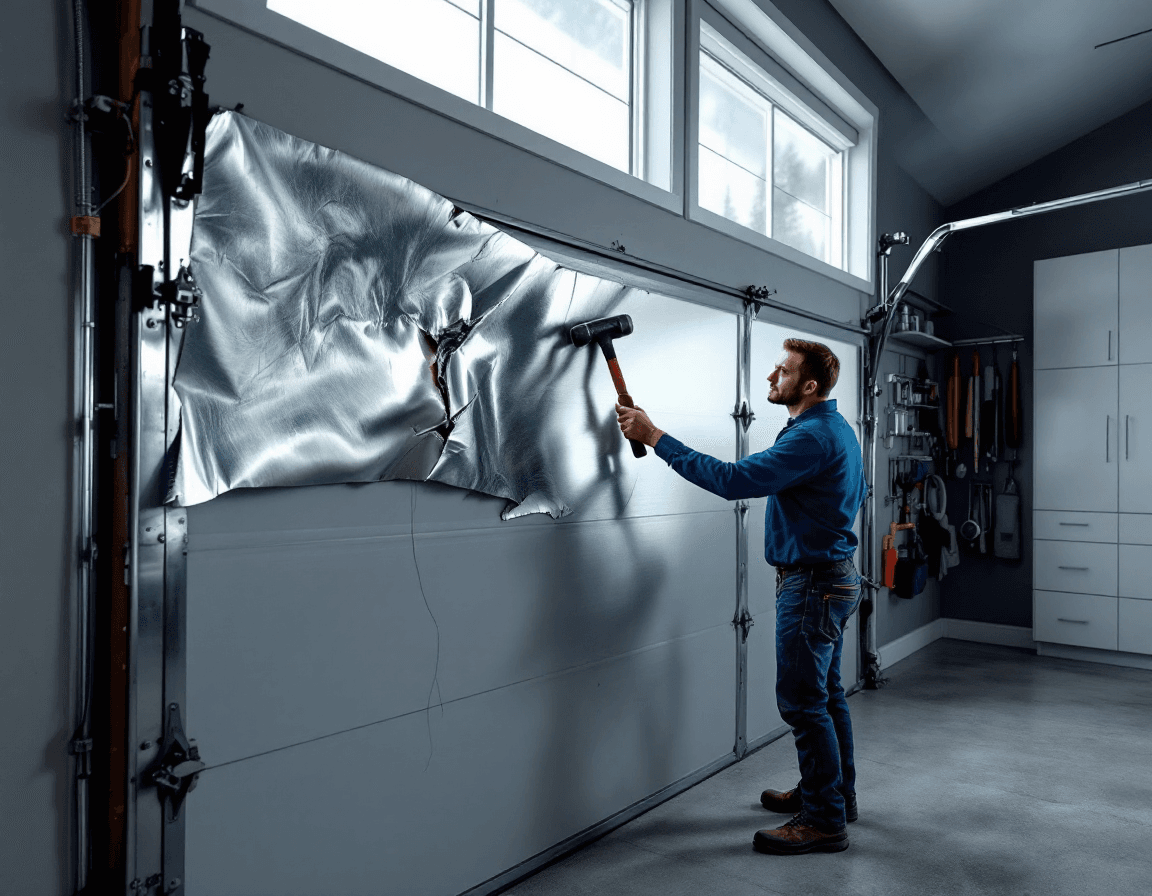
Garage Door Panel Replacement in Des Moines, WA is often the right fix for a door that still opens and closes without trouble but shows a visible problem on one or more sections. Homeowners in ZIP 98198 tend to notice the damage after a windy winter storm, a stray kayak paddle, or a bumper that met the bottom panel a little harder than planned. The mechanics may be perfectly sound, yet a dent or crack can still let water in, weaken insulation, and make the whole door look neglected. This page explains how we think about panel work, what it usually costs, and how to decide between patching a problem and swapping out the section.
Des Moines sits on the Puget Sound shoreline in south King County, and the conditions here are different from those in an inland suburb. Salt-laden air drifts in from the water, rain often settles in for long, steady stretches from fall through spring, and gusts can come straight off the Sound with real force. Those forces work on painted steel skins, wood frames, and the seams where one section meets the next. When a panel is already compromised, moisture finds the gap quickly, and the lower sections near the floor usually show the effects first. Knowing this local pattern helps explain why a small dent in Des Moines can become a bigger problem over a single wet season.
Our technicians are licensed, bonded, and insured, and we treat panel replacement with the same care we bring to any repair near a door under tension. Panels look like the simplest part of a garage door, but each one connects to rails, rollers, hinges, and bracing that carry the door's weight. A careless removal can throw those components out of alignment, so a job that starts as a cosmetic fix can turn into a larger repair. The sections below walk through what to check, what drives the cost, and where we recommend professional help. If you noticed a fresh dent or rust creeping along a seam, you are in the right place to start.
Reading the Damage Before Anyone Quotes a Price
Before a price is discussed, it helps to look closely at what is actually wrong with the door. A dent that has pushed a panel inward without splitting the metal is a different job from a crack running along a seam or a bowed section that has pulled away from its neighbors. On a dry day, stand across the driveway and look along each panel at a low angle, because shallow dents often show up more clearly in raking light. Notice whether the damage stays on the skin or whether the edges, end caps, or nearby track also look bent.
Write down what you observed and when you first saw it, especially if the damage followed a storm or a collision. That short record helps a technician plan the visit, and it can matter if an insurance claim is involved. Take a few photos in natural light, including one from farther back so the entire door appears in the frame. Avoid hammering a dent out yourself, since the force can crack a panel that was only bent and turn a simple replacement into a larger one.
Why Puget Sound Air Works Against Steel Panels
Salt is one of the quiet forces behind many panel problems in Des Moines. Even when you do not live directly on the water, salt spray and humid air can settle on a door's exterior and sit in the seams between sections. Over time, that moisture encourages corrosion at scratches, chips, and dents where the factory coating has been broken. A panel that looked only cosmetically damaged last year may show rust bloom along the crease this winter.
Homeowners near the Des Moines Marina and in the Redondo area often ask whether they can simply wipe the door down and wait. Routine washing with fresh water helps, and it is worth doing a few times a year, especially after a wet stretch. However, washing cannot reverse metal that has already lost its protective layer. Once rust has started under the paint, the most reliable approach is to address the affected section promptly rather than letting it spread across neighboring panels.
Dents, Cracks, and When a Simple Repair Is Not Enough
Not every dent calls for a full panel swap. A shallow, smooth depression that has not broken the paint or cracked the seam may be acceptable to leave in place if the door functions and the panel still seals against its neighbors. Cracks are a different matter, because they create openings for water and cold air and tend to grow with repeated flexing. A crack that runs into the rail channel or along a hinge line should be evaluated quickly rather than watched over several seasons.
Insulated doors add another layer of complexity. When a panel with foam insulation is compromised, moisture can work into the core and reduce the insulating value in a way that is not visible from the outside. In those cases, a technician will usually check whether the insulation is still dry and intact before recommending a repair method. Your door's manufacturer, model, and age all influence whether a matching replacement section is practical.
Bottom Sections and the Water Line Problem
The bottom panel takes more punishment than any other section. It meets the driveway, catches splash from heavy rain, and absorbs most of the impacts from bumpers, bikes, and wet leaves swept against the threshold. Water that pools at the base can wick upward into the lower edge of the panel and, over time, into the bottom seal and the end brackets. A bottom section that has been damaged by water or impact often needs replacement rather than patching, because the lower edge is where the strain and moisture concentrate.
When we inspect a damaged bottom panel, we also look at the weather seal and the threshold beneath it. A new panel can be undermined by a worn seal that lets water track underneath, so replacing the section and ignoring the seal is rarely the best outcome. Keep the driveway side of the door clear of debris, and check the seal for flattened or torn areas after every big storm.
Rot and Rust in Wood and Composite Panels
Wood and composite doors add a different set of challenges. Solid wood panels can soften where water has been trapped behind paint, especially at the bottom rail and along joints where end grain is exposed. Composite and engineered wood sections resist rot better than solid timber, but they can still swell or delaminate if edges are left unsealed. In both cases, the damage may look minor on the surface while the interior has already weakened.
Rust is the more common issue on steel doors. It usually begins at a chip, scratch, or dent, then spreads beneath the paint in a way that looks like blisters or bubbles. Light surface rust can sometimes be cleaned, primed, and repainted, but once the metal has thinned or the rust has reached the seams, replacement is usually the more durable choice. We will tell you plainly which path makes sense for your door rather than recommending a repair that will need to be redone within a year.
Backing Accidents and What the Impact Hides
A single panel damaged by a backing accident often looks like the only problem, but impacts can transfer force to neighboring sections, hinges, and track brackets. A vehicle that bumps the lower panel can flex the entire section and twist the hinge straps just enough to cause misalignment. Sometimes the first sign is a slight gap at the top of the door or a bottom edge that no longer sits evenly on the floor. That is why we check the surrounding hardware before we confirm the panel replacement.
If the impact was significant, we also look for hairline cracks around the top roller brackets and along the track bends. Those components are under tension, and damage to them is not something a homeowner should attempt to fix alone. If you suspect the door was knocked off its track or the spring system was affected, stop using the door and contact a licensed professional. Driving slowly into the bumper of a parked vehicle is a common cause of these incidents, so a quick rearview check before reversing can prevent a lot of expense.
Matching a Faded or Mismatched Panel
Matching is often the hardest part of a panel replacement, particularly on doors that are more than a few years old. Paint fades under sun exposure, and the sections that get the most direct light, usually the upper panels on the south- or west-facing side, can look noticeably different from the lower ones. A new panel that arrives in a fresh color can make the door look patched rather than repaired. Before ordering, we compare the existing color, sheen, and texture in the same light you normally see the door in.
When an exact match is not available, there are practical options. Some homeowners choose to repaint the entire door so every section looks consistent, which often costs less than it appears. Others accept a slight difference and focus on making the replacement section structurally sound and well sealed. We will explain the tradeoffs honestly so you can choose the approach that suits your home and your budget.
Repair or Replace: A Practical Decision Path
Deciding between repair and replacement depends on the material, the extent of the damage, and whether the rest of the door is in good condition. Replacing a single section is usually more economical than replacing the whole door, provided the surrounding panels, hinges, and seals are still sound. The following points help frame the decision:
- A shallow dent with intact paint and a sealed seam may not need work beyond monitoring.
- A cracked panel, a split seam, or a section that no longer sits flush usually warrants replacement.
- Rust that has spread under the paint or reached the edges of the panel generally calls for a new section.
- Water damage at the bottom edge combined with a worn seal means both the panel and the seal should be addressed together.
- Damage that has affected the track, rollers, or hinges requires an inspection of the full door before any panel is ordered.
If the door is very old, uses discontinued panels, or has damage across several sections at once, a full door replacement may be the more practical conversation. We will walk you through the numbers without pressure so you can decide what makes sense for your household.
What a Panel Replacement Typically Costs in Des Moines
Panel replacement in our service area generally falls between $250 and $800 per section, and the exact figure depends on the door. Factors that move the price include the door material, whether the section is insulated, the color and finish needed for a match, the number of hinges or brackets that must be removed, and how much alignment work follows the swap. A standard steel section on a common residential door will usually land near the lower end of that range, while a custom wood or specialty insulated section will often fall higher.
We provide an itemized estimate after an on-site inspection, so you know what is included before any work begins. That estimate typically covers the panel, labor, and any minor hardware replacement needed to complete the job safely. If the inspection reveals additional issues, such as a damaged seal or a bent track section, we will explain those separately so you can approve only what you choose.
Safety Limits: When Panel Work Crosses Into Spring Territory
Panel replacement itself is a manageable job for a trained technician, but it can quickly become hazardous when it touches the spring system or cables. Torsion springs and extension springs store a large amount of energy, and cables carry the load that keeps the door balanced. A homeowner who removes a panel near those components without understanding the tension involved can be seriously injured. For that reason, we always recommend a licensed professional for any work that involves springs, cables, or the drum assembly.
If your damaged panel sits near the top of the door, where the spring and cable hardware are located, do not attempt the repair yourself. Keep children and pets away from the door, and avoid operating it manually if the door feels unbalanced or sticks halfway through its travel. A licensed technician can assess the tension, stabilize the door, and perform the panel swap with the correct procedures. Safety should always come before saving a few dollars on a DIY attempt.
Keeping Replacement Panels Looking Right for Years
Once a new panel is installed, a little routine care helps it blend in and last. Rinse the door with fresh water every few months, paying attention to the bottom edge and the seams where salt and grime collect. Inspect the weather seal each season, and replace it if it is cracked, flattened, or no longer touching the threshold evenly. Lubricate the rollers and hinges as recommended for your door type, but avoid spraying lubricant onto painted surfaces.
Watch for early warning signs such as small paint bubbles, a dull streak across a seam, or a faint gap at the top corner. Catching these details early makes the difference between a simple touch-up and another panel replacement. A yearly inspection by a licensed technician can also confirm that the hardware, balance, and alignment remain correct after the new section is in place.
If you are dealing with a dented, cracked, rusted, or water-damaged panel in Des Moines or anywhere nearby in ZIP 98198, we are ready to take a look and give you a clear, honest recommendation. Call Seattle Garage Door Fix at (888) 799-3819 to schedule an inspection, ask about matching options, and get an itemized estimate before any work begins.