
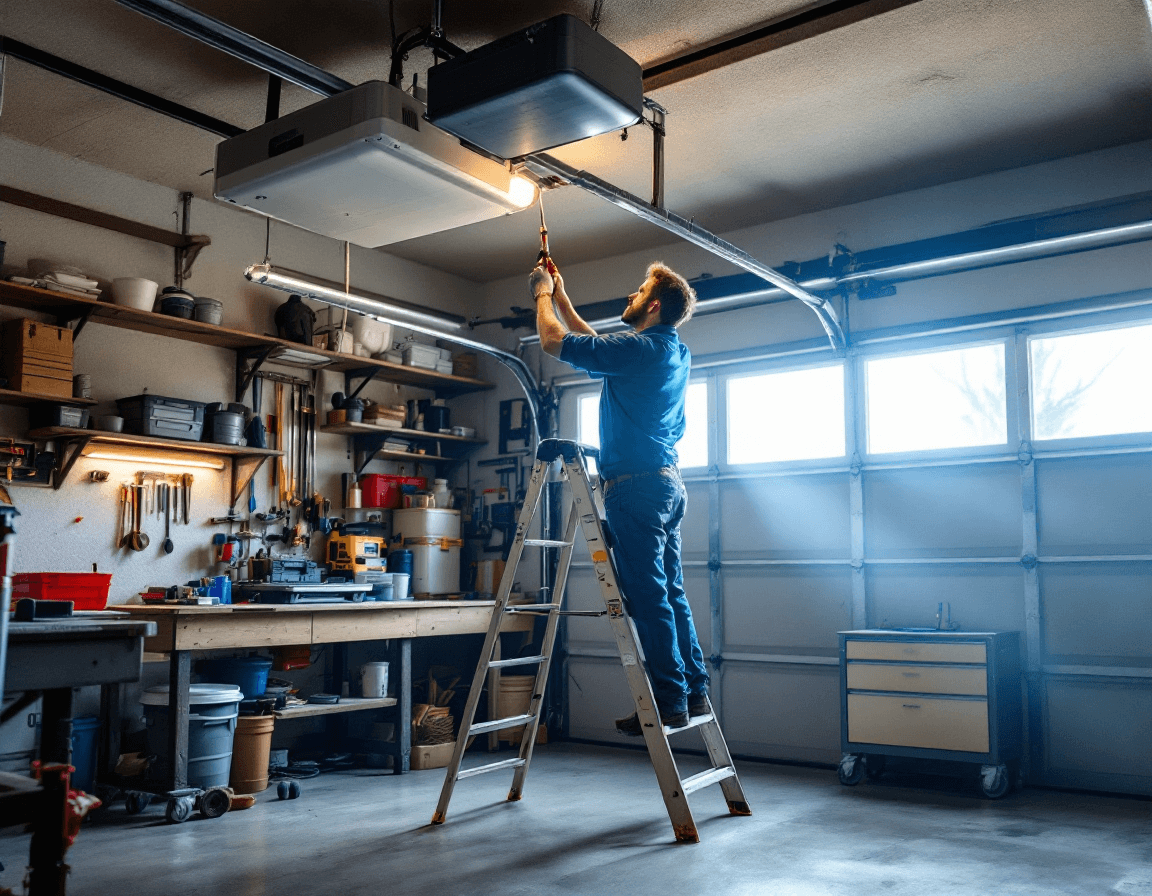
Garage door opener repair in Kent, WA is one of the most common service calls we handle, and it often starts with a simple question: why did the door stop responding? Kent sits in the Green River valley south of Seattle, where homes range from older ranch houses to newer builds on the slopes, and most of those homes rely on a garage door opener as the main way in and out. When the opener fails, the household feels it right away, whether that means a car stuck inside or a family locked out during a rainy commute. Our technicians serve Kent and the surrounding King County communities, including the 98030, 98031, 98032, and 98042 ZIP codes.
This page explains how we troubleshoot openers in Kent, what the most common symptoms usually mean, and what you can safely check yourself before calling. We work on motors, gear assemblies, circuit boards, and travel-limit settings across the major opener brands, including Chamberlain, LiftMaster, Genie, and many others. Most opener repairs we complete fall in the $95 to $375 range, depending on the part, the brand, and how much diagnostic time the problem requires. Every repair follows the same logic: identify the failing component, confirm it is the cause, and fix it without creating a new problem.
Local conditions matter, and we want you to understand why your opener may behave differently here than it does in drier parts of the country. Western Washington is damp for long stretches of the year, and that moisture finds its way into wall-mounted controls, sensor wiring, and the opener head itself. The information below is written the way a technician would explain it to a neighbor standing in the driveway, so you can make a better decision about what to do next.
Why Kent Openers Work Harder Than the Manufacturer Expected
Many garage doors in Kent were installed on older lots where the garage is attached to a house built decades ago, and the door, track, and opener were often sized for a different setup than what homeowners use today. Heavier insulated doors, added windows, and upgraded wood or composite panels all increase the load on the opener. When the motor works harder than it was designed to, gears wear faster and the motor may overheat during long cycles. A problem that started as a minor drag can grow into a complete failure over a single winter.
Our area also sees a lot of short trips, with residents running in and out several times a day for school, errands, and work. That frequent cycling puts more stress on the limit switches and the drive mechanism than occasional use would. Openers installed in detached garages or on sloped driveways near East Hill often carry extra strain because the door has to travel up a grade and the garage may be colder and damper than the rest of the property. Understanding these local patterns helps a technician focus on the most likely culprit first.
The good news is that most of these stresses are predictable and manageable. A tune-up that checks tension, lubrication, and limit settings can catch a failing part before it leaves you stranded. When we visit a Kent home for an opener problem, we always ask how often the door is used and whether the problem appears at certain times of day, because those details often narrow the cause quickly.
When the Opener Hums but the Door Refuses to Move
One of the most frustrating symptoms is hearing the motor run, feeling the carriage shift, and then watching the door sit still. This usually points to a disconnect between the motor and the door, a stripped drive component, or a problem with the door's own balance. In some cases the carriage slips along the rail without pulling the door, which often happens when the drive chain or belt has lost tension. A loud hum with no movement can also mean the motor is receiving power but the gear train is not turning freely.
Before calling a technician, you can perform a safe visual check. Disconnect the opener from power using the emergency release cord, which is typically a red handle hanging from the carriage, and then manually lift the door partway. A door that feels extremely heavy or resists lifting may be out of balance, and that is a job for a licensed professional because the springs store a large amount of energy. Never attempt to adjust or remove spring tension yourself, even if the opener itself seems to be the only problem.
If the door moves freely by hand but the opener still refuses to lift it, the fault is more likely electrical or mechanical inside the opener head. Our technicians check the motor coupling, the gear engagement, and the power supply to the logic board. Many repairs in this category are straightforward once the failing component is confirmed, and the diagnosis often takes less time than homeowners expect.
When the Remote and Wall Button Both Fall Silent
When neither the handheld remote nor the wall-mounted button works, the first thing we check is whether the opener is receiving power at all. A tripped breaker, a loose outlet, or a worn power cord can leave the entire system dead while the garage light still appears to work. Next we look at the wall control, because wiring to that panel can corrode or pull loose over time, particularly in garages where humidity lingers after a wet week. Simple checks like these resolve a surprising number of calls.
Remote controls rely on a small battery and a receiver inside the opener head, and both can fail quietly. Replacing the battery is a quick test, but a dead remote may also mean the receiver has lost its programmed codes after a power surge or an update. Reprogramming the remote follows a specific sequence for each brand, and we walk through the correct steps during a visit. If the wall button works but the remote does not, the problem is usually in the remote or its programming rather than in the opener itself.
Safety sensors are another common cause of this symptom. If the photo-eyes at the bottom of the door are misaligned, dirty, or blocked by cobwebs and spider activity, the opener may refuse to close even though the buttons respond. Check that both sensor lenses are clean and that the indicator lights on each sensor are steady rather than flashing. If the lights are off or blinking inconsistently, the sensors or their wiring need attention.
Grinding From the Opener Head and Stripped Gears
A grinding, clicking, or rattling noise from the opener head often signals a stripped gear, worn nylon gear teeth, or a loose drive sprocket. These parts absorb a lot of wear, and they can fail gradually, producing a rough sound long before the opener stops working completely. If you notice a sudden change in noise, or a metallic scraping that did not exist last month, it is worth scheduling service promptly. Continuing to run a damaged gear can break the drive shaft and cause a more expensive failure.
Stripped gears are often accompanied by jerky movement, where the door starts and stops unpredictably or lifts only part of the way. Some openers use a plastic gear that is designed to wear out and protect the motor, which is a useful safety feature but means the gear must be replaced when it fails. Our technicians inspect the gear set, the motor shaft, and the drive sprocket to determine whether a single component can be replaced or whether the gear assembly needs more extensive work. Replacement gear sets are available for most major brands, and we confirm compatibility before ordering.
Lubrication matters, but it does not fix worn teeth. We recommend the correct lubricant for the gear type and avoid over-greasing, because excess grease can attract dust and debris that accelerates wear. If you hear grinding and see metal shavings or powder inside the opener cover, stop using the door and call for service. Those signs mean the gears are already compromised and continued use will likely make the repair more costly.
Doors That Stop Short or Reverse Right Away
A door that closes most of the way and then reverses, or one that opens and stops well below the top of the track, usually points to the travel-limit settings or to the safety reversal system. Modern openers use limit adjustments to tell the motor where the door should stop in both directions. When those settings drift, the opener may believe the door has hit an obstacle and reverse as a safety precaution. Settings can drift after a power outage, after a tune-up, or as the door gradually changes balance over time.
Force settings work alongside the limits. If the opener is set to detect resistance at a level that is too sensitive, a slightly heavy spot on the track or a small amount of debris can trigger reversal. The opposite problem also exists: force settings that are too high can allow a door to keep moving against an obstacle, which is a safety issue. We adjust limits and force carefully, testing each setting with an object placed in the door's path, and we verify that the door reverses correctly when it should.
Reversal caused by a closed photo-eye beam is another frequent cause. Sensors mounted too high, bent brackets, or sunlight shining directly into the lens can all trick the system into thinking something is in the way. Cleaning the lenses and checking alignment often clears the problem. If the door still reverses after those checks, the issue usually lies in the logic board or the sensor wiring, and those components are tested before any replacement is recommended.
Decoding a Blinking Light Pattern
Many openers communicate faults through a light on the motor housing or on the wall panel, and the pattern of flashes is a kind of diagnostic code. A repeating pattern may indicate a safety sensor problem, a limit switch fault, an overheating motor, or an error in the logic board. The exact meaning varies by brand and model, so the owner's manual is the best starting point. Writing down the number of flashes and how often they repeat helps a technician narrow the problem quickly.
Here are some general patterns homeowners in Kent often report, with the caveat that your manufacturer's chart is the authority for your specific opener:
- A light that flashes several times, pauses, then repeats often relates to sensor alignment or a blocked beam.
- A light that flashes rapidly or stays on without pattern can point to a control board fault or a stuck button on the wall panel.
- A light that flashes only when the door is moving may indicate a limit or travel setting that needs adjustment.
- A light that flashes after a power interruption can suggest that the opener has lost its learned settings and must be retrained.
Some flash patterns are harmless and clear on their own, but others indicate a true fault. We do not recommend ignoring a repeating pattern, because the opener may be trying to protect the motor or prevent a dangerous door movement. A short diagnostic visit will usually confirm the cause and let you know whether the fix is simple or requires a replacement part.
Loose Chains, Belts, and Drive Hardware
Chain-drive and belt-drive openers depend on tension to move the carriage smoothly, and a loose chain or belt can slip, jump, or come off the sprocket entirely. A chain that sags noticeably in the middle, makes a slapping sound, or appears to have jumped its track should be addressed quickly. Belt drives are quieter and common in newer homes around East Hill and in some Panther Lake area residences, but they still stretch and can slip off their pulleys over time. Both systems can be damaged further if you keep running the opener with a loose drive.
Tension adjustments on the opener itself are a task for a technician, not a homeowner, because the carriage, rail, and sprocket must be aligned correctly. Over-tightening a chain or belt can damage bearings and the motor, while under-tightening causes slippage and additional wear. We check the rail for bends, verify that the trolley moves freely, and confirm the sprocket is seated properly before adjusting tension. Replacing a worn belt or chain is usually a modest repair, and we match the replacement to the opener's original specifications.
The hardware connecting the carriage to the door is also worth inspecting. The trolley arm, the bracket that attaches to the top of the door, and the mounting bolts can loosen from vibration, especially on older doors. A loose connection may produce a clunk when the door starts or stops, and it can cause the door to lift unevenly. Tightening these fasteners is part of our standard visit, but if the bracket is bent or cracked, we replace it rather than trying to make it work.
Circuit Boards, Surges, and Electrical Trouble in Damp Garages
The logic board is the brain of the opener, and it manages motor control, remote receiving, safety sensors, and lighting. Boards can fail after lightning storms, power fluctuations, or long-term exposure to humidity, which is a real concern in Western Washington garages. Corrosion on connectors and terminals can cause intermittent behavior that comes and goes with the weather. Because these symptoms can resemble mechanical problems, careful testing is important before replacing a board.
Power surges are a common issue in the Kent area during winter storms, when the grid experiences brief interruptions and restorations. Whole-house surge protection and a dedicated outlet for the opener can reduce the risk of damage, and we are happy to discuss those options during a visit. Keep in mind that surge protectors are not a substitute for electrical repairs performed by a licensed electrician when wiring is damaged. If you see scorch marks, smell burning, or notice a breaker that trips repeatedly, shut the opener off and call for service.
Moisture can also affect the wall control and the sensor wires that run along the garage ceiling. Wires exposed to condensation may develop shorts or breaks that cause the door to behave unpredictably. We inspect those runs, look for damaged insulation, and repair or replace wiring as needed. Keeping the garage ventilated and avoiding stored items against the wall helps protect the electronics during the damp months.
Intermittent Operation: The Hardest Problems to Pin Down
Intermittent problems are among the most challenging calls we receive. The door may work perfectly for a week, then refuse to respond for a day, then resume normal operation without any visible change. These symptoms can come from loose connections, failing capacitors, weak remote batteries, intermittent sensor misalignment, or a motor that draws too much current under certain temperatures. Because the fault appears and disappears, it may not show up during a quick inspection.
Our approach is to gather information first. We ask when the problem happens, whether it occurs after rain, during cold mornings, or after several openings in a row, and whether any lights flash during the failure. We then test the system under those conditions when possible and monitor the sensors, power supply, and motor response. Keeping a simple log of when the door misbehaves can save time and help us pinpoint the cause faster.
Patience and documentation are the keys. If you notice a pattern, write it down with the date, time, weather, and what happened. That record gives us a clear picture of the failure and helps us avoid replacing parts that were not the cause. Intermittent faults often trace back to something simple, such as a connector that needs to be reseated or a sensor wire that rubs against a bracket.
What a Kent Repair Visit Typically Covers and What It Costs
A typical opener repair visit begins with a complete inspection of the opener, the door balance, the sensors, the wall control, and the safety features. We confirm the brand and model, review any symptoms you have observed, and test the system through a full cycle. From there we explain what we found, what the repair involves, and what it will cost before any work begins. Most opener repairs fall between $95 and $375, depending on the part needed, the complexity of the diagnosis, and whether the opener requires a special component.
Some visits resolve quickly with a sensor realignment or a limit adjustment, while others require replacing a gear set, motor, or logic board. We will tell you when a repair is not worth the cost compared with a new opener, particularly on older units where parts are scarce or the motor has failed. Honest recommendations matter to us, and we do not push unnecessary work. If a simpler fix is available, we offer it first.
Our technicians are licensed, bonded, and insured, which provides you with protection during any work performed in your garage. We keep our diagnostic process transparent so you understand what is happening with your opener at every step. Scheduling service early often prevents a small problem from turning into a larger repair, so calling at the first sign of trouble is usually the most economical choice.
Why Spring and Cable Work Belongs With a Licensed Professional
Opener problems are sometimes mistaken for spring or cable failures, and it is important to know the difference. Torsion springs and extension springs hold a great deal of tension, and handling them without the right tools and training can cause serious injury. Cables that fray, slip off drums, or snap can also release stored energy and cause the door to drop unexpectedly. These parts should never be repaired or replaced by a homeowner, even if you have experience with other home projects.
If your door is unbalanced, sits crooked, or stays partly open after the opener is disconnected, the problem may involve springs or cables rather than the opener itself. Our licensed technicians inspect these components with the proper equipment and make repairs according to safe procedures. We always recommend professional service for spring and cable work, because the risks are too high for a do-it-yourself approach. Keeping children and pets clear of the door while you wait for service is a sensible precaution as well.
Calling a licensed professional for spring and cable work protects you and your household, and it also protects the rest of your garage door system from additional damage. When the opener and the balance system are both checked during the same visit, the door is more likely to operate smoothly for years. If you are unsure whether your problem involves the opener or the springs, call us at (888) 799-3819 and we will help you determine the next step.
Garage door opener repair in Kent, WA does not have to be a stressful experience. Whether your opener hums without moving the door, grinds from the head, reverses unexpectedly, or flashes a confusing light pattern, our team can diagnose the cause and recommend a practical fix. Call (888) 799-3819 to schedule service for your Kent home, and we will bring the tools and experience needed to get your door working safely again.