
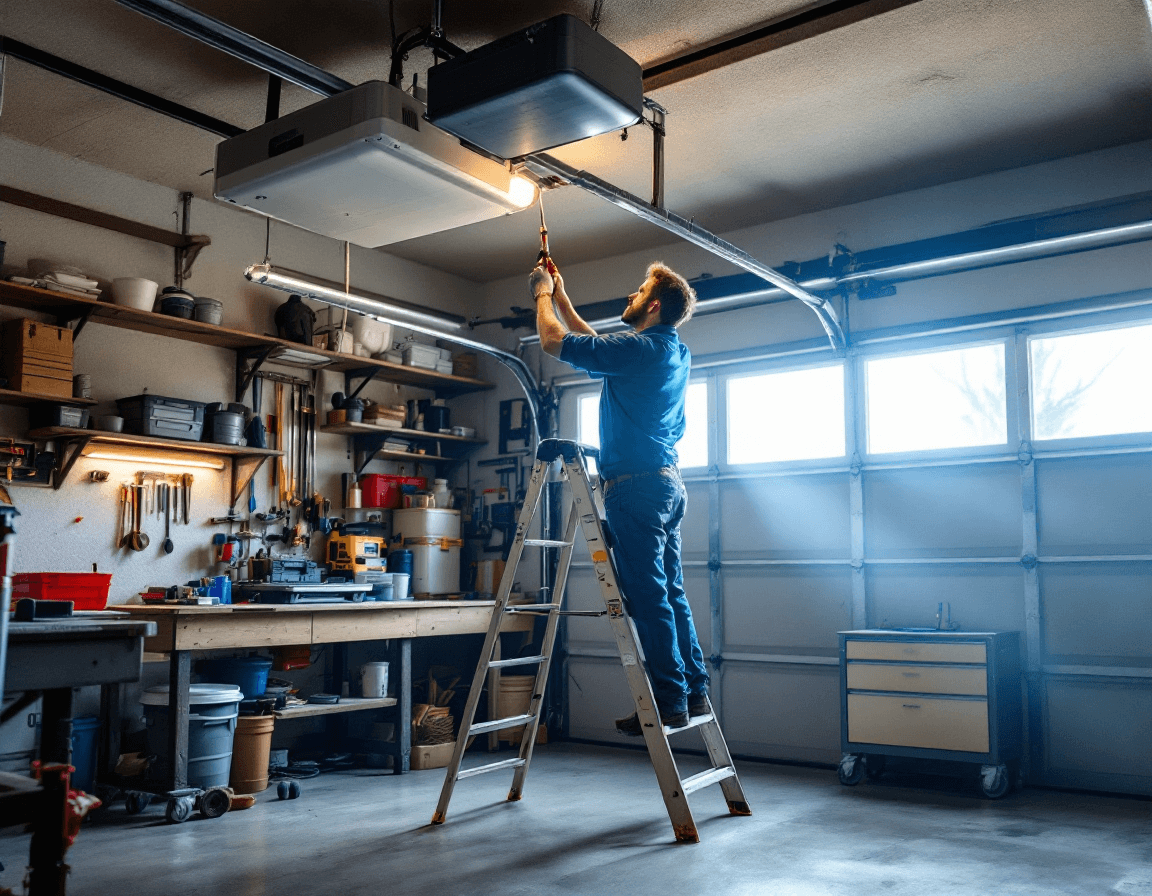
Garage Door Opener Repair in Covington, WA is one of the most common calls we handle for homeowners across the Covington area, from the older ranch-style homes near the older parts of town to newer builds in the neighborhoods that have grown up around the town center. Most opener problems look dramatic when they first happen. The door stops mid-swing, the remote goes dead, or the motor hums without lifting anything, and it is easy to assume the whole system has failed. In practice, the majority of these failures come down to a handful of components, and a careful diagnosis usually points to a specific fix rather than a full replacement.
Covington's climate plays a real role in how openers age. Our winters bring long stretches of cool, damp air, occasional hard freezes that stiffen lubricants, and the constant moisture that works its way into outlets, door sensors, and wiring runs. Homes near Jenkins Creek and the wooded lots east of the town center often deal with extra humidity and leaf litter that collects around sensor brackets and the threshold. Because of that, we approach every opener call with the local weather in mind, and we check for the kinds of wear that show up in this part of King County, not just the generic failures listed in a manual.
This page walks through the symptoms we see most often, what they usually mean, and what a licensed technician can do about them. We cover motor and gear problems, remote and keypad failures, travel-limit and force-setting issues, blinking indicator lights, chain and belt trouble, and the intermittent faults that are hardest to pin down. We also describe what a typical repair visit involves and where the $95 to $375 range for most opener repairs tends to fall. Read on for a practical guide, and call us at (888) 799-3819 if your door is giving you trouble right now.
Reading the Clues Your Opener Gives You Before Calling
Before anyone touches a wrench, the most useful thing a homeowner can do is describe the symptom precisely. "The door is acting weird" is hard to troubleshoot over the phone, but "the motor runs for about two seconds and then the door drops back down" points directly at a particular subsystem. We ask customers to note whether the door moves at all, whether the sound changes between open and close, whether the lights on the opener flash, and whether the problem happens from the wall button, the remote, or both. Those details narrow the search dramatically.
Timing matters too. A problem that appears right after a cold snap often involves a stiff door, a weak battery in a remote, or condensation in an exposed connection. A failure that started after a power outage points toward the logic board, the circuit board memory, or a tripped safety circuit. A door that worked fine last month and now stalls halfway suggests worn rollers, a sagging track, or a travel-limit setting that drifted as the cable stretched or the door settled over several seasons.
Keep a short list of what you observe. Homeowners who write down the basics before calling tend to get a faster and more accurate diagnosis. A simple list helps:
- Does the motor run, buzz, or stay silent when you press the button?
- Does the door move at all, even a few inches?
- Does the problem happen with the remote, the wall control, the keypad, or all three?
- Did the trouble start after a storm, a power interruption, or a cold spell?
- Are any indicator lights blinking, and how many times do they flash in each cycle?
When the Motor Hums but the Door Refuses to Move
One of the most frustrating symptoms is hearing the opener motor engage while the door stays put, or the door lifts a short distance and then stops. This usually means power is reaching the motor but the drive is not transferring force to the door. The most common culprit is a disconnected or slipping drive mechanism, such as a stripped drive gear, a broken trolley connection, or a release handle that has been pulled and left in the disengaged position. Sometimes the motor is working perfectly and the problem lies in the door itself, which has become heavy or binding because of a seized roller or a track that has shifted out of alignment.
A technician will start by checking whether the trolley is still attached to the door arm, whether the emergency release has been accidentally pulled, and whether the door moves freely by hand when the opener is disconnected. This step is important for safety as well as diagnosis. A door that is hard to lift manually often has a mechanical issue that the opener is struggling to overcome, and continuing to run the motor under those conditions can burn out the drive and damage the gear train. In Covington's damp months, we also look for corroded hinges and rollers, since moisture and grit can make a door feel heavier than it should.
If the motor is humming and nothing moves, stop using the button until the cause is found. Repeated attempts can overheat the motor and strip gears that might otherwise have been repairable. A licensed technician can test the motor's current draw, inspect the gear and drive assembly, and determine whether the fault lies in the opener or in the door hardware. Repairs in this category commonly involve replacing a drive gear, reattaching the trolley, or freeing a stuck roller, and they often fall within the broader $95 to $375 range depending on parts and the brand of opener.
Silent Remotes and Dead Wall Buttons
When the remote does nothing and the wall button also fails, the problem is often a power or signal issue rather than a broken motor. Start with the simplest checks: a weak or corroded battery in the remote, a wall control with a loose wire, or a tripped breaker feeding the garage outlet. A surprising number of "dead opener" calls turn out to be a GFCI outlet that tripped during a rainy spell and needs to be reset. Covington homes built with garage circuits exposed to the elements can see these trips more often than homes with protected indoor wiring.
If the wall button is dead but the remote works, the wiring between the control and the opener is the likely suspect. Low-voltage runs are sometimes pinched, cut during a drywall repair, or loosened by vibration over time. If the remote is dead but the wall button still responds, the issue is usually in the receiver on the opener or in the remote's programming. Remotes can lose their code after a power surge or after the opener's learn button has been pressed accidentally, and reprogramming them is typically a quick service. Keypads, which are increasingly common, can fail from moisture getting behind the keypad face, so we check seals and mounting on any exterior keypad that sits in an exposed location.
Signal interference can also cause intermittent remote problems. Nearby devices, a new Wi-Fi router, or even metal storage shelving placed near the door can weaken the signal enough that the remote only works from certain spots in the driveway. A technician can test the receiver's sensitivity, check antenna placement, and recommend whether a replacement remote or a receiver upgrade makes more sense. Many of these repairs are straightforward and fall at the lower end of the typical price range.
Grinding Noises and Stripped Gears in the Opener Head
A loud grinding, clicking, or whining sound from the opener head is one of the most important warnings a homeowner can receive. In most cases it indicates a stripped or worn gear in the drive mechanism. Plastic gears, which are common in many residential openers, can wear down over years of use, and the teeth can crack or shear away entirely. Once a gear begins to slip, the motor may still run while the door struggles, lurches, or stops partway through its travel. Continuing to operate the opener in this condition can damage the motor and the drive shaft, turning a moderate repair into a full replacement.
Our technicians inspect the gear set, the drive sprocket or belt pulley, and the mounting hardware to determine what has failed. We also look for signs of excessive lubrication loss, which is common when the opener has never been serviced. Covington's wet weather can accelerate the breakdown of lubricants, and a garage that sees large temperature swings between a cold morning and a warm afternoon can make grease thicken and thin in ways that stress the gears. A proper service includes cleaning old grease, applying the correct lubricant to the gear set, and checking the alignment of the drive components.
Stripped-gear repairs are among the more involved opener jobs, and they are often where the price moves toward the upper end of the typical range. Replacing a drive gear assembly can take longer than a simple sensor fix, and it requires care to avoid damaging the rail or the motor housing. Our advice is simple: if you hear grinding, stop using the opener for regular trips until it has been inspected. Waiting usually makes the repair more expensive.
Doors That Reverse Right After Closing
A door that closes most of the way and then immediately reverses is often a safety feature doing its job, but the trigger may be something minor. Modern openers are required to reverse when they sense an obstruction, and they rely on a set of sensors and force settings to decide when to do that. The most common cause is a misaligned photo-eye pair, the two small sensors mounted near the floor on either side of the door. If one sensor has been bumped, if its bracket has loosened, or if a spider web, cobweb of leaves, or accumulated grime has blocked the beam, the opener will think something is in the way and reverse at once.
Another frequent cause is a force or travel-limit setting that has drifted. As cables stretch, springs age, and the door settles over several seasons, the amount of force the opener needs to close the door can change. If the close-force setting is too sensitive for the current conditions, the door may reverse on contact with a small amount of resistance, such as a rough patch on the floor or a seal that has become stiff in cold weather. Adjusting the travel limits and force settings requires care, because the opener's safety functions must remain reliable. We never recommend turning those protections off, and we make adjustments only within the manufacturer's specifications.
Reversal problems can also come from the door itself. A bent track, a rubbing roller, or a seal that catches on the threshold can create enough resistance to trigger the safety system. In coastal and wet-climate homes, the bottom seal may also swell or warp, which changes the door's behavior near the floor. A thorough repair visit checks the sensors, the travel limits, the force settings, and the door's balance and alignment so the fix addresses the real cause.
Decoding the Repeating Blink Patterns on the Opener
Many openers use indicator lights to communicate faults, and the number of blinks in a repeating pattern often points to a specific problem. A light that flashes several times, pauses, and then repeats usually signals a particular error code that the manufacturer has defined. Because each brand uses its own system, there is no single universal meaning for every pattern, which is why we always recommend checking the model's documentation alongside a physical inspection. A flashing light is information, and it is worth recording before you power-cycle the opener, because the pattern may disappear after a reset.
Common patterns relate to sensor wiring, obstructed photo-eyes, force-limit faults, and communication problems between the wall control and the logic board. Some patterns indicate that the opener has detected a motor overload or a stalled drive, which may point back to the gear and track issues described earlier. Others mean that the travel limits have not been set or have been lost, which can happen after a power interruption or a firmware glitch. A technician can read these codes, verify the wiring, and reset or reprogram the logic board when appropriate.
It is tempting to keep resetting the opener until the lights stop flashing, but a repeating error often returns for a reason. If the pattern continues after a basic reset, schedule a diagnosis rather than repeating the cycle. Covington homeowners who keep a photo or a note of the pattern tend to save time at the appointment, and that small habit can reduce the cost of the visit.
Loose Chains, Slipping Belts, and Damp-Weather Drive Trouble
Chain-drive and belt-drive openers each have their own failure patterns, and both are affected by the kind of humidity and temperature changes that Covington garages experience. A chain that has become loose can jump off the sprocket, causing the door to stall, clatter, or stop entirely. Over time, chains stretch, links can kink, and the tension may need adjustment. A loose chain is often one of the easier repairs, but it should be addressed promptly, because a chain that jumps can damage the rail or the trolley.
Belt-drive openers are quieter and popular in many newer homes, but their belts can also loosen or slip. Moisture, dust, and the normal aging of the belt material can reduce grip, and a belt that has come off its pulleys can leave the door stranded. Our technicians check belt tension, inspect the pulleys for wear, and confirm that the belt sits properly in its channel. Replacing a belt is a practical repair in many cases, but the work should be done carefully to avoid stressing the motor or the rail.
Homeowners should never attempt to adjust or replace spring or cable components on their own. Torsion springs and extension springs store a large amount of energy, and cables can fail under load in ways that cause serious injury. If a chain or belt problem appears to involve the springs, the cables, or the drum, stop and call a licensed professional. Safety must come first, and a qualified technician can handle the tension system properly while also repairing the opener drive.
Intermittent Operation: Tracking Down the Fault That Comes and Goes
Intermittent problems are some of the most challenging calls we handle, because the opener may work perfectly during the appointment and fail again a day later. These faults often involve loose wiring, a failing circuit board component, a marginal power supply, or a sensor that becomes unreliable when it gets wet or cold. In Covington, a garage door that works fine in dry weather may behave differently during a long wet stretch, when moisture gets into connectors and sensors and creates a short-lived signal failure.
Diagnosing an intermittent fault usually requires patience and a systematic approach. A technician will check connections at the terminals, examine the wiring for nicks or corrosion, test the power supply voltage, and review the opener's error history if the model supports it. We also ask customers to note when the problem occurs: morning or evening, after rain, during cold snaps, or after the door has been used several times in a row. Those patterns can point toward heat-related issues in the logic board, moisture in a sensor, or a battery backup that is nearing the end of its life.
One practical tip is to keep a simple log for a week or two if the problem is not constant. Record the date, time, weather, and what happened when you pressed the button or used the remote. That information can make a major difference in the diagnosis, and it helps the technician replicate the conditions that trigger the fault.
Brand Notes for Openers Commonly Found in Covington Homes
Covington garages contain a wide mix of openers, from older chain-drive units installed decades ago to recent belt-drive models with smart-home connectivity. We service every major opener brand, and while the principles of troubleshooting are similar across manufacturers, each brand has its own logic board layout, programming procedure, and recommended part numbers. Knowing the model number helps greatly, because it lets us check the correct diagnostic sequence and confirm which parts are available for the repair.
Smart openers add another layer of complexity. Many models connect to home networks, mobile apps, and voice assistants, and a connectivity problem can look like a mechanical fault when the door simply will not respond to an app command. A technician can check whether the problem lies with the opener's hardware or with the network connection, and whether a firmware update or a re-pairing step is needed. Older openers may lack these features, but they often require careful attention to the safety reversal system and the limit switch settings, especially if the unit has been in service for many years.
If you are not sure what opener you have, look for a label on the motor housing or the rail near the header. Writing down the brand, model, and serial number before your appointment makes the visit faster and helps the technician bring the right tools and parts. For homeowners who are considering replacement, we can also discuss whether a repair is more economical than a new unit, based on the age, condition, and current performance of the existing opener.
What a Covington Repair Visit Covers and What It Typically Costs
A typical opener repair visit begins with a conversation about the symptoms and a visual inspection of the door, opener, sensors, wiring, and safety system. The technician then tests the motor, drive, travel limits, force settings, and remote or keypad functions, and confirms whether the problem can be resolved on the spot. Many repairs are completed during the same visit, especially when the needed part is available. For more complex issues, we explain what has failed, what the options are, and what the expected cost range looks like before any work proceeds.
For most opener repairs, pricing falls between $95 and $375. Simpler jobs, such as realigning a photo-eye, reprogramming a remote, or tightening a loose chain, typically sit at the lower end. More involved repairs, such as replacing a stripped drive gear, a failed logic board, or a motor that has burned out, tend to fall toward the upper end of the range. The final figure depends on the brand, the part required, and the amount of labor involved, and we aim to provide a clear explanation before starting the work.
Our technicians are licensed, bonded, and insured, and we follow safe practices for every visit. We do not perform spring or cable replacement as part of a standard opener repair, and when a problem involves those components we recommend a licensed professional for that portion of the work. If a diagnosis reveals a safety hazard, we will explain the risk plainly and help you decide on the next step.
Preparing Your Covington Garage Opener for Wet Winters and Warm Summers
Routine care can prevent many of the problems described on this page. Covington's mix of damp winters and mild summers is kind to lubricants in some ways and hard on them in others, and a simple maintenance rhythm helps openers handle both. Once or twice a year, clean the photo-eyes, wipe down the rail, check that the door moves smoothly by hand when the opener is disconnected, and listen for new sounds during operation. Keep the area around the door clear of leaves, debris, and standing water, especially in homes near Jenkins Creek where runoff can reach the garage threshold during heavy rain.
Test the safety reversal once a month by placing a flat object, such as a piece of wood, under the closing door. The door should reverse on contact. If it does not, stop using the opener and schedule service immediately. Also check the remote batteries, the keypad seals, and any exposed wiring at the wall control. Small adjustments can prevent the surprise of a stalled door on a cold morning when you are heading out for work.
Finally, avoid using the emergency release more than necessary, and never force a door that is stuck. Forcing a door can damage the opener, the track, and the springs, and it can create a safety hazard. If something feels wrong, call a licensed technician early. A small repair caught in time is almost always less costly than a major failure that follows weeks of ignored warning signs.
If your Covington garage door opener is humming without moving, grinding, reversing, flashing a pattern you do not recognize, or behaving unpredictably, we can help. Call Seattle Garage Door Fix at (888) 799-3819 to describe the symptoms, schedule a diagnosis, and get a clear explanation of your options. Our licensed, bonded, and insured team serves Covington and the surrounding area, and we will tell you plainly what needs fixing and what can wait.