
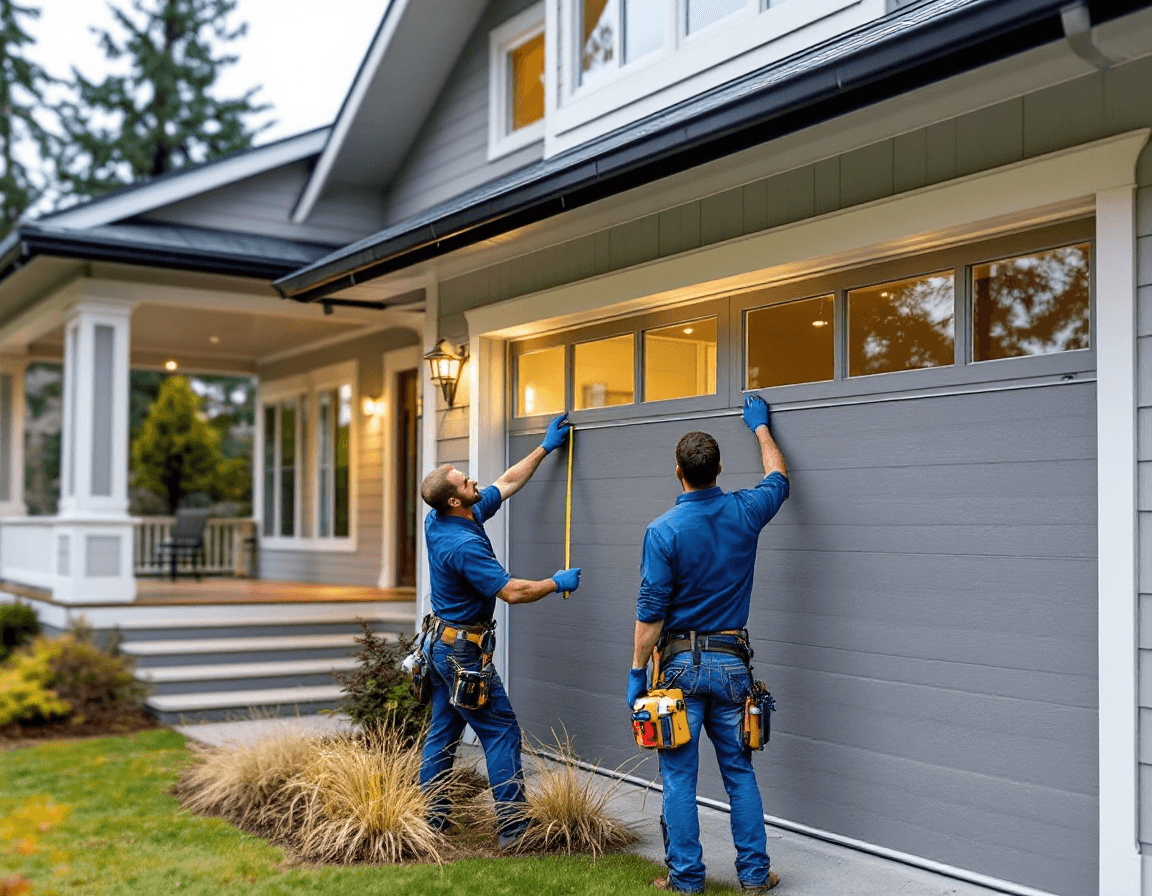
Garage Door Installation & Replacement in Covington, WA is one of the most practical upgrades a homeowner can make, especially when an old door has stopped keeping up with daily use or with the region's weather. Covington sits in the southeast part of King County, where wet winters, damp air, and the occasional windstorm put steady pressure on every exterior component of a home. A garage door takes more of that pressure than almost anything else, because it is the largest moving part on the house and it faces the street every day. When it fails, it can lock your car inside, leave the garage open to the elements, and quietly expose the rest of the home to cold, moisture, and security risks.
This page explains when replacement makes more sense than another repair, how different door materials perform in our climate, and what the process looks like for homes in Covington and nearby neighborhoods. We also cover the realistic cost range, the decisions that drive that cost, and the questions worth asking before you sign anything. Our goal is to give you enough detail to compare options with confidence, whether you are dealing with a door that was damaged by a storm or simply want a quieter, better-insulated space for your vehicles and workshop.
Every installation we perform is handled by licensed, bonded, and insured technicians. Garage doors carry real hazards, particularly the high-tension springs and heavy panels involved in any replacement, so we treat each job as a careful, measured project rather than a quick swap. If you are weighing a new door, read through the sections below, then call (888) 799-3819 for a straightforward conversation about your home.
Recognizing When a Door Has Crossed the Line From Repairable to Replace
Most garage doors do not fail all at once. They give warning signs over months or years, and many homeowners keep patching them long after a new door would have been the smarter investment. A door that repeatedly needs service calls, slow or uneven movement, or new parts every season is often telling you that its overall condition, rather than any single component, is the real problem. Recognizing that pattern early saves money and avoids being stranded on a cold Monday morning.
Replacement usually makes more sense than repair when one or more of the following conditions apply:
- The door panels are cracked, dented through the insulation layer, or warped enough that the sections no longer sit flush against the tracks.
- Rust has spread through seams and bottom brackets, or wood sections show soft spots, swelling, or rot at the base.
- The door has broken down repeatedly over a short period, meaning you are paying for parts and labor more often than the door is worth to keep running.
- Storm damage, a backing-out accident, or a fallen limb has bent the frame, and the track alignment cannot be restored without major rework.
- The opener is being asked to fight a heavy, out-of-balance door, which shortens the life of both the door and the motor.
When you call for an estimate, we will look at the full system rather than only the failed part. Sometimes a worn cable or a faulty sensor is the only issue, and a targeted repair is the right call. Other times, a door with aging panels, a sagging center section, and outdated hardware will cost more to keep alive than it would to replace with a modern, balanced unit. We would rather tell you that plainly than sell you a door you do not need.
Matching Door Materials to the Pacific Northwest Climate
Western Washington is not a harsh climate by national standards, but it is persistently damp. Rain falls for long stretches between autumn and spring, humidity stays high even in shoulder seasons, and temperatures seldom swing as dramatically as they do in drier regions. That mix favors some materials and creates problems for others. Choosing the right door starts with understanding how moisture behaves on your property, especially if your home sits near a seasonal creek or on a lot where runoff collects after heavy rain, as some Jenkins Creek-area properties do.
Insulated steel is the most common choice in Covington for good reason. Galvanized steel skins bonded to a foam core resist warping, hold up well to wet weather, and need relatively little maintenance when the factory finish is intact. Scratches in the paint should be touched up promptly, since exposed metal in a wet climate can begin to rust. Steel doors also come in a wide range of textures and window options, which makes them a flexible choice for both traditional and contemporary homes.
Wood and wood-composite doors have a distinct appeal, especially for carriage-style designs, but they require more attention here. Solid wood can absorb moisture, swell, and develop finish failures on south- and west-facing exposures that take the brunt of wind-driven rain. Quality wood doors can perform well with a maintenance routine that includes periodic sealing and inspection of the bottom rail, but homeowners should go in with realistic expectations. Engineered wood and composite skins are often a more stable option for wet-climate homes that want a wood look.
Aluminum and glass doors suit homes that want more light and a clean, modern profile. Aluminum resists rust better than steel, though it dents more easily and typically offers less insulation unless it is paired with thermal breaks and insulated glazing. Glass panels should be specified with appropriate glazing and sealed units so that condensation between the layers does not become a recurring problem during cool, humid months.
Choosing Between Insulated Steel, Wood, Glass, and Aluminum for Your Home
Picking a material is less about finding the single best option and more about matching the door to how you use the garage, how the house is oriented, and what style you want to live with for the next fifteen or twenty years. A detached workshop in a sunny corner of a lot has different needs than an attached two-car garage that opens onto a shaded driveway, and both differ from a garage that doubles as living space.
Many Covington homeowners narrow their choices by asking a few practical questions before they look at samples. These questions help separate a door that looks good on the showroom floor from one that suits your actual property:
- Is the garage attached to living space, and do you need the door to hold back cold air and reduce noise?
- How much direct rain or wind does the door face, and is there a covered entry or overhang to protect it?
- Will the garage be used mainly for parking, or for a workshop, gym, or storage area that needs steady temperatures?
- How much maintenance are you willing to do each year, including painting, sealing, or cleaning window seals?
- Do you want a door that disappears into the architecture of your house, or one that makes a bold statement from the street?
Insulated steel tends to answer most of these questions well. It offers strong thermal performance, low upkeep, and a wide design range. Wood and glass choices often make sense when curb appeal is the top priority and the homeowner is prepared for periodic finish work. Aluminum fits modern homes and sunny exposures where light and clean lines matter most. Our technicians can walk you through sample panels, explain how each option performs on your specific exposure, and point out the trade-offs that are easy to overlook on a product brochure.
Carriage-Style Looks and Modern Design Choices in Covington Neighborhoods
Garage door style plays a bigger role in how a home presents itself than many people expect. The garage often occupies a large share of the front elevation, so a faded or mismatched door can make an otherwise well-kept house feel dated. Covington has a mix of established neighborhoods and newer developments, along with homes that have been updated over several decades, and the right door style depends a great deal on which architectural language your house already speaks.
Carriage-style doors are among the most requested designs for traditional, craftsman, and transitional homes. They use decorative hardware, grid or panel patterns, and often window inserts to imitate the swinging doors of older carriage houses. Modern versions are usually built on insulated steel or engineered materials, which gives the look without the same maintenance burden as solid wood. Contemporary homes often pair flush panels with full-width glass or horizontal grooves, creating a clean, minimal face that reads well from the street and at night.
Color and finish matter as much as shape. Darker colors absorb more heat, which can be an advantage in cool months but may increase thermal movement on sunny days. Lighter tones reflect more light and can make a narrow driveway feel open. When we measure for a new door, we also look at trim, siding, and roofline, so the final choice complements the house rather than competing with it. If you are unsure, bring a photo of your home from the street, and we will help you visualize the options.
Sizing, Single Versus Double Doors, and Planning Around Remodels and Additions
Accurate measurement is the foundation of any successful installation. Garage openings in older Covington homes sometimes vary from standard dimensions, and additions or remodels can change the framing in ways that affect how a door fits and operates. A door that is even a half inch off in width or height can bind, leak air, or strain the opener, so we verify the rough opening, header height, and clearance above and beside the door before recommending a size.
Single-car and double-car doors each have advantages. A double door provides a wide, balanced opening for two vehicles and typically lets you use an opener with a more manageable load per panel. Single doors are common in older homes or where the wall space is limited, and they can leave more room for storage or a workbench on the other side of the garage. In some properties, replacing two single doors with one double door, or the reverse, requires structural changes that should be reviewed by a qualified contractor before work begins.
Remodels and additions raise additional planning questions. If you are finishing a garage into a home office, adding a bedroom above, or extending the house toward the driveway, the new door may need to match new insulation levels, electrical runs, or wall details. Scheduling the door install alongside other trades can prevent the common problem of a new door going in before the framing is finished or after drywall has already been hung in a way that complicates access. We are glad to coordinate timing with your general contractor so the door becomes a finished element of the project rather than an afterthought.
What to Expect on Installation Day in Covington
A well-run installation follows a predictable sequence, and knowing what happens at each step helps you plan your day and spot any concerns early. Most residential replacements are completed in a single visit, though complex openings or custom doors may require additional time for fabrication and fitting. Before the work begins, we confirm the door model, finish, hardware, and any accessory details, then walk the opening with you to review the plan.
The removal stage is where safety is most important. The old door is heavy, and the springs that counterbalance it store significant energy even when the door looks inactive. Our technicians secure the door, release tension using the proper tools and procedures, and remove the old panels, tracks, and hardware in a controlled sequence. This is precisely the kind of task homeowners should never attempt alone, and it is why we handle every spring and cable operation ourselves.
Once the opening is clear, the new door is assembled or positioned, the tracks are set level and plumb, and the springs are calibrated to the door's weight. We then check balance, confirm that the door opens and closes smoothly, adjust limit settings, and test the safety reversing system. If an opener is being installed or replaced, we program the remote controls and verify that the auto-reverse feature responds correctly when the path is obstructed. Before we leave, we review the operation with you and explain basic care steps so you know what normal performance looks like.
Understanding the Investment: Pricing From $950 to $3,800 and Beyond
Installed pricing for new garage doors typically falls between $950 and $3,800 or more, depending on the door type, size, materials, and features. A basic insulated steel single door with standard hardware generally sits at the lower end of that range, while double carriage-style doors, glass-heavy designs, custom wood, or large oversized openings move the price upward. Premium insulation packages, specialty finishes, and smart-opener integration can also add to the total.
Several factors drive the final number more than people expect. Panel design and thickness affect both cost and thermal performance. Track systems, including high-lift and vertical configurations, may be needed in lofted garages or where ceiling space is limited. Spring systems must be sized to the door's weight, and an accurate fit is essential for safe operation. If the opening needs framing repair, weatherseal upgrades, or header work, those items are priced separately after an on-site assessment. We provide a written estimate that itemizes these elements so you can see exactly what you are paying for.
Value is best judged over the life of the door rather than the day of installation. A better-insulated door can reduce drafts into an attached garage, a balanced and well-fitted unit places less stress on the opener, and quality materials resist the moisture and temperature cycles common in our region. We encourage homeowners to compare estimates on equal terms, meaning the same door specifications, the same warranty coverage, and the same installation scope. A lower quote that omits seals, hardware, or disposal may end up costing more later.
Insulation, Energy Efficiency, and Keeping an Attached Garage Comfortable
For many Covington households, the garage is more than a parking space. It may hold a freezer, a water heater, a home gym, or a workshop, and it often shares a wall with the living area. A door is one of the largest openings in that envelope, so its insulation and sealing have a real effect on how comfortable the connected spaces feel. Cold drafts along the floor, chilly air near the kitchen wall, and a garage that never quite warms up are common signs that the door is not doing its job.
Insulated doors reduce heat transfer by filling the panel sections with foam, which helps keep the garage temperature closer to the house in winter and limits heat gain in summer. Weatherseal quality matters just as much. Bottom seals, top and side seals, and tight-fitting tracks prevent the rain-driven drafts and moisture intrusion that are common during wet months. When a door is installed with careful attention to these details, homeowners often notice that the space feels calmer and quieter, especially when the door closes against a properly sealed frame.
It is worth being realistic about what a new door can and cannot do. Insulation performance depends on the entire garage envelope, including the wall between the garage and the house, the attic or ceiling above, and any gaps around service doors and utility penetrations. We can recommend sealing upgrades or refer you to a qualified insulation contractor if the rest of the space needs attention. A new door is a major step, and it works best when it is part of a broader plan to make the garage efficient.
Permits, Structural Considerations, and Working With Covington Projects
Garage door replacements are often straightforward, but some projects require permits or structural review. Whether a permit is needed depends on the scope of work, such as changing the size of an opening, altering a header, or modifying load-bearing framing. Requirements can also vary based on local jurisdiction, so it is wise to confirm with the appropriate building department before committing to a project that involves structural changes. We will tell you early if we see something that needs review, and we are happy to work with your architect, designer, or general contractor to keep the schedule on track.
Structural considerations are particularly important when a door is being enlarged to accommodate a larger vehicle, a new addition, or a modernized entry. Widening an opening can require a properly sized header to carry the load above, and changing the door height may affect the clearance needed for tracks and springs. In older homes, we may find framing that has been weakened by moisture, rot, or previous repairs, and those conditions must be addressed before a new door goes in. Our goal is always to leave the opening sound, plumb, and ready for years of use.
Coordination with other trades is often the difference between a smooth project and a frustrating one. If electricians are running new circuits for a garage workshop, or if painters are finishing the exterior trim, it helps to decide early whether the door will go in before or after those tasks. Sharing measurements and finish selections up front prevents costly corrections later. We regularly work alongside builders and remodelers in the area, and we are glad to provide written specifications that keep everyone aligned.
Warranties, Safety Hardware, and Long-Term Care for Your New Door
A new garage door is a long-term investment, and understanding its warranty and maintenance needs helps protect that investment. Warranty coverage varies by manufacturer and by component. Panels, finishes, springs, and hardware may each carry different terms, and some coverage depends on proper installation and routine care. We provide written details about what is covered, how long it lasts, and what steps keep the warranty valid, so you are never left guessing after the crew leaves.
Safety hardware deserves special attention. Modern doors should operate with a functioning auto-reverse system, photo-eye sensors aligned at the correct height, and secure cable and spring assemblies. The springs in particular are the most hazardous part of any garage door system. They are under high tension, and they should only be adjusted, replaced, or serviced by trained professionals using proper equipment. If you notice a spring that looks stretched, a cable that is fraying, or a door that feels unbalanced, do not attempt a do-it-yourself fix. Call a licensed technician to inspect it.
Routine care keeps a door performing well through Western Washington's wet seasons. Homeowners can help by keeping tracks clean and free of debris, checking weatherseals for cracks or gaps, lubricating hinges and rollers with an appropriate product, and touching up any paint scratches before rust develops. Watching for changes in sound or movement is also valuable, since a door that starts to grind, bind, or drift is often trying to tell you something. A brief seasonal inspection, especially after the first heavy rains of fall, can catch small issues before they become expensive ones.
Questions to Ask Before You Choose a Contractor
Choosing a contractor for a garage door installation is a decision that affects safety, appearance, and long-term reliability, so it helps to know what to ask. Reputable companies will answer these questions directly and will put the answers in writing. If you feel rushed or get vague responses, that is worth paying attention to. A thorough conversation at the start usually leads to a smoother project and fewer surprises later.
A short checklist can make the comparison easier. When you request estimates, ask each company to clarify the following points so you can evaluate the bids on equal terms:
- Are the technicians licensed, bonded, and insured, and can they provide proof on request?
- Does the estimate include removal and disposal of the old door, new tracks, springs, weatherseals, and any required hardware?
- What warranty applies to the panels, springs, opener, and labor, and how long does each coverage period last?
- Who handles spring adjustments and cable work, and is that work performed by trained staff?
- Will the team measure the opening on site and confirm dimensions before ordering the door?
- How will any structural or framing issues be identified, priced, and approved before work proceeds?
These questions are easy to ask and tell you a great deal about how a company operates. At Seattle Garage Door Fix, we welcome them, because informed homeowners make better decisions and tend to be happier with the finished result.
Whether your garage door was damaged in a winter storm, has grown too drafty to live with, or simply no longer matches the home you have today, a well-planned replacement can make a lasting difference. For a clear assessment of your Covington property, call (888) 799-3819 to schedule a licensed technician, talk through material and style options, and receive a written estimate with no obligation to proceed.