
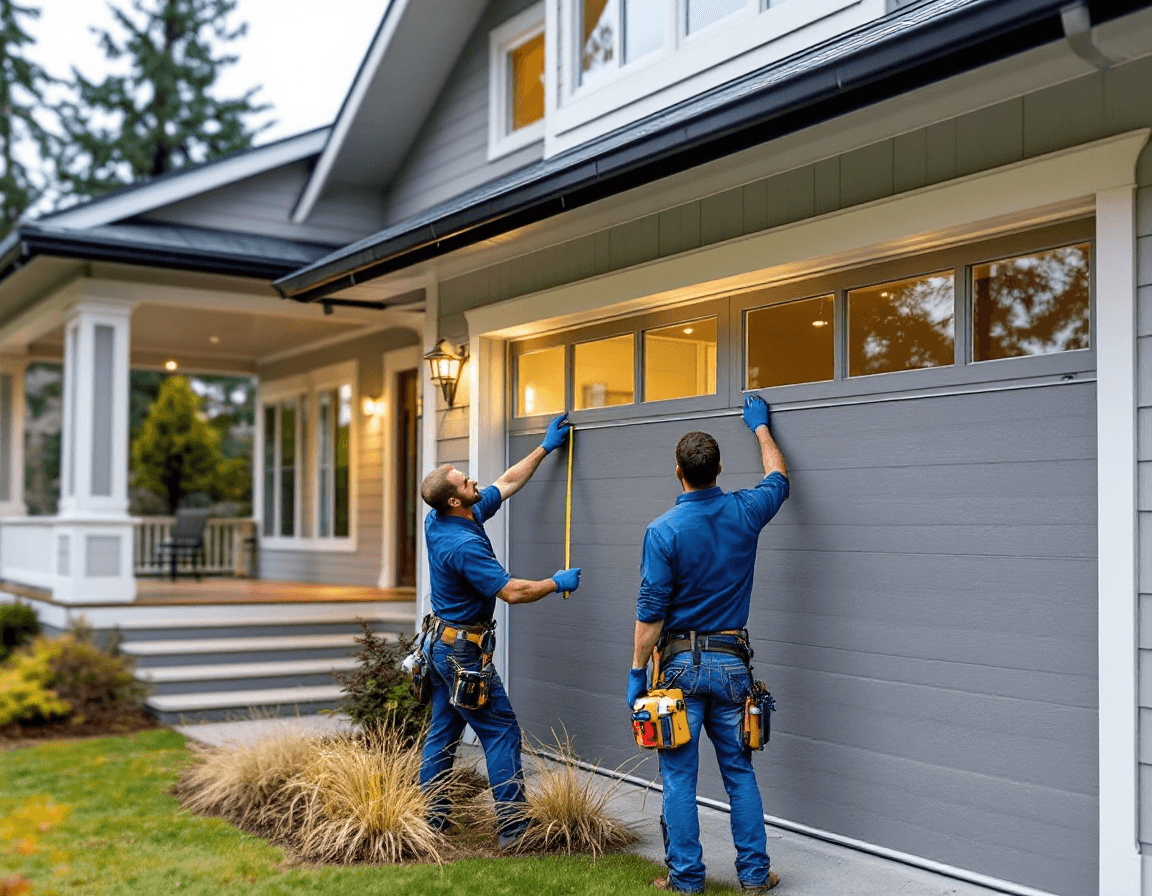
Garage door installation and replacement in Kent, WA is one of the most practical upgrades a homeowner can make, and it affects far more than the look of the house. Kent sits in the Green River valley, where winter rain, damp ground, and temperature swings put steady pressure on every component of a garage door. Whether your current door is cracked, warped, or simply worn out, a well-matched replacement can make the garage quieter, more secure, and easier to live with. Our technicians install single and double doors in insulated steel, carriage-style, wood, glass, and aluminum, and we work with homeowners across the 98030, 98031, 98032, and 98042 ZIP codes.
Many of the doors we see in Kent were installed during the building boom that followed decades of growth in the area, so they have now reached a point where age and weather are doing their work. Panels that were fine for a decade may be showing rust at the bottom seam, hinges may be loose, and weatherstripping may have hardened into a brittle strip that no longer seals. A replacement is rarely a single decision made on impulse. It usually comes after a few frustrating months of repairs, a storm that left a dent in the panel, or a remodel that makes the old opening look out of place. This guide walks through how to tell when replacement makes more sense than another repair, how to choose materials suited to our climate, and what the process looks like from measurement to final adjustment.
When a Door Has Passed the Point of Repair
Every garage door will need service over its life, but there is a difference between routine maintenance and a door that has simply run out of useful years. A useful starting question is how many separate problems the door has produced in the last two years. One broken cable is an accident. Three or four failures involving rollers, tracks, openers, and panels suggest that the whole assembly has been fighting itself for a long time. When repair bills begin to approach a meaningful fraction of replacement cost, a new door often delivers better value and far more predictable operation.
Certain damage is also difficult to fix in a way that lasts. Water intrusion that has soaked into the bottom panel of a wood door can lead to soft, swollen sections that will not hold a screw or bracket. Steel panels with deep rust perforation near the bottom edge may look acceptable from the driveway, but the metal behind the paint is often thin and weak. Dents that crease a panel along a seam can distort the entire section, causing it to rub against the tracks or bind as it rises. In these cases, patching the surface treats the symptom while the structure underneath continues to degrade.
Here are the signs we most often see when a homeowner is better served by replacement than by another repair visit:
- Rust or rot has reached the bottom panel or the edges of several sections
- Panels are bowed, creased, or no longer sit flush against each other
- The door has been damaged in a storm, a fallen branch incident, or a vehicle impact, and the frame is out of square
- Repairs keep recurring on the same components, even after new parts are installed
- The door is so drafty or noisy that the garage cannot be used comfortably as a workshop or living space
Reading the Warning Signs Before a Breakdown
Most garage doors give warning signals long before a complete failure. A door that begins to shudder or hesitate during its upward travel is often telling you that the balance has shifted, the tracks have loosened, or the lift components are wearing unevenly. A grinding or squealing sound at the rollers usually means the nylon or steel wheels have worn flat or the bearings are dry. Pay attention to a door that stops partway through its cycle, because that may indicate an opener that is working harder than it should to overcome friction or imbalance.
Light leaking around the bottom seal, daylight visible at the top corners, or a constant draft under the door are also worth noting. In the Pacific Northwest, where cold air and wet weather arrive together for much of the year, these gaps let moisture into the garage and then into adjacent rooms. Over time, that moisture can affect stored items, workbenches, and the framing near the header. A door that is no longer sealing well is not just uncomfortable. It can quietly raise your heating bills and invite dampness into spaces that were never designed to handle it.
One caution is essential. Garage door springs and cables are under very high tension, and attempting to adjust, wind, or replace them without proper training and equipment can cause serious injury. If your door shows any sign of spring or cable trouble, such as a sagging door, a snapped coil, or a visibly frayed cable, leave that work to a licensed professional. Our technicians handle spring and cable work as part of every installation and repair, using the right tools and procedures.
Choosing Materials That Hold Up in the Valley Climate
Material selection matters more in Kent than many homeowners expect. The valley's wet winters and humid shoulder seasons can challenge certain finishes, while summer afternoons can still produce strong sun exposure on south- and west-facing garage fronts. Insulated steel remains the most common choice for good reason. A steel skin over a foam core offers good strength, a wide range of colors and textures, and a generally strong balance between cost and performance. Quality steel doors use galvanized substrates and durable powder or polyester coatings, and those coatings matter a great deal near wet ground.
Wood doors bring warmth and a classic appearance that suits older Kent homes and many newer craftsman-style builds. They do require more attention, including periodic refinishing and sealing, especially along the lower panels where splash and runoff collect. Engineered wood or composite options can offer a similar look with better dimensional stability, which helps reduce warping after seasonal swings. Glass-paneled doors, often with tempered or frosted glass, let natural light into the garage and pair well with modern facades. They tend to be more expensive and need thoughtful insulation choices, since glass sections are typically less insulating than solid panels.
Aluminum doors are lightweight and resist corrosion well, which makes them appealing for homes near wet ground or for owners who want a sleek, contemporary profile. Because aluminum is less rigid than steel, these doors are often built with thicker sections or reinforced frames to handle wind load. Our technicians can talk through the trade-offs for your specific exposure, whether your garage faces an open lot, a tree-lined street, or a driveway that catches runoff after heavy rain.
Insulation, Sealing, and Keeping Heat Where It Belongs
Insulation is one of the most common reasons homeowners in Kent decide to replace a door, particularly when the garage is attached to living space or houses a heated workshop. An insulated door uses a core of foam, typically polyurethane, bonded between the exterior and interior skins. Door insulation is measured in R-value, and manufacturers list their ratings for each product. The higher the rating, the better the door resists heat transfer. Comparing ratings across brands helps, but the installed performance also depends on how well the door seals at the edges, the bottom, and the top.
Sealing is the other half of the equation. A premium insulated door can still leak air if the bottom weatherstrip is worn, if the side seals do not meet the jamb cleanly, or if the header gap has been left open. During installation we check each seal point, adjust the door so it lands evenly on the threshold, and confirm that the top and side seals compress without binding. For attached garages in Kent, this attention to detail can make a noticeable difference in how warm the adjoining laundry room or mudroom feels in January.
Consider also the interior finish of the door. Some homeowners choose a finished interior panel to reduce noise and improve the look from inside the garage. Others prefer a bare steel back to keep the cost down. Either approach can work, but a well-sealed, insulated door combined with good weatherstripping will typically outperform a cheaper door that looks similar from the street. When the garage is used as a shop, a quieter door can also reduce the rumble that carries into nearby rooms.
Matching the Door to Carriage-Style and Neighborhood Character
Curb appeal is a practical consideration, not just an aesthetic one. Garage doors occupy a large portion of the front elevation on many Kent homes, so their style affects how the entire property reads from the street. Carriage-style doors, with their vertical or horizontal grid patterns and decorative hardware, have become popular on homes that want a traditional or farmhouse feel. These doors can be made in steel with embossed woodgrain textures, which gives the appearance of real wood while adding the insulation and low maintenance of steel.
Homes in the East Hill area, where many properties feature mature landscaping and a mix of architectural styles, often benefit from doors that complement the existing trim, roofline, and entry details. A dark bronze or charcoal finish can soften a bright white facade, while a warm cedar tone can echo cedar siding or stained entry doors. Homes closer to Kent Station, many of which have newer construction and modern lines, may prefer flat-panel steel or aluminum with horizontal grooves and a minimalist hardware profile. Choosing a color and style is easier when you bring a photo of the house and a sample of the trim color to the consultation.
Hardware and windows deserve attention too. Decorative hinges, handles, and window inserts can transform a plain steel door into something that looks custom-built. Window sections should be chosen with privacy and insulation in mind. Frosted or obscure glass keeps the interior hidden from the street, while clear glass shows off a finished garage interior. Our installers can show you sample configurations so you can see how each option will look in daylight and after dark.
Planning Your Replacement Around a Remodel or Addition
Many replacement projects in Kent are tied to a larger remodel. A homeowner may be converting part of the garage into a home office, adding a bump-out for a workshop, or extending the footprint to accommodate a larger vehicle or a storage loft. In those cases, the new door has to match the planned opening, the framing, and the structural header, not just the existing dimensions. Coordinating the door with the contractor or builder early avoids costly changes later, such as reframing a wider opening or ordering a door that does not fit the new wall.
Timing matters as well. If the remodel will involve drywall, insulation, or exterior siding, it often makes sense to install the door before the finish work begins. That sequence lets the installer set the frame, check level and plumb, and make adjustments without damaging newly finished surfaces. If the garage will be temporarily unusable during construction, we can discuss scheduling that keeps the house accessible while the work proceeds. Clear communication between the remodel crew and the door installer saves time on both sides.
Structural considerations are important for any opening change. A double door that replaces a single opening, or a wider door added to a new addition, may require reinforced headers or additional support depending on the wall design. We will evaluate the existing framing during the consultation and let you know if a structural change is needed. When permits are required for the remodel, the door specifications should be included in the plans submitted to the local building office so that the inspection goes smoothly.
What Happens During a Typical Installation Day
A well-run installation follows a predictable sequence, and understanding it helps you plan your day. Most single-door replacements take a few hours, while double doors or projects involving opener upgrades or header work may take longer. Before the crew arrives, we ask that you clear the area around the garage, move vehicles out of the driveway, and remove stored items from the first several feet of the garage interior so the team has room to work.
The first step is removing the old door. This includes disconnecting the opener, releasing the spring tension in a controlled way, detaching the panels, and removing the tracks and hardware. Our technicians use proper tools and procedures for this stage because the springs store a great deal of energy. Once the old door is out, the crew inspects the opening, checks the header and jamb condition, and confirms that the new door's dimensions match the rough opening. Any framing issues are discussed with you before the new door is set.
Next comes assembly and installation. The new tracks are mounted and checked for level and alignment, the new springs are fitted and tensioned to the door's specific weight, and the panels are attached with the hinges and rollers. Once the door is mounted, we test its balance and travel, adjust the seals, and set the opener limits. A final walkthrough shows you how the door operates, how to use the manual release safely, and what to expect in the first few weeks as the door settles into its final position. Clean-up is part of the job, and we remove all packaging and debris before we leave.
Understanding Installed Pricing Between $950 and $3,800-Plus
Pricing for garage door installation in Kent depends on several factors, and our installed range runs from about $950 to $3,800 or more. Lower-end projects typically involve a single steel door in a standard size with basic insulation and a straightforward opening. Higher-end projects may involve a double door, premium insulated steel or wood, glass sections, custom carriage-style designs, aluminum construction, or structural header work. The final cost is determined by the door itself, the materials, the opening, and the scope of work, which is why we provide a written estimate after reviewing your specific situation.
It helps to know which elements drive cost. Door size and weight influence the spring system and hardware. Insulation grade and panel design affect material cost. Decorative features such as windows, faux hardware, and custom finishes add to the price. Opener upgrades, new weatherstripping packages, and framing repairs are separate line items that may or may not be included depending on your needs. Our estimates break these components out so you can see where your money is going and decide which features matter most to you.
Some homeowners compare a replacement quote against the cost of ongoing repairs. This is a reasonable comparison, but it should include the expected service life of the new door, the energy performance you will gain, and the reduction in unexpected breakdowns. A door that lasts many years with minimal service may cost less over time than repeated repairs on an aging unit. We are happy to walk through the numbers for your situation without pressure to choose the most expensive option.
Permits, Measurements, and Ordering the Right Door
Before a new door is ordered, accurate measurements are essential. We measure the width and height of the rough opening at several points, check for out-of-square conditions, and note the headroom and sidewall clearance needed for the track system. Some Kent homes have sloped driveways, low ceilings, or obstructions near the opening, and these conditions can affect the type of track and spring system that will work. Getting the measurements right the first time prevents delays and returns.
Permits are another consideration. Depending on the scope of your project, a garage door replacement that changes the opening size, alters structural framing, or is part of a larger remodel may require a permit from the City of Kent or the applicable jurisdiction. Simple like-for-like replacements often do not need a permit, but this varies with the details of the work. We will let you know whether a permit is likely needed for your project and can help coordinate documentation when it is. It is always wise to confirm current requirements with the local permit office before work begins.
Once measurements and permit questions are settled, we place the order with the manufacturer. Custom colors, glass options, and carriage-style details may have longer lead times, so it is worth planning ahead. We will give you an estimated delivery window and keep you informed if anything changes. When the door arrives, we inspect it for shipping damage and confirm that the sections, hardware, and finish match your order before scheduling installation.
Caring for Your New Door Through Kent's Seasons
A new garage door performs best with simple, consistent care. Start with a visual check every few months. Look at the bottom seal for cracks or flattening, the side and top seals for gaps, and the panels for scratches or chips in the finish. Wipe the exterior with mild soap and water to remove road grime and pollen, and rinse the bottom edge thoroughly after heavy rain. In the Pacific Northwest, where moss and mildew can take hold in shaded spots, a gentle cleaning helps keep the finish looking fresh.
Lubrication is important, but it should be done carefully. Use a silicone-based or garage-door-specific lubricant on the rollers, hinges, and track surfaces, and avoid getting grease on the tracks where it can attract dirt. Do not lubricate the springs unless your installer specifically instructs you to, and never attempt to adjust the springs or cables yourself. If you notice unusual noises, uneven movement, or an out-of-balance door, call a licensed professional rather than trying to correct the problem on your own.
Finally, keep the warranty paperwork and installation records in a safe place. Warranty coverage varies by manufacturer and by component, and it often depends on maintenance and proper use. We provide documentation at the end of each installation and explain what is covered, what is excluded, and how to file a claim. If you have questions about your door's operation after installation, we are glad to help, and a quick call can often resolve a minor issue before it becomes a bigger one.
If your garage door is damaged beyond repair, leaking heat through worn seals, or simply showing its age, a replacement may be the most practical path forward. Our Kent team serves homeowners across the 98030, 98031, 98032, and 98042 ZIP codes, and we are happy to visit your home, measure your opening, and talk through materials, styles, and budget without pressure. Call (888) 799-3819 to schedule a free consultation and get a clear, written estimate for your garage door installation or replacement in Kent.