
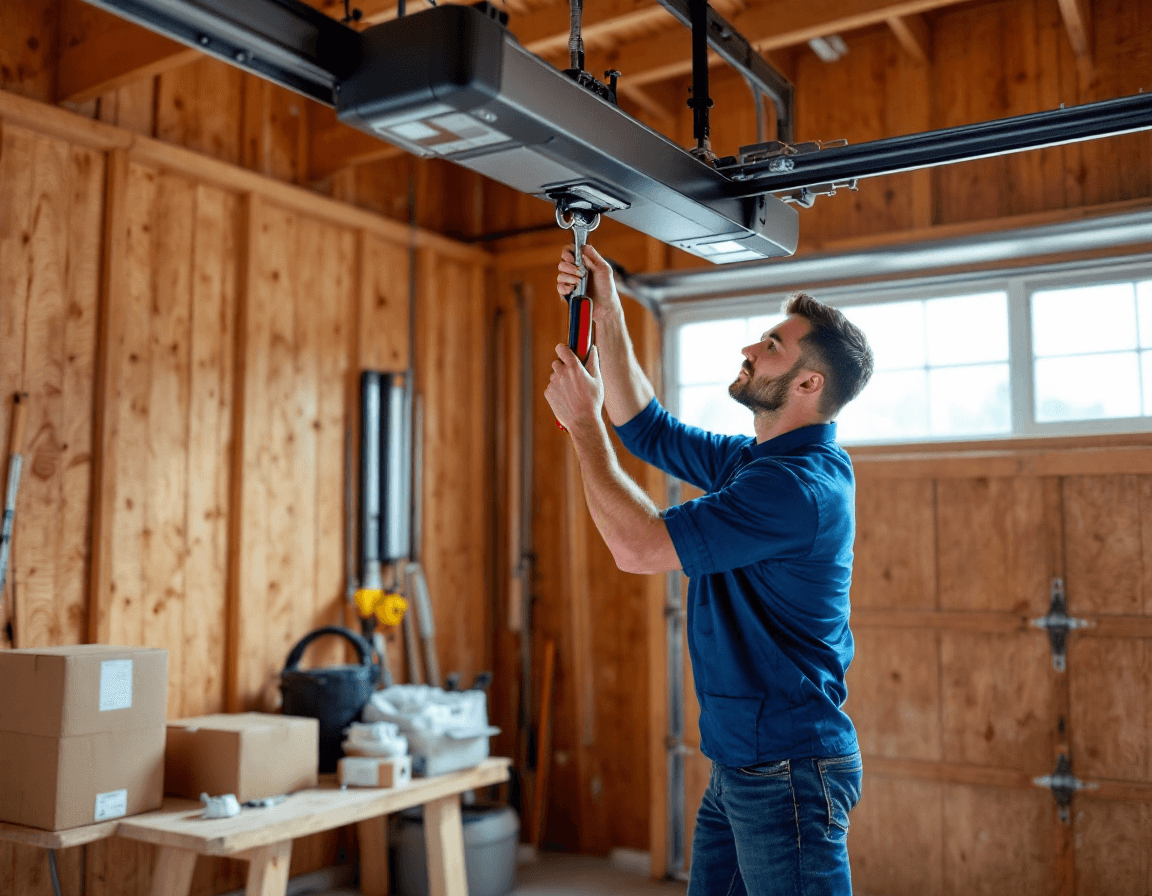
Garage Door Opener Installation & Replacement in Normandy Park, WA is one of the most practical upgrades a homeowner can make to a daily-use fixture that often gets ignored until it fails. Most of us press the button a few times a day without thinking about the motor, the logic board, or the safety sensors tucked into the door tracks. When the opener starts grinding, stalling halfway up, or refusing to respond to the remote on a wet morning, the inconvenience becomes real very quickly. This page explains how we approach opener work for homes in Normandy Park and the surrounding South King County neighborhoods.
Normandy Park sits on the Puget Sound shoreline between Burien and the Des Moines area, and the homes here range from mid-century ranch houses to newer builds with larger two-car garages. Many of those garages were built with a single opener model that was considered reliable at the time, and some have been running for well over a decade. Our technicians see the same pattern again and again: the door itself is still in decent shape, but the opener is the component that finally gives out. Replacing it at the right moment can extend the life of the whole system and make the garage far more pleasant to use.
Whether you are dealing with a noisy unit, a remote that no longer works, or a desire to control the door from your phone, this guide walks through the decisions that matter most. You will find practical notes on drive types, security, smart features, battery backup, and realistic pricing in the $275 to $650 installed range, which depends on the opener model and the complexity of the job. We also explain where safety work belongs in the hands of licensed professionals, because a garage door is one of the heaviest moving objects in the home.
Why Normandy Park Garages Work Harder Than the Brochure Suggests
The Pacific Northwest is not an easy place for a garage door opener to live. Our winters bring long stretches of damp air, frequent drizzle, and occasional cold snaps that stiffen lubricants and make tracks feel sluggish. Along the shoreline, salt-tinged air drifts inland, and that moisture finds its way into exposed wiring, mounting brackets, and metal hardware. A unit that performed flawlessly in a dry climate may start showing corrosion on its rail hardware or erratic limit settings after several wet seasons.
Normandy Park homes also tend to have garages that serve more than parking. Many double as workshops, storage rooms, or the main entry for kids coming home from school, which means the door cycles more often than a simple commuter garage would. Heavier use puts more strain on the motor and the drive gear, especially when the door is oversized or when older insulated panels have added weight over the years. An opener that was sized for a lighter door may run hot and wear out faster than expected.
Power reliability is another local consideration. Storms that roll across the Sound can knock out electricity for hours, and when the power goes, a garage door without a backup becomes a manual task that is difficult for anyone with limited strength or mobility. Choosing an opener with a sensible battery backup and understanding how the emergency release works are small decisions that pay off when the lights go out on a windy evening.
Reading the Signs Your Opener Is Nearing the End
Most homeowners do not wake up one day and decide their opener needs replacing. Instead, they notice a series of small changes that add up. Paying attention to these early warnings helps you schedule a visit before a failure leaves your car stranded in the driveway. Here are the signs our technicians hear about most often from Normandy Park customers:
- The motor is noticeably louder than it used to be, with a grinding or rattling sound at the start or end of travel.
- The door opens or closes more slowly than before, or it pauses partway through its cycle.
- The remote works only when you stand close to the door, or it needs several presses before responding.
- The light on the unit flickers, or the opener resets itself without a clear reason.
- The door reverses unexpectedly, even when the path looks clear, which can indicate a sensor or force-setting problem.
- Repair parts for the unit are hard to find, or the cost of a repair approaches what a new opener would run.
Any one of these symptoms might have a simple fix, such as a dirty safety sensor lens or a remote with a weak battery. When several show up together, however, the opener is usually telling you that its internal components are wearing out. A technician can diagnose the cause during a visit, and we are always happy to explain whether a repair is worthwhile or whether replacement makes more sense for the long term.
Belt Drive, Chain Drive, or Wall-Mount: Matching the Drive to Your Space
The drive style is one of the first choices you will make when replacing an opener, and it affects both noise and installation. A chain-drive opener uses a metal chain running along a rail to move the trolley that lifts the door. Chain-drive units are typically the most budget-friendly option and are very durable, but they produce more noise because metal contacts metal along the entire length of travel. For garages that share a wall with a bedroom or a home office, that noise can be a real annoyance.
A belt-drive opener uses a reinforced rubber belt instead of a chain. The belt runs far more quietly, which is why many Normandy Park homeowners choose it when the garage is attached to living space or when the door operates early in the morning. Belts do not need the same level of lubrication as chains, and they tend to be gentler on the door hardware. The tradeoff is that belts can be more sensitive to extreme temperatures, so the installer needs to check tension and mounting carefully during setup.
Wall-mount openers attach to the side wall of the garage instead of the ceiling. They are a strong choice when ceiling space is limited, such as in a garage with a raised storage platform, an older ceiling with uneven joists, or a bonus room above the garage. Wall-mount installation requires a solid wall section and correct bracket placement, so it is not always the right answer for every layout. During a site visit we measure the door height, the track configuration, and the available clearance before recommending a specific drive type.
Rolling-Code Security and Why an Older Remote Matters
If your opener was installed many years ago, there is a good chance it uses fixed-code technology, meaning the remote sends the same signal every time. That signal can be captured and replayed by someone with the right equipment, which makes a fixed-code system less secure than modern alternatives. Rolling-code openers change the transmitted code with every press, so a captured signal becomes useless almost immediately. For a home with an attached garage or a door that opens onto a side yard, upgrading to rolling-code security is one of the most meaningful improvements you can make.
Rolling-code systems also tend to offer better range and fewer interference problems. Older remotes sometimes work well in one spot and fail in another, especially when neighboring devices share the same frequency. A newer opener with a current receiver can handle these conditions more reliably, and it usually gives you the option to program multiple remotes, keypads, or visor clips without relying on a clumsy manual process. When we replace an opener, we also review the remotes, keypads, and wall-control devices in the home so that everything works together.
Security is not only about the code. A good installation includes checking the door's manual release, confirming that the safety reversal sensors are aligned, and verifying that the opener's travel limits are set correctly. Those steps protect both your belongings and anyone who might be standing near the door. We never recommend leaving a fixed-code remote in a vehicle that is parked outdoors, but for many households the simplest upgrade is replacing the entire system rather than trying to patch an older one.
Smart Control Through Wi-Fi and Compatible Apps
Smart garage door control has become a popular feature, and it can be genuinely useful for busy households in Normandy Park. Many modern openers support Wi-Fi connectivity, which lets you open or close the door from a phone, receive alerts when the door has been left open, and review recent activity. Some systems also integrate with home automation platforms, so the garage can respond to a schedule or to a voice assistant. For families juggling school pickups and late-evening arrivals, this flexibility is a real convenience.
Compatibility is worth thinking through before you buy. Some smart features depend on a specific app ecosystem, such as myQ-enabled systems, while others work with different platforms or with a separate smart hub. Not every opener supports every feature, and the capabilities of a particular model can change with firmware updates. A technician can confirm which features your chosen opener supports, which app it uses, and whether your home network is strong enough in the garage to keep the connection stable.
Smart control does introduce a few considerations. You will need a dependable Wi-Fi signal where the opener is mounted, and the app account should be protected with a strong password and two-factor authentication if the system offers it. Notifications are helpful, but they should be configured thoughtfully so you do not ignore them. We walk through these settings during installation so that the features work for you rather than creating new headaches.
Keeping the Door Working When the Power Drops
Battery backup is one of the most valuable options for homes that experience winter storms or outages. A backup battery allows the opener to run for several cycles when household power is lost, which means you can still get the car in or out during a blackout. Some systems also offer a battery that charges automatically from the grid and switches on seamlessly when the electricity goes out. For anyone with mobility concerns or a household member who depends on the garage as a main entry, backup power can make a meaningful difference.
Battery capacity varies by model, and the number of cycles you can expect depends on the unit and the age of the battery. Batteries do wear out over time, typically within a few years, so it is smart to check the backup status periodically. Keep the battery in a location that stays within the manufacturer's temperature range, and remember that cold garages can reduce battery performance. Our technicians can explain what to expect from a specific battery option and when a replacement is likely to be needed.
Every opener should also have a clearly marked emergency release cord that lets you disconnect the door from the motor. Know where that cord is and how to use it before you need it. Pull it only when the door is closed, and be aware that a manually operated door can be heavy and can move unexpectedly if the springs are not in good condition. If the door feels difficult to lift by hand, do not force it. Call a licensed technician instead of attempting a spring adjustment yourself.
What a Realistic Installed Budget Looks Like
For most Normandy Park homeowners, an installed garage door opener replacement falls in the range of $275 to $650, with the final figure depending on the opener model, the drive type, and the complexity of the installation. A basic chain-drive unit without smart features will sit near the lower end of that range, while a belt-drive or wall-mount model with Wi-Fi control and battery backup will generally land higher. Additional items such as extra remotes, keypads, or a new safety sensor kit can change the total, which is why we provide a clear estimate before any work begins.
It helps to think about the value of each feature rather than chasing the highest-end model. If the garage is detached or rarely used for daily entry, a quieter belt drive may not be necessary, and a reliable chain-drive unit could serve you well for years. If the garage is attached to a bedroom or family room, the quieter operation and softer start-stop motion of a belt drive may be worth the added cost. Battery backup is often a smart addition in areas prone to outages, while smart Wi-Fi control is a matter of personal preference and daily habits.
We encourage homeowners to ask direct questions about warranties, included parts, and what the installation covers. A good estimate should describe the opener model, the labor involved, any mounting hardware required, and whether the old unit will be removed and disposed of properly. Transparency about pricing helps you make a confident decision and avoids surprises once the work is underway.
The Installation Visit, Step by Step
A typical replacement visit begins with an inspection of the door, the tracks, the springs, and the existing opener. The technician checks the door balance, verifies that the rails are straight, and confirms that the safety sensors are mounted at the correct height and aligned properly. This step matters because a new opener will only perform as well as the door it moves. If there are signs of worn rollers, a bent track, or a damaged cable, those issues should be addressed before the new opener is set.
Next comes the physical installation. The old unit is removed, the mounting location is prepared, and the new opener is attached to the ceiling or wall using the appropriate brackets. The trolley is connected to the door arm, the travel limits are set, and the force settings are adjusted so the door reverses when it contacts an obstruction. Wiring is connected to the outlet and to the wall control, and any smart features are linked to the homeowner's app account. Each step is tested before the technician moves on to the next one.
Finally, the technician walks you through the new system. You will learn how to program remotes, how to use the emergency release, how to check the battery backup, and how to tell when a sensor needs cleaning. We also explain what normal operation sounds and looks like, so you can recognize a potential problem early. The visit is complete only when the door opens, closes, and reverses correctly under test conditions, and when you feel comfortable using the system on your own.
Repair or Replace: An Honest Look at the Numbers
Deciding whether to repair an old opener or replace it is a practical question with no single right answer. A repair may be the better choice when the unit is relatively new, the fault is isolated, such as a failed remote receiver or a worn sensor, and the part is readily available. Replacement often makes more sense when the motor is failing, the logic board is unreliable, or the opener is so old that it lacks modern safety features. Repeated repairs on an aging unit can add up quickly, and the frustration of an unpredictable opener has its own cost.
When we visit a home, we weigh the age of the opener, the condition of the door, the frequency of repairs, and your goals for the garage. If the door is in good shape and the opener is the weak link, replacement usually gives you the best return. If the door itself is failing, with worn rollers, damaged panels, or springs that need attention, it may be wise to address the door first or in the same visit. We would rather tell you honestly that a repair is sufficient than sell you a new unit you do not need.
It is also worth remembering that an opener replacement is a good time to review the entire system. Safety sensors, remotes, keypads, and the emergency release should all be inspected and updated where necessary. Doing this work together can prevent the frustration of replacing one component only to discover that another is about to fail.
Safety Work That Belongs to Licensed Professionals
Garage door openers are safe when they are installed, adjusted, and maintained correctly, but the system includes components that carry serious risk. The springs that counterbalance the door are under extreme tension, and cables that support the door can cause injury if they snap or are handled incorrectly. Spring and cable work should never be attempted by homeowners, no matter how handy they are. Our licensed and insured technicians are trained to handle these components safely, and we always recommend a professional for any job that involves tension or load-bearing hardware.
Even simple-seeming tasks deserve caution. Adjusting the travel limits, changing the force settings, or reconnecting the trolley can affect how the door reverses and how it responds to obstructions. A mistake here may leave a child or pet at risk, or it may cause the door to close on a vehicle. Safety sensors should be checked regularly, and the door should always reverse when it meets resistance. If it does not, stop using the opener and call a technician right away.
Our team is glad to answer questions about opener safety, maintenance, and upgrades. You do not need to wait for a failure to get expert advice. A brief service visit can confirm that your opener and door are working together safely and can identify small issues before they become expensive problems.
Ready to Upgrade Your Normandy Park Garage Door Opener?
If your opener is loud, slow, unreliable, or no longer secure, it may be time for a replacement that fits your home and your daily routine. Our licensed and insured team serves Normandy Park and the surrounding Western Washington communities, and we can help you choose between belt drive, chain drive, or wall-mount options, along with battery backup and smart control if they make sense for you. Call (888) 799-3819 to schedule an inspection and receive a clear estimate for your opener installation or replacement.