
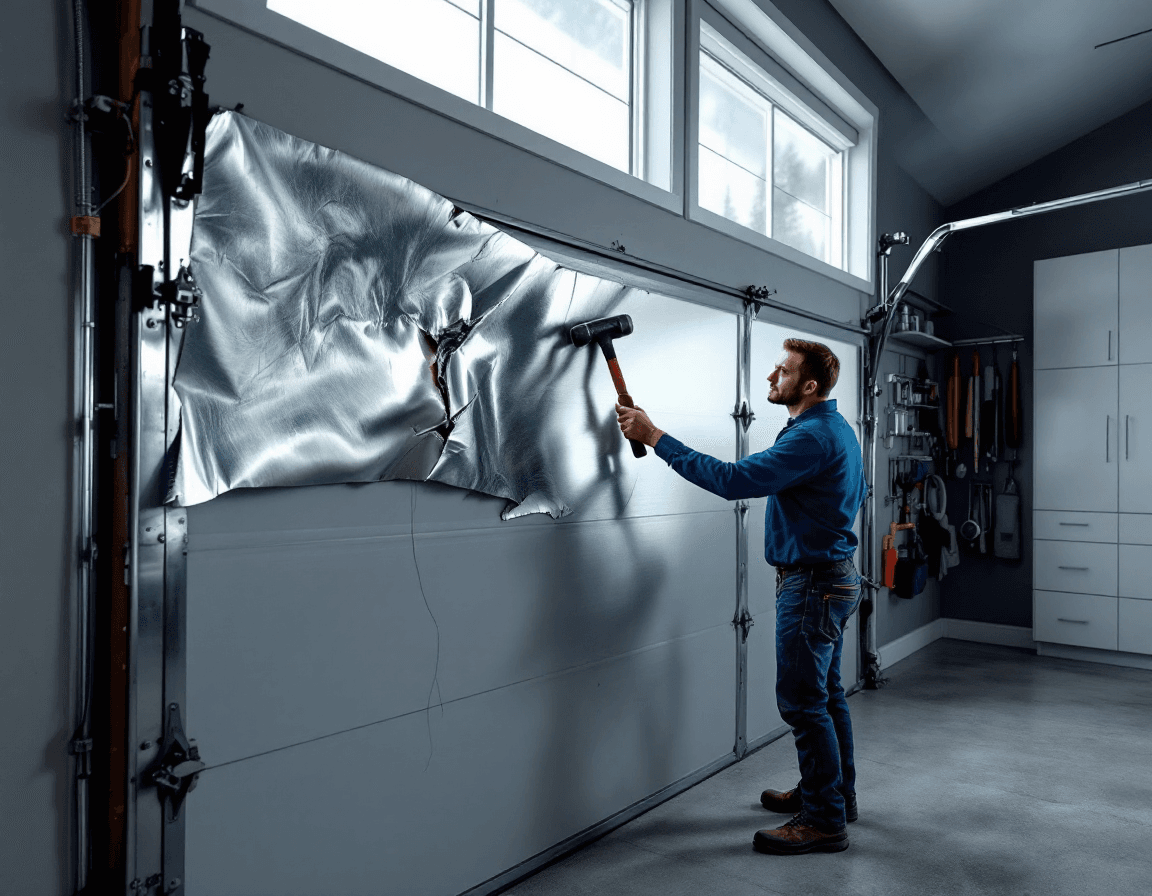
Garage door panel replacement in Seattle, WA is often the most practical fix when one section of an otherwise solid door has taken a hit. A dent from a bumped bumper, a cracked panel from a falling branch, or a bottom section softened by months of rain can make the whole door look worse than it actually is. The motor still lifts, the springs are fine, and the tracks run true, yet every time the door opens it draws the eye to that one damaged piece. Replacing only the affected section is usually far less expensive than replacing the door, and it can restore both the function and the appearance of your garage.
Seattle's weather shapes these problems in ways homeowners in drier parts of the country rarely see. Our winters bring long stretches of drizzle, low clouds, and standing moisture, while summers are mild but can still bring the occasional burst of direct sun that heats and cools a door face. Homes in Ballard, Fremont, and Magnolia sit close enough to saltwater that airborne salt and damp air speed up corrosion on steel hardware and exposed edges. Across the city, from Capitol Hill to Rainier Valley, older garages often have wood framing, aging weatherstripping, and doors that have spent decades soaking up the same gray winters.
This page explains how we assess damaged panels, how we decide between repair and replacement, what the job involves on a typical sectional door, and what influences the $250 to $800 per-section range. We also cover practical issues specific to Seattle, including alley garages, sloped driveways, and safe working practices. If you have a panel that needs attention, the information below should help you make a clear, informed decision before a technician ever touches the door.
Reading the Damage: Dents, Cracks, and Hidden Water Trails
The first step in any panel job is a careful look at what actually happened to the section. A shallow dent in a steel panel may look dramatic in the sunlight, but it often sits only in the outer skin, while the insulation core and the interlocking edges remain intact. A crack in a polystyrene-core panel, on the other hand, can run through the foam and let moisture settle in, which is why we treat cracks more seriously than most homeowners expect. We look at both faces of the panel, the seams where it meets its neighbors, and the rollers and hinges that connect it to the rest of the door.
Water damage is trickier because it rarely announces itself. On the bottom section, you may see a tide line, a bulge near the lower edge, or paint that has lifted in a rough patch about the height of a rain splash. Inside the garage, a faint white crust on the concrete or a musty smell along the base of the door can point to moisture that has been wicking up into the panel for a long time. We check whether the damage is limited to the surface or whether the core has swelled, softened, or separated from the skins.
Impact damage from a backing accident usually has a clear origin point, often near a corner or at the height of a vehicle bumper or mirror. The panel may be bent inward, the edge may be split, or the hinge that joins it to the next section may be twisted out of alignment. Because the panels are linked, a hit to one section can stress the neighbors, so we inspect the adjacent sections for hairline separations, loose fasteners, and signs that the track has shifted. Documenting these details also helps if you later discuss the damage with your insurance provider.
Why Seattle's Wet Winters Quietly Attack the Bottom Panel
The bottom section of a garage door takes more abuse than any other part, and in Western Washington that abuse is mostly about moisture. Rain runs down the exterior face, pools against the threshold, and sits there when the drainage outside the garage is less than ideal. Many older Seattle garages were built with minimal slope in the driveway or a threshold that collects runoff, so the bottom panel spends long hours in wet conditions. Over several rainy seasons, that exposure can soften wood, bubble paint, and corrode the metal edges of steel sections.
Steel panels with a painted or galvanized finish usually resist moisture well until the coating is scratched. Once a scrape or chip exposes bare metal, rust can start at the edge and creep under the paint, especially near the bottom bracket or the seam where two sections meet. Wood and wood-composite doors present a different challenge, because they absorb water and expand, then dry unevenly, which opens cracks and can cause the rails and stiles to lose their shape. In these cases, a rotted lower section may be sound at the top but failing at the base.
Homes near the water feel these effects more quickly. Magnolia and parts of Ballard experience salt-laden air that accelerates corrosion on hardware and fasteners, and a bottom panel in these areas may show rust earlier than a door a few miles inland. We recommend rinsing the bottom section periodically with fresh water, particularly after winter storms, and checking the threshold seal. Keeping the lower edge dry and the weatherstripping pliable goes a long way toward protecting a replacement panel once it is installed.
Finding a Match When Your Door's Color Has Moved On
One of the most common questions we hear is whether a new panel will match the rest of the door. The honest answer is that it depends on how old the door is, what it is made from, and how its finish has weathered. A door that has spent fifteen years facing a south or west exposure may have faded noticeably, even under Seattle's usually overcast skies, while a door on a shaded north-facing side wall may look nearly new. A fresh panel will show its color immediately, so the contrast can be more obvious than the original damage.
The first step toward a good match is identifying the door. The manufacturer name, model number, and section dimensions are usually printed on a label or stamped on a bracket inside the garage, and sometimes on the back of a panel near the top edge. Those details allow us to source a replacement section with the correct profile, groove pattern, and thickness, which matters for proper fit and weather sealing. Even when the exact model is no longer in production, many manufacturers offer compatible sections in standard profiles that align closely with older doors.
Color is the harder part. When an exact paint match is not available, we can discuss options such as repainting the entire door for a uniform look, using a close-tone finish that blends well from the street, or accepting a slight difference and letting time soften it. Homeowners with carriage-style or decorative overlay doors often find that a complete refinish looks better than a single new panel. We will give you honest feedback on what is realistic for your specific door before you commit to a plan.
Repair or Replace? A Practical Decision Path
Not every damaged panel needs to be replaced. Some dents can be carefully pulled or tapped out, surface rust can be cleaned and treated before it spreads, and minor edge separations can sometimes be reinforced. The right answer depends on whether the structural integrity of the section has been compromised and whether repairing it would leave an acceptable result. A repair that looks patched or continues to flex at the seam is rarely worth the effort, and a panel that has lost its insulation or its interlocking edge should be replaced.
We typically consider the following factors when advising on repair versus replacement:
- Whether the dent is confined to the outer skin or has distorted the core and edges
- Whether cracks have gone through the panel or into the insulation
- Whether rust is surface-level or has perforated the metal
- Whether rot has reached the structural framing inside the section
- How closely a repaired section could match the color and texture of the rest of the door
- Whether neighboring sections show the same wear, which may signal a broader problem
When several sections show age-related problems at once, replacing a single panel may not solve the underlying issue. In that situation, we will walk through whether the door as a whole is a better investment, especially if the springs, tracks, or opener are also nearing the end of their service life. We never recommend replacement just to increase the size of a job, and if a targeted repair will do the work safely and attractively, we will tell you so.
What a Single-Section Swap Typically Involves on a Sectional Door
Most residential garage doors in Seattle are sectional doors made of several horizontal panels joined by hinges and rollers. Replacing one section means temporarily separating it from its neighbors, removing the damaged panel, and fitting the new one in its place. The work sounds simple, but it requires careful attention to alignment, hinge orientation, and the way each panel engages the track. A new section that sits even slightly out of square can cause rubbing, noise, or uneven weather sealing that shows up weeks later.
The process usually begins with a full inspection of the door in its closed and open positions. The technician checks the track, the rollers, and the hinges, then confirms that the door is balanced and that the opener is set correctly before any panel is removed. The door is secured so that it cannot move unexpectedly during the work, and the damaged section is carefully detached. The replacement is then fitted, aligned, and fastened, after which the door is cycled several times to confirm smooth travel, proper seal contact at the bottom, and clean engagement with the tracks.
Finishing touches matter as well. Weatherstripping along the bottom and between sections should be checked and replaced if it has hardened or torn, because a new panel is only as good as the seal it meets. If the replacement section has a different finish from its neighbors, we discuss whether touch-up or a full refinish makes sense. Every job ends with a walkthrough so you know how the door should sound and behave in normal use, and what to watch for over the coming months.
Pricing Between $250 and $800 Per Section, and What Shifts the Number
Our typical pricing for panel replacement falls between $250 and $800 per section, depending on the door. That range reflects the real differences between a standard steel panel on a common residential door and a custom wood, insulated, or decorative section that must be sourced specially. The price is for the section and its installation, and it is always best to confirm the exact figure after we have measured and identified your door, because two sections of the same door can differ in size and hardware.
Several factors push the cost toward one end of the range or the other. The material and insulation level of the replacement section is a major driver, since insulated panels cost more than single-skin steel, and wood or specialty finishes cost more still. Sourcing time also matters: a common profile may be available quickly, while an older or discontinued style may require ordering from a supplier and waiting for delivery. Access to the work area can affect labor, particularly on tight lots or in garages where the door is difficult to support during removal.
Other considerations can influence the final quote. Repainting the rest of the door to match the new section adds time and materials, and a damaged frame or track may need separate attention. If you have more than one damaged section, the per-section price may shift when the work is combined into one visit. We provide a clear written estimate before work begins so there are no surprises, and we will explain which parts of the quote are required for safe, lasting results and which are optional upgrades.
Alley Garages, Tight Driveways, and Access Issues Across Seattle Neighborhoods
Seattle's housing stock creates some unique access challenges for garage door work. Many homes in Capitol Hill, Queen Anne, and parts of Fremont sit on narrow lots with short driveways, steep grades, or detached garages reached from an alley. In Ballard and Green Lake, older garages may open directly onto gravel or uneven pavement that makes it hard to stage a replacement panel safely. Our technicians plan for these conditions, bringing the right equipment to stabilize the door and protect the surrounding area during removal and installation.
West Seattle and parts of Rainier Valley present their own considerations. Hillside driveways in West Seattle can sit at an angle that changes how the door balances and how panels seat in the track, so we check alignment with that slope in mind. In Rainier Valley and across the southern neighborhoods, many garages were built decades ago with framing that has shifted slightly over time, which can affect how a new section sits against its neighbors. Recognizing these local patterns helps us deliver a result that looks and works correctly in the place it is installed.
Parking and scheduling can also matter in dense areas. If your garage opens onto a shared alley or a narrow street, we will discuss where the van can safely stop and how to keep the access path clear during the job. Our goal is to minimize disruption for you and your neighbors while still giving the work the time and attention it needs. Tell us about any access constraints when you call, and we will plan accordingly.
Backing Accidents and the Insurance Conversation
A single panel damaged in a backing accident is one of the most frequent reasons homeowners call us for this type of work. Vehicles reversing out of tight Seattle driveways or alley garages can catch the lower sections, leaving a dent, a split edge, or a bent hinge that changes how the door travels. These incidents can be stressful, especially when the damage is visible from the street, so it helps to take a few calm steps before the repair begins.
Photograph the damage from several angles, including a wide shot that shows its position on the door, and keep any notes about the date and circumstances. If you plan to file a claim, contact your insurance provider to learn whether your policy covers this type of damage and what documentation it requires. Coverage varies by policy and by the cause of the loss, so we recommend checking directly with your insurer rather than assuming how it will be handled. We can provide a written description of the work and an estimate to support your records.
Once the claim process is underway, or if you decide to pay for the repair yourself, schedule the work promptly. Leaving a damaged section in place can allow water intrusion, further hinge stress, or a weakened seal, and small problems tend to grow quickly in a Seattle winter. Prompt attention also keeps the door secure and protects the opener from the extra strain of an unbalanced or misaligned section.
Working Safely Around a Door Under Tension
Garage doors are heavy, and the springs that counterbalance them store a great deal of energy. Even when the job seems limited to a single panel, the door must be properly supported and the tension managed so that it cannot move unexpectedly. Panel replacement often involves separating sections and disturbing the rollers and hinges, which means the door's weight is no longer distributed the way it normally is. That is why this work should always be handled by trained, licensed professionals.
Spring and cable work is not something homeowners should attempt, and it is never a task to try on your own with improvised tools. Torsion springs and lift cables are under high tension, and mishandling them can cause serious injury. If your door's springs are worn, broken, or the cables are frayed, we recommend having a licensed technician address those components as a separate, carefully handled repair. A panel replacement should never be used as a shortcut to bypass that inspection.
Homeowners can help keep things safe by keeping children and pets away from the work area, avoiding the door while it is being serviced, and never standing under a door that is partly open or unsupported. If you notice the door drifting, grinding, or rising unevenly after a panel has been damaged, stop using the opener and call for service. Our technicians will confirm that the door is balanced, secured, and operating smoothly before they leave.
Protecting a Replacement Panel for the Long Haul
A new panel gives you a fresh start, but the way you care for it over the following years determines how well it holds up. In Seattle, the biggest threats are persistent moisture, salt air in coastal neighborhoods, and the slow wear that comes from daily use and seasonal temperature swings. Simple habits can extend the life of a replacement section and keep it looking consistent with the rest of the door.
Begin with the bottom edge and threshold, since that is where water collects. Keep the driveway and threshold clear of debris so runoff can drain, and check the bottom weatherstripping at least once a year for cracks or flattening. Rinse the lower sections with fresh water every few months, especially in Magnolia, Ballard, and other areas with salt exposure, to remove residue before it can corrode hardware. Look for chips in the paint, and touch them up promptly with a matching exterior coating so bare metal does not invite rust.
Finally, schedule periodic inspections that cover the whole door, not just the new section. Rollers, hinges, tracks, and fasteners all influence how the panels sit together, and small adjustments early on can prevent the stress that leads to new dents or separations. A routine check every year or two gives you a clear picture of the door's condition and helps you catch the next issue while it is still simple to address.
For dependable garage door panel replacement across Seattle and the surrounding King County communities, call Seattle Garage Door Fix at (888) 799-3819. Our licensed, bonded, and insured technicians will inspect the damaged section, explain your repair-or-replace options honestly, and provide a clear written estimate before any work begins. Whether your door is in Ballard, West Seattle, Queen Anne, or Rainier Valley, we are ready to help you restore a clean, safe, and well-matched garage door.