
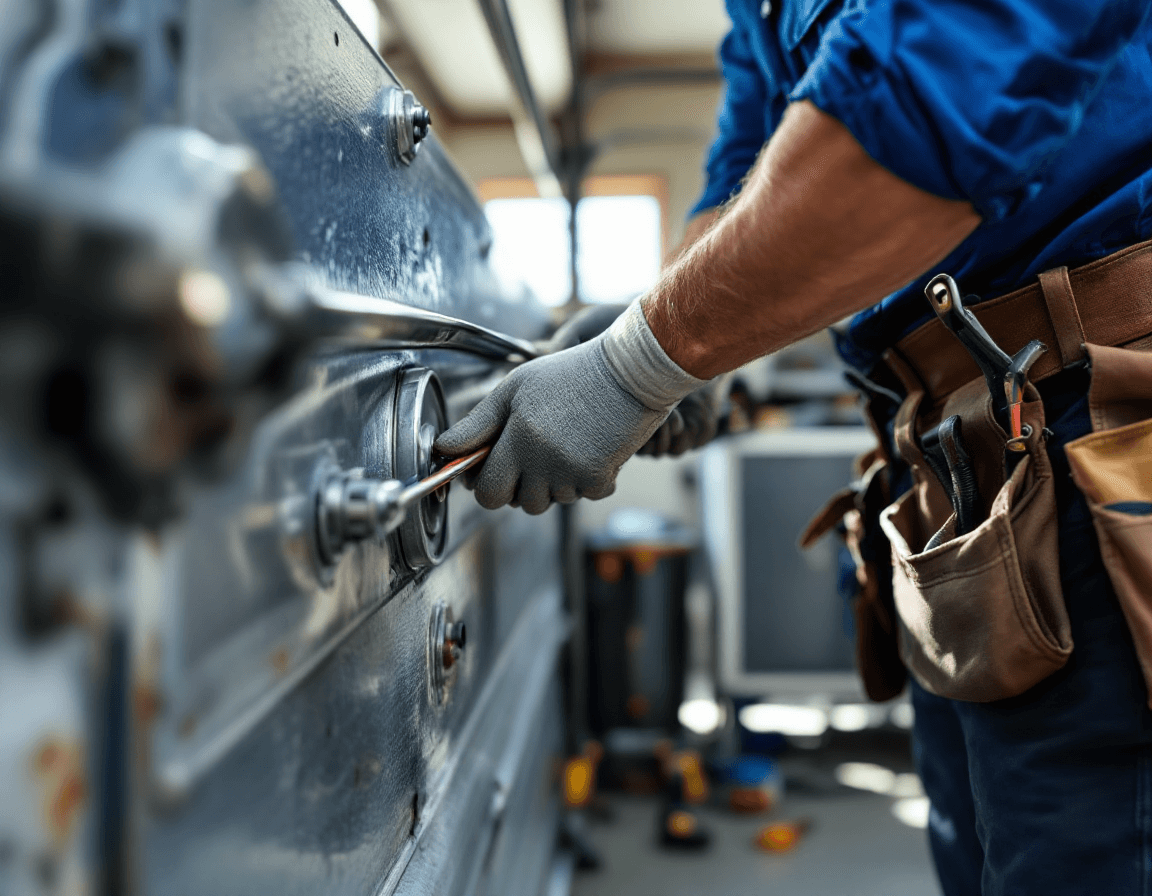
Garage Door Cable Replacement in Seattle, WA is one of the most common repairs we handle, and it is also one of the most urgent when a cable fails. A lift cable is under heavy tension, and when it snaps or slips off the drum, the door can drop unevenly, jam in the track, or sag halfway open. Homeowners from Ballard to Rainier Valley often notice the problem only after a loud bang in the garage or a door that suddenly won't close.
Seattle's weather plays a real role in how quickly these cables wear out. Our winters bring long stretches of drizzle, cold mornings that dip near freezing, and humidity that rarely lets a garage dry out completely. Steel cables exposed to that moisture can develop surface rust, and once corrosion starts, the individual strands begin to fray where they wrap around the drum. Many of the cable calls we answer in the spring follow a wet January and February, which is why we encourage homeowners to pay attention to small changes before the cable makes the decision for them.
This page explains how lift cables work, what symptoms to watch for, what replacement involves, and why this job should be handled by a licensed, insured technician. We also cover typical pricing, the questions that affect cost, and how to get service at your address whether you live near Green Lake, in a Magnolia hillside home, or in a West Seattle townhouse with a detached garage. If your door is currently stuck or hanging crooked, do not try to force it open or closed. Call us at (888) 799-3819 and we will walk you through the safest next step.
Why Seattle Garage Cables Take a Beating
Garage cables in our region age on a different schedule than cables in drier climates. The steel is coated, but that coating can thin over time, especially on cables that sit near a garage door seal where rainwater tracks in from the driveway. Once the galvanizing wears through, moisture reaches the bare steel and corrosion begins in tiny pits that are difficult to see from the floor. A cable can look fine from a distance and still have compromised strands near the drum.
Salt air adds another layer of wear for homes closer to the water. Properties in Magnolia, parts of Ballard, and some West Seattle blocks sometimes carry a faint salt film on exposed metal, particularly during windy months when marine air pushes inland. Garages in these areas often show rust on hardware before the rest of the door looks worn. Cables are one of the first components to suffer because they are thin, heavily loaded, and constantly flexing.
Temperature swings matter as well. A cold garage makes steel slightly less flexible, and a sudden warm afternoon can increase condensation on the inside of an uninsulated door. That repeated cycle of expansion, contraction, and dampness is hard on any moving part. Over several years, the combination of Seattle moisture and daily use leads to fraying that often shows up first on the side of the door where the cable does the most work.
Recognizing the Warning Signs Before a Break
Most cable failures give some warning, even if it is easy to miss. The most common early sign is a door that begins to hang slightly lower on one side than the other. You may notice a gap at the bottom corner, or the door may look tilted when it sits closed. Some homeowners describe the door as seeming "tired" or reluctant, especially on the first open of the morning.
Other signs are more specific to the cable itself. If you look closely at the cable where it wraps around the drum, you may see loose strands, bright spots where the coating has rubbed away, or a reddish-brown crust forming along the length. Frayed wire ends can catch on clothing or on the edge of the drum groove. A cable that has begun to stretch unevenly may also cause the door to close with a slight binding sound on one side.
- Door sits lower or tilted on one side when closed
- Visible rust, flaking coating, or bright worn spots on the cable
- Frayed or loose wire strands near the drum or the end fitting
- Door binds, shudders, or closes unevenly from left to right
- Cable appears slack or loose when the door is fully down
- A single loud snap or pop followed by the door stopping mid-travel
If you notice any of these symptoms, schedule an inspection before the cable fails completely. A cable that is only partially frayed can often be replaced in a single visit, which is typically less disruptive than dealing with a door that has dropped out of its track.
When a Cable Jumps the Drum or Snaps
A snapped cable is usually the most dramatic failure. The door may drop suddenly with a loud crack, or it may stop abruptly while still partly open. Because the cable is under high tension, the release of that energy can make a sharp noise that many people mistake for a spring breaking or a car backfiring. After the snap, the door often becomes unstable and may sag or lean depending on which cable failed.
A cable that comes off the drum is a related but different problem. The cable slips out of its groove, usually because the drum rotated while the cable was slack or because the door was forced by hand. Once the cable is off the drum, the door may hang at an angle or lock in place. Cable tangled around the drum can also happen when debris or a loose wrap interferes with the normal winding pattern, and it can make the door bind as it moves.
If the door is stuck, keep everyone away from the door and do not attempt to lift it manually or pull the cable back onto the drum. Disconnect the opener if you can do so safely by pulling the emergency release cord, then leave the door in place until a technician arrives. Attempting a repair while the spring system is still loaded can cause serious injury, which is why we treat every snapped or jumped cable as a safety call first and a repair second.
Understanding the Lift System: Cables, Drums, and Springs
Most residential garage doors use a lift system built from several connected parts. The lift cables run from the bottom bracket on each side of the door up to the drum at the top of the track. The drums are attached to a torsion shaft or spring system, and as the door opens, the cables wind onto the drum while the springs store and release energy. Cables and springs work together, so a problem in one often affects the other.
This is why cable replacement is rarely as simple as swapping a single cable. A technician needs to check the drum for wear, confirm the cable length and fittings match the door, and evaluate the spring system to make sure it is not failing in a way that could cause another break. In many Seattle homes, a cable failure is discovered during routine inspection of a worn spring, and the two repairs are scheduled together to avoid repeat trips.
Cable drums also deserve attention. A drum with a damaged groove or a loose set screw can wear new cable quickly, and a drum that has shifted on the shaft can cause the cable to climb unevenly. Cable drum service typically includes checking for grooves that are worn smooth, confirming the drum is secured correctly, and verifying that the cable seats properly as the door travels. These details are easy to overlook, but they determine how long the new cable will last.
Typical Cost of Cable Replacement and What Changes It
For most residential cable replacements, pricing typically falls between $110 and $300. Where a job lands in that range depends on several factors, including the door size, whether one or both cables need replacement, the condition of the drum, and whether the job includes a related spring or hardware repair. Doors with heavier insulation or larger panels may require additional care when the tension is released and reset.
Access also affects cost. A standard attached garage with a clear work area is usually simpler than a detached garage with limited lighting, a narrow driveway, or stored items blocking the door. Older homes around Capitol Hill, Queen Anne, and Green Lake sometimes have non-standard framing or custom door sizes that add time to the job. We always explain what is included before any work begins so there are no surprises on the final invoice.
Keep in mind that a quote for a cable alone may not cover the whole problem. If a spring is worn, a drum is damaged, or the track is bent, the technician will explain the options. Some homeowners prefer to address only the immediate failure, while others choose to replace the cable, check the drum, and inspect springs in one visit. Either approach can be reasonable depending on the age of the door and your plans for the home.
Older Homes, Alley Garages, and Hillside Driveways
Seattle has a wide range of garage styles, and each one presents its own challenges. Many homes in Fremont, Green Lake, and Rainier Valley were built decades ago with detached garages, sometimes accessed from alleys with limited turning space. Older doors in these properties may use hardware that is no longer common, and the framing may not be perfectly square. When a cable fails on one of these doors, the technician often needs extra time to confirm the correct parts and alignment.
Hillside properties on Queen Anne, parts of Magnolia, and some West Seattle streets add another variable. When a garage sits on a slope, the door may open with a slight tilt, and the cable can wear unevenly on the downhill side. Driveways that drain toward the garage can also send more water under the door, increasing corrosion at the bottom bracket where the cable attaches. We pay close attention to these conditions during inspection because they often explain why one side of the door fails first.
Doors in newer Seattle construction, including townhomes and infill homes in Ballard and Capitol Hill, may use lighter-weight panels and modern openers. Even so, cable wear still occurs, and the same warning signs apply. The key difference is that newer doors often have tighter tolerances, so even a small misalignment after cable replacement should be corrected right away to prevent premature wear on the rollers and track.
Why Cable Work Belongs in Licensed, Insured Hands
Garage door cables and springs store a significant amount of energy. A spring that is improperly adjusted or released can cause serious injury, and a cable that is handled incorrectly can whip or detach with force. This is the main reason we recommend that spring and cable work be performed only by a licensed, bonded, and insured professional. Homeowners who attempt the job themselves often underestimate the tension involved and the risk of a sudden release.
Licensing and insurance also protect you if something goes wrong during the repair. A qualified technician carries the right tools, uses proper clamps and winding equipment, and knows how to secure the door before work begins. They also know when a repair should stop and when a part needs replacement rather than adjustment. If you are unsure whether a job is within your comfort level, the safest answer is to leave the cable and spring work to a professional.
There is also a practical reason to hire a technician. Cable replacement done incorrectly can damage the drum, the track, or the bottom bracket, and those repairs often cost more than the original cable job. A professional installation takes into account the door's weight, the spring system, and the way the cable seats on the drum, so the repair lasts longer and the door operates smoothly.
Preventing the Next Break Through Seasonal Care
Routine care is one of the most effective ways to extend cable life in our climate. Because Seattle homes stay damp for much of the year, a simple seasonal check can catch problems before they become emergencies. Look at the cables, drums, and tracks at least twice a year, ideally before the wettest months and again in late spring when the weather begins to dry out.
- Inspect each cable for rust, flaking coating, or loose strands
- Check that cables sit evenly in the drum grooves when the door is closed
- Look for debris, leaves, or moss in the track and bottom brackets
- Confirm the door is level and closes without binding on either side
- Wipe down the track and rollers, and keep the garage ventilated when possible
- Schedule a professional inspection if you notice any new noise or imbalance
Lubrication should be handled carefully. Spray lubricant on the rollers, hinges, and track as recommended, but avoid heavy grease on the cables themselves, since it can attract dirt and grit. If you see rust starting on a cable, call a technician rather than trying to scrub it, because aggressive cleaning can remove the protective coating and make the corrosion worse. A professional can determine whether the cable can be saved or needs to be replaced.
Coordinating Cable Work with Opener, Track, and Roller Checks
A cable replacement is a good opportunity to review the rest of the door system. Openers, rollers, hinges, and tracks all share the load, and a problem in one component often shows up as wear in another. If a cable has failed because the door was out of balance, the rollers and track may also be stressed. A thorough visit includes checking these parts so you are not back in a few months for a related issue.
Opener performance is worth noting as well. If the opener struggles to lift the door after a cable replacement, the cause may be a misaligned track, a tired spring, or an opener that needs an adjustment. We look at the full operation during service rather than assuming the cable is the only issue. This approach helps the door run quietly and gives you a clear picture of what, if anything, needs attention in the coming year.
Rollers in particular deserve attention. Worn nylon or steel rollers can cause the door to shift, and when they bind in the track, the cable experiences uneven tension. Replacing worn rollers at the same time as the cable can help the door move evenly and reduce strain on the new components. Ask the technician to explain any recommendations so you can decide what fits your budget and timeline.
Booking Cable Service Across Seattle and King County
We provide garage door cable replacement and cable drum service across Seattle and surrounding King County communities. Our service area includes Ballard, Capitol Hill, West Seattle, Queen Anne, Fremont, Green Lake, Magnolia, and Rainier Valley, along with the ZIP codes 98101, 98103, 98105, 98107, 98109, 98115, 98116, 98117, 98118, 98122, 98125, 98133, 98136, 98144, and 98199. If your property is in one of these neighborhoods or nearby, we can usually discuss timing and availability when you call.
When you contact us, it helps to have a few details ready. Tell us the approximate door size if you know it, describe what you are seeing or hearing, and mention whether the door is stuck open, stuck closed, or still operating but out of balance. If you have an older door, note any brand names or model numbers on the door or opener so the technician can bring the correct parts. These details help us prepare the right tools and keep the visit efficient.
If your garage door has snapped a cable, is hanging crooked, or is binding on one side, do not wait for it to worsen. Keep people and pets away from the door, avoid trying to force it, and call (888) 799-3819. We will explain the safest next step, give you a clear picture of what the repair involves, and help you restore a smooth, balanced door as soon as possible.