
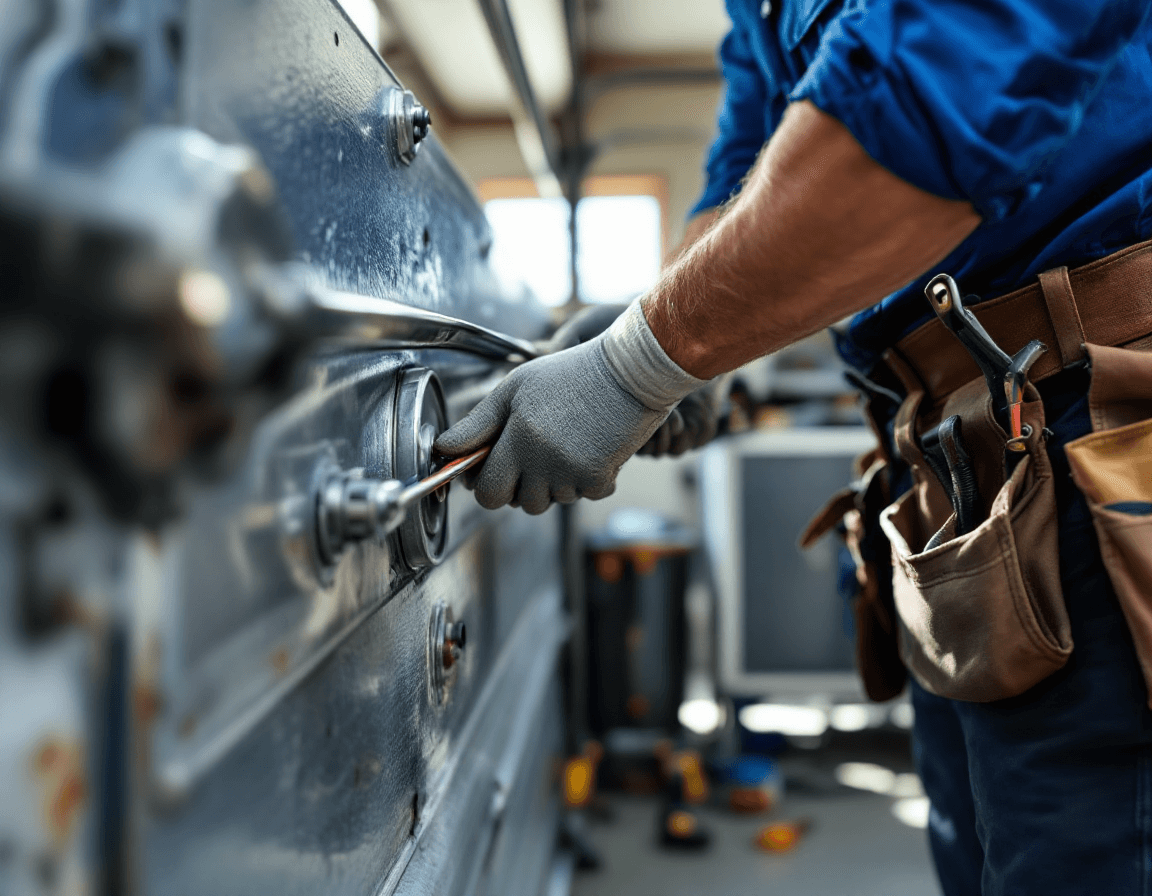
Garage door cable replacement on Mercer Island is one of the most common repairs we see on the island, and it is also one of the most urgent. The lift cables on a torsion-spring door carry the full weight of the door as it rises and falls, so when one fails, the door can stop working or hang at an odd angle. Homeowners here often notice the problem on a weekday morning when the door will not open all the way, or when a loud bang from the garage makes them think something has broken in the house. Either way, the cable is usually the culprit, and it is worth understanding what is happening before you decide on a repair.
Mercer Island sits in the middle of Lake Washington, and that location shapes how garage doors age. Homes here range from older split-levels and mid-century houses to newer builds on sloped lots, and many of them have detached or semi-attached garages that take daily abuse from wet weather and temperature swings. Whether your home is close to the Town Center or tucked into a quieter residential street, the same mechanical rules apply to your door. This page explains how lift cables fail, what the symptoms look like, how drum problems develop, what affects cost, and why this kind of work belongs with a licensed professional.
If you are dealing with a door that is stuck, hanging crooked, or making a sound you have not heard before, the sooner you have it inspected, the less likely a small cable problem will spread into damage to the springs, the drum, or the door panels. Our team at Seattle Garage Door Fix serves Mercer Island and the surrounding Eastside and Seattle-area communities, and we handle cable replacement, cable drum service, and related repairs. You can reach us at (888) 799-3819 for guidance on what your door needs.
Reading the Early Warning Signs Your Lift Cable Is Failing
Lift cables rarely fail without warning, although the warning is often subtle. Many homeowners first notice that the door seems to labor a bit more on one side, or that it pauses partway up before continuing. Over time those small hesitations become more pronounced, and the cable may begin to fray where it wraps around the drum. Paying attention to these early changes gives you time to schedule service on your own terms instead of waiting for a full failure.
The most common symptoms we hear about from Mercer Island homeowners include:
- A cable that has visibly snapped or come loose from the bottom bracket or drum
- A door that hangs crooked, sitting noticeably lower on one side than the other
- Frayed strands, rust, or a stiff, kinked section of cable near the drum
- A door that closes unevenly, binds on one track, or stops partway through its travel
- A sharp snap followed by a door that will not move at all
- A cable that has wrapped unevenly or tangled around the drum
Any one of these signs justifies a call. A combination of two or more is a stronger indication that the cable system needs attention right away. Do not assume that a door which still works is safe, because a worn cable can give way without notice.
Why Island Garages Put Extra Stress on Lift Cables
Western Washington's climate is gentle in many ways, but it is hard on steel. Mercer Island gets long stretches of damp, overcast weather, and the lake's influence keeps humidity high for much of the year. Moisture sitting on the cable and drum encourages surface rust, and once rust starts, the strands lose flexibility and begin to fray under load. Garages that sit against slopes or near the water can also collect condensation, which speeds up corrosion on hardware that is rarely inspected.
Temperature swings add another layer of wear. A cold snap can make metal stiffer and less forgiving, while damp heat in late spring can cause the door's components to expand and contract along with the rest of the structure. Many island homes were built with garages that are not fully insulated, so the door experiences the full force of outdoor conditions every day. Over several years, these cycles fatigue the cable, especially where it bends around the drum and the pulley.
Usage matters as well. A household with two commuters who open and close the door several times a day puts far more cycles on the cable than a weekend garage. Families who use the garage as a main entry or who frequently load and unload cars will see faster wear. Because island life often means trips to Town Center, school runs, and errands across the bridges, many doors on Mercer Island cycle more often than homeowners realize. Counting how many times your door opens in a typical week can help you judge how often the cables deserve an inspection.
What Actually Goes Wrong Inside the Cable Drum
The cable drum is the cone-shaped or cylindrical wheel that the lift cable winds around as the door rises. Each side of a typical garage door has its own drum and cable, and both must wind at the same rate to keep the door level. When a cable comes off the drum, the door loses its balance, and the cable can slip out of its groove and jam against the bracket. Drum problems often start with a cable that has been overwound or underwound because of a previous adjustment or a small slip.
A drum that is worn, cracked, or loose on its shaft can cause the cable to wrap unevenly. The result is a door that sits lower on one side or that stops at a different height than before. Sometimes the cable looks fine, but the drum's set screw has backed out, and the drum has slipped on the shaft. This is a service item rather than a simple cable swap, and it is best diagnosed by someone who checks the full cable and drum assembly together.
Cable drum service involves more than replacing a single part. A technician must inspect the drum for grooves that are worn smooth, check the set screws and shaft alignment, and confirm that the new cable is seated correctly from start to finish. The job also includes verifying that the door balances properly once the cable is back in place. Skipping any of these steps can leave the door vulnerable to another failure within weeks.
When the Door Goes Silent After a Loud Snap
A loud snap in the garage is one of the most alarming moments a homeowner can experience. Often the sound is the cable parting under tension, and the door then drops or stops in place. If the door is stuck partway open, the most important step is to keep everyone clear of the door's travel path and avoid pulling on the cable or the bottom of the door. A door that has lost its cable can shift unexpectedly as the remaining spring tension changes.
If the door is closed and you are not sure whether it is safe to open, leave it closed and use the interior entry to reach the rest of the house. Avoid attempting to lift the door by hand. Even a door that seems light can carry substantial force when the springs are still wound and the cable has failed on one side. Disconnecting the opener is generally advisable so the motor does not continue pushing against a broken system, but beyond that step, the repair belongs to a licensed technician.
Once the door is secured, call for service and describe exactly what you heard and saw. Details such as whether the door dropped, which side it sits on, and whether the opener still runs help the technician arrive prepared. A prompt visit reduces the chance of additional damage to the opener, the track, and the panels. It also keeps your household safer while the garage is out of service.
Diagnosing a Lopsided Door Before You Replace Anything
A door that hangs crooked is not always a cable problem, so it helps to think through the possibilities before ordering parts. Track misalignment, loose roller hardware, a worn bottom seal, or uneven spring tension can all make a door look lopsided. Cable issues are common causes, though, especially when the lean appeared suddenly or when one side has a visible kink or slack. Taking a few careful observations can help narrow the cause.
Start by checking whether both cables appear tight when the door is closed. Look at each drum and note whether the cable is wrapped neatly in its groove or has begun to overlap. Watch the door as it moves slowly, either by hand with the opener disengaged or by observing it from a safe distance during operation, and note whether one side lags behind. Listen for grinding, scraping, or popping that suggests the cable or drum is catching.
Even with careful observation, measuring tension and balance requires training. Springs on a torsion system store large amounts of energy, and adjusting them incorrectly can cause serious injury. A licensed technician will check the spring system, the cable routing, and the drum alignment together so that the door balances properly once the repair is finished. Trying to correct a crooked door through trial and error can make the imbalance worse and create hazards that are hard to reverse.
Telling Frayed, Rusted, and Tangled Cables Apart
Not every cable problem looks the same, and the appearance of the cable can offer useful clues. A frayed cable shows individual wire strands that have started to separate or break, often at bends near the drum or at the bottom fitting. A rusted cable has a reddish or brown crust and may feel stiff or rough when run through the fingers, although it should never be handled bare for long. A tangled cable has wrapped over itself on the drum, which usually indicates that the cable has slipped out of its groove at some point.
Each of these conditions calls for replacement rather than simple cleaning. Frayed strands weaken the cable's rated load, and rust tends to spread along the wire even after the surface is wiped down. Tangled cables may look repairable, but once a cable has been kinked or forced into the wrong groove, its internal strength can be compromised. Replacing the cable with one rated for your door's weight and spring system restores the safety margin the door was designed for.
When you call for service, it helps to say what you noticed about the cable's condition, not just that the door is not working. Mention whether you saw strands sticking out, a visible rust pattern, or a cable that appeared to jump from the drum. This information lets the technician plan the right parts and confirm whether the drum, bracket, or pulley also needs attention. It also helps you understand whether this is an isolated event or a sign that the system has been aging for a while.
Understanding Mercer Island Cable Replacement Pricing
Most cable replacements fall in the range of $110 to $300, though the final cost depends on several factors. The door's size and weight matter because heavier doors use heavier-duty cables and sometimes require more labor to rebalance. Whether one cable or both need replacement changes the parts list and the time required. The condition of the drum, bracket, and pulley also affects price, since a worn drum may need to be serviced or replaced alongside the cable.
Other factors can push the total higher. If the job reveals a broken spring, a damaged shaft, or a track that needs realignment, the scope of work grows and so does the estimate. Access to the garage, the height of the door, and the age of the hardware can all influence how long the job takes. A technician who has examined the full system is in the best position to explain what is included and what might be recommended as a follow-up.
Transparency matters when you are comparing quotes. Ask whether the estimate includes both drums or only the affected side, whether the cable is rated for your door, and whether the technician will verify balance and safe operation before leaving. A fair quote should explain what work is covered and what conditions would change the price. Keep in mind that the lowest number is not always the best value if it leaves out drum service or testing.
Why Spring and Cable Work Belongs With Licensed Professionals
Garage door cables are connected to torsion springs or extension springs, and both carry high levels of stored energy. Working on this system without proper training and tools can result in serious injury, including cuts, crushing injuries, and strain from sudden release of tension. Even experienced homeowners underestimate how quickly a spring or cable can move once the balance is disturbed. For this reason, we always recommend that spring and cable work be performed by licensed and insured professionals.
Licensing and insurance give homeowners a measure of protection that a casual repair does not. A licensed technician is accountable for workmanship, follows established safety procedures, and carries coverage in case something goes wrong during the job. Our company is licensed, bonded, and insured, and our technicians approach every cable job with the same caution. We will never recommend that you attempt to wind, unwind, or release springs yourself.
Choosing a professional also protects the rest of your garage system. A cable job done correctly restores balance, protects the opener from excessive strain, and reduces wear on the track and rollers. A rushed or improvised repair can throw the entire door out of alignment, leading to repeat service calls and higher costs over time. Investing in proper work now typically saves money and frustration later.
Protecting Your New Cables Through Island Winters and Lake Breezes
Once new cables are installed, a few habits can extend their service life. Keeping the garage door tracks clean and free of debris reduces the strain on rollers and helps the door move evenly. Periodic visual checks of the cables, drums, and brackets allow you to catch fraying or rust before it becomes a failure. Look for changes in appearance, new noises, or a door that seems to sit differently after a storm or cold snap.
Moisture control is especially important in the Pacific Northwest. If your garage collects damp air or condensation, improving ventilation or adding a dehumidifier can reduce corrosion on metal parts. Avoid spraying lubricants directly onto cables, since many products attract dirt and can make the surface sticky. A recommended approach is to use a light lubricant on the rollers and hinges as directed by the manufacturer, and to keep the cables themselves clean and dry.
Seasonal check-ins are a practical habit for island homeowners. Each fall, before the wettest months arrive, take a few minutes to watch the door operate and listen for changes. In spring, after the first warm spell, look for signs of expansion or rust that may have appeared over winter. Scheduling professional inspections every year or two gives a trained eye the chance to spot wear that homeowners often miss.
Scheduling Service Around Your Mercer Island Routine
A broken cable rarely waits for a convenient time, but planning your service window can still make the process smoother. If your household relies on the garage daily, let the scheduler know which mornings or evenings are easiest for access. Clearing a path to the door and moving vehicles or bikes out of the work area helps the technician start quickly. Mercer Island's traffic patterns around the Town Center and the bridges can affect travel times, so flexible windows are often helpful for both sides.
Before the visit, gather any details that might help diagnose the problem. Note when the issue started, whether the door has been opened or closed unusually often, and whether there were recent storms or temperature changes. If you have photos of the cable, drum, or door alignment, share them when you book. These details allow the technician to bring the right parts and reduce the chance of an incomplete repair.
After the job is done, ask the technician to walk you through the work. You should understand which cable was replaced, whether the drum was serviced, and what maintenance is recommended for the coming months. A clear explanation makes it easier to recognize problems early and to decide when the next inspection should happen. Good communication is part of a reliable repair, especially when the door is central to daily life.
If your Mercer Island garage door is hanging crooked, has a cable that has snapped or come off the drum, or is making a sound it never made before, do not wait for it to fail completely. Call Seattle Garage Door Fix at (888) 799-3819 to schedule a cable replacement or drum service visit. Our licensed, bonded, and insured technicians will inspect the system, explain your options clearly, and get your door moving safely again.