
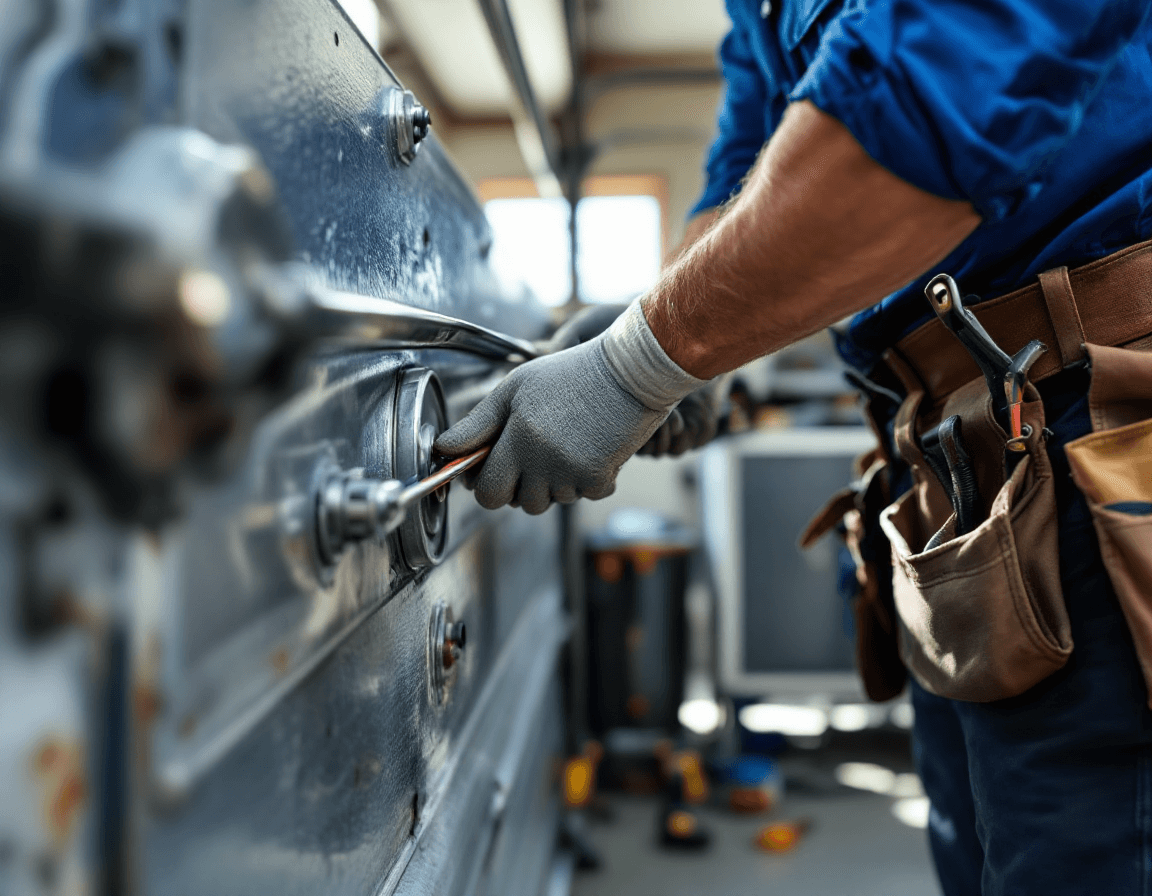
Garage door cable replacement in Bellevue, WA is one of the more common repairs we handle, and it is also one of the easiest to recognize once you know what to look for. Bellevue's wet winters, damp spring mornings, and the temperature swings between the Cascade foothills and the Lake Washington shoreline all work on the steel cables that lift your door. Over time, moisture gets into the strands, the cable frays or rusts, and eventually it lets go. When that happens, a heavy door that was balanced for years can suddenly hang crooked, bind on one track, or refuse to move at all.
This page explains what lift cables do, how to tell when they are failing, what to do in the minutes after one snaps, and what a professional repair involves. We serve homeowners across Bellevue and the surrounding King County communities, including the 98004 through 98008 ZIP codes, from Downtown and Crossroads to Factoria, Somerset, and Lake Hills. Our goal here is to give you enough background to make a confident decision, whether you are troubleshooting a door that just stopped working or planning ahead for a cable that looks worn.
Cable work is one of the few garage door jobs where a mistake can seriously hurt someone, because the springs that help lift your door store a great deal of energy. For that reason, this page is written to help you understand the problem, not to walk you through a do-it-yourself fix. A licensed technician should handle any cable replacement, drum service, or spring work.
Why Bellevue Garages Wear Cables Faster Than You Might Expect
Most people assume a steel cable will last as long as the door itself, but the environment matters more than the calendar. Bellevue gets a long stretch of gray, drizzly weather from fall through spring, and many garages are not fully climate-controlled. Moisture settles on the cables, especially the lower sections that hang near the bottom bracket, and it sits there through repeated cycles of wet and dry. Over several seasons, that trapped moisture starts to rust the outer wires, and rust weakens the strands from the inside where you cannot see it.
The homes themselves add another layer of variation. Many houses in older Bellevue neighborhoods, including parts of Lake Hills and the established blocks near Downtown, still have original or early-generation hardware that has been opened and closed thousands of times. Newer builds in Factoria, Somerset, and Crossroads often have heavier insulated doors that put more sustained load on the cables, particularly where the springs were sized for a lighter panel. A door that has grown heavier with added insulation, a window upgrade, or a heavier opener can wear cables faster than the original specification anticipated.
Garage temperature also plays a role. A garage attached to a home can stay warmer in the winter and then pick up condensation when a cold snap ends and the damp air moves in. Those daily swings create a surprising amount of wear on the cable and its fittings. This is why a cable that looks fine in October may show fraying by March, and why we encourage local homeowners to pay attention to small changes in how the door behaves rather than waiting for a dramatic failure.
Recognizing a Cable That Is Giving Up
Lift cables rarely fail without warning. In most cases, the first signs are subtle: the door moves a little slower, makes an unfamiliar grinding sound, or sits slightly out of level when you stop it halfway. Learning these early signals can save you from being stuck in the driveway with a door that will not budge. Look for the following symptoms, and treat any of them as a reason to schedule an inspection:
- The door hangs crooked or lopsided when it is partly open, with one side noticeably higher than the other
- Visible fraying, kinked strands, or orange-brown rust on the cable, especially near the drum or the bottom bracket
- The door closes unevenly, binds on one track, or stops partway as if something is catching
- A loud snap or bang followed by the door sagging or refusing to move
- The cable appears loose, tangled, or bunched around the drum instead of wrapping in neat, even coils
- A rough, scraping sound when the opener runs, which can indicate a cable catching on the drum or a pulley
It helps to look at the cables with the door fully closed and the opener disconnected. Check that each cable is seated in its groove on the drum and that there are no loose strands poking out of the braided section. If you notice any of these conditions, do not keep cycling the door to see whether it will "work itself out." Every additional cycle on a damaged cable increases the chance that it will fail at the worst possible moment, such as when a child or car is underneath.
What to Do in the First Few Minutes After a Cable Snaps
If a cable snaps while the door is closed, the door may stay in place, but if it snaps while the door is raised, it can drop quickly. Your first priority is to keep everyone clear of the door's path. Move children, pets, and vehicles away from the opening, and do not stand underneath the door to inspect it. A door that has lost one cable can shift unpredictably as its weight rebalances.
Next, disconnect the opener. Most openers have a red emergency release handle hanging from the trolley, usually on a cord. Pulling that cord separates the door from the drive mechanism so that the opener cannot try to run a door that is no longer properly supported. Do not force the door open or closed by hand after a cable failure, and do not attempt to tighten, reattach, or unwind anything near the springs. The tension in those springs is substantial, and cable work done without the correct tools and training can cause serious injury.
Once the area is safe, take a few photos of the cable, the drum, and the pulleys from a distance. These images are useful when you call a technician, because they help us prepare the right parts before arriving. Note whether the cable is still attached to the bottom bracket, whether the drum is intact, and whether the door is sitting level. Then call a licensed professional to secure the door and schedule the repair. Our team can often arrange a same-day visit depending on scheduling in your part of Bellevue.
Understanding the Drum, the Pulleys, and How the Cable Actually Works
To understand why cable repair is more involved than it looks, it helps to picture the whole lift system. Each side of the door has a cable that runs from a bottom bracket fastened near the lowest panel, up through a pulley near the track, and onto a drum mounted at the end of a shaft above the door opening. As the door rises, the cable winds onto the drum, and the drum's grooves are shaped to guide the cable into neat, even layers. The springs above the door, either torsion springs on a shaft or extension springs along the track, provide the lifting force that counterbalances the weight of the door.
The drum is more than a simple spool. Its grooves are designed to match the cable's diameter and keep each wrap in its own channel, so that the door lifts evenly on both sides. When a cable comes off the drum, or when the drum itself is worn or cracked, the cable can bunch, overlap, or jump the groove. That is the moment a door begins to hang crooked. A proper cable drum service involves checking the drum surface, the set screws, the shaft alignment, and the cable's seating, not just swapping out the cable.
Pulleys and bearings matter as well. A worn pulley can wobble or grind, and that movement can slowly wear the cable from the outside. Good repair work looks at the complete path the cable travels, from bracket to pulley to drum, and corrects anything that might cause the replacement cable to fail prematurely. This is why we treat cable replacement as a system check rather than a single part swap.
Why Cable Replacement Is Rarely a One-Part Job
Homeowners often ask whether they can replace only the broken cable. In most cases, the answer is that it makes sense to address both sides at once. Lift cables on a typical door are installed as a matched pair, and they wear at similar rates because they experience the same environment and the same loads. If one cable has let go, the other has likely seen comparable wear, even if it still looks acceptable. Replacing both at the same time usually costs less than making a second service call a few months later.
There are also related components that often need attention during the same visit. Worn drums, bent or misaligned shafts, loose set screws, and damaged brackets can all contribute to cable failure, and leaving them in place can shorten the life of a new cable. Rollers and hinges may show wear that affects how the door tracks, which in turn affects the cable. A thorough technician will inspect these parts, explain what they found, and recommend only what is necessary for safe operation.
Spring condition is a particular concern. Cables and springs work together, and a spring that has lost tension can put extra strain on the cable. Replacing spring hardware is specialized work that must be done by a licensed professional with the proper winding bars and safety equipment. Any time we replace cables on a door whose springs show signs of fatigue, we will discuss the situation with you openly so you can decide how to proceed with confidence.
What a Typical Cable Visit Looks Like in Bellevue
When we arrive at a home, the first step is a safety assessment. We check whether the door is secured, whether the springs are under tension, and whether the cable is still on the drum or has come free. We then inspect both sides of the door, the bottom brackets, the pulleys, the drum, and the track alignment. This initial look helps us determine whether a simple cable replacement will be enough or whether additional parts need attention.
Once the cause is clear, we explain the plan in plain language before starting any work. For most standard residential doors, the work involves releasing spring tension using specialized tools, removing the damaged cable from the drum and bracket, installing the new cable with the correct fittings, and then carefully restoring tension and testing the door through its full range of motion. We check that the door lifts evenly, stops where it should, and reverses safely when the opener is reconnected. The door's balance is verified before we leave, because a cable that is installed but not properly balanced can cause problems within days.
Many Bellevue homeowners appreciate knowing what happened and how to prevent it. At the end of the visit, we walk through what we replaced, what we inspected, and any monitoring we suggest. If there are signs of wear that are not urgent, we will mention them so you can plan ahead rather than being surprised later.
Reading the Price: What Shapes a $110 to $300 Cable Quote
For most standard residential cable replacements, our pricing typically falls between $110 and $300. The exact figure depends on several factors, and it helps to understand them before you call. The door's size and weight matter, because heavier or wider doors often require more robust cables and sometimes additional hardware. The type of spring system also affects the job, since torsion and extension spring setups call for different procedures and tools.
Access and condition are important too. A garage with tight clearances, a door that is wedged or misaligned, or a drum that needs replacement will take more time than a straightforward swap. Parts availability can influence the quote, particularly for older or less common door brands. Here are the main items that typically shape the final price:
- Door size, weight, and whether the panels include insulation or windows
- Spring type and whether spring replacement or adjustment is also required
- The number of cables needed and whether both sides need replacement
- Drum condition, including whether the drum must be replaced or only serviced
- Access and clearance in the garage, including any obstructions near the tracks
- Whether pulleys, brackets, or shaft components also need repair during the same visit
We always aim to give you a clear estimate before work begins, so there are no surprises on the invoice. If the inspection reveals a need for additional parts or service, we explain the reason and the cost before proceeding. You are never obligated to approve work beyond what you choose.
Sloped Driveways, Compact Garages, and Other Bellevue Layout Realities
Bellevue's geography shapes how garage doors are built and used. In hillside areas, including parts of Somerset and neighborhoods that climb away from the lake, driveways often slope steeply toward the garage. That slope can change how the door's weight is balanced and how the cables wind on the drum, particularly when the door is opened on a grade. A cable that works well on a level driveway may show more strain when the surrounding ground pushes the door in an unexpected direction.
Condominium and townhome garages present a different challenge. Many Downtown and Crossroads properties have narrow shared drives, low overhead clearances, and garages where the door track runs close to ceiling-mounted storage or a vehicle's roof rack. Cable replacement in these spaces requires careful planning, especially when the door must be partially lowered or supported during the work. Our technicians are accustomed to working around these constraints, and they plan the sequence so the door is secured at each stage.
Older Lake Hills and Factoria homes sometimes have garage framing that has shifted over decades. A slightly out-of-square opening can cause the door to track unevenly, which places uneven stress on both cables. When we encounter this, we check the track alignment and the header, and we discuss whether adjustments are needed to protect the new cable. The goal is a door that operates smoothly across its full travel, not just one that works for a few weeks after the repair.
Preventing the Next Failure Without Attempting the Repair Yourself
You can extend the life of your lift cables with a few simple habits, all of which are safe for homeowners. Once a season, usually in the early fall before the rainy months settle in, take a close look at the cables while the door is closed and the opener is disconnected. Check for visible fraying, rust, or loose strands, and make sure each cable sits in its groove. Keep the garage ventilated when possible, since trapped humidity speeds up corrosion in Bellevue's damp conditions.
Keeping the door balanced also helps. Disconnect the opener and lift the door manually about halfway. A well-balanced door should stay roughly in place without drifting up or down. If it moves significantly, that is a sign the springs or cables may need professional attention. Test this only if the door is in good condition and nothing is visibly damaged. If the door feels heavy, sticks, or pulls unevenly, stop and call a technician instead of continuing to test it.
Routine professional inspections are the most effective preventive step. A technician can spot early wear on cables, drums, and pulleys that a homeowner might miss, and can recommend timely service before a failure happens. Scheduling an inspection every year or two, or whenever the door begins to behave differently, is a practical way to avoid a sudden breakdown in the middle of the morning commute.
Choosing a Licensed Technician for Spring and Cable Work
Because cable and spring work can cause serious injury, it is worth taking time to choose the right company. Look for a provider that is licensed, bonded, and insured, and that can explain the work clearly before starting. Ask what the quote includes, whether it covers both sides of the door, and whether a balance check and safety test are part of the visit. A reputable technician will be comfortable answering these questions in plain language.
Pay attention to how a company handles the initial conversation. A good technician will ask about your door's make, approximate age, and the symptoms you have noticed, and will explain what they think is happening before any work begins. They will also be honest about whether a cable replacement will solve the problem or whether another repair is needed first. Avoid anyone who pressures you into unnecessary work or who suggests attempting spring adjustments without the proper training and equipment.
We are proud to serve homeowners across Bellevue and King County with transparent pricing, clear explanations, and careful workmanship. Our technicians are trained for the safety demands of lift cable and spring service, and we will always recommend a licensed professional for any work involving tension and drum components.
If your garage door is hanging crooked, has a frayed or rusted cable, or has stopped moving after a loud snap, do not wait for the problem to get worse. Call Seattle Garage Door Fix at (888) 799-3819 to schedule a licensed technician for your Bellevue home. We will secure the door, explain what we find, and get your garage back in working order with a clear, upfront quote.