
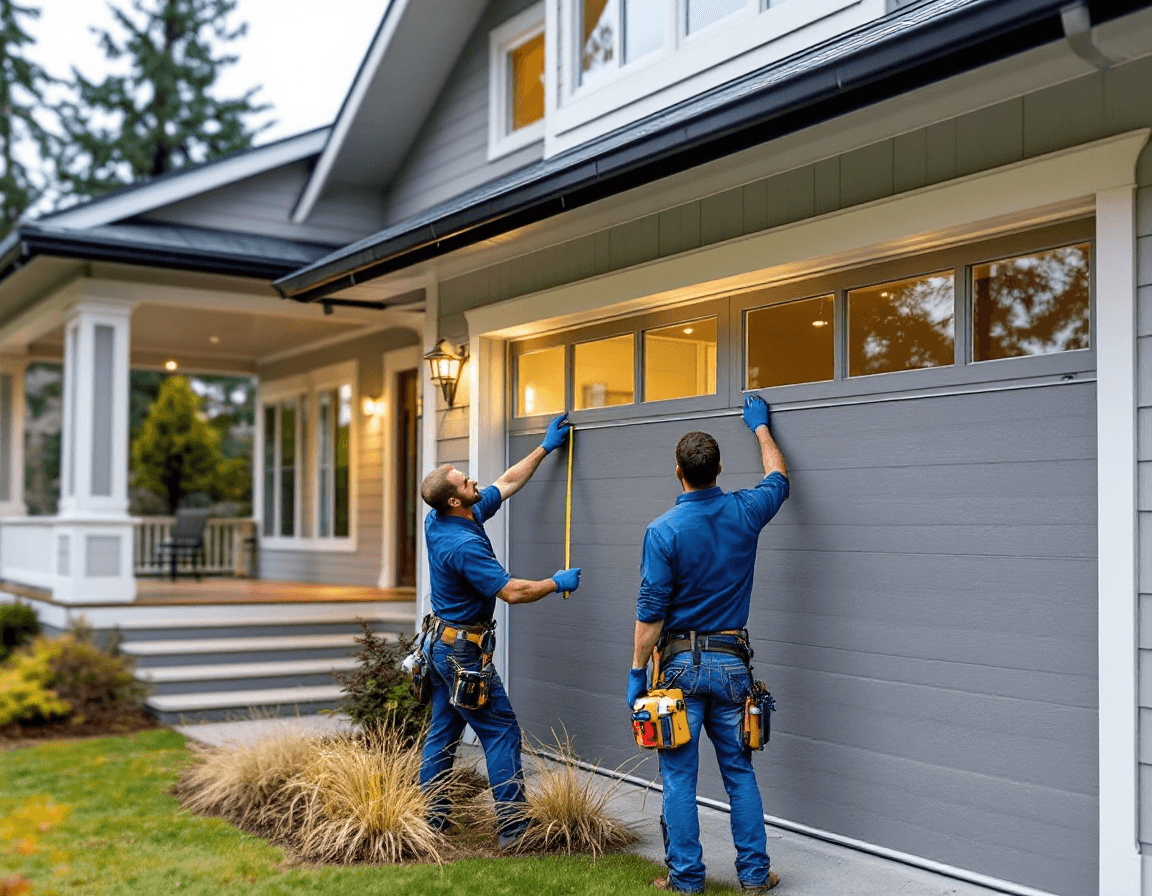
Replacing a garage door in Bellevue, WA is one of the most visible upgrades you can make to a home, and it affects far more than curb appeal. The door is the largest moving part on your house, and in Western Washington it has to hold up to wet winters, humid spring mornings, and the occasional windstorm rolling off Lake Washington. When a door is damaged beyond repair, or simply no longer keeps the weather and the cold out, a new installation is often the most practical path forward. Our team at Seattle Garage Door Fix installs new single and double garage doors across Bellevue and the surrounding King County communities, including the 98004, 98005, 98006, 98007, and 98008 ZIP codes.
Bellevue homes are varied enough that no single door fits every property. You will find mid-century ranches with narrow single bays in Lake Hills, split-levels with sloped driveways near Somerset, townhome-style units around Factoria, and newer custom homes where the owner wants a carriage-style or glass-paneled statement door. Each of those situations calls for a slightly different approach to sizing, insulation, and hardware. A door that looks perfect in a showroom can still be wrong for a home with a short header, an older track system, or a wall that flexes more than expected.
This guide walks through how we think about replacement projects in Bellevue: the warning signs that a door has reached the end of its useful life, the materials that suit our damp climate, realistic pricing, how remodels change the picture, and the local considerations that homeowners often overlook. We also explain why certain tasks, especially spring and cable work, should always be handled by a licensed professional. The goal is to give you enough detail to make a confident decision, whether you call us today or simply want to understand your options before you talk to anyone.
Reading the Signs That a Door Has Reached the End
Most homeowners do not wake up one morning and decide to replace a garage door. Instead, the decision builds through a series of small annoyances that eventually add up. A door that stalls halfway up, shudders on the way down, or needs a firm push to close fully is usually telling you something about its age and condition. Replacement starts to make more sense than repair when the list of problems is long or when the same component keeps failing.
Common signs that point toward replacement rather than another patch job include:
- Panels that are dented, cracked, delaminated, or pulling away from the frame, especially after a storm
- Visible rust creeping along seams, hinges, or the bottom edge of steel sections
- Soft, spongy, or crumbling wood near the base, hinges, or top rail, which often signals rot
- Repeated breakdowns on an older door where the cost of parts is approaching the cost of a new unit
- Drafts, light leaking around the edges, or a noticeably cold garage that affects the adjoining living space
Any one of these items can sometimes be corrected. When several appear at once, the door is usually working against itself, and replacing the whole assembly tends to produce a quieter, more reliable result.
Why Puget Sound Moisture Changes the Material Conversation
The Pacific Northwest climate asks more of a garage door than many homeowners expect. Bellevue's winters bring long stretches of drizzle and damp air, and the humidity that lingers through spring can work its way into any material that is not properly sealed or finished. Wood doors are especially sensitive to this cycle of swelling and drying, which is why many local homeowners who love the look of cedar or fir end up choosing a factory-finished composite or a steel door with a wood-grain texture instead. Those alternatives keep the appearance while reducing the risk of cupping and rot near the bottom panel.
Steel doors hold up well in our climate when they have a quality galvanized base and a durable powder-coat or paint finish. The main vulnerability is scratches in the finish that expose bare metal, particularly along the lower panels where tires, bikes, and recycling bins make contact. Aluminum resists corrosion very effectively, which makes it a strong option for homes near water features or for owners who want a clean, contemporary profile. However, aluminum is less insulating than steel with foam core, so it fits best where the garage is not a major source of heat loss.
Glass panels bring light into a garage, and they can look excellent on modern homes in Bellevue. Their weak point is the seal around each glazed section, which must stay intact to keep moisture out of the frame. For that reason, we recommend tempered or insulated glass units with a reputable edge seal and a frame that drains well. Homeowners who want glass but also need better thermal performance can often combine insulated glass with a thicker steel or composite section above the panel line.
Matching a Door to Bellevue's Mixed Housing Stock
Because Bellevue includes homes from many eras, the first question we ask is not what style you want but what the opening and structure can support. Older homes in neighborhoods like Lake Hills often have garage openings that were framed decades ago with less precise dimensions, and the header above may not match modern standard sizes. Measuring carefully before ordering protects you from delays and from costly field modifications that can compromise a door's warranty. We verify the rough opening width and height, the header clearance, the track room on each side, and the depth needed for the torsion or extension spring system.
Split-level and sloped-driveway homes, which show up frequently in parts of Somerset and nearby hillside streets, can present unique challenges. The garage floor may not sit level with the approach, and water may run toward the door during heavy rain. In those cases, we check the threshold, the weatherstripping, and the drainage at the base, since a new door will only perform well if water is directed away from the bottom seal. We also confirm that the chosen panel design will clear any landscaping, low eaves, or porch overhangs that could interfere with opening travel.
Newer construction in Bellevue usually comes with more consistent openings, but builders sometimes specify lighter framing or limited headroom to maximize interior space. That can affect which track configuration works best. A low-headroom system or a vertical lift design may be appropriate, but these choices should be made deliberately rather than assumed. A good installation begins with a careful look at the building itself.
Choosing Between Insulated Steel, Carriage-Style, Wood, Glass, and Aluminum
Material selection is where many Bellevue homeowners find the most value, and it is also where the decision can feel overwhelming. Insulated steel doors, typically built with a polyurethane foam core sandwiched between steel skins, are the most common choice for homes where the garage shares a wall with living space or where the owner wants to reduce heat loss. Manufacturers publish insulation ratings for their products, and those figures are worth comparing side by side, though the real-world result also depends on weatherstripping, the sill seal, and whether the garage has a well-insulated ceiling or walls.
Carriage-style doors have become popular across Bellevue because they echo traditional barn and carriage designs while still offering modern operation. Many use steel or composite with faux hardware, and they can be paired with a finish that complements brick, cedar siding, or stucco. For a more classic look, some homeowners choose real wood carriage doors, but those require regular maintenance and careful finishing to handle the wet season. We help customers weigh the aesthetic benefits against the upkeep so the door continues to look good after the first few years.
A simple comparison can help frame the decision:
- Insulated steel: strong thermal performance, low maintenance, and a wide range of textures and colors
- Carriage-style composite or steel: classic appearance with modern durability, suited to most residential exteriors
- Real wood: unmatched warmth and character, but needs consistent sealing and refinishing in our climate
- Glass or glass-accented: natural light and a contemporary look, best with insulated glass and solid edge seals
- Aluminum: excellent corrosion resistance and a sleek profile, usually best where insulation is less critical
Each option can work well in Bellevue when it is matched to the home, the orientation of the garage, and the owner's priorities.
Realistic Installation Costs Around Bellevue
Installed pricing for new garage doors in our service area typically falls between $950 and $3,800 or more, depending on the door's size, construction, materials, and the hardware package. A basic insulated steel single door with standard track and springs will usually sit at the lower end of that range, while a large double door with premium insulated glass, decorative hardware, or a custom wood finish will land higher. Openings that require structural work, unusual sizes, or upgraded opener systems can push costs upward as well. We provide written estimates that break out the door, hardware, springs, labor, and any necessary removal or disposal so you know exactly what you are paying for.
Several factors have the biggest influence on the final number. Width and height matter because larger panels require heavier springs and more robust tracks, and double doors almost always cost more than single doors. The panel construction and insulation rating affect both material cost and long-term energy performance. Finally, the choice between an existing opener and a new one can change the total, particularly if you want a quieter belt drive or a unit with battery backup for power outages.
It helps to think of the price as a long-term investment rather than a single line item. A well-chosen door that reduces drafts, resists moisture, and operates smoothly for many years often delivers more value than a lower-cost unit that needs early repairs. We are happy to walk through two or three options at different price points so you can compare the trade-offs clearly.
Remodels, Additions, and Adding a Second Door
Bellevue has seen steady remodeling activity, and many of our installations are tied to larger projects. Homeowners converting a single-car garage into a home office, gym, or accessory space often want a door that is quieter and better insulated than the original. Others adding a second bay during an addition need a door that matches the new roofline and exterior materials. In these situations, the garage door becomes part of the overall design, and it is worth coordinating with your architect, contractor, or designer early.
When a remodel changes the garage opening, the door should be sized and ordered only after framing is finalized. Changing a wall, adding a header, or altering the slab can shift dimensions by an inch or more, which is enough to cause problems with the track or the panel fit. We recommend scheduling the door installation after framing and drywall are complete, or at least after the opening has been confirmed. Doing so avoids the frustration of a door arriving before the structure is ready.
Adding a second door, or converting a double bay into two singles, is another common request. These projects require careful attention to the center post, the header load, and the way the existing opener will operate the new layout. Some homeowners discover that a double door is easier to keep balanced than two singles, while others prefer the flexibility of separate doors. We will explain how each option affects operation, weather sealing, and appearance so the decision fits your home.
Permits, HOAs, and Working Within Local Rules
Before any installation, it is wise to confirm whether your project requires a permit or review. Requirements can depend on the scope of work, especially if the opening is being enlarged, if structural framing is changing, or if the work is part of a larger remodel. We recommend checking directly with the City of Bellevue or your local building department to understand what applies to your address. Our team can help you gather the specifications and product information that inspectors often request.
Homeowners in planned communities and some condominium or townhome associations should also review their governing documents before ordering. Many associations have guidelines on door color, style, glass use, and exterior materials, and approval may be required before work begins. Sometimes the process is quick, but occasionally it takes several weeks, so it is better to start early. Bringing product brochures, color samples, and a site photo to the association review usually speeds things along.
Finally, consider how the new door will interact with your existing exterior lighting, house numbers, and driveway layout. Small details like these are easy to overlook but can make a noticeable difference in how the finished project looks and functions. We are glad to coordinate with your other trades so the installation fits neatly into the rest of your remodel.
Our Installation Process From Measurement to Final Test
A successful replacement follows a predictable sequence, and we keep our customers informed at each stage. The process begins with an on-site assessment, where we measure the opening, inspect the existing hardware, check the structure above and beside the door, and evaluate the slab and threshold. We also talk through your goals, whether that is energy savings, a fresh look, reliability, or a combination. Based on those findings, we present options and provide a written quote.
Once a door is selected and ordered, we schedule installation and confirm access, parking, and any pets or children who need to be kept clear of the work area. On install day, the old door is carefully removed and disposed of, the opening is cleaned and inspected, and the new track, rollers, hinges, and panels are assembled and aligned. Springs are installed and tensioned by licensed technicians, and the opener is programmed and tested. Weatherstripping and bottom seals are adjusted so the door closes firmly without binding.
Before we leave, we run a series of checks to confirm the door is balanced, level, and secure. We test the auto-reverse safety feature, confirm the emergency release works, and verify that the door stops properly in both fully open and fully closed positions. We then walk you through daily operation and basic care, including how to inspect seals and keep the track clear. You receive documentation for your warranty and a clear explanation of what to expect in the first few weeks as the new door settles.
Safety First: Why Spring and Cable Work Belongs to Licensed Professionals
Garage door springs store a tremendous amount of energy, and even a small mistake during installation or adjustment can cause serious injury. Torsion springs and extension springs under tension can release suddenly, and cables that are frayed or improperly seated can snap. For that reason, every spring replacement, cable repair, and drum adjustment should be performed by a licensed, bonded, and insured professional who has the proper tools and training. Homeowners should never attempt these tasks themselves, even if they have seen videos or have experience with other mechanical work.
Replacing a door is a natural time to evaluate the entire balance system, since the springs and cables were installed under the old door's weight and may no longer be correct for the new one. We calculate the appropriate spring rating based on the door's actual weight and dimensions, then install and test the system before handing the door back to you. This is one of the reasons we recommend allowing a professional to handle the full installation rather than piecing it together.
If you notice that your current door is unbalanced, that one side sits lower than the other, or that the opener strains to lift it, stop using the door manually and call for service. Do not attempt to adjust tension on your own. A licensed technician can inspect the system, identify the cause, and recommend the safest repair or replacement path.
Neighborhood Notes Across Bellevue
Each part of Bellevue has its own character, and we keep those differences in mind when we plan a project. Downtown Bellevue includes many attached garages and townhome-style residences where space is tight, so compact operation, quiet opener performance, and efficient use of headroom matter. In Crossroads, you will find a broad range of single-family homes where curb appeal and insulation are often the primary priorities for owners who spend time in their garages. Factoria includes many properties with varied layouts, making accurate measurement especially important before ordering a custom size.
Somerset is known for its hillside lots and distinctive home designs, so we pay close attention to driveway grade, drainage at the threshold, and how the door will sit against sloped surrounding landscaping. Lake Hills has many homes built in earlier decades, where we often find older framing that calls for careful verification and sometimes minor modifications. Across all of these neighborhoods, the Pacific Northwest climate shapes the decision, so we focus on sealing, drainage, and finishes that hold up through long, damp seasons.
Whether your home is near Downtown, tucked into a quiet street in Lake Hills, or perched on a Somerset slope, we bring the same commitment to measured work and clear communication. We serve the full Bellevue area and nearby King County communities, and we are glad to help you think through the right door for your property.
If your garage door is damaged, failing, or simply no longer suits your home, we would be glad to help you explore your options. Call Seattle Garage Door Fix at (888) 799-3819 to schedule a free consultation and receive a clear, written estimate for your Bellevue installation.