
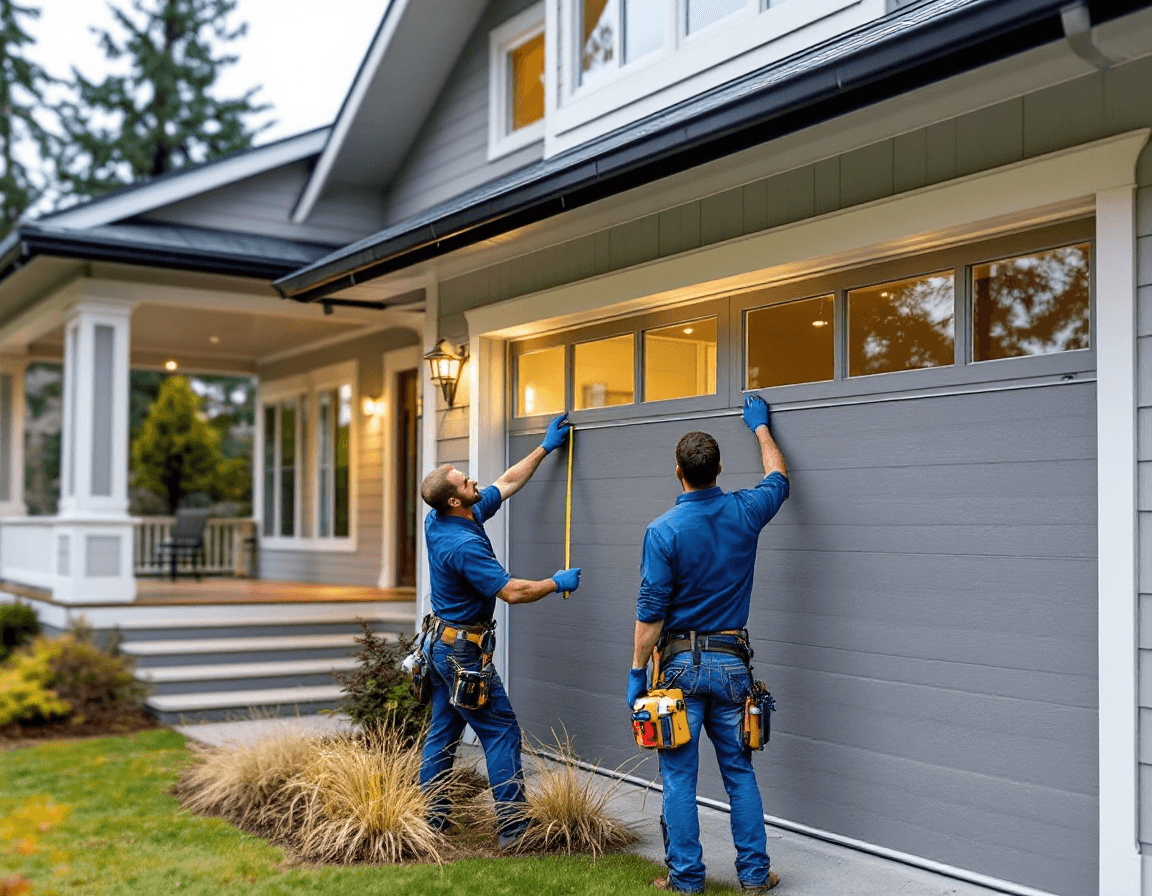
Garage Door Installation & Replacement in Newcastle, WA is the right call when a door can no longer be repaired economically, when it has become a daily source of drafts and noise, or when your home needs a new look. Newcastle sits on the hills and ridgelines between Lake Washington and the Cougar Mountain foothills, and its homes range from older ranch-style houses to newer custom builds with wide, multi-bay garages. Those garages take a beating from wet winters, humid spring mornings, and the occasional windstorm that blows through the valleys. Choosing a new door here means thinking about moisture, wind load, and insulation as much as appearance.
Many Newcastle homeowners reach this decision gradually. A door that once closed quietly starts rattling, a panel shows a soft spot near the bottom, or a remote that worked all last year suddenly needs three tries. At some point, the cost of patching the same problems each season exceeds the cost of a new door that fits your opening, your budget, and your daily routine. Seattle Garage Door Fix installs new single and double garage doors in insulated steel, carriage-style, wood, glass, and aluminum, with installed pricing generally running from $950 to $3,800 or more depending on the door and materials you choose. The sections below explain how to tell when replacement makes sense, what to look for in materials, and how the process works for homes in ZIP codes 98056 and 98059.
When Repair Stops Making Sense on a Newcastle Garage Door
There is a practical threshold where a repair technician will tell you honestly that a door is finished. Typically that happens when the door panels themselves are compromised, when the frame or track system is bent beyond straightening, or when several subsystems fail at once. A single worn roller is an easy fix, but if the rollers, hinges, cables, and bottom seal are all original and failing together, you are paying to keep an aging assembly running. Replacing the entire door at that point often produces a more reliable result than another round of piecemeal work.
In Newcastle, one common pattern is a door that has been repaired three or four times over a decade and now has mismatched hardware. The panels may have been replaced with a slightly different profile, the track may have been realigned around a bulge, and the opener may be struggling to compensate. Each fix was reasonable on its own, but the combined result is a door that never quite balances and wears the opener prematurely. When a technician finds that the door no longer sits square in its opening, replacement is usually the more durable investment.
Safety should also weigh into the decision. A door that jumps off its tracks, drops unexpectedly, or reverses poorly during closing is a hazard for children, pets, and anyone parking nearby. If the door is damaged beyond repair, do not attempt makeshift fixes or spring adjustments yourself. Springs under tension can cause serious injury, and any spring or cable work should be handled by a licensed professional who can assess the full system before deciding whether to repair or replace.
Reading the Damage: Storm, Rot, and Rust After Wet Winters
The Pacific Northwest climate is hard on garage doors in ways that homeowners from drier regions often do not expect. Long stretches of rain, damp soil against foundations, and high humidity through the shoulder seasons encourage wood to swell and soften and encourage steel to corrode where paint has chipped or where water pools at the bottom edge. Newcastle's tree-lined lots and shaded driveways can keep surfaces wet longer than in open areas, which speeds up the process. If you see dark staining, soft spots, or peeling finish near the base of the door, moisture is usually the culprit.
Storm damage looks different. Windstorms that roll through the Eastside can push branches, fencing, and debris into a door, dent panels, bend tracks, and crack glass sections. Sometimes the damage is cosmetic and the door still operates, but a bent track or a twisted frame can introduce stress that shows up weeks later as uneven movement or a noisy opener. After any significant storm, check the sections for hairline cracks and run the door slowly through a full cycle while watching for binding or skipping.
Rust on steel doors deserves attention even when it looks minor. Surface rust on a painted panel can often be cleaned and treated, but rust that has eaten through the skin of an insulated panel or spread along the seams is a sign the door is nearing the end of its useful life. Wood doors with rot at the bottom rails or along the stiles generally cannot be restored to structural soundness without extensive replacement of sections. In those cases, a new door is typically the more practical path, and choosing a material suited to wet conditions makes the replacement last longer.
Insulated Steel, Carriage-Style, Wood, Glass, or Aluminum: Making the Material Choice
Selecting a door material is the single biggest decision in the project, because it affects appearance, insulation, maintenance, and cost all at once. Each option has strengths that matter differently depending on how you use your garage. Below is a practical overview to help you narrow the field before you request quotes.
- Insulated steel: Usually the most efficient and most economical choice for daily-use garages. Polyurethane or polystyrene cores improve thermal performance, and factory finishes resist moisture better than bare steel. Available in many styles, including panels that mimic carriage doors.
- Carriage-style: Steel or composite doors designed to look like swing-out barn doors, with decorative hardware and faux hinges. These suit craftsman, farmhouse, and traditional homes and can be built with insulation cores for better efficiency.
- Wood: Warm and distinctive, with excellent curb appeal when properly sealed and finished. Wood requires regular maintenance in a wet climate, so it is best for homeowners willing to refinish every few years and protect the bottom edge from splash-back.
- Glass: Frosted or clear glass panels admit natural light into the garage and can make a small space feel larger. Tempered or laminated glass is the standard for safety, and insulated glass units help limit heat loss compared with single-pane designs.
- Aluminum: Lightweight, rust-resistant, and well suited to modern designs with large glass lites. Aluminum is less insulating by itself, so it is often paired with thermal breaks or insulated panels when efficiency matters.
If your garage is attached to a home where you spend time in the workshop or where the garage shares a wall with living space, insulation becomes more important. A wood or aluminum door without insulation can make the garage a cold, damp room in winter. Conversely, a homeowner who uses the garage primarily for storage may find that a well-built steel door with a good seal meets all needs at a lower price.
Energy Efficiency Without Overspending in a Newcastle Home
Garage doors are often overlooked in home energy planning, yet a large, uninsulated door can let significant heat escape and bring cold, damp air into an attached garage. Newcastle winters are typically mild compared with the interior of the continent, but they are long and wet, and the temperature difference between a heated house and an unheated garage can still drive up heating costs and create condensation problems. An insulated door, paired with good weatherstripping and a properly fitted bottom seal, addresses both issues.
When comparing doors, look at the insulation core and how the panels are constructed rather than focusing only on a single number on a brochure. A thicker insulated panel with a continuous core generally performs better than a thin skin with foam pockets. Pay attention to the perimeter seals, including the top and side weatherstripping and the bottom seal that contacts the floor. A high-quality door can underperform if the seals are poorly installed or if the floor is uneven, so the installation process matters as much as the product.
Efficiency also connects to comfort in summer. Newcastle afternoons can warm up quickly on sunny days, and a garage with an insulated door and sealed edges stays cooler than one with a thin, leaky door. If you plan to add a heater, workshop, or refrigerator in the garage, insulation becomes even more valuable. Ask your installer to show you how the door's seals meet the frame and the floor before you commit, and consider upgrading the door and the perimeter seals together for the best results.
Matching the New Door to Newcastle's Architecture and Sloped Lots
Newcastle's housing stock is varied, and many homes are built on sloped lots where the driveway rises or falls toward the garage. That grade can affect how a door sits in its opening, how the bottom seal meets the pavement, and how water runs toward or away from the threshold. During a site visit, a technician should check whether the floor is level and whether the slope creates a gap that needs a different seal or threshold detail. Doors that look excellent in a showroom can perform poorly if the opening is out of square or the grade drains toward the garage.
Style matters just as much. A carriage-style door with divided lites and decorative hardware can complement a craftsman bungalow or a Tudor-influenced home, while a clean-lined aluminum and glass door may suit a contemporary build. Homes with stone or lap-siding facades often look best with panel designs that echo the trim lines, and a door color that picks up the window casings tends to read as intentional rather than an afterthought. If your home has an HOA or a neighborhood with design guidelines, check those before selecting a finish.
Consider how the door will look from the street during different seasons. Darker colors absorb more heat and can show water spots more readily, while lighter finishes may hide dirt but show scuffs. Glass sections reflect the sky and nearby trees, which can be striking in a wooded setting. A good installer will help you visualize options against your siding, roof color, and landscape before you finalize the order.
Remodels and Additions: Planning the Opening Before the Door Arrives
Many replacement projects in Newcastle are part of a larger remodel. You might be adding a bay, converting a single-car garage into a double, or expanding a garage to make room for a workshop or a second vehicle. When the opening itself is changing, the door must be sized and engineered for the new span, and the header, framing, and wall conditions need to be verified before the old door comes out. Measuring carefully and coordinating with your contractor prevents costly delays.
Remodels also raise questions about the wall between the garage and the house. If the garage is being insulated for the first time or upgraded, the door choice should align with the wall insulation plan and the vapor management strategy. Mixing a highly insulated door with an unsealed garage wall can still allow drafts and moisture problems, so the door is best treated as one part of an envelope upgrade rather than a standalone purchase.
Permits may apply depending on the scope of the work. Structural changes to headers, expansions of the opening, or electrical changes for openers can trigger review by the local jurisdiction. Your contractor should explain what applies to your specific project before work begins. Planning these details early avoids the frustration of a finished door sitting in the garage while the paperwork catches up.
What Installed Pricing Covers and What Changes the Number
The installed price range of $950 to $3,800 or more reflects real differences in materials, size, and complexity. A standard single door in a basic insulated steel design will generally sit at the lower end of that range, while a large double door in custom wood, glass, or carriage style with premium hardware will land higher. Pricing discussions should always be specific to your opening, your choices, and your site, because there is no single figure that fits every Newcastle home.
- Door size and configuration: Single-car and double-car openings differ significantly in material and labor, and non-standard widths or heights raise cost.
- Material and construction: Insulated steel, carriage-style composites, solid wood, glass lites, and aluminum each carry different material costs and finish requirements.
- Hardware and tracks: Heavy-duty track systems, decorative hinges, and upgraded rollers add value and durability but also add to the total.
- Site conditions: Out-of-square openings, damaged framing, or sloped floors may require extra shimming, trim, or threshold work.
- Opener compatibility: If your existing opener cannot handle the new door's weight or style, an opener upgrade may be recommended and priced separately.
A quote should itemize these elements so you can see where the money goes and which options you can adjust. Ask whether removal and disposal of the old door are included, whether weatherstripping and a new bottom seal are part of the package, and whether the warranty covers both the door and the installation labor.
Walking Through the Installation Day in Newcastle
A well-run installation follows a predictable sequence, and knowing the steps helps you prepare. Most homes can expect the crew to arrive, verify measurements against the existing opening, remove the old door and any damaged track, and inspect the framing and header. Once the opening is confirmed, the new door is assembled or staged, the tracks are mounted and leveled, and the door is hung and balanced. Final steps include testing the opener, adjusting the limit settings, installing or replacing weatherstripping, and walking the homeowner through daily operation.
Before the crew arrives, clear the space around the garage and move vehicles and stored items to a safe area. Mark any sprinkler heads, low-voltage lines, or exterior lights that might be near the frame. If your opener is being reused, confirm that it is grounded properly and that the wall control is accessible. Pets and children should be kept clear of the work area for the duration of the install.
Balance and spring work are where licensed expertise matters most. The springs on a new door are under substantial tension, and adjustments must be made with the correct tools and procedures. Homeowners should never attempt to wind, unwind, or remove springs, and any cable or spring service after installation should be scheduled with a licensed professional. A reputable installer will test the balance before leaving and explain how to recognize the signs of a problem.
Warranties, Licensing, and What to Ask Before You Sign
When you invest in a new door, the paperwork matters. Ask what the manufacturer warrants on panels, finishes, and hardware, and ask separately what your installer guarantees for workmanship. Warranty terms vary widely, and some coverage depends on routine maintenance such as lubricating rollers and hinges, keeping the bottom seal in good condition, and avoiding over-tightening the opener. Get the terms in writing and keep them with your home records.
Seattle Garage Door Fix is licensed, bonded, and insured. Those credentials protect you if something goes wrong during the work and show that the crew is accountable for the job. When you request a quote, confirm the license and insurance status of the crew that will perform the installation, not just the company name on the proposal. Clear answers to these questions are a good sign of a professional operation.
Finally, ask about the scope of the quote. Does it include the old door removal, disposal, and any framing or trim repair? Does it cover a new opener if your current one is not suitable? Are weatherstripping and the bottom seal included? A thorough estimate answers these questions up front, which makes it easier to compare options and avoid surprises on installation day.
Getting Your Newcastle Garage Door Quote Started
The best time to plan a replacement is before a door fails completely. Start by documenting the problems you see, noting the age and condition of the current door, and thinking through how you use the garage. Take photos of the opening, the track, and any damaged panels, and measure the width and height of the opening at several points. Those details help a technician give you a faster, more accurate estimate.
Seattle Garage Door Fix serves Newcastle and surrounding communities in ZIP codes 98056 and 98059, and our team can talk through material options, insulation upgrades, and remodel coordination with you. Whether your door is beyond repair, you want better efficiency, or you are updating the look of your home, we can help you compare choices and plan a clean, professional installation. Call (888) 799-3819 to schedule an estimate and get straightforward answers about your Newcastle garage door replacement.