
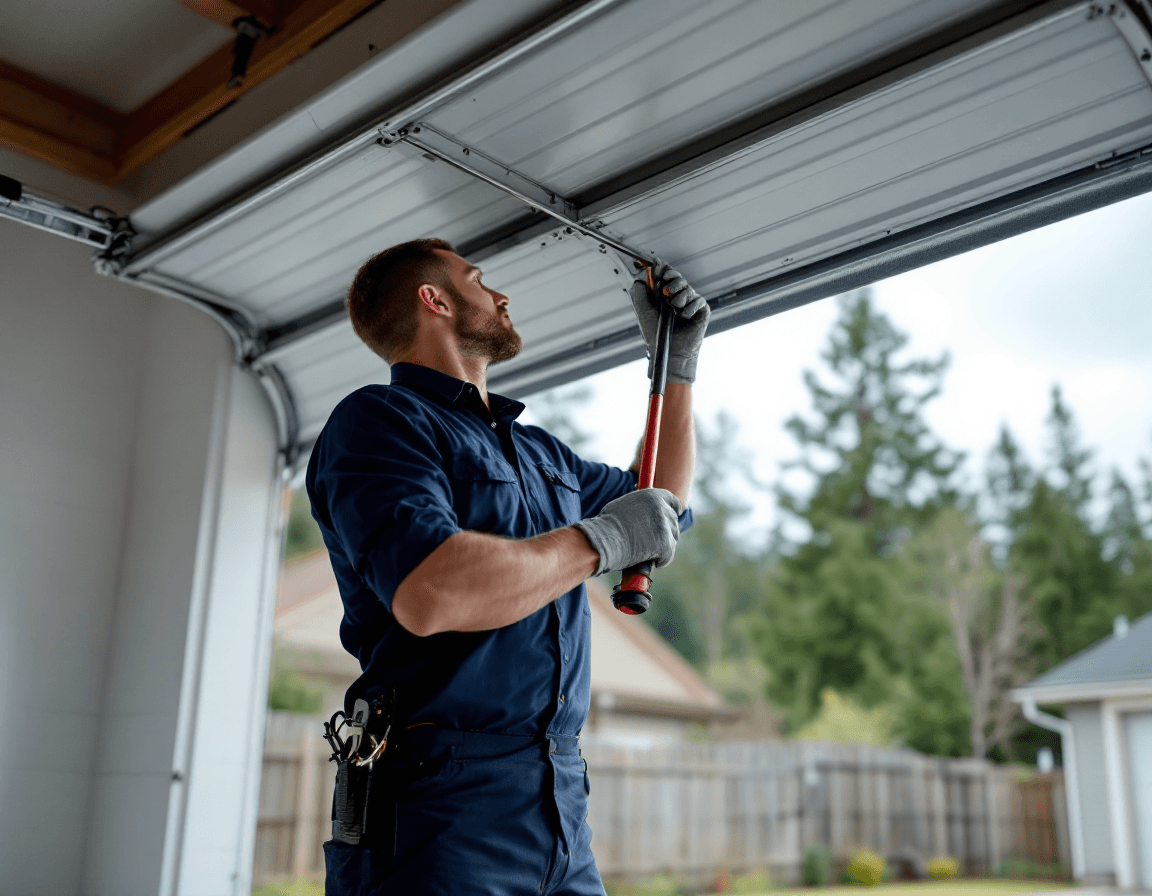
Garage Door Spring Replacement in Newcastle, WA is one of the most common repairs we handle for homeowners on the hillside streets and older lots around the city, and it is also one of the most dangerous to attempt without training. The springs carry most of the weight of your door, so when one fails, the door can go from hanging comfortably to dropping hard in a single moment. Understanding what is happening, what it costs, and when to call a professional can save you from a damaged opener, a bent track, or an injury.
Newcastle homes come with a range of garage setups, from attached two-car garages built in the late nineties to older detached structures that were never designed around modern insulated doors. Many of these doors are heavier than their original springs were rated for, especially after owners added insulation, windows, or upgraded to steel panels. That imbalance puts extra stress on the spring system every time the door cycles. If your door has started behaving differently, it is worth having it inspected before a minor fatigue issue turns into a snapped spring on a Tuesday morning.
Our technicians serve Newcastle and the surrounding King County communities, including homes within the 98056 and 98059 ZIP codes. We are a licensed, bonded, and insured garage door company, and we treat every spring job as the high-tension work it is. Whether you need a single torsion spring replaced, a pair of extension springs swapped out, or a full balance check after a break, we will explain what we find and what it will take to fix it. You can reach our team at (888) 799-3819 at any time to talk through your symptoms.
What a Broken Spring Sounds Like on a Quiet Newcastle Morning
Most homeowners who experience a spring failure describe the same thing: a sharp, loud bang that sounds like a gunshot or a heavy piece of metal dropped on a concrete floor. The noise often happens early in the morning or late at night, when the house is quiet and the sound carries through the walls. In many Newcastle neighborhoods, where lots are close together and homes sit near one another on the slopes, neighbors may hear it too. If you woke up to a noise like that, the door has likely released its stored tension all at once.
After the bang, the door may look normal from the outside while sitting partly open or sagging slightly. Some owners assume the opener has failed, when the real culprit is the spring that can no longer hold the door's weight. You might notice the door hanging unevenly, with one side lower than the other, or the bottom seal resting on the floor at an odd angle. These are signs that the spring system has lost its ability to counterbalance the panels.
Do not try to force the door open or closed after a loud bang. Keep children and pets away from the door, and avoid pulling on the cables or lock handles in an attempt to see what happened. A broken spring can still have energy stored in the remaining parts of the system, and a sudden movement can cause injury. Taking a few photos of the damage can help our technicians prepare the right parts before arriving.
Torsion or Extension: Knowing Which Spring Your Door Uses
Before any spring replacement begins, a technician needs to identify exactly which spring system your door uses. Torsion springs are mounted on a steel shaft above the door opening, usually running across the full width of the garage. Extension springs run parallel to the horizontal tracks on each side, sometimes with a safety cable running through the center of each spring. Both types work by storing energy when the door is closed and releasing it as the door opens, but they fail in different ways and require different tools.
Torsion systems are the more common setup on newer doors across Western Washington, and they are generally considered the more durable option when properly sized. A visible gap in the coil of a torsion spring is a telltale sign of a break, and it is often accompanied by the door refusing to lift or feeling far heavier than normal. Extension springs tend to show their wear by stretching, sagging, or developing a noticeable gap between coils, and they often fail at the hook ends where stress concentrates.
Knowing the difference also matters for cost and timing. Torsion spring work usually requires precise winding and careful handling of the winding cones, while extension spring work involves releasing tension on each side in a controlled sequence. A technician who mixes up the two can end up with a door that is dangerously unbalanced. If you are not sure which system you have, a quick look above the door will usually answer the question, but that look should be from a safe distance and never involve touching the spring.
Why Our Pacific Northwest Winters Wear Springs Down Faster
The Pacific Northwest climate is gentle compared with many parts of the country, but it is hard on garage door hardware in its own way. Newcastle sees long stretches of damp, overcast weather through the fall and winter, with moisture that can settle into steel over time. That humidity encourages surface rust on springs, cable drums, and hardware, and rust is a quiet enemy because it weakens metal from the outside in. A spring that looks fine on the surface may have lost significant strength underneath.
Cold snaps add another layer of stress. When temperatures drop, steel becomes more brittle, and springs that have already been working near their limits can fail more readily. Many of the calls we answer during colder periods involve springs that gave out after a few days of freezing weather, even though they had been showing wear for months. The change in temperature does not cause the damage on its own, but it often reveals weakness that was already present.
Rain and runoff also matter for homes near natural drainage features. Newcastle has a number of creeks and wooded corridors, including the China Creek area, and properties close to these natural features often have higher ambient moisture levels. Garages on lower-lying lots or those with poor drainage at the threshold can trap humidity around the door mechanism. Keeping the garage ventilated and the floor drained helps slow corrosion, but the springs themselves still deserve periodic inspection because the cycle count and moisture exposure add up over the years.
Warning Signs That the Spring Is Losing Its Fight
Springs rarely fail without warning, and most homeowners can spot early signs if they know what to look for. Catching these symptoms early can turn an emergency repair into a planned service visit, which usually means less stress and more control over scheduling. A few observations during a routine walk around the garage can tell you a lot about the health of your spring system.
- Your door feels noticeably heavier when lifting by hand, or the opener seems to labor harder than it used to.
- The door rises a few inches and then stops or drifts back down, even though the opener is working.
- You see rust-colored flakes, gaps between coils, or a stretched appearance on the spring.
- The door closes too fast, slams into the floor, or drops unevenly from one side to the other.
- The opener hums or strains, but the door barely moves from its closed position.
Any one of these signs deserves attention, and a combination of them is a strong indication that the spring is near the end of its service life. Newcastle homeowners with heavier insulated doors should pay particular attention, since added weight shortens spring life even when the cycle count seems moderate. If you notice these symptoms, avoid running the door repeatedly to test it, because each cycle adds stress to a weakened spring.
How Our Technicians Approach a Safe Spring Replacement
A professional spring replacement begins with a full inspection of the door, opener, tracks, rollers, hinges, and cables. The technician confirms the door's weight, measures the spring dimensions, and checks the condition of the drums and bearing plates. This step matters because replacing only the broken spring without assessing the rest of the system can leave a door that will fail again within months. Good work starts with understanding the whole assembly.
Once the inspection is complete, the technician secures the door in place using clamps or locking pliers on the track, then relieves the tension in the remaining spring using proper winding bars and safety equipment. Torsion springs are wound with specific tools that must be seated correctly to avoid injury. Extension springs are released in a controlled order, with safety cables and safety hardware in place. Every step is performed with the door locked down, the power to the opener disconnected, and the work area cleared.
After the new springs are installed, the technician tests the door through several full cycles and checks the cables, drums, and balance. A balanced door should stay in place when lifted to roughly halfway and released, with minimal drift in either direction. We always confirm the opener's force settings and the auto-reverse function before handing the door back to the homeowner. Our licensed and insured team stands behind this process, and that is exactly why we ask homeowners not to attempt the job themselves.
High-Cycle Springs for Busy Newcastle Households
Standard springs are typically rated for a set number of cycles, and that rating assumes a moderate pattern of use. Households with teenagers coming and going, home-based businesses with frequent vehicle traffic, or families with multiple cars can exceed those cycles faster than expected. High-cycle springs are engineered with a higher cycle rating, which can extend service life for garages used heavily throughout the day. They are a sensible upgrade when the original springs have failed early or when the household's routine demands more from the door.
High-cycle options are not a one-size-fits-all solution, though. The right choice depends on the door's weight, height, track configuration, and the type of opener system installed. A technician must size the springs correctly to match these factors, because an oversized spring can overpower a door and cause just as many problems as an undersized one. We evaluate the door's specifications before recommending any upgrade, and we explain the reasoning in plain terms so homeowners can make an informed decision.
If your household is considering a high-cycle upgrade, ask whether the cables, drums, and bearings are in good shape before the new springs are installed. Replacing only the springs on a worn system can put uneven stress on the components that remain. A balanced assessment helps ensure the investment pays off through longer service life and smoother daily operation. The added durability is most noticeable in homes that open the door several times a day through every season.
Balance Is the Step Most DIY Repairs Skip
Door balance refers to how the spring tension matches the weight of the door, so the door stays put when released partway open. A properly balanced door requires less effort from the opener and reduces wear on the motor, gears, and the rest of the hardware. Balance is the most overlooked part of a spring job, and it is also one of the most important for long-term reliability. Many repair attempts that look successful on the day of service end up failing months later because the door was never truly balanced.
Imbalance often shows up as a door that drifts open or closed when you let go, or one that slams down hard at the end of its travel. In Newcastle homes where garages have been upgraded with heavier insulated panels, the original spring setting may no longer match the actual weight. A simple adjustment can sometimes correct a minor imbalance, but more significant issues require resizing the springs or inspecting the track alignment. Our technicians check balance at several points in the door's travel before signing off on any job.
Balance also has a direct link to safety. A door that is out of balance can close with more force than intended, and that puts people and vehicles at risk. Auto-reverse sensors help, but they do not replace a properly balanced door. When we finish a spring replacement, we verify balance, sensor alignment, and opener force so the system works as a whole.
Cables, Drums, and the Damage Hidden After a Break
When a spring snaps, the cables attached to the drums can slip, loosen, or snap as well. The cable is the link that transfers the spring's energy to the door, so a loose or frayed cable will prevent the door from lifting evenly. Many homeowners notice that the door sits crooked or one side rises faster than the other after a spring break, and the cable is often the reason. Ignoring this problem can lead to a damaged drum, a bent shaft, or uneven stress on the track.
Cable drums themselves can crack or slip on the shaft after a break, especially when the spring fails suddenly. Drums that are damaged need to be replaced along with the spring, because a worn drum can cause the new cable to bind or fail prematurely. Bearing plates, center brackets, and the shaft itself should also be inspected for bending or wear. A thorough inspection after a break protects the investment in the new spring and prevents a second service call.
Safety cables deserve a special note. Extension spring systems use safety cables that run through the springs to keep them contained if they fail. If a safety cable is missing, frayed, or improperly installed, a broken spring can whip violently and cause serious injury. We check safety cables during every extension spring job and replace any that show damage or wear.
What Spring Replacement Costs in Newcastle
For most spring replacements, our pricing falls in the range of $180 to $450, depending on the type of spring, the size of the door, and the amount of related work required. A straightforward torsion spring replacement on a standard single-door setup typically falls toward the lower end of that range, while a larger double door, a high-cycle upgrade, or a job that also needs cable or drum replacement will often land higher. Every quote depends on what the technician finds during the inspection, so the final number is confirmed on site before any work begins.
Several factors influence the total cost. Door weight matters because heavier doors require springs with greater tension capacity. The number of springs, the type of winding system, and whether the opener needs adjustment all affect labor time. Older doors that have been neglected may need additional hardware, which can change the final price. We explain each line item so homeowners know exactly what they are paying for and why.
Cost is only one part of the decision. A low-quality spring installed by an unlicensed worker may save a few dollars today but can lead to repeated failures or serious injury. Choosing a licensed, bonded, and insured company protects you if something goes wrong during the job. Our goal is to deliver a safe, balanced door that performs well for years, not just a quick fix that buys a few weeks.
Keeping Newcastle Garage Doors Balanced Through Every Season
Preventive maintenance is one of the simplest ways to extend spring life and avoid emergency calls. A visual inspection every few months can catch rust, gaps, or uneven movement before they turn into failures. Keep the tracks clean, lubricate the rollers and hinges with a silicone-based product rather than heavy grease, and check the door's balance by lifting it halfway and releasing it. If the door drifts, schedule a service visit rather than trying to adjust the springs yourself.
Seasonal habits also make a difference in the Pacific Northwest. In the fall, clear leaves and debris from the threshold and tracks to keep moisture from pooling near the door mechanism. In winter, watch for ice buildup on the bottom seal and avoid forcing a frozen door open, since that strain can damage springs and the opener. In spring, after the wettest months have passed, take a few minutes to look for surface rust and make sure the door still moves smoothly.
Finally, consider scheduling a professional inspection every year or two, especially if your garage door is more than ten years old or sees heavy daily use. A technician can measure spring condition, check cable tension, verify balance, and identify wear that is not visible to the untrained eye. That kind of routine check gives you a clear picture of your door's health and helps you plan for upgrades before a failure forces the issue.
Why Spring Work Belongs in Licensed Hands
Garage door springs store enormous amounts of energy, and mishandling them is one of the leading causes of serious injury in residential garage work. Even experienced homeowners can underestimate the force involved, and a single slip with a winding bar can cause lasting harm. Spring replacement is not a weekend project, and the tools, training, and experience required are significant. Licensed professionals understand these risks and build safety into every step of the process.
Attempting the job yourself can also void warranties on the door or opener and can create problems with insurance if an accident occurs. Mismatched springs, incorrect tension settings, or missing safety cables can leave the door in an unsafe condition that is not obvious until it fails. A professional replacement includes proper sizing, balance verification, and a clear explanation of what was done. That documentation gives you confidence that the work meets accepted standards.
If you are facing a broken spring, a door that will not lift, or a loud bang that you cannot explain, the safest step is to call a licensed team. Our Newcastle technicians are ready to inspect your door, explain your options, and restore safe, balanced operation. Call (888) 799-3819 to schedule your spring replacement and get your garage back to working order.