
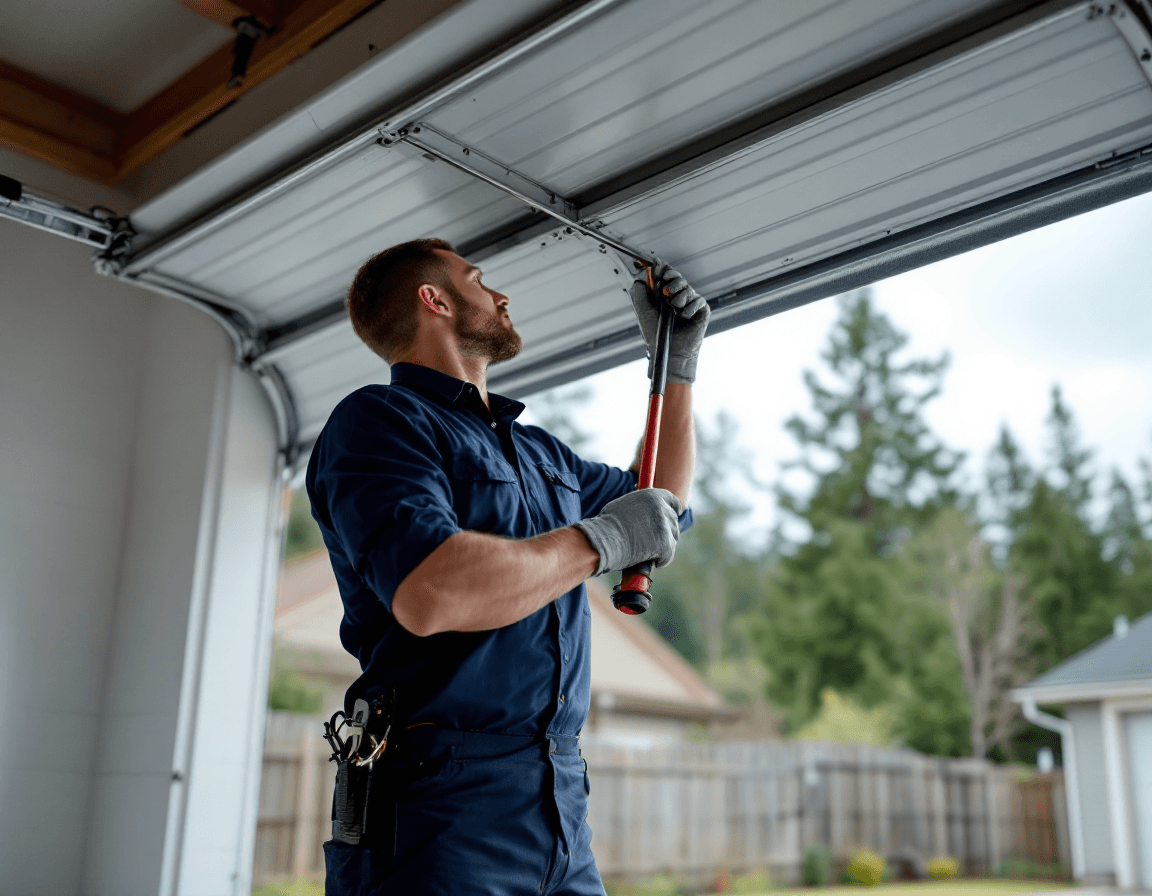
Garage door spring replacement on Mercer Island is one of the most common and most urgent repairs we handle, and it's easy to see why. The island's homes range from older split-levels near the Town Center to newer builds on the east side, and most have a torsion spring or extension springs carrying the full weight of the door. When one of those springs fails, the door can go from working fine to refusing to move in a matter of seconds. Our licensed, bonded, and insured technicians replace broken springs, rebalance the door, and check the cables and hardware so the repair holds up through the next wet season.
Spring problems rarely come with much warning, but they usually leave clues before the final break. Many Mercer Island homeowners notice a door that feels heavier than it used to, or an opener that labors without lifting the door smoothly. Others hear a sudden crack in the garage and find the door stuck halfway up or sitting unevenly on its tracks. Whatever the situation, the spring is the first component we check, because it's the part that makes everything else possible. This page explains what a failed spring looks like, what the repair involves, what affects cost, and why this job should always go to a trained professional.
What a Snapped Spring Sounds Like in a Quiet Mercer Island Garage
A spring that breaks under tension makes a noise that people never forget. It's usually a sharp bang, sometimes compared to a gunshot or a heavy metal pipe dropping on concrete, and it can be loud enough to rattle windows in the house next door. Homeowners in quieter pockets of the island, especially those with attached garages near the bedrooms, often describe jumping out of bed at night because of it. The sound comes from the stored energy in the spring releasing all at once as the coil separates.
After the bang, the door usually stays where it is or drops a few inches. If the door was closed when the spring broke, it may not move at all, and the opener might still run briefly before shutting off. Many people try to open the door by hand at this point, which is a risky move because the remaining spring may still be under tension and the door can be heavier than it looks. We always recommend keeping children and pets away from the door and calling for service rather than trying to lift it or disconnect the opener yourself.
On a typical call, the technician will inspect the broken spring first, then look at the drums, cables, and bearing plates to see whether the break caused secondary damage. A snapped spring often loosens a cable or bends a shaft, so the repair is rarely just a matter of swapping one coil. Taking time to examine everything at once prevents a second service visit a few weeks later, which is something we work hard to avoid.
Reading the Warning Signs Before the Door Quits
Springs fatigue gradually, and the warning signs are usually visible long before a complete failure. Paying attention to how your door behaves during normal use can help you catch a worn spring early, which generally means a calmer and less expensive repair. The most useful signs tend to be the ones that change slowly, like a door that takes a little more effort to open each month.
- The door feels noticeably heavy when you lift it by the handle, or it seems to rise faster than it descends.
- You see a gap or stretched section in the torsion spring coil, or the coils look uneven when you stand beside the door.
- The door opens a few inches, then stops and needs a push to continue.
- The opener strains, hums, or clicks but the door barely moves or moves only partway.
- The door slams shut or closes faster than it did last year.
- The door sits crooked on its tracks, with one side lower than the other.
Any single sign can have more than one cause, so a diagnosis should always come from a trained technician. A balance problem, a worn roller, or an opener setting can produce similar symptoms. Still, when two or more of these signs appear together, a failing spring is very likely the culprit. Waiting too long after the first sign is the most common reason a manageable spring replacement turns into an emergency call.
Torsion Versus Extension Springs: Knowing Which System Your Door Uses
Before any repair, a technician needs to know which spring system your door uses, because the two designs fail in different ways and require different tools. Torsion springs are mounted on a steel shaft above the door opening, and they wind and unwind to lift the door. They are usually the more durable choice and are common on newer doors across Mercer Island, especially on heavier insulated models. Extension springs run along the sides of the track, stretching as the door moves, and they are often found on older garages or lighter residential doors.
Torsion springs typically carry the bulk of the door's weight and store a large amount of energy when they're wound. That is why a broken torsion spring produces such a dramatic noise, and why winding or unwinding one requires specialized winding bars and training. Extension springs store less energy in any single coil but still carry serious tension, and they can recoil with force if a cable or safety cable fails. Both types should be handled only by licensed professionals.
Identifying the system also tells us what to expect from the repair. A torsion job often includes checking the shaft, bearings, and cable drums, while an extension job focuses on the spring pairs, pulleys, and safety cables. Some older doors have been retrofitted with mismatched parts, and a careful inspection catches those problems before a new spring is installed. Homeowners who aren't sure which type they have can usually tell by looking above the door, since torsion springs sit on a horizontal bar, while extension springs run alongside the track.
Why Lake Washington Humidity Wears Springs Faster
The Pacific Northwest climate has a real effect on garage door hardware, and Mercer Island homeowners feel it in multiple ways. Winters are long, wet, and mild, with frequent drizzle and days of moisture-laden air that rolls in off Lake Washington and settles over the island. That humidity encourages surface rust on steel springs, especially where paint has chipped or where the coils sit close to condensation near the header and the wall. Once rust forms, it pits the steel and gradually reduces the spring's strength.
Temperature swings add another layer of stress. A cold snap in January can make metal contract and make the spring stiffer, while a warm afternoon in the same month can change the feel of the door dramatically. Those repeated expansions and contractions work the metal over time, and they're one reason springs sometimes fail in winter or early spring, when the door has been working hardest during the wet months. Garages that stay damp because of poor ventilation or a leaking gutter can speed up the process even more.
Several Mercer Island neighborhoods have their own microclimates shaped by tree cover and slope. Homes tucked under mature evergreens often stay damp longer after rain, and garages built into hillsides can collect water near the floor. We recommend keeping the garage well ventilated, clearing gutters so runoff doesn't pool near the door, and asking a technician to lubricate the springs during routine service. A little attention to moisture can add meaningful life to a spring, though it won't replace a broken one.
What the $180 to $450 Range Typically Covers
Most spring replacements on Mercer Island fall within the range of $180 to $450, though the final figure depends on the details of your door and the work required. The range reflects differences in spring type, door weight, the number of springs involved, and whether related parts need attention at the same time. Because every door is different, we always confirm the scope with you before any work begins so there are no surprises on the invoice.
Several factors tend to push the cost toward the higher end. Replacing a torsion spring on a heavy insulated double door takes more time and more careful handling than a single spring on a lighter residential door. If the break damaged the cable drums, bearing plates, or a shaft, those parts may need replacement too. A door that has been out of balance for a long time may also need additional adjustment to restore smooth operation. High-cycle spring options, which we describe below, can also change the price.
- Spring type and size, including whether the door uses a single torsion spring or a paired set
- Door weight and construction, such as heavy wood, steel, or insulated panels
- Condition of cable drums, cables, bearings, and the shaft
- Need for a new safety cable or additional hardware
- Whether you choose a standard or high-cycle spring
- Any opener adjustments required after the new spring is installed
Asking for a clear written estimate is a good habit for any home repair. A reputable technician should explain what is included, what might change once the old parts are removed, and what warranty applies to the new components. We'd rather you understand the job before we start than feel uncertain halfway through.
Our Process on a Typical Mercer Island Service Call
Every spring call begins with a safety check before anyone touches the tension system. The technician confirms the door's condition, checks whether the opener is disconnected, and assesses whether the door can be secured safely while the work is done. We also talk with you about the symptoms you've noticed, since those details often point to the root cause faster than a visual inspection alone. This conversation helps us plan the right parts and tools before arriving at the job.
Once the setup is safe, we measure the door and identify the correct replacement spring by wire size, inside diameter, length, and cycle rating. Measurements matter a great deal, because a spring that's even slightly wrong can cause uneven lifting, premature wear, or a door that won't balance. We remove the damaged spring using the proper winding equipment, inspect the cables, drums, and bearings, and replace any worn components. Then the new spring is installed and tensioned to the manufacturer's specifications and the door's weight.
After installation, the technician tests the door through several full open and close cycles. We check whether the door stays put when it's halfway open, which is a simple way to confirm balance, and we adjust the opener limits if needed. Before leaving, we walk you through the new setup, explain what to watch for, and note any recommendations for future maintenance. Many Mercer Island homeowners appreciate that we don't leave the job until the door moves smoothly in both directions.
High-Cycle Springs and When They Make Sense
Standard residential springs are rated for a certain number of cycles, meaning complete open and close movements over their lifetime. High-cycle springs are built with heavier wire or different processing so they can handle more repetitions before fatigue sets in. They are often a good fit for households that use the garage as a primary entrance, where the door opens and closes several times a day, or for families with teenagers coming and going on busy schedules. Some homeowners also choose them when they plan to stay in the home for many years and want to reduce the chance of another spring replacement.
High-cycle options aren't automatically necessary for every home. A garage used mainly for storage and occasional car parking may not wear out a standard spring as quickly, and the added cost may not be worth it. We usually discuss how often the door is used, how heavy it is, and how long you expect to remain in the house before recommending one option over another. The goal is a spring that fits your actual use rather than an upsell.
Choosing a high-cycle spring also affects balance and installation. Because the wire and tension specifications differ, the technician must confirm the correct setup for your door's weight and opener type. A high-cycle spring installed incorrectly will still cause problems, so the installation quality matters as much as the spring itself. We'll explain the difference in plain language so you can decide with confidence.
Balancing the Door So It Stays Put and Protects the Opener
A new spring means little if the door isn't balanced correctly. A balanced door should stay in place when you lift it manually to about halfway, without sliding up or drifting down. When the balance is off, the opener has to work harder than it was designed to, which shortens its lifespan and can cause jerky movement, slamming, or uneven closing. Balance adjustments are a routine but important part of every spring replacement, and they require careful tension settings.
Balancing involves more than tightening the spring until the door feels right. The technician checks the tension against the door's actual weight, verifies that the cables are seated correctly on the drums, and confirms that the rollers and hinges move freely. If the door was already out of balance before the spring broke, the new spring alone may not solve the problem, and additional adjustments to the hardware may be needed. This is one reason we prefer to see the whole system rather than just the failed part.
A balanced door also improves safety. Doors that are too heavy or too light can close unpredictably, and an unbalanced door may reverse or stop unexpectedly on the opener's sensors. Once the balance is correct, we test the auto-reverse safety features to make sure they respond properly. Homeowners who notice any change in how the door moves after a few weeks should call for a follow-up rather than waiting for the next seasonal maintenance visit.
Cables, Drums, and the Hidden Damage a Spring Break Leaves Behind
When a torsion spring breaks, the force of the release can do more than ruin the spring itself. Cables may slip off their drums, fray against the track, or stretch unevenly. Drums can crack or slide out of position on the shaft, and bearing plates may bend. Extension spring breaks can pull pulleys out of alignment or damage the safety cables that are supposed to catch the door if a spring fails. These secondary problems often aren't visible at a glance, which is why a thorough inspection matters.
We check every cable for fraying, kinks, and proper seating, and we replace any cable that shows wear. Drums are examined for cracks and for correct alignment on the shaft, since a shifted drum can cause the door to lift unevenly. Bearing plates and center bearings are inspected for looseness and wear. If a component is compromised, we explain what needs replacing and why, so you can make an informed decision about the full repair.
Loose cables deserve special attention. A cable that has come off its drum can hang at an odd angle, and a door in this condition can drop unexpectedly if it's disturbed. Never try to reattach a cable yourself while the spring is still under tension or while the door is partly open. A licensed technician can safely secure the door, reseat the cable, and confirm that the system is stable before anyone uses the door again.
Keeping Your New Spring in Good Shape Through Pacific Northwest Winters
After a replacement, a few simple habits can help your new spring last longer. Keep the garage well ventilated so humidity doesn't linger around the door hardware, and clear debris from the tracks so rollers move freely. Check the weatherstripping along the bottom of the door, since gaps can let in water that eventually reaches the springs and the floor. Wiping down the door and hardware occasionally with a dry cloth removes grime that can hold moisture against the metal.
Lubrication is part of the maintenance picture, but it needs to be done correctly. Use a silicone-based or manufacturer-approved lubricant on the springs, rollers, and hinges, rather than heavy grease that collects dust and grit. Avoid spraying lubricant on the opener's electronics or on the door's safety sensors, and keep the lubricant off the tracks where it can attract debris. A technician can show you which points need attention and how often they should be serviced.
Scheduling an inspection every year or two is a practical way to catch small problems before they become emergencies. A technician can look for rust spots, check cable wear, verify balance, and confirm that the opener's safety features are working. For Mercer Island homes that see heavy use or sit in damp, shaded spots, an annual visit is often a sensible investment. The cost of a routine check is almost always lower than the cost of an emergency call on a cold, wet morning.
Why Spring Work Belongs in Professional Hands
We will always say this plainly: spring work is one of the most dangerous jobs a homeowner can attempt. Torsion springs store enormous energy when wound, and a slip of the winding bar or a sudden release can cause serious injury. Extension springs can recoil with force if a safety cable is missing or a hook fails. Even experienced DIYers have been hurt by springs that seemed manageable, which is why licensed professionals rely on specialized tools, proper training, and strict safety procedures.
Attempting a spring replacement without the right equipment also tends to cost more in the end. Incorrect spring sizing, improper winding, or missed cable damage can lead to a second failure within months, sometimes damaging the opener or the door itself. A professional installation includes correct measurements, proper tensioning, balance testing, and a clear explanation of what was done. You receive a repair that is designed to last rather than a temporary fix that may need to be redone.
If you're unsure whether a problem is a spring issue, it's always safer to call for help than to guess. Our team can diagnose the problem by phone in many cases and explain what to expect before we arrive. Whether your door is stuck halfway up, your garage sounded like a gunshot last night, or your opener has been straining for a week, a licensed technician can get your home moving safely again.
If your Mercer Island garage door has stopped lifting, makes a loud bang, or feels unusually heavy, don't wait for the next symptom to get worse. Call Seattle Garage Door Fix at (888) 799-3819 for licensed, bonded, and insured spring replacement, balancing, and inspection. We'll explain your options, confirm the price range before any work begins, and get your door working safely again.