
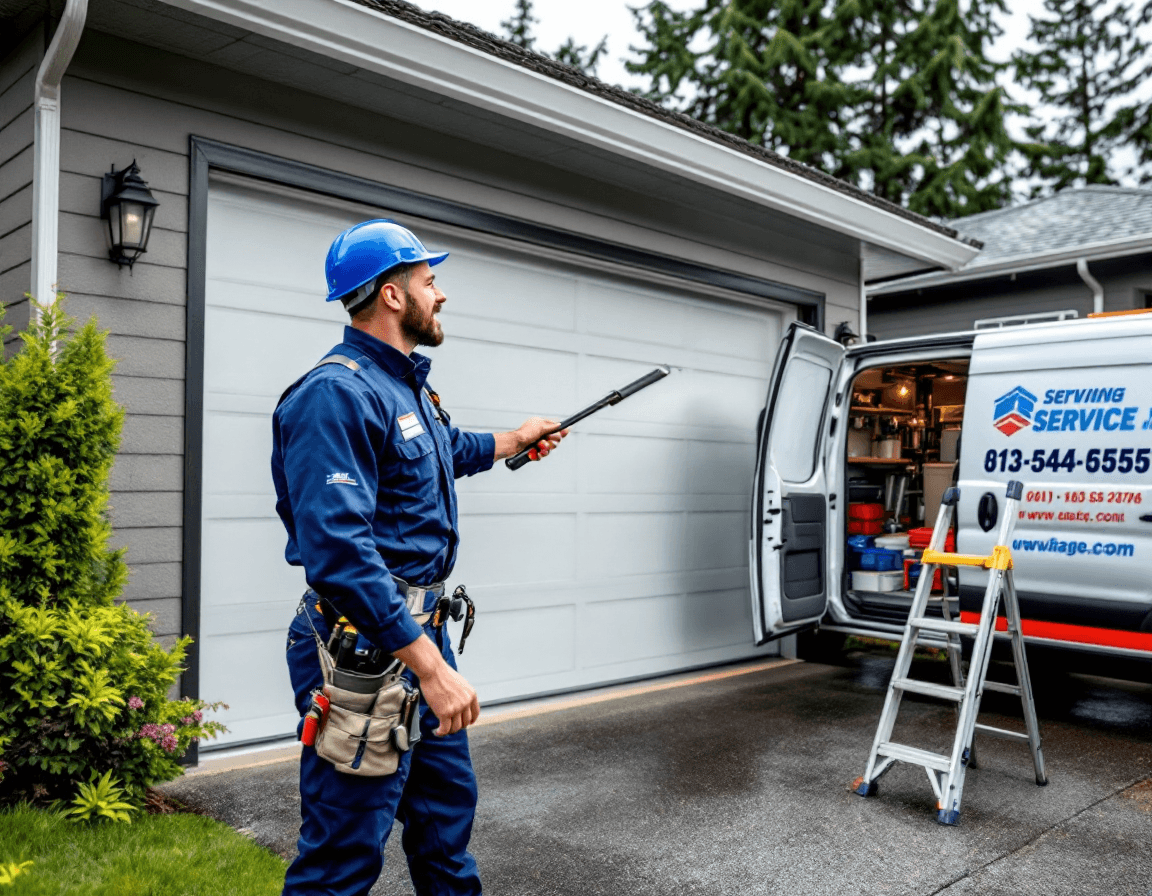
Garage door repair in Mercer Island, WA is a practical need for homeowners on the island, whether the door has stopped responding to the wall button, is halting halfway up, or has begun making a noise it never made before. Our technicians work throughout 98040 and the surrounding Eastside and Seattle neighborhoods, and we see the same handful of problems again and again, often shaped by the damp, cool weather that settles over Lake Washington for much of the year. A door that worked fine in August can start acting up by November, and that seasonal pattern is worth understanding before you decide what to do.
This page walks through the most common symptoms we hear about from Mercer Island homeowners, explains what each one usually means, and sets realistic expectations for cost and timing. We have kept the advice grounded in what a technician can actually observe on a service call, rather than guesswork. Where a repair involves high-tension parts, we say so plainly, because safety matters more than saving a few dollars on a DIY attempt.
If you are reading this with a door in front of you that will not close or is behaving strangely right now, you do not need to read every section before calling. Keep the opener's remote handy, check whether the power is on and the emergency release is disengaged, and then use the sections below to match your symptom to a likely cause. Our team can be reached at (888) 799-3819, and we are glad to help you sort out whether the problem is minor or needs a proper visit.
Why Mercer Island Garage Doors Feel the Lake Damp
The Pacific Northwest climate has a particular effect on residential garage doors, and Mercer Island sits in the middle of it. Winters bring long stretches of drizzle and fog rolling off the water, and the humidity rarely drops far below comfortable levels for months at a time. Steel tracks and hinges that spend the wet season damp will develop surface rust long before they fail structurally, and that rust increases friction at every roller and pivot point. A door that rolls smoothly in dry summer weather can feel noticeably heavier by January.
Wood doors, which remain common on older homes and custom builds across the island, face their own challenges. Moisture swells panels and can warp the bottom rail just enough to rub against the threshold or pull the door slightly out of square. Painted surfaces that have seen several wet winters often show lifting or peeling near the bottom edge, and that moisture can migrate into the hardware mounting areas if left alone. Even steel doors are not immune, because condensation inside an uninsulated garage can accelerate corrosion on the bottom bracket and the lower section.
Mercer Island also experiences the occasional gusty day when wind funnels across the lake and hits exposed garage faces, especially on properties near the water or on higher lots with open sightlines. Repeated wind loading can loosen fasteners, nudge tracks out of alignment, and stress the bottom brackets over time. We recommend a quick visual check after any strong wind event, looking for panels that have shifted, brackets that appear bent, or a gap that has opened at one corner. Catching these small changes early often prevents the more expensive repairs that follow when a track finally gives way.
When the Door Refuses to Move at All
A door that will not open or close, or that does nothing at all when you press the button, usually traces back to one of a few sources. Power is the obvious first suspect, so confirm the opener has light and that the breaker feeding the unit has not tripped. Many of the outages we see on the island turn out to be a tripped circuit, a dead outlet, or a wall button with a loose wire behind it. Those cases are often resolved in minutes without any parts at all.
If the opener has power but the door still sits motionless, look at the emergency release cord that hangs from the trolley. If it has been pulled, the door is disconnected from the drive and will not move under motor power until the trolley is re-engaged. Also check for a jammed or obstructed track, a bent section that is catching the rollers, or a bottom bracket that has come loose and is binding against the frame. A door that is physically stuck will often make the opener strain, hum, or click without moving, which is a signal to stop running it.
Here are the checks we suggest before calling a technician, along with the situations that mean you should stop and call immediately:
- Confirm the opener light and wall control respond, and check the circuit breaker for that outlet.
- Make sure the emergency release cord is still attached and that the trolley is latched to the carriage.
- Look along the tracks for obvious obstructions such as a stray tool, a bicycle, or debris that has wedged between rollers and the rail.
- Stop using the opener right away if you see a snapped spring, a cable hanging loose, or a door that has dropped suddenly, since those conditions require a licensed technician.
The Reversing Door That Stops Short of the Floor
Modern openers include safety reversal, which is a sensor-based feature that causes the door to reverse direction if something interrupts the photo-eye beam near the floor. When a door goes down partway and then bounces back up before touching the ground, the most common culprit is a misaligned or dirty photo-eye. These sensors are mounted low on each side of the opening, and they must face each other directly with a clear line of sight. A spiderweb, a leaf blown in from the wet yard, or a hose that drifted into the path can break the beam even when nothing appears to be there.
Alignment problems are common after a bump from a car, a child's scooter, or a lawn tool. One sensor may have been nudged a few degrees, which is enough to keep the beam from reaching the receiver. Wiring can also be an issue, especially on older installations where the low-voltage line runs along a wall that stays damp through the winter months. Corrosion at the terminal connections can produce an intermittent signal, so the door may work fine one morning and reverse the next.
Sometimes the reversal is not from the photo-eye at all but from the door's own force settings. If the opener senses resistance that is actually caused by a binding track, a worn roller, or a bottom seal that has swollen and hooked on the floor, it will reverse as designed. In these cases, adjusting the sensor alignment will not solve the problem. A technician needs to inspect the rollers, the track alignment, and the force limits together, because treating only the symptom leaves the underlying friction in place and shortens the life of the opener.
Grinding, Squealing, and Banging: What Each Sound Points To
Noise is often the first warning that a garage door is headed for trouble, and each sound tends to point toward a different part of the system. A high-pitched squeal usually means dry or rusted metal, most often at the rollers, hinges, or pivot points where two surfaces rub without adequate lubrication. In a damp Mercer Island garage, that squeal can appear within a few weeks of the last tune-up, particularly when the lubricant has been washed away by a wet season. A light application of the right lubricant can quiet the door, but a squeal that returns quickly usually signals worn rollers that should be replaced.
A grinding or scraping sound tends to be more serious. It often comes from the opener's drive mechanism, where the gears or chain are wearing unevenly, or from a roller that has worn flat and is dragging along the track. Grinding that gets louder as the door travels suggests that something is contacting metal that should not be touching, and continued operation can damage the track or strip the opener's drive gear. We recommend limiting use and scheduling an inspection rather than assuming the sound will fade on its own.
A sharp bang, clunk, or boom usually indicates a loose fastener, a cracked bracket, or a section of the door that is no longer seated correctly on the track. Banging at the top of the travel often points to the top roller or the end of the track, while banging at the bottom can mean the door is hitting the stops or the floor more forcefully than it should. Any time a loud bang is followed by a door that looks uneven, stop operating it. Loose hardware on a door under spring tension can be hazardous, and a technician should check the hardware, the springs, and the cables before the door is used again.
Crooked Travel and Doors Coming Off Track
A door that moves unevenly, rises at an angle, or looks crooked as it travels is one of the most common symptoms we encounter, and it is also one that should never be ignored. Garage doors are designed to lift in a level, synchronized way, with both sides moving at the same rate. When one side lags, the door twists in its frame, which places stress on the panels, hinges, and tracks, and can eventually cause a section to pop out entirely. A slight tilt that seems harmless may be the early stage of a track problem that will leave the door jammed.
The causes of crooked travel include a broken or stretched cable on one side, a worn roller that has stopped turning freely, a track that has shifted out of plumb, or a loose bracket that allows the door to pivot. Because the cables and springs are under substantial tension, we do not recommend that homeowners attempt to adjust or replace them themselves. A licensed technician can measure the track alignment, check the cable drums, and determine whether the issue is a simple roller swap or a more involved spring and cable repair.
When a door has come completely off its tracks, the situation is more urgent. Do not try to force the door back into place by pushing or pulling on it, and keep people and vehicles clear of the opening. Disengage the opener, use the emergency release only if the door is safe to handle, and call for service. Attempting to re-seat a door that has jumped its track often damages the rollers, the track, and the panels, and it can injure whoever is trying to help. Our technicians can restore a door safely and inspect the rest of the system for damage that may not be immediately visible.
Slamming, Sagging, and Gaps Along the Bottom Seal
A door that slams shut too quickly often has a problem with its closing force or its safety features. Some openers are programmed with a closing speed that can be adjusted, and a sudden drop may indicate that the close-limit or force setting has drifted. In other cases, a broken spring or a worn cable can cause the door to fall faster than its counterbalance system intends, which creates a much more serious situation. If your door seems to drop rather than descend, consider it an urgent repair.
Sagging and visible gaps tell a different story. A door that bows in the middle, leans to one side, or leaves a noticeable opening along the bottom edge is often showing the effects of worn springs, damaged panels, or a bottom seal that has torn or compressed. Gaps also let in cold air, drafts, moisture, and pests, which matter a great deal in a garage that is frequently damp. Over time, a gap at the bottom can allow water to pool on the floor and seep under the threshold, which is exactly the condition that accelerates rust and rot in the lower sections.
Simple seal replacement is often one of the more affordable fixes we perform, and it can make a noticeable difference in how well the garage holds heat and resists the wet weather. Sagging, however, usually needs more than a new seal. The springs or panels may be the real issue, and those repairs fall into the category that requires licensed professional handling. Homeowners who notice any sag should avoid standing under the door or leaning against it, and should arrange an inspection promptly.
Remotes, Wall Buttons, and the Electronics Side
When the remote or wall button does nothing, the problem is often electrical or communication-related rather than mechanical. Remote batteries are a frequent and easily overlooked cause, especially after several months of use. Replacing the batteries in the handheld unit and the wall control is a good first step. If the opener still does not respond, the next suspect is the receiver on the opener, which may need to be re-synchronized with the transmitters or replaced if it has failed.
Interference can also prevent a remote from working reliably. Neighboring devices, newly installed Wi-Fi equipment, or metal objects stored near the opener can all disrupt the radio signal. Some homeowners find that moving the opener's antenna wire or relocating a nearby storage shelf restores normal operation. If the remote works from the driveway but not from inside the house, consider whether the wall structure or a new appliance is blocking the signal.
Wall buttons can fail from loose wiring, corroded contacts, or a damaged control panel. Because the wiring for these buttons often runs through a wall that experiences seasonal humidity, we sometimes see intermittent failures that appear only after a damp stretch of weather. A technician can test the circuit, confirm the button is sending a signal, and replace the control if needed. Keyless entry pads and smart-home integrations add another layer, and they should be checked together with the opener's programming to confirm the system is communicating correctly.
Realistic Costs: What a Visit Versus a Larger Job Covers
Most residential garage door repairs we perform fall within a range of $95 to $450, depending on the part involved, the time required, and the condition of the rest of the system. Smaller service calls, such as adjusting a sensor, replacing a remote, or lubricating and tightening hardware, typically sit near the lower end of that range. Repairs that involve replacing rollers, hinges, a seal, or a section of track often land in the middle, while more involved work on the opener or on a damaged panel can reach the upper end.
Prices depend on several factors that vary from one home to the next. Door size and weight matter, as does the type of track system and whether the opener is a standard chain drive, a belt drive, or a screw drive unit. Access to the hardware, the age of the components, and whether a special-order part is required can all change the final figure. We believe in explaining what is needed before any work begins, so you know the scope and the cost before you approve it.
Here is a general way to think about the categories of work that tend to come up on Mercer Island service calls:
- Sensor realignment, remote programming, and minor hardware tightening, which are typically the most straightforward visits.
- Roller, hinge, and bracket replacements, along with track alignment and lubrication, which address friction and noise.
- Weather seal replacement and panel repairs, which improve insulation and protect the lower door from moisture.
- Spring, cable, and opener component work, which carries higher stakes and requires a licensed technician with the right tools.
Spring and Cable Work Belongs in Trained Hands
Garage door springs and cables store a large amount of mechanical energy, and that energy can cause serious injury if the system is handled incorrectly. Torsion springs and extension springs are under constant tension even when the door is closed, and releasing that tension without proper tools and training can cause a spring to unwind violently. Cables that are frayed, stretched, or off their drums can snap and whip unpredictably. For these reasons, we tell every homeowner that spring and cable work should be handled only by a licensed professional.
Many of the symptoms described on this page, including crooked travel, sagging, and sudden drops, can point to spring or cable trouble. Diagnosing the problem correctly requires measuring spring winding, checking cable condition, and inspecting the drums and bearings. Attempting these steps without the proper equipment or experience is risky, and it can turn a manageable repair into a serious injury or a completely failed system. We would rather you call and have the door checked safely than try a fix that could harm you or your family.
This is also why we encourage homeowners not to watch for a spring to fail and then attempt to "just swap it out" with online instructions. Replacement springs must be matched to the door's weight, height, and cycle rating, and the installation must be balanced correctly. A licensed technician carries the tools and training to do this safely, and will explain any options before proceeding. When spring work is needed, you deserve a clear explanation and a repair done the right way.
Protecting Your Door Between Service Visits
Routine care does not replace professional repairs, but it can extend the life of your door and reduce the frequency of service calls. In a Mercer Island garage, the biggest enemies are moisture, grit, and neglect. Keeping the tracks clean, wiping down the hardware after particularly wet weeks, and applying a lubricant designed for garage door components can prevent much of the squealing and friction we see during the winter months. Avoid using household oils or heavy greases on rollers and hinges, since they can attract dirt and gum up over time.
Ventilation and insulation also matter. Running a dehumidifier or improving airflow in the garage can reduce the condensation that drives corrosion, and sealing the bottom gap can keep the wet air and debris from reaching the lower panel. If your door is painted, touching up chips promptly prevents moisture from getting under the finish. Checking the photo-eyes once a season and keeping the area around them clear helps prevent false reversals, and testing the auto-reverse feature by placing a board on the floor under the door will confirm that the safety system is working.
Finally, pay attention to how the door sounds and moves over time. A small change, like a faint new squeal or a slightly slower opening speed, is often the earliest warning of a developing problem. Making a note of the change and scheduling a visit before it becomes a stuck door is usually the most economical choice. Our technicians are happy to walk you through what they find and to explain the options, so you can decide what makes sense for your home and your budget.
If your garage door on Mercer Island is refusing to open, reversing too soon, grinding, sagging, or moving unevenly, you do not have to guess at the cause or wait for it to get worse. Call Seattle Garage Door Fix at (888) 799-3819 to speak with a licensed, bonded, and insured team that can diagnose the problem, explain your options clearly, and get your door moving safely again.