
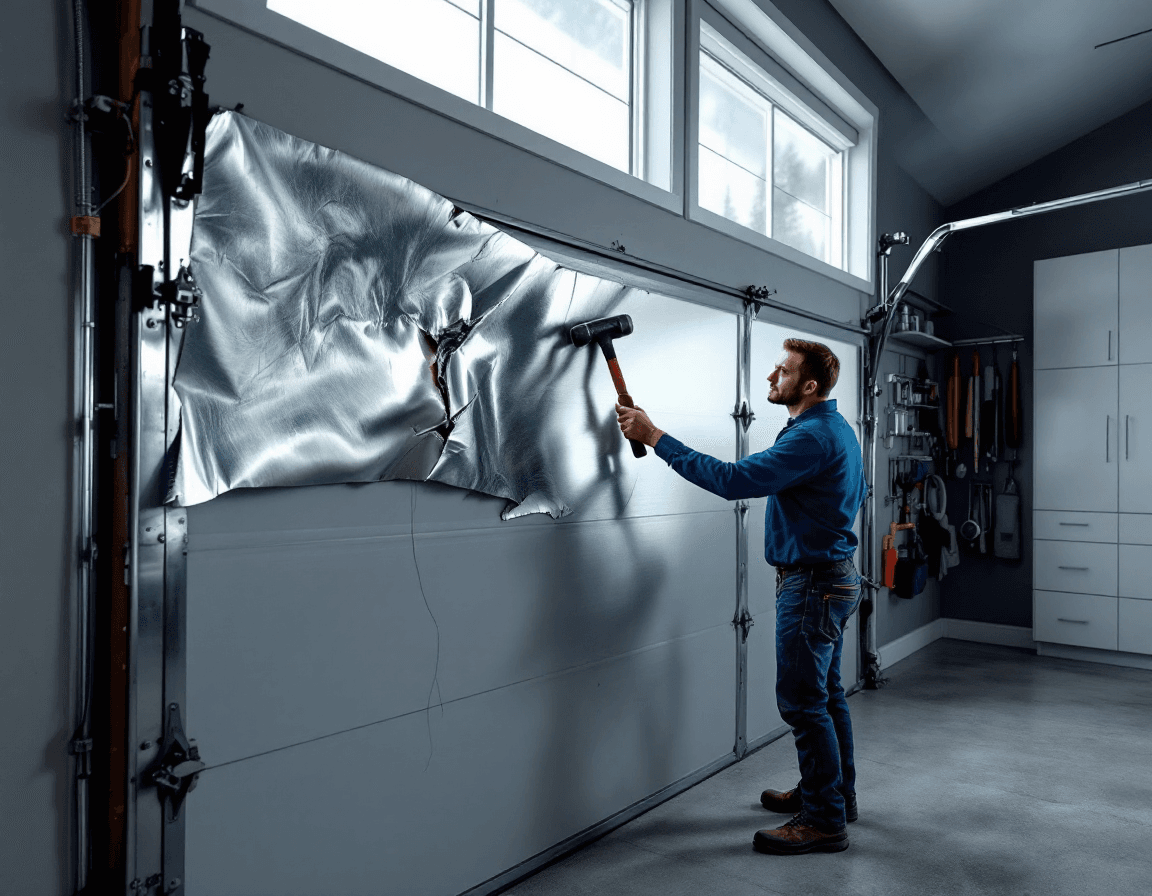
Garage Door Panel Replacement in Mercer Island, WA is one of the most common calls we take from homeowners in the 98040 area, and it usually begins with something small: a dent from a bike rack, a hairline crack along a seam, or a soft spot near the bottom that wasn't there last spring. Homes on the island range from mid-century rambler garages near the Town Center to newer builds on the hillside lots, and most of them have sectional doors built to be repaired one piece at a time. A damaged panel does not automatically mean the whole door needs to go, and that distinction is the core of this guide. We've written it the way a technician would explain it standing in your driveway, covering the signs, the options, the rough costs, and the moments when it's smarter to call someone else.
Many island households only notice a panel problem when they finally look closely at the door, often after a storm, a move-in, or a neighbor mentions a bent edge. The door may still open and close without complaint, which is why people often assume nothing is wrong. Panel damage is primarily a cosmetic and weather-sealing issue at first, but left alone it can affect insulation, security, and how evenly the door balances. Understanding what you're looking at now saves money later, and it helps you judge whether a quote you receive is reasonable. Everything below is written with that practical goal in mind.
Panel replacement is a targeted repair, and in most cases it is one of the more affordable ways to restore a door's appearance and protection. The work typically runs $250 to $800 per section, with the final figure depending on the door's style, insulation, glass or window inserts, and how easily the old panel can be removed. Before getting into the details, know that any work involving springs, cables, or lifting tension should be left to a licensed professional. With that in place, let's walk through what to check and how to decide.
Reading the Dent: What a Panel Problem Really Tells You
A dent is more than a surface flaw, and the shape of the damage tells a technician a good deal about what happened. A shallow, broad dimple across the middle of a panel usually comes from a hard object pressed against the door, such as a stored ladder or a kid's scooter leaning in the wrong spot. A sharp crease along one edge often points to a vehicle bumping the door at low speed, which can also bend the track or push the bottom seal out of line. Look at whether the metal is simply pushed in or whether the paint has cracked, because cracked paint exposes bare steel to moisture.
Pay attention to whether the damage sits on a single section or spreads across several. A single dented panel is often an isolated event, but three or four panels with similar creases suggest a repeated impact point or an issue with the track alignment. The rollers and hinges between panels should be checked as well, since a bent panel can pull on hinges and wear them unevenly over time. If the door rattles or sits crooked when closed, the panel damage may be the visible symptom of a larger geometry problem.
It is worth stepping back and looking at the door from the street and from inside the garage with the lights on. Daylight shows warps and ripples that are hard to see up close, and interior light can reveal gaps where a damaged panel no longer meets its neighbor. Take clear photos from a few angles, because they make it easier to describe the problem to a technician and to compare options. A good assessment should explain exactly which section is affected and why, rather than just quoting a number.
Pacific Northwest Weather and Island Driveways
Western Washington's damp, mild climate is kind to plants and hard on garage doors. Long stretches of drizzle, morning fog that lingers into midday, and winter nights where the temperature hovers near freezing all work on steel and wood finishes in slow, relentless ways. Moisture gets under paint, sits in the lower edges of panels, and slowly corrodes the metal from the inside out. Doors that face north or sit in shaded side yards often stay damp longer, which accelerates surface rust and softens any wood components.
Island driveways add their own pressures. Many homes have sloped approaches, tight turns, and narrow garage bays where a car's side mirror or a delivery van can come close to the door edge. Sprinkler overspray from nearby lawns, leaves caught in the bottom track, and salt-laden air carried in from the water during windy months all contribute to the wear that shows up at the lowest panel. Families who keep bikes, kayaks, or lawn equipment stacked near the door often find the bottom section takes the most abuse.
These local conditions explain why panel problems frequently appear in the bottom two sections first. Water that pools at the threshold soaks the lower edge, and the bottom panel bears the weight of the door against that seal over and over. If you live in a home near the lakefront or in a lower-lying part of the island, consider checking the bottom edge after heavy rain. Catching moisture early is far easier than replacing a panel that has already gone soft.
Repair or Replace: Drawing the Line for a Single Section
The question homeowners ask most often is whether a damaged panel can be repaired or must be replaced outright. Small dents on steel panels can sometimes be pushed back and refinished, particularly if the metal has not cracked or creased sharply. However, once a panel has a fold line, a split seam, or a crack that runs through the insulation layer, straightening it rarely restores the original strength or the factory finish. In those cases, swapping the entire section is usually the more durable choice.
Insulated panels are a special consideration. The foam core inside many modern steel doors helps with energy performance, and when that core is compromised, a simple cosmetic fix will not restore the thermal barrier. Panels with decorative windows or glass inserts also require careful handling, because a cracked pane can be a safety hazard and may need its own replacement part. A technician should explain whether the window section can be swapped alone or whether the whole panel must be replaced as a unit.
Use the following guide as a starting point when you're weighing your options:
- Replace the panel when the metal is creased, split, or punctured, since bent lines rarely hold their strength.
- Replace the panel when rust has eaten through the steel or the insulation core feels soft, damp, or crumbly.
- Consider repair when the dent is shallow, the paint is intact, and the panel still sits flush with its neighbors.
- Consider repair when the damage is purely cosmetic and the door's weather seal and balance remain sound.
- Ask whether the surrounding hardware, including hinges and rollers, was affected before settling on any fix.
A fair assessment should weigh these factors against cost and the age of the door. On an older door where the other panels are also showing wear, replacing a single section can look good for a few years and then the problem spreads. On a relatively new door with one isolated impact, a single swap often makes the most sense.
Matching a Panel That Has Already Faded
One of the trickiest parts of panel work is finding a replacement that matches the rest of the door. Steel doors that have sat in the Puget Sound sun for a decade or more often show uneven fading, especially on the side that faces south or west. A brand-new panel, fresh from the box, can look like a different door entirely when it is set beside a weathered neighbor. This mismatch is the reason many homeowners hesitate to repair a panel at all, even when the damage is minor.
Matching begins with identifying the manufacturer, the model line, the color name, and the year the door was installed. Many doors carry a label or a stamped plate on the inside of a panel, though the label may be hard to read after years of use. When the exact part is no longer produced, a technician can often source a close equivalent in the same profile, but color and gloss may still vary. Discuss the realistic options before the work starts, so you know whether the match will be seamless or merely acceptable.
If an exact match is impossible, there are a few honest alternatives. Some homeowners choose to have all panels refinished or repainted to a uniform color, which costs more but produces a consistent look. Others accept a visible difference and treat the replacement section as a lower panel that blends with the shadow line of the door. Whichever route you pick, ask for photos of the replacement panel next to a sample of your existing finish before any work is scheduled.
The Bottom Panel Problem: Water, Salt Air, and Rot
The bottom panel is the most exposed section on any garage door, and on the island it is often the first to show serious deterioration. Water finds its way beneath the bottom seal, wicks into the lower edge, and sits there through long stretches of wet weather. Over time, that moisture can corrode the steel from the inside of the panel, and in wood or composite doors it can cause swelling, softening, and eventually rot. Homeowners sometimes notice a faint musty smell or a dark staining line before they see any visible damage.
Salt-laden air adds another layer of risk for homes closer to the water. Even when there is no direct spray, fine salt particles can settle on surfaces and speed up corrosion of exposed metal and fasteners. Check the bottom bracket, the lower hinge, and the bottom roller where they meet the panel, because these hardware pieces often rust along with the panel and can loosen the connection. A damaged bottom panel that is not replaced promptly can transfer strain to these fittings.
Replacing a bottom section can be straightforward when the surrounding structure is sound, but it sometimes reveals hidden issues. The threshold, the weather seal, and the lower track may all need cleaning or adjustment once the old panel is removed. Ask the technician to inspect those components during the visit so the new panel is not fighting an uneven opening. A new bottom section that is installed on a misaligned door will wear quickly and may leak again within a season.
Backing Accidents and the Panel That Took the Hit
Few things are more frustrating than a single panel damaged after a backing accident, especially when the rest of the door works perfectly. A bumper, a tow hitch, or a side mirror can leave a sharp crease that is impossible to ignore, and the damage often appears suddenly after a moment of distraction. Many homeowners wonder whether they should call an insurance adjuster, handle the repair themselves, or simply live with the dent. The right answer depends on the severity, the policy, and whether the impact affected anything beyond the panel itself.
Start by checking the full door after any collision. Look at the track on both sides, because a jolt that bends a panel can also pull the track out of its channel or dislodge a roller. Examine the top roller brackets and the torsion or extension hardware for signs of stress, and watch the door as it opens and closes to listen for grinding, popping, or uneven movement. If anything seems off, stop using the door until a technician has inspected it, since forcing a misaligned door can cause much larger failures.
When the damage is limited to one panel, replacement is usually the cleanest fix. Keep photos of the impact and the damage, along with any repair estimate, in case you need documentation for an insurance claim. Ask the technician whether the impact caused any bent hardware that should be replaced alongside the panel. This approach protects the door's function and gives you a clear record of the work completed.
What a Panel Swap Typically Costs Here
Pricing for panel replacement is usually quoted per section, and the range we commonly see runs from about $250 to $800 per section. Lower-end figures often apply to simpler steel panels on standard sectional doors, where the old section slides out and the new one fits the existing hardware. Higher figures tend to apply to insulated panels, decorative or glass-insert sections, custom-colored replacements, or doors where the panel must be specially ordered to match an older finish.
Several factors influence where a particular job lands within that range. The door's age and manufacturer affect whether parts are readily available or must be sourced separately. The number of panels involved matters, since replacing a second or third section on the same visit can reduce the per-section cost in some cases. Access also plays a role, because a door that sits in a tight garage bay or requires extra disassembly takes more time than one that opens freely. A reputable quote should explain these variables rather than offering a single number with no context.
It helps to compare the cost of a panel swap against the cost of a full door. A complete sectional door replacement costs considerably more and represents a much larger commitment, so a single-panel repair is often the more economical choice when the rest of the door is in good condition. Be cautious, though, if the repair estimate approaches the price of a new door on an aging system, because the other components may be near the end of their life. Ask the technician to point out any hardware that is nearing failure so you can plan ahead.
How a Replacement Visit Usually Unfolds
A typical panel replacement visit begins with a walk-through of the door and a discussion of what you want to accomplish. The technician will check the damage, confirm the door's manufacturer and model if possible, and talk through matching options. Once you approve the plan, the crew will secure the door, relieve tension according to safe procedures, and remove the affected section. This is the point where spring and cable work requires a licensed professional, because the tension in those components can cause serious injury if mishandled.
After the old panel is out, the new one is fitted into the existing hinges and rollers, then aligned with the neighboring sections. The technician should check the seal, the track clearance, and the bottom edge to confirm the door closes evenly and seals against the threshold. Expect the visit to take a few hours for a straightforward single-panel swap, though complex doors or matching work may take longer. A good crew will test the door several times before leaving, opening and closing it through its full travel.
Before the technician packs up, ask for a walkthrough of the finished work. Look at the seam lines, the color match in natural daylight, and the way the door meets the floor and the header. Confirm the warranty terms for both the panel and the labor, and keep the invoice with your home records. A clear handoff makes it easier to notice any issue early, when a small adjustment is still simple.
Checking the Hardware Before You Close the Book
Replacing a panel does not automatically address the parts that hold the door together, so it is wise to review the hardware before considering the job finished. Hinges that connect panels can wear or loosen after a damaged section is removed, and rollers may have been pushed out of their track during the impact. These small components are easy to overlook because they are not visible from the outside, yet they carry the door's weight every time it moves. A brief inspection during the visit can prevent a second service call later.
The springs, cables, and drums deserve particular respect. These parts store significant tension, and even experienced homeowners can be seriously hurt by an unexpected release. If your inspection reveals frayed cable, a gap in the spring coil, or a drum that appears out of place, do not attempt to adjust or replace it yourself. Schedule a licensed technician to handle that work, and keep the area clear while the repair is pending.
Look for simple warning signs in the weeks after a panel swap. A new section that sits slightly out of line, a door that drifts when half open, or a noise that repeats with each cycle all deserve attention. Document what you notice, including the time of day and the weather, because that information helps a technician diagnose the cause quickly. Early attention keeps a small adjustment from becoming a larger repair.
Keeping New Panels Looking Right for Years
A replacement panel will last much longer when the surrounding door receives regular care. Rinse the bottom edge and the threshold periodically during the wet season to remove grit and salt residue, and check that the weather seal stays flexible and makes contact along the floor. Wipe the panel surfaces with a mild soap and water solution, then dry them so moisture does not sit in seams. Avoid abrasive cleaners that can dull or scratch factory finishes.
Paint touch-up can help protect small chips before they turn into rust. Use a color-matched product recommended for garage door metal, clean the area first, and apply thin coats so the finish blends with its neighbors. Keep an eye on the fasteners and brackets near the new panel, since loose screws can allow the section to shift and stress the finish. Tighten hardware that you can safely reach, and leave anything connected to tension to a licensed professional.
Finally, think about where things are stored near the door. Bikes leaning against the bottom section, recycling bins pushed into the panel, and vehicles that brush the edge all invite new damage. A simple habit of parking with a bit of clearance and keeping a rubber bumper or guard on the wall can protect a new panel for years. A little foresight helps the door stay sound and looking like it did the day it was installed.
If you are dealing with a dented, cracked, rusted, or water-damaged panel on the island, our team at Seattle Garage Door Fix can look at it, explain your options, and give you a clear quote for the section involved. Call (888) 799-3819 to schedule an assessment, and we will walk you through whether a panel swap, a refinish, or a broader repair makes the most sense for your Mercer Island home.