
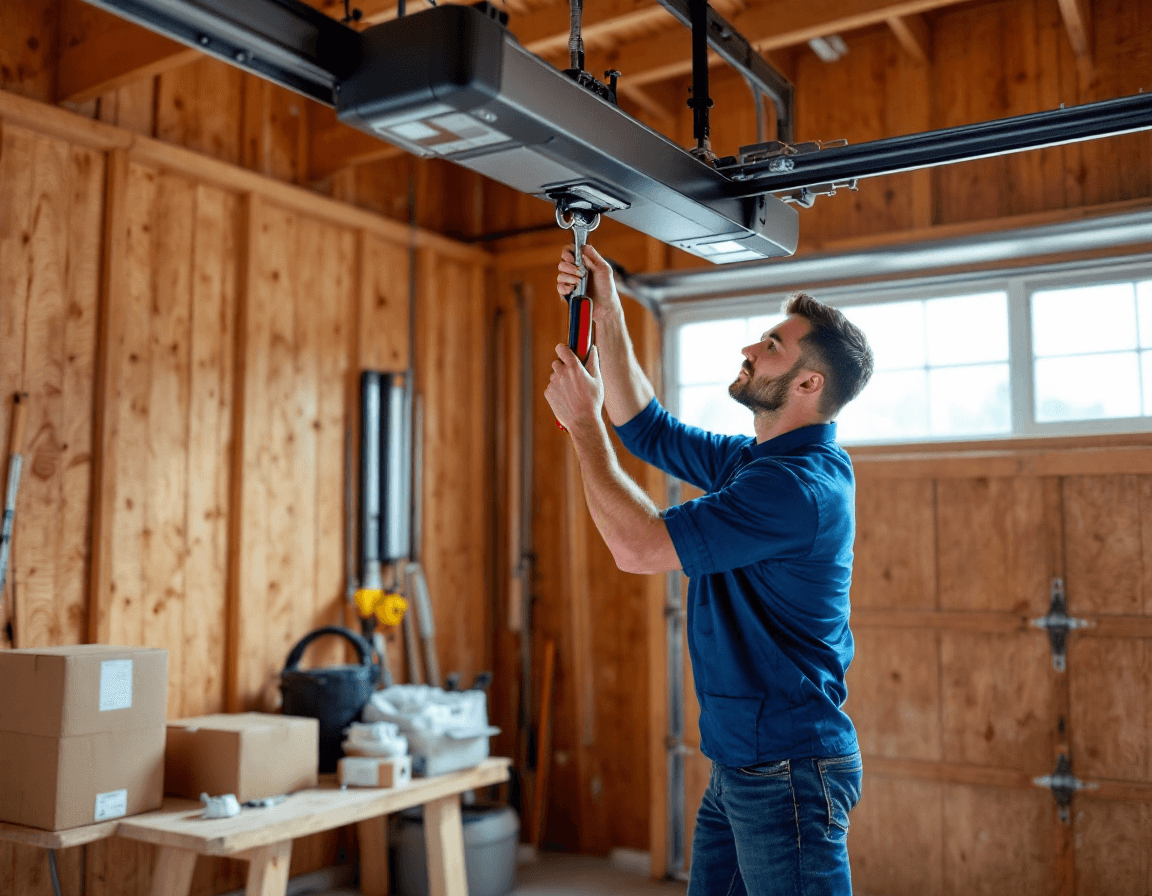
Garage Door Opener Installation & Replacement in Mercer Island, WA is one of the most practical upgrades a homeowner on the island can make, and it often pays off sooner than people expect. An opener does far more work than most of us notice. It lifts a heavy door hundreds of times a year, reads remote and keypad signals, runs safety sensors, and in many homes doubles as the only reliable way into the house when the car is in the driveway and the weather is miserable. When that unit starts grinding, stalling, or ignoring its remote, the whole household feels it.
Mercer Island sits in the middle of Lake Washington, and that location shapes how garage equipment ages. Damp air rolls off the water in fall and winter, morning fog settles in low spots, and wind funnels across the lake with enough force to rattle a loose door panel. Many homes here include detached or tucked-under garages on sloped lots, older mid-century houses with original wiring, and newer builds that were designed around a smart home from the start. Whatever your situation, the opener is the part of the system most likely to need attention first. This page explains when replacement makes more sense than repair, how to choose between belt, chain, and wall-mount drives, what modern security and smart features actually do, and what to expect from a professional installation and an honest quote.
Seattle Garage Door Fix serves Mercer Island and the surrounding Eastside and Seattle neighborhoods, and we are a licensed, bonded, and insured company. If you are unsure whether your opener is worth saving, you can call us at (888) 799-3819 and a technician can talk through the options with you before any work begins. The sections below cover the details that matter most for local homes.
Why Island Garages Put More Strain on Openers
Garages on Mercer Island rarely have the simple setup of a flat suburban lot with a short driveway. Many properties slope toward the lake or sit on hillsides, which means the garage door may be heavier than it looks because of extra bracing added for wind or storm resistance. A door that was balanced for one weight may now be carrying insulation, a newer panel style, or a glass window insert, and the opener has to work harder every time it starts from a standstill. Over several years, that extra load shows up as longer run times, warmer motors, and a clicking or straining sound during the first few feet of travel.
Moisture is the second factor. The lake climate keeps humidity high for long stretches, and condensation can form on metal rails, trolley carriages, and the internal gearbox housing overnight. Dust and pollen from nearby greenery stick to lubricated parts and turn into a grit that wears gears faster than most homeowners expect. Garages that stay closed for long periods, such as those used mainly for storage, often develop stiff movement because the lubricant has dried out or thickened.
Finally, the island's cool, wet winters mean that openers are used heavily during the months when the weather is worst. A unit that worked fine in July may stall during a January cold snap when the door seals stiffen and the track resists movement. Planning a replacement before the coldest part of the year can save a stressful morning stuck outside the garage with a dead remote and a door that will not budge.
Reading the Warning Signs Your Opener Is Failing
Most openers do not fail without warning. They tend to send up a series of small signals that become harder to ignore over time. Paying attention to these early can help you decide whether a repair is enough or whether replacement is the smarter investment. The most common signs include:
- The motor runs but the door moves slowly, pauses partway up, or reverses without a clear obstruction.
- The opener makes loud grinding, banging, or chattering sounds that were not present a year or two ago.
- The remote works only when you stand very close to the door, or the keypad responds inconsistently after rain.
- The light on the unit flickers, the motor hums without turning the drive, or the opener restarts on its own.
- The door drops unexpectedly or the safety reverse triggers even when the path looks clear.
Any one of these symptoms can have a simple cause, such as a dirty photo eye or a loose wire. Several together often point to a motor, logic board, or gear assembly that has reached the end of its useful life. A technician can test the safety sensors, check the limit settings, and measure the motor's performance before recommending a path forward. If the cost of the needed repairs approaches the price of a new installed unit, replacement usually makes more sense because you also gain modern safety features and a fresh warranty.
Choosing Between Belt, Chain, and Wall-Mount Drives
The drive style determines how the opener moves the door, and it has a major effect on noise, maintenance, and price. Chain-drive openers use a metal chain running along a rail. They are typically the most affordable option and handle heavy doors well, but they are louder and require periodic lubrication. For a garage that sits beneath a bedroom or a home office, chain drive may be the wrong choice. Belt-drive openers use a reinforced rubber belt, which runs much more quietly and smoothly. The belt is also less likely to stretch or rust in damp conditions, which makes it a strong fit for lake-adjacent properties.
Wall-mount openers attach to the wall beside the garage door rather than to the ceiling. This design suits garages with limited headroom, a high-lift or low-headroom door, or a ceiling that cannot support the bracket and motor weight. Wall-mount units are sometimes quieter because the motor is isolated from the ceiling joists, which can otherwise transmit vibration into living spaces above. Each drive style has a place, and the right choice depends on your garage layout, how close the living space is, and how you plan to use the door day to day.
When we visit a home, we look at the headroom above the door, the wall space beside it, the weight of the door panels, and whether the ceiling framing is solid enough for the mounting bracket. We also ask how the garage is used. A shop that sees frequent late-night use has different needs than a single-car garage where the opener only runs twice a day. Matching the drive to the actual use is the surest way to avoid buying a quiet unit that does not fit or a powerful unit that disturbs the household.
Rolling-Code Security and Why an Older Opener Is a Liability
Openers made before rolling-code technology became standard send the same fixed signal every time you press the remote. That signal can be captured and copied by inexpensive devices, which means an older unit may be more vulnerable to unauthorized entry than most owners realize. Rolling-code systems change the transmitted code with every use, so a captured signal cannot be replayed to open the door. For a home on Mercer Island, where many families rely on attached garages that connect directly to interior doors, this is a meaningful upgrade rather than a minor convenience.
Security goes beyond the remote itself. Modern openers include safety protections that are required under the federal standards that govern automatic garage door operators, including photo eyes that stop and reverse the door when something breaks the beam, and pressure-sensitive reversal for the bottom edge of the door. Older units that predate these protections, or units with failing sensors, create a real risk of injury, especially around children or pets. Replacing an aging opener is one of the best ways to bring the whole system up to current safety expectations, and it gives you the chance to confirm that the sensors, wiring, and force settings all meet the manufacturer's specifications.
We also check for signs that a door has been left in a risky state, such as a disconnected release cord or a manual override that has been bypassed. Those issues need to be corrected during installation, and they are a good reason to have the work done by a licensed professional who can test every function before leaving the property.
Smart Control, myQ, and What Phone Access Really Means
Wi-Fi-enabled openers and smartphone apps have become popular, and for many households they are genuinely useful. A system compatible with myQ, for example, lets you open or close the door from a phone, receive alerts when the door is left open, and grant temporary access to a family member or service provider. Many owners appreciate knowing whether the garage was closed after a late evening departure, especially when they are traveling across the lake or away from the island for work. Some systems also integrate with voice assistants and home automation platforms, which can simplify routines such as closing the door at a set time each night.
Smart features do require a stable home network. A router placed in a distant corner of the house may not reach a garage opener mounted on the far side of the building, and thick walls or detached garage construction can weaken the signal. During installation, we test the connection and recommend a range extender or mesh node if the signal is weak. We also help set up user accounts and sharing permissions so that access is controlled and easy to revoke.
It is worth thinking carefully about who needs access and how alerts should be handled. A phone notification about an open door is only helpful if someone checks it. For households with teenagers, frequent guests, or rotating contractors, the app's sharing settings can be a practical way to manage entry without handing out physical keys. For a simpler setup, a standard rolling-code remote and a keypad may cover most needs at a lower cost.
Battery Backup for Power Outages Along the Lake
Windstorms in the Puget Sound region occasionally knock out power across Mercer Island and nearby neighborhoods, sometimes for several hours. When that happens, a standard opener cannot lift the door, and the household may be left with a car stuck inside or no way to leave the garage. Battery backup units solve this problem by providing enough stored power to run the opener for a set number of cycles during an outage. They are particularly useful for families who depend on the garage as their main entrance, households with medical equipment that requires a car nearby, and anyone who regularly needs to leave early when power is down.
Battery backup options vary in capacity and in how many door cycles they support during an outage. Some units are designed to run the door a limited number of times before the battery must recharge, while others include higher-capacity packs for longer use. The battery also needs periodic replacement, usually after several years, and its performance declines in very cold conditions. A technician can recommend a backup size that matches your typical use and explain how to test the system once a year without waiting for an actual storm.
Keep in mind that a battery backup does not replace the manual release cord. The release cord remains the way to disconnect the door from the opener during power loss, and it should be kept accessible and labeled. Our installers check the release mechanism, confirm that it operates freely, and show homeowners how to use it safely.
Installation Day: What a Technician Checks on Site
A professional opener installation involves far more than bolting a motor to the ceiling. The process begins with an inspection of the door itself, including the springs, cables, rollers, hinges, and track alignment. Because the opener is only as good as the door it moves, a worn or unbalanced door can cause premature failure in even the best unit. We confirm that the door is operating smoothly by hand before connecting any new equipment, and we note any issues that should be addressed separately.
Next, the technician measures the headroom, checks the mounting surface, and selects the correct drive and bracket configuration. Electrical work is confirmed to be safe and up to code, including a dedicated outlet where required and proper grounding. The unit is installed, the limit settings are programmed, and the force settings are adjusted so the door reverses correctly when it meets an obstacle. We then test the photo eyes, the pressure-sensitive reversal, the remote, keypad, wall control, and any smart features, and we walk you through the operation before leaving.
Every installation ends with a clear explanation of what was done and what to watch for in the coming months. Owners receive instructions for the release cord, a basic maintenance schedule, and details about the warranty. If the old opener is removed, we dispose of it responsibly and confirm that no loose wires or mounting hardware remain on the ceiling or wall.
Pricing Between $275 and $650 Without Surprises
Installed opener pricing for most Mercer Island homes falls in the range of $275 to $650, depending on the opener model, drive type, and the features selected. Chain-drive units with basic remotes tend to sit at the lower end of that range, while belt-drive and wall-mount models with smart connectivity and battery backup often land higher. Quieter operation, stronger motors for heavy doors, and advanced security features all influence the final price, and the most appropriate option is the one that fits your garage and your habits rather than the one with the longest feature list.
The price should cover the opener itself, professional installation, testing of all safety systems, and a basic setup of your remotes and any app connection. Ask whether accessories such as additional remotes, keypads, or battery backup kits are included or listed separately. Also confirm what happens if the door needs minor adjustment during installation, since a small amount of spring or track work can be necessary before a new opener performs well. A clear written estimate lets you compare options fairly and avoids surprises on the day of service.
It is also fair to weigh the cost of repair against replacement. If an older opener needs a costly control board, a new motor, and recurring service calls, the combined expense may come close to a new installed unit. Replacement brings a fresh warranty, updated safety features, and often better efficiency. Repairing a unit that is near the end of its life can be a poor use of money, even when the first estimate looks modest.
Safety, Springs, and Where a Licensed Professional Must Take Over
Garage door systems carry stored energy in their springs and cables, and this energy can cause serious injury if handled incorrectly. Torsion springs and extension springs are under high tension even when the door appears to be at rest, and cables can snap with enough force to cause harm. For that reason, any work involving spring replacement, cable repair, or drum adjustment should be performed only by a licensed professional with the proper tools and training. Homeowners should never attempt to wind, unwind, or remove springs on their own.
During an opener installation, a technician may find that the springs are worn or that the door is out of balance. When that happens, the spring and cable work should be handled by a licensed pro, and the opener should not be forced to compensate for a failing counterbalance system. Our team will explain what needs to be corrected, why it matters, and how it affects the life of the new opener. A door that is properly balanced is quieter, safer, and far easier on the motor.
Homeowners can take simple safety steps between service visits. Keep the door's sensors clean and aligned, test the auto-reverse feature monthly by placing a board or similar object in the door's path, and keep children and pets clear of the door while it is moving. If you notice fraying cables, a door that will not stay open when lifted partway, or a spring that appears damaged, stop using the door and call a licensed technician.
Scheduling Service Across Town Center, East Seattle, and First Hill
Seattle Garage Door Fix provides opener installation and replacement across Mercer Island, including homes near the Mercer Island Town Center and the residential streets that stretch toward the lake. Many of our customers also live in the East Seattle corridor and in nearby neighborhoods such as First Hill, where older garages and multi-family buildings present their own access and parking challenges. Whether your home is tucked into a quiet cul-de-sac, sits on a steep driveway, or shares a shared garage with neighbors, a technician can assess the space and plan the work around your schedule.
Our service area covers more than 60 cities across the greater Seattle and Western Washington region, and our team is familiar with the common building styles, weather exposure, and access constraints of this area. Appointments can be arranged during the week or on weekends, and we aim to explain the options clearly so you can choose the right opener without pressure. If you have a time-sensitive situation, such as a car trapped inside the garage or a door that will not close, let the scheduling team know when you call.
Preparing for your appointment is simple. Make sure the garage is clear around the door and the opener, note the brand and model of your current unit if you know it, and gather any remote or keypad details. If you have questions about smart features, battery backup, or the features that matter most for your household, write them down so the technician can address them during the visit. Good preparation makes the installation faster and helps you leave with a system that fits your home.
To discuss your opener options, get an estimate, or schedule installation or replacement in Mercer Island, call Seattle Garage Door Fix today at (888) 799-3819. Our licensed, bonded, and insured technicians will assess your garage, explain the choices clearly, and help you get a quiet, secure, and reliable opener that is ready for the next Pacific Northwest winter.