
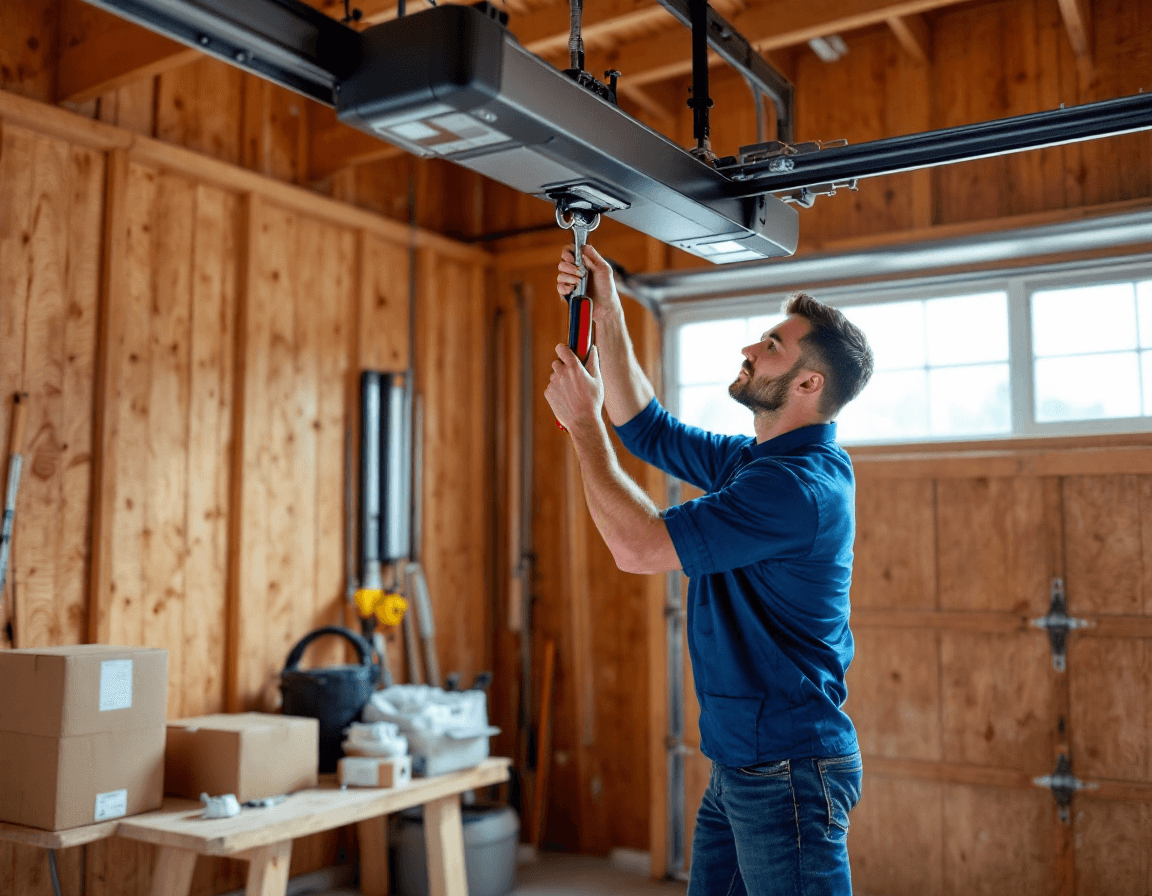
Your garage door opener is the part of the system you touch most often, and when it starts grinding, stalling, or refusing to respond, the whole household feels it. Garage Door Opener Installation & Replacement in Bellevue, WA is a service our technicians perform regularly for homeowners across the city, from the older ranch-style houses near Lake Hills to newer townhome-style garages near Downtown. A replacement is often the right call when the unit is loud, unreliable, or simply too old to keep patching, and it gives you a chance to bring your garage into line with current security and convenience standards.
Bellevue's climate shapes how an opener lives its life. Our winters are mild compared with much of the country, but they are wet, and the damp air that settles over the Eastside from October through April works its way into motor housings, wiring connections, and the metal track that guides your door. Summers are generally comfortable, yet a sunny afternoon can warm a closed garage quickly, which affects lubricants and plastic components. Windstorms that roll through Western Washington can also knock out power for hours at a time, and that makes battery backup far more than a luxury for many local households.
This page explains how our licensed, bonded, and insured team evaluates an opener, what the different drive types mean for your daily routine, how smart controls and rolling-code security fit into the picture, and what a typical installation looks like. We also cover pricing, which generally falls between $275 and $650 installed depending on the model you choose, and we explain what moves that number up or down. If you are weighing repair against replacement, read the sections on economics and warning signs first, then decide what makes sense for your home.
Reading the Warning Signs Your Opener Has Quietly Given Up
Most openers do not fail all at once. They send signals for months or even years before the moment the door stops in the middle of its travel, and recognizing those signals early helps you avoid a dead garage on a rainy Tuesday morning. The most common complaint we hear is noise: a motor that whines, a gearbox that clatters, or a chain that slaps against the rail with every cycle. Slowness is another clue, especially when the door hesitates at the top or bottom of its path or the opener seems to labor before the door begins to lift.
Unreliability is harder to pin down because it comes and goes. A remote that works one day and fails the next, a wall button that answers only after several presses, or a door that reverses for no obvious reason can all point to a worn logic board, a failing safety sensor, or a receiver that has lost its sensitivity. Some of these symptoms are the opener's fault, and others come from misaligned photo-eye sensors or a door that has become unbalanced. A good technician checks all of those variables before recommending a new unit, which keeps you from paying for a replacement when a sensor realignment would have solved the problem.
Age is worth paying attention to as well. Openers manufactured before rolling-code technology became standard may still function mechanically, but their security is weak, and they can often be defeated by someone with inexpensive equipment. If your opener is well past its expected service life and you have already replaced a board or a motor once, the repair bills tend to climb while the reliability of the unit continues to decline. When you find yourself calling for service every season, that pattern itself tells you something useful.
How Bellevue's Wet Winters and Power Outages Expose Weak Openers
Western Washington's moisture is easy to underestimate. Rain is frequent, humidity stays high for long stretches, and the cold snaps that do arrive can leave condensation on metal surfaces overnight. Over time, that moisture corrodes electrical contacts inside older openers, degrades wire insulation at the ceiling-mounted motor, and encourages rust on the rail brackets and hardware that hold everything in place. An opener that worked reliably in a drier climate may start showing intermittent faults within a few seasons of living in a damp Bellevue garage.
Windstorms present a different challenge. When high winds knock trees and lines down across the Eastside, power can go out for hours, and a garage door without battery backup becomes a manual task. Many homeowners discover this only when they need to leave for work or when they are trying to get a car out in the middle of an outage. Some households also keep vehicles or valuables in the garage, which turns a dead opener into a security concern as well as an inconvenience.
A modern installation can address both problems. Sealed motor housings, corrosion-resistant hardware, and properly rated wiring help the unit handle moisture better than older designs. Battery backup kits keep the door operating during outages, and many include a charge indicator so you know the battery is ready before the next storm. We recommend discussing your garage's exposure to weather, whether it is detached or attached, and how often you rely on the door as your main entry when we plan the installation.
Choosing Between Belt-Drive, Chain-Drive, and Wall-Mount Openers
Selecting the right drive style is one of the most important decisions in an opener replacement, and the right answer depends on how your garage is used. Chain-drive openers are the traditional workhorse. They are typically the most economical option, they handle heavy doors well, and they are straightforward to service. Their main drawback is noise, since the metal chain runs along the rail and transmits sound directly into the house, particularly in homes where the garage shares a wall with a bedroom or home office.
Belt-drive openers use a reinforced rubber belt in place of a chain, and the difference in operation is noticeable. The belt runs quietly, the door moves more smoothly, and the vibration into the surrounding structure is much lower. For many Bellevue homeowners, particularly those with attached garages beneath living space or townhomes with shared walls, a belt-drive unit is the upgrade that makes the biggest day-to-day difference. Belts also require less lubrication than chains, which suits a damp climate where lubricants can attract grime if applied carelessly.
Wall-mount openers are installed on a sidewall rather than the ceiling, which frees up overhead space. This matters in garages where the ceiling is already crowded with storage racks, bicycle hoists, or ductwork, and in situations where the door's high-lift or low-headroom configuration leaves little room for a traditional rail. Wall-mount units are a practical solution for tight spaces, though the mounting bracket must be anchored into solid framing, and our technicians verify that structure before we commit to the design.
Here is a quick way to think about the three options:
- Chain-drive: lowest upfront cost and simple service, but louder through the ceiling and walls.
- Belt-drive: quieter, smoother operation, and less maintenance on lubrication, usually at a higher price point.
- Wall-mount: ideal for low-headroom or crowded garages, with the mounting surface determining feasibility.
Rolling-Code Security and Why an Older Opener Is a Real Liability
Security is often the reason homeowners finally commit to replacement. Older openers used fixed codes, meaning the signal from your remote was identical every time you pressed the button. A person with a simple code-grabbing device could record that signal and replay it later to open the door. Rolling-code technology changes the signal with every use, so a captured transmission cannot be reused. That single feature makes a meaningful difference for anyone who parks valuable vehicles, stores tools, or simply wants a garage that does not invite casual tampering.
Replacing an older unit also gives you a chance to review the rest of your entry points. Many homeowners find that the garage's side door, a keypad, or the remote controls stored in parked vehicles all deserve attention at the same time. We recommend retiring old remotes and deleting unused codes from the opener's memory during installation, since a previous owner's remote may still work on an older unit. Starting fresh with clean programming is one of the simplest and most overlooked security steps.
It is worth remembering that rolling-code security protects against one specific kind of attack, and it does not replace good habits. Keeping the door closed when you are away, avoiding leaving remotes in plain view in a parked car, and checking that the door's auto-close and safety reversal features work properly all contribute to a safer garage. Our technicians test the photo-eye sensors and force settings after every installation, because a correctly functioning safety system is as important as the security of the signal.
Smart Control, myQ Compatibility, and Keeping the Door Under Your Control
Wi-Fi-enabled openers have become popular among Bellevue homeowners who want to check the door from work, grant access to a delivery driver, or receive an alert when the door has been left open. Many modern units work with the myQ ecosystem, which lets you monitor and operate the door through a smartphone app and, in many setups, integrate it with voice assistants and home automation platforms. The convenience is real, particularly for families whose schedules shift throughout the week.
Smart features do require planning. The opener needs a stable Wi-Fi signal where it is mounted, and in larger homes or detached garages, that often means checking signal strength before installation or adding a range extender. Your home network's password and router configuration also matter, because the app depends on a reliable connection to function. We walk homeowners through the app setup during installation so the system works the first time, and we explain how to add or remove users so you stay in control of who can open the door.
There are trade-offs to consider. Connected systems introduce software updates, account management, and the usual considerations that come with any internet-connected device. We suggest using a strong, unique password for the app account, enabling two-factor authentication where available, and reviewing the list of connected users periodically. Smart convenience and sound security work well together when they are set up deliberately rather than left at factory defaults.
Battery Backup for Power Outages Across the Eastside
Battery backup is one of the most practical additions for a home in the Bellevue area. When power fails during a storm, a battery backup kit allows the opener to continue operating for a set number of cycles, which is usually enough to open the door, move a vehicle out, or close the garage before you lose patience. Kits vary in capacity, charging time, and mounting location, so the right choice depends on how often you expect to use the door during an outage and how much space is available on the ceiling or wall.
Battery packs need periodic attention. Most manufacturers recommend checking the charge indicator and replacing the battery on the schedule specified for the model, and a backup battery that has aged out will not perform when it matters most. Temperature affects battery performance, and a garage that swings between cold winter nights and mild daytime highs can shorten battery life compared with a climate-controlled space. We include battery condition in our installation checklist and explain the maintenance interval so the backup is ready when you need it.
Backup power also changes how you think about the door's manual release. The emergency release cord should be accessible and tested at least once a year so you know how it works. We show homeowners exactly how to disengage and reengage the trolley, and we caution against pulling the release while the door is under tension from a broken spring, since that situation calls for a licensed technician rather than a do-it-yourself fix.
What a Typical Installation Visit Looks Like in Bellevue
A well-run installation begins before any hardware is unpacked. Our technician inspects the door, the tracks, the rollers, the hinges, and the existing opener, checking for signs of wear that could affect the new unit's performance. We measure the door's weight and dimensions, confirm the ceiling clearance or wall space for the chosen drive, and verify the electrical outlet location. If the existing door is out of balance or the springs are worn, we point that out clearly, because a new opener cannot compensate for a door that is working against it.
Once the plan is set, the old opener is removed, the new rail and motor are mounted, and the door is connected to the trolley arm and header bracket. The technician then programs travel limits, sets the force adjustment, aligns the photo-eye sensors, and tests the reversal function with an obstruction. We also program the remotes, wall control, and any keypad you have chosen, and we connect smart features if your model includes them. Each step is verified before the technician moves on, because a rushed installation is more likely to produce noise or safety problems later.
We finish by walking you through operation and maintenance. You will know how to use the emergency release, how to add or remove remotes, how to check the battery indicator, and what the warning lights on the motor mean. If we noticed anything during the inspection that needs future attention, such as a worn cable or a tired spring, we note it and explain the options. Spring and cable work carries real risk because those components store significant tension, so any repair in that area should be handled by a licensed professional rather than attempted at home.
Pricing Between $275 and $650: What Shapes Your Final Number
Opener installation pricing generally falls between $275 and $650 installed, and the spread reflects real differences in equipment and labor. The opener model is the largest factor. Basic chain-drive units with standard controls sit toward the lower end of the range, while belt-drive or wall-mount units with Wi-Fi capability, premium motors, and battery backup typically land higher. The horsepower rating matters too, since heavier doors, insulated multi-panel doors, and wood carriage-style doors often require more motor capacity.
Installation complexity also shapes the quote. A straightforward replacement on a standard single-car door with existing wiring and an accessible ceiling is simpler than a job that requires a new outlet, structural reinforcement for a wall-mount bracket, or rework on a low-headroom track. Accessories such as keypads, extra remotes, and battery kits add to the total, and so does any repair the technician finds necessary before the new opener can operate safely. We provide a written estimate that itemizes the opener, accessories, and labor so you can compare options without guesswork.
Keep in mind that the lowest price is not always the best value. An opener with a quality motor, a stable drive system, and proper rolling-code security may cost more upfront but avoid the repeat service calls that come with budget units. Our technicians can explain which features are worth paying for in your specific garage and which ones you can safely skip, so the investment matches how you actually use the door.
Repair or Replace: Running the Numbers on an Aging Opener
The repair-or-replace question deserves a clear, honest answer. A single failed part on a relatively new opener, such as a remote receiver or a limit switch, is often worth fixing. When the motor is failing, the logic board has been replaced more than once, or the unit is old enough that parts are becoming hard to source, replacement usually makes more financial sense. The goal is to avoid spending repair money on a unit that will need another repair within months.
A helpful way to evaluate the decision is to consider three questions. First, how old is the opener, and how many years of service remain under typical use? Second, how often has it needed service in the last two or three years? Third, do you want features the current unit does not offer, such as rolling-code security, quieter operation, or smart control? If the answers point toward frequent repairs and a desire for upgrades, replacement is usually the better path, even if the current unit still runs.
We are happy to diagnose the problem before recommending either option. A diagnostic visit lets us test the opener's electronics, motor, and safety sensors, check the door's balance, and give you a plain assessment of what is working and what is not. If we recommend replacement, we explain why in terms you can evaluate. If a repair is the sensible choice, we say so, even when a larger sale would have been possible.
Neighborhood Notes for Downtown, Crossroads, Factoria, Somerset, and Lake Hills
Bellevue's neighborhoods share a common climate but differ in housing styles, lot sizes, and garage layouts, and those differences affect opener selection. Downtown Bellevue and its surrounding residential blocks include a mix of older homes and newer townhomes, where shared walls and limited ceiling space make quiet belt-drive or compact wall-mount openers especially appealing. Attached garages in these areas often sit beneath living space, so vibration and noise control are real priorities for many households.
Crossroads and the neighborhoods around it include many single-family homes where the garage is a daily entry point for families with multiple vehicles. In those homes, reliability, fast cycle times, and battery backup tend to matter most, because the door gets used several times a day. Factoria's residential areas include a range of home ages, and it is common to find older chain-drive openers that are ready for replacement with a modern unit that offers better security and smart control. Somerset's hillside lots sometimes bring sloped driveways and garages set at unusual angles, which we account for when we plan the installation.
Lake Hills has many homes with longer-established garages, some of which were built before current safety and security standards became common. Those homes often benefit from a full evaluation during replacement, including a check of the door's balance, the tracks, and the sensors, since older components can be worn in ways that are easy to miss. Our team serves these neighborhoods and many others across Bellevue's ZIP codes, including 98004, 98005, 98006, 98007, and 98008, and we tailor each visit to the actual conditions on your property.
Keeping Your New Opener Reliable Through Every Western Washington Season
A new opener performs best when it gets simple, regular attention. Once a season, take a few minutes to watch the door travel in both directions, listening for unusual sounds and noticing any hesitation or jerky movement. Test the auto-reverse function by placing a small object in the door's path, using something safe like a folded towel, and confirm the door reverses promptly. Check that the photo-eye sensors are clean and aligned, since dust, cobwebs, and rain-splashed grime can interfere with their operation.
Moisture management deserves a regular look. Keep the garage ventilated when possible, wipe down the track and hardware after heavy rain if water has been blowing in, and watch for signs of rust on brackets and fasteners. Use a silicone-based or manufacturer-recommended lubricant on moving parts such as rollers and hinges, and avoid spraying lubricant directly onto the motor or the opener's electrical components. Belt-drive units generally require less lubrication overall, but the belt and rail still benefit from an occasional inspection.
Some maintenance tasks belong to a licensed professional. Springs, cables, and drums are under significant tension, and adjusting or replacing them without the right tools and training can cause serious injury. If you notice a broken spring, a frayed cable, a door that drops suddenly, or a door that is out of balance, stop using the door and call a licensed technician. We are glad to inspect the system, explain what we find, and perform the work safely.
Your garage door opener is a system that touches security, convenience, and everyday safety, and it deserves a installation that matches how your household actually uses the door. If your current opener is loud, slow, unreliable, or lacking modern rolling-code security, or if you want quieter operation, smart control, or battery backup for the next windstorm, our licensed team in Bellevue can help you compare options and plan the right replacement. Call (888) 799-3819 to schedule an inspection, ask questions about drive types and pricing between $275 and $650 installed, or request a written estimate for your garage. We will explain the choices plainly and get your door working reliably again.