
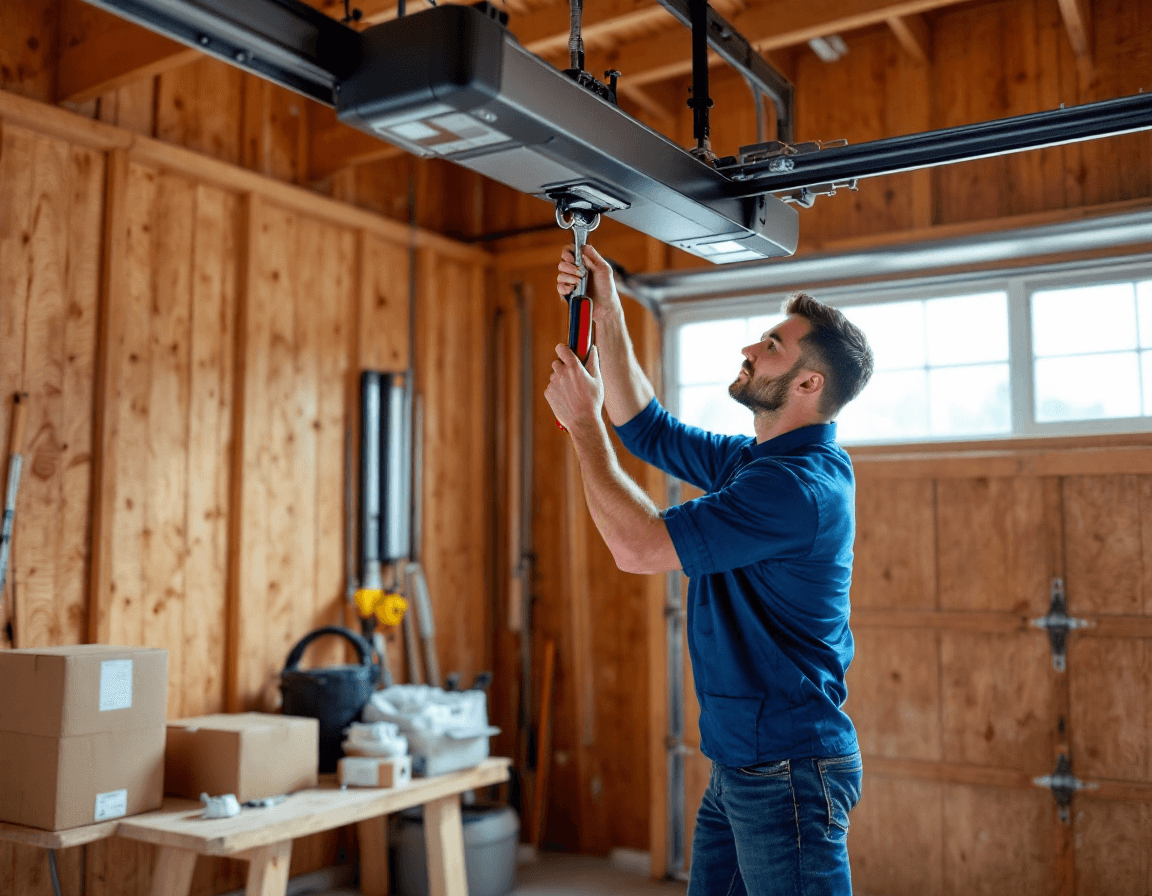
Garage Door Opener Installation & Replacement in Redmond, WA is one of the most practical upgrades a homeowner can make to daily routine, security, and comfort. Redmond households span everything from older split-levels near Marymoor to newer townhomes and larger custom builds on the hillsides, and the garage door opener in each one takes more abuse than most people realize. Between damp winters, the occasional windstorm that knocks out power across a neighborhood, and years of daily cycling, a mid-grade opener can go from quiet and dependable to noisy and erratic in what feels like a short time. Our technicians serve homes across the 98052 and 98053 ZIP codes, and we regularly see the same handful of problems that signal it's time to replace rather than patch.
This page explains when a replacement makes more sense than another service call, how to choose between belt-drive, chain-drive, and wall-mount designs, and what smart features and battery backup actually do for you day to day. We also cover what installation involves inside a typical Redmond garage, what drives the installed price, which parts of the process matter most for safety, and why a licensed, bonded, and insured crew should handle the work. Nothing here is a sales script. It's a straightforward walkthrough from people who spend their days inside garages in this part of King County.
Why Redmond Garages Wear Openers Out Faster Than You Might Expect
Western Washington weather is mild compared with much of the country, but it is persistently damp, and that dampness is hard on electronics and metal. Morning condensation settles on rails and hardware, wind-driven rain works its way under weatherstripping, and the seasonal swing between dry summers and soggy winters causes wood frames and tracks to shift slightly over time. An opener mounted to a ceiling joist in a garage with poor ventilation may run through a humid cycle every single day, which gradually corrodes contacts and loosens fasteners. Those conditions add up, and they explain why an opener that looked fine at year eight can start misbehaving well before its time.
Many Redmond homes also have garages that were built for smaller cars than we park today. Larger trucks, SUVs, and cars with roof racks put more weight on the door and sometimes shorten the opener's effective lifespan because the motor works harder to lift and lower. Add in the fact that many garages double as workshops, storage rooms, or the main entry to the house, and the opener may cycle far more often than the manufacturer's original design assumed. A household that uses the door a dozen or more times a day puts meaningful wear on the drive system, the trolley, and the limit settings.
The result is that the opener is often the first component to fail, even when the door panels, springs, and rollers are still in good shape. That's an important point for planning. Replacing an opener is usually a contained project that does not require touching the spring system, which is the most dangerous part of the door. When the opener is the weak link, replacing it can restore reliable operation without the cost or risk of a full door rebuild.
Reading the Warning Signs That Your Opener Is Finished
Some openers fail dramatically, with a motor that simply stops humming, but most decline gradually. The first sign is often noise. A opener that once ran smoothly may start to grind, rattle, or clunk, and the sound often changes depending on whether the door is opening or closing. Noise can come from a worn gear set, a loose mounting bracket, or a trolley that has lost its lubrication, and while some of those issues are fixable, a loud opener that has been running for many years usually has multiple worn parts working against each other.
Slowness is another clear signal. If the door takes noticeably longer to reach the top or bottom of its travel than it used to, the motor may be struggling to maintain consistent force. Stopping partway through a cycle, reversing for no clear reason, or refusing to close after the remote is pressed are all signs that the logic board, the force settings, or the motor itself is losing its reliability. Intermittent behavior is especially frustrating because it can seem to fix itself for a day or two before failing again.
Remote and keypad problems deserve attention as well. If you've replaced batteries, reprogrammed the remotes, and still find the door unresponsive, the receiver may be failing. Older units also tend to lack the modern safety protections that current models include, so an opener that is simply unreliable can also be unsafe. A practical rule of thumb: if repairs keep adding up, if the unit is more than a decade old, or if the manufacturer no longer supports the replacement parts you need, a new opener is almost always the better investment.
- Loud grinding, rattling, or clunking that wasn't present before
- Door movement that is noticeably slower or inconsistent between cycles
- Reversing or stopping mid-travel without an obvious obstruction
- Remotes or keypads that work sporadically or need frequent reprogramming
- Repair estimates that approach the cost of a new installed unit
Choosing Between Belt-Drive, Chain-Drive, and Wall-Mount Openers
Choosing the right drive system is one of the most important decisions in the replacement process, and it depends mostly on how you use the garage and how much noise you can live with. Chain-drive openers are the traditional, budget-friendly option. They use a metal chain running along a rail, which makes them strong and capable of handling heavier doors, but they are also the loudest choice. For detached garages, workshops, or homes where the opener sits above a bedroom, that noise can be hard to live with.
Belt-drive openers use a reinforced rubber belt in place of the chain. The result is a much quieter operation, which is why many Redmond homeowners choose belt-drive when the garage shares a wall with living space. Belts stretch slightly over time and generally need less lubrication than chains, but they should still be inspected during routine maintenance. Belt-drive models usually cost a bit more upfront, and the quieter performance is the main reason most people pay the difference.
Wall-mount openers attach the motor to the side wall rather than the ceiling. This is a useful option when ceiling space is limited, when the door track runs close to the ceiling, or when a garage has a lot of overhead storage or ductwork. Wall-mount units also keep the motor away from the rails, which can reduce vibration transmitted into the ceiling. They are not automatically better or worse, but they are often the right answer for garages where a standard ceiling mount simply won't fit cleanly.
Rolling-Code Security and the Gap in Older Openers
Security is a common reason homeowners replace an opener, and it's worth understanding why. Older openers often used fixed-code remote systems, meaning the remote sent the same signal every time it was pressed. A device that captured that signal could, in principle, reuse it to open the door. Modern openers use rolling-code technology, which changes the transmitted code with every use, so a captured signal becomes useless once it has been sent. For a homeowner who parks on a busy street or wants a simple upgrade to their overall home security, that difference matters.
Rolling-code systems also tend to pair with better overall design. Many newer models include built-in lighting that can be scheduled, secure keypad options, and integration with other smart home devices. If your current opener predates rolling-code technology, replacing it may be the single most effective security improvement you can make to the garage, short of upgrading the entry door from the garage into the house. Many homeowners are surprised to learn how inexpensive that upgrade can be relative to the peace of mind it provides.
Security also depends on what happens after installation. Changing default codes, removing old remotes you no longer use, and turning on any available alerts are simple steps that make a real difference. During installation we walk through these settings with you so that the new system is working for you rather than leaving old access points open. We also recommend checking the manual or app periodically to confirm that no unfamiliar devices have been added.
Wi-Fi and myQ Control Without the Marketing Noise
Smart opener features have moved from novelty to practical convenience. A Wi-Fi-enabled opener, often paired with an app ecosystem such as myQ, lets you check whether the door is closed, open the door remotely, and receive notifications when it moves. For families whose schedules change often, or for anyone who has ever driven away and wondered whether the garage was still open, these features are genuinely useful. They are also helpful for letting a delivery driver or a trusted family member in when you are not home, provided you set up permissions carefully.
The value of smart control depends on your home network. A strong Wi-Fi signal near the garage is essential, and some homes in Redmond have thick construction, long driveways, or detached garages that sit far from the main router. If your signal is weak, a simple mesh node or extender often solves the problem. We check connectivity during the install and will tell you honestly whether your current network can support reliable app control or whether a small change would help.
Keep your expectations grounded. Smart features require an account, a stable internet connection, and a phone that stays updated. They do not replace the basic safety features of the opener, and they should never be used as a substitute for looking at the door before you drive away. We recommend turning on alerts for door movement and reviewing who has access to the app, especially if you share the garage with roommates, family members, or service providers.
Battery Backup and Staying Mobile During a Power Outage
Battery backup is one of the most underrated features for Redmond homeowners. Windstorms in the Pacific Northwest can knock out power for hours, and in a neighborhood with overhead lines or dense tree cover, an outage can last longer than you expect. Without backup power, a standard opener simply stops working, which means the door has to be lifted manually. Manual operation is possible but awkward, and it can be a real problem if you need to leave for work, get a vehicle out during an emergency, or simply get back into a garage that has been closed all day.
Battery backup units are designed to keep the opener running for a limited number of cycles after power is lost. The exact number varies by model and battery condition, so it's worth asking what the specific unit you're considering can do rather than relying on a general claim. Batteries also need occasional replacement, typically on a schedule that depends on use and environment. We recommend checking the battery status in the app or on the unit periodically, especially before the rainy season, when outages are more likely.
If you lose power frequently, backup capability is worth the additional cost for most households. It also pairs well with a general emergency plan. Keep the manual release cord visible and make sure everyone in the household knows how to use it safely. Our technicians will show you how to disengage the opener and reattach it, and we'll explain the limits of backup power so you're never caught off guard.
What Installation Day Looks Like in a Typical Redmond Garage
A typical replacement starts with an inspection. We check the door balance, the condition of the tracks and rollers, the header bracket, and the wiring for the wall control and safety sensors. This matters because a new opener is only as good as the system it connects to. If the door is out of balance or the track is bent, the new motor will be asked to do work it wasn't designed for, and that can shorten its life quickly. We'll point out any issues before we begin so you can decide how to proceed.
Next, the old opener is removed and the new unit is mounted. Ceiling-mount installations require a secure header bracket and correctly sized fasteners, and wall-mount installations require solid anchoring into framing that can handle the load. The rail is aligned, the trolley is connected, and the door arm is attached to the door bracket. Once the mechanical installation is complete, the wiring is connected and the limits are set so the door stops at the correct open and closed positions.
Safety testing comes last, and it is not optional. We confirm that the safety reversing system works by placing an object in the door's path and verifying that the door reverses. We check the photo-eye sensors, make sure they are aligned and clean, and confirm that the door stops and reverses as designed. We also verify the manual release and walk you through how to use it. A well-installed opener should operate quietly and predictably, and you should leave with a clear understanding of how to operate, test, and maintain it.
Understanding Installed Pricing from $275 to $650
Installed prices for garage door openers in our service area generally range from $275 to $650, depending on the model and features you choose. The biggest factor is the opener itself. A basic chain-drive unit sits at the lower end of that range, while a belt-drive model with Wi-Fi, a battery backup kit, and a wall-mount configuration sits toward the higher end. The installed price includes the labor and standard parts needed for the replacement, but it can vary depending on the specific model and any extra components your garage requires.
Several other factors can influence the final number. Some garages need an upgraded header bracket, a longer rail, or additional wiring for a wall control or keypad. Others need minor door adjustments before the new opener can operate safely. We discuss these possibilities during the quote so that you are not surprised. We aim to present options clearly, including the tradeoffs between a lower-cost unit and a feature-rich model, and we do not push you toward features you don't need.
It's also worth thinking about the total value rather than only the sticker price. A quieter belt-drive unit may cost more upfront but make the garage more comfortable for everyone in the house. A battery backup kit may feel like an extra expense until the first outage. A smart opener may save time and provide peace of mind every day. Ask us to explain the differences between models so you can choose the one that fits your budget and your household.
Neighborhood Considerations Across Downtown Redmond, Overlake, Education Hill, and Marymoor
Redmond is not a single kind of neighborhood, and the best opener for a home near Downtown Redmond may not be the best choice for a house on Education Hill. Downtown and nearby condo or townhome areas often feature attached garages with shared walls and limited ceiling clearance, which makes quiet belt-drive operation and wall-mount designs especially appealing. Owners in these buildings often want smart features too, since they may be coming and going at irregular hours and appreciate the ability to check on the door from anywhere.
Overlake's mix of newer construction and busy commercial corridors means many homes have garages that are used heavily and sometimes sit close to neighboring units. A quiet drive system is a practical priority there, along with reliable battery backup for the outages that can happen when wind moves through the area. Education Hill homes are often on slopes or in older developments, and the garage layout can vary a lot from one house to the next, so an on-site inspection is essential before choosing a model.
Marymoor and the surrounding residential streets feature a range of home styles, from older ranches to newer builds, and many garages in that area have been converted for additional storage or a workshop. These spaces may have different headroom and wiring conditions than standard two-car garages. Whatever part of Redmond you call home, we look at your specific garage rather than relying on a single rule, because the right answer depends on the door, the space, the wiring, and how you use the room every day.
Keeping Moisture, Wiring, and Safety Sensors in Good Working Order
Once your new opener is installed, a few simple habits will protect it through the wet months. Keep the garage ventilated when possible, especially if it is attached to living space and tends to hold moisture. Wipe down the rail and track occasionally to remove grit that can cause premature wear, and inspect the door's weatherstripping so that water is not finding its way into the mechanism. The goal is not to make the garage dry in an absolute sense, but to avoid conditions that speed up corrosion and electrical problems.
Pay attention to the photo-eye sensors near the floor. These small sensors are critical to safe operation, and they can drift out of alignment if they are bumped by a bicycle, a vacuum, or a child's toy. Spiderwebs, dust, and mud splashed up from the driveway can also block the beam. Clean the lenses gently and confirm that the indicator lights look normal. If the door refuses to close or reverses unexpectedly, the sensors should be one of the first things you check.
Finally, remember that routine adjustments are different from spring and cable work. An opener can often be adjusted by a homeowner for things like remote programming or basic travel limits, but the torsion springs, lift cables, and drums are under high tension and can cause serious injury if handled improperly. Those components should always be serviced by a licensed professional. If something in the door system looks frayed, bent, or unbalanced, stop using the door and call a qualified technician rather than attempting a repair yourself. Our team is licensed, bonded, and insured, and we are happy to inspect the full system while we are on site.
Garage Door Opener Installation & Replacement in Redmond, WA is a project that pays off every time you pull into the driveway, and it's one we handle with careful attention to your garage, your budget, and your safety. If your current opener is loud, slow, unreliable, or missing the security and backup features you need, call Seattle Garage Door Fix at (888) 799-3819 to schedule an inspection. We serve Redmond and the surrounding Eastside communities, and we'll walk you through the right drive type, the right features, and a clear installed price before any work begins.