
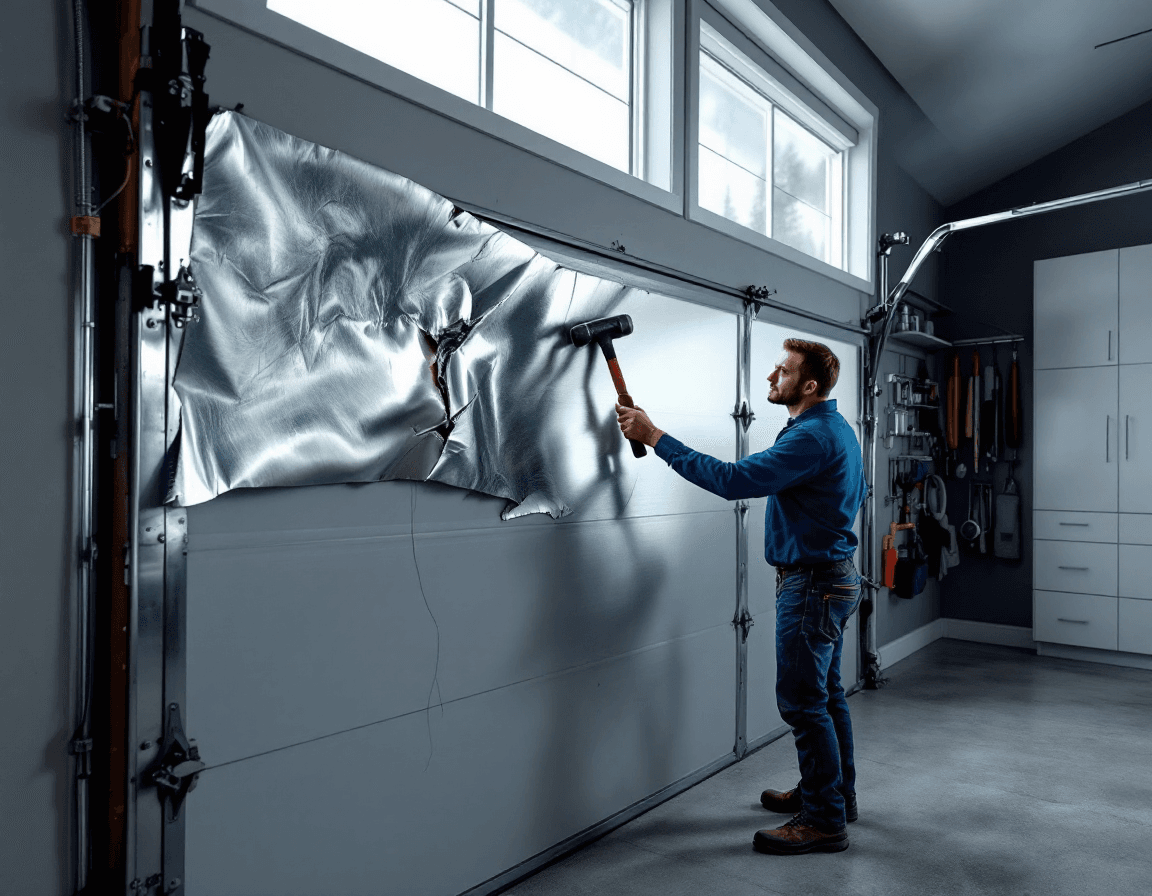
Garage Door Panel Replacement in Redmond, WA is often the most practical fix when a single section of your door is dented, cracked, rotted, or stained, and the rest of the door still runs well. Redmond homes sit in a part of King County where wet winters, long gray stretches, and occasional bright summer afternoons all put stress on the lower and exposed parts of a garage door. Many homeowners assume that one damaged panel means buying a new door, but in most cases the panel can be swapped out while the tracks, rollers, springs, and opener stay in place.
This page explains how panel replacement works, what it costs, how to tell whether a section should be replaced or the whole door needs attention, and what to expect when matching an older panel to a door that has been exposed to Washington weather for years. We serve homeowners across Redmond's neighborhoods, including the 98052 and 98053 ZIP codes, and we see the same patterns repeatedly: a bottom section soaked by standing water, a panel bent after a trash bin or car met it at the wrong angle, or a color that has faded to a shade that no longer matches anything in the driveway. Our goal here is to give you a clear, honest picture so you can decide what makes sense for your home and budget.
If you are reading this because you already have a damaged panel in front of you, you do not need to make every decision today. Take a few photos, note where the damage sits on the door, and check whether the door is still moving smoothly. The information below will help you ask the right questions and understand the answers you receive from any technician, including us.
Reading the Damage Before Moisture Makes It Worse
A dent on a garage door panel may look cosmetic, but its real importance depends on what has happened to the metal, wood, or composite surface beneath it. On steel doors, a dent can crack the factory paint and the galvanized coating, exposing bare metal to damp air. In Redmond, that exposure can turn into surface rust within a few wet months, and the rust often spreads outward from the dent rather than staying put. A hairline crack in the paint line deserves the same attention, because it lets water find the seam between the outer skin and the insulation core on insulated steel doors.
Take a close look at the bottom two sections, where splash, tire spray, and pooled water collect. Press gently on any area that feels soft, spongy, or flexible when it should feel firm. On wood or wood-look doors, soft spots, lifting paint, and dark staining along the bottom edge usually point to moisture that has been wicking upward for a long time. Also check the seams where one panel meets the next, since water tends to enter there and travel sideways behind the surface.
Document what you find. Photograph the damage from a few distances, measure roughly how large the affected area is, and note whether it extends across the full width of one section or is limited to a corner. Those details help a technician quote accurately and help you compare options without guessing. A clear record also matters if the damage came from an impact and you are discussing it with an insurance adjuster or a family member who shares the household costs.
How Pacific Northwest Weather Works on Garage Doors
Western Washington weather is not dramatic in the way that a Midwest hailstorm or a Southwest heat wave is, but it is relentless, and that persistence does more long-term damage than most homeowners expect. Redmond's wet season tends to bring frequent light rain and damp mornings, which keeps the lower portion of a garage door in contact with moisture for long stretches. Moss and mildew often establish themselves on the north-facing side of a door first, while the south- and west-facing panels can fade and chalk under the sun during the drier months.
Those two forces work against each other in an interesting way. Moisture softens and stains, while UV exposure dries out finishes and makes them brittle, so a panel can look weathered on the surface and still be compromised underneath. Insulated steel doors with polyurethane cores are durable, but the seams and bottom edges are the weak points where water tends to get behind the skin. Wood doors, which remain popular on some Redmond homes with older craftsman or traditional styling, need regular sealing to handle the wet season without swelling or rotting.
Cold snaps, though infrequent, can also expose existing weakness. Metal that has been flexing with temperature changes for years may develop fatigue around the panel edges, and a door that already has a minor dent can show that dent more clearly once the surrounding material contracts. If you notice a new gap, a rattle, or a panel that seems to sit slightly out of line after a cold week, that is worth documenting alongside any visible dents.
What a Panel Replacement Involves on Your Door
Replacing a panel sounds simple, but it is a careful job that requires understanding how the door is assembled. Most sectional doors are built from horizontal panels held together by hinges, with rollers and tracks guiding the entire assembly. A damaged section has to be separated from its neighbors, and on many doors that means releasing the hinges and carefully lifting the affected section free while the rest of the door remains supported. On doors with torsion springs, the spring system is under significant tension, and that tension is one reason panel work must be handled by a trained, licensed technician rather than a do-it-yourself project.
Once the damaged panel is out, the technician checks the surrounding hardware, including hinge brackets, roller stems, and end caps, because a panel that was dented in an accident may have also bent or stressed nearby components. If the panel includes insulation, the technician confirms whether the new section will match the thickness and core type of the rest of the door. Window inserts, decorative grooves, and hardware positions also need to line up so the finished door looks and operates as if it were original.
After installation, the door should be tested through a full open and close cycle. The technician checks that the panel sits level with its neighbors, that the seals meet the floor and jamb evenly, and that the door does not bind in the tracks. A well-done panel replacement should not change how the door sounds or moves, and anything that feels off after the job should be addressed before you leave.
Matching a Panel After Years of Sun and Rain
Matching is often the hardest part of panel replacement, especially on a door that is more than a few years old. Manufacturers update colors, textures, and profiles over time, and a model that was popular a decade ago may no longer be sold in its original form. Even when the exact model is still available, the existing door has been exposed to sun and rain for years, so its finish may have dulled or shifted in tone. A brand-new panel, fresh from the box, can look noticeably different next to an older section, particularly on dark colors.
There are a few ways to handle this. The most seamless option is a panel from the same manufacturer, product line, and color code, paired with careful inspection to confirm the finish is consistent. If the exact match is unavailable, a technician may recommend replacing the full set of adjacent sections so the color transition looks intentional rather than patched. In some cases, the best result is a design change that is clearly deliberate, such as adding a window insert or a different panel style across the door, though this should be discussed honestly with the homeowner before any work begins.
Bring your door's model number, color name, and any stamped information you can find on the inside panel edges. If the label is worn, photograph the surface in natural daylight rather than under a garage light, since artificial light can distort color. A good technician will tell you plainly when a match is close, when it is not, and what tradeoffs each option involves.
Repair Versus Replace: Reading the Panel Itself
Not every damaged panel needs to be swapped out. Light surface scratches, minor paint chips, and small shallow dents can often be addressed with touch-up products, filler, or a localized repair that restores the finish and protects the metal. The question is whether the damage affects structure, insulation, or the ability of the panel to sit flush with its neighbors. A repair that looks acceptable from across the driveway may still be the wrong choice if water has entered the core.
Panel replacement usually makes more sense when the damage is deep, widespread, or structural. A panel that is cracked through, bent along a fold line, rotted at the edges, or delaminating from its insulation core should generally be replaced rather than patched. When more than one panel shows similar wear, that may indicate the door is nearing the end of its useful life, and a full door replacement could be a better long-term investment, depending on the age of the opener, springs, and tracks.
Here are signs that point toward replacement rather than repair:
- The panel flexes or feels hollow when pressed, suggesting the core or skin is compromised.
- Rust or rot extends beyond the visible damage and reappears after cleaning.
- The panel no longer sits level with adjacent sections or creates a visible gap at the seam.
- Insulation has become wet, discolored, or detached from the outer skin.
- A crack runs through the panel rather than across the paint surface alone.
If the door is otherwise sound, the cost difference between a repair and a single-panel replacement is often modest, and the replacement gives you a more reliable result. A technician should explain both options and give you a clear comparison rather than pushing one solution.
When a Backing Accident Takes Out One Section
A backing accident is one of the most common reasons Redmond homeowners need a single panel replaced, and it often happens in a driveway where a vehicle, a trash bin, or a delivery cart meets the door at the wrong height. Impacts like these tend to concentrate force on one section, bending the panel, cracking the finish, and sometimes dislodging the hinges or rollers at its edges. Because the damage is localized, a single-panel replacement can be far more economical than replacing the whole door.
After an impact, check the door's operation before you run it repeatedly. Listen for grinding, watch for uneven movement, and look at the tracks for bends or dents that could cause binding. If the door hesitates, rides crooked, or stops partway, shut off the opener and avoid forcing it, since a damaged track or spring system can become more dangerous under strain. Keep the area clear of children and pets while the door is inspected.
If the accident happened while you were driving, your auto insurance may cover part of the cost depending on your policy and how the damage occurred, and a homeowners policy may apply in other situations. Photographs, the time of the incident, and a repair estimate all help the claims process. We can provide a written description of the work and the materials used, though the coverage decision rests with your insurer.
Bottom Sections, Water Lines, and Hidden Rot
The bottom panel of a garage door takes more abuse than any other section. It sits closest to the driveway, absorbs splash and road grime, and is the first place water pools when the threshold seal wears down or the slab slopes toward the door. In Redmond's wet months, a bottom section can stay damp for days at a time, and that moisture slowly works its way into hems, hinge holes, and insulation seams.
Look for a water line, a band of discoloration that marks where moisture has repeatedly wicked up the panel. A bottom panel with a clear water line, white mineral deposits, or softened edges often needs replacement rather than cleaning, since the moisture is already inside the material. Check the weatherstrip along the bottom as well, because a worn or misaligned seal may be the reason water is getting in. Replacing the seal while the panel is out is usually a sensible addition.
Hidden rot can be harder to spot. On wood doors, pry gently at the bottom edge with a flat tool in an inconspicuous spot to see whether the wood is firm or crumbles. On steel doors, look for bubbling paint, rust streaks running down from fastener holes, and any gap where the panel edges separate. If you find any of these signs, the affected section should be evaluated closely before the rest of the door is considered sound.
What a Panel Replacement Costs in Redmond
Panel replacement pricing in Redmond generally falls between $250 and $800 per section, depending on the door. Several factors shape where a particular job lands within that range. The size and weight of the panel matter, as do the material and insulation type, whether the design includes windows or decorative details, and how easily the section can be matched to the existing door. Doors with older or discontinued models may require more time to source a suitable panel, which can affect the final figure.
Labor for the removal and installation, the panel itself, and the reinstallation of hinges and hardware are typically part of the quote, but you should confirm what is included before work begins. A clear written estimate should describe the panel model or specification, the scope of the work, and any additional items such as a new weatherstrip or hinge replacement. If the technician discovers hidden damage during the job, such as a bent track or a worn roller, that additional work should be explained and approved before it proceeds.
We recommend comparing estimates on the basis of scope rather than price alone. A lower number that leaves out color matching, hardware inspection, or post-installation testing may not be the better value. Ask how the panel will be matched, what warranty applies to the panel and labor, and whether the technician will check the entire door for related issues.
Neighborhood Notes Across Redmond
Redmond is not a single uniform landscape, and the homes we see vary quite a bit from one area to another. Downtown Redmond includes a mix of older single-family houses, smaller lots, and newer townhome and multifamily buildings, where garage doors may be shared, narrower, or positioned close to busy streets. Doors in this part of town often take hits from parking maneuvers and delivery traffic, so single-panel damage is common.
Overlake has a different character, with a number of newer residential developments and homes that were built with modern insulated doors. Those doors tend to be well sealed, but when a panel is damaged, matching the exact finish and profile can be more complicated because the product lines have evolved. Homeowners in this area often appreciate a technician who can identify the door's manufacturer and series quickly.
Education Hill features hillside lots, sloped driveways, and homes that sometimes sit at different elevations from the street. Water runoff on a slope can concentrate at the bottom of a door, so panel damage from moisture is a frequent concern. Marymoor Park's surrounding neighborhoods include a range of home ages and styles, and many homeowners in that area have older doors that were installed before current energy and finish standards, which makes matching and repair-versus-replace decisions especially worth discussing.
Across all these areas, the same principle applies: the more clearly you can describe where the damage sits, how it happened, and what the door looks like from the street, the faster a technician can give you a useful answer.
Keeping a New Panel Performing Through the Wet Season
Once a replacement panel is installed, a little routine care helps it last. Rinse the lower sections periodically, especially after the driveway has been exposed to road salt, leaf debris, or heavy tire spray. Use a mild soap and a soft cloth rather than abrasive pads, and avoid pressure washing too close to seams, since high-pressure water can force moisture into joints. Dry any standing water on the bottom edge when practical, particularly during the November through March rain season.
Inspect the weatherstrip along the bottom and the side seals at least a few times a year. A seal that has flattened, cracked, or pulled away from the door is an invitation for water, and replacing it is usually an inexpensive way to protect the new panel. Keep an eye on the paint along the edges of the new section as well, and touch up any chips promptly with a matching product recommended by your technician.
Finally, keep a simple log of the door's condition. Note the date of the panel replacement, the color and model information, and any warranty details. If another section is damaged in the future, that record will help a technician match materials faster and give you a clearer picture of the door's overall history.
Why Springs, Cables, and Heavy Components Belong With a Licensed Professional
Panel work sometimes brings homeowners close to the parts of a garage door that can cause serious injury if handled incorrectly. Torsion springs and extension springs store large amounts of energy, and cables, drums, and brackets can release that energy suddenly if they fail or are disturbed. Even a seemingly minor task, such as removing a panel to reach a bent track, can put a person in the path of a moving door or a loaded spring system.
For that reason, we strongly recommend that spring, cable, and track adjustments be handled only by a licensed, bonded, and insured garage door technician. Our own work follows that standard, and we will tell you when a repair crosses into territory that should be left to trained hands. If a technician recommends spring replacement alongside a panel job, take that recommendation seriously rather than trying to save money by postponing it. A door that is safe, balanced, and properly tensioned will serve you far better than one that is merely looking new.
If you are unsure whether a problem requires professional attention, err on the side of caution. Keep people and pets clear of the door, disconnect the opener if the door is behaving unpredictably, and call a qualified technician to inspect it.
Ready to talk through a damaged panel on your Redmond home? Call Seattle Garage Door Fix at (888) 799-3819 to describe the damage, share a few photos, and get a clear, honest recommendation on whether a single-section replacement, a repair, or a broader look at your door makes the most sense for your home and budget.