
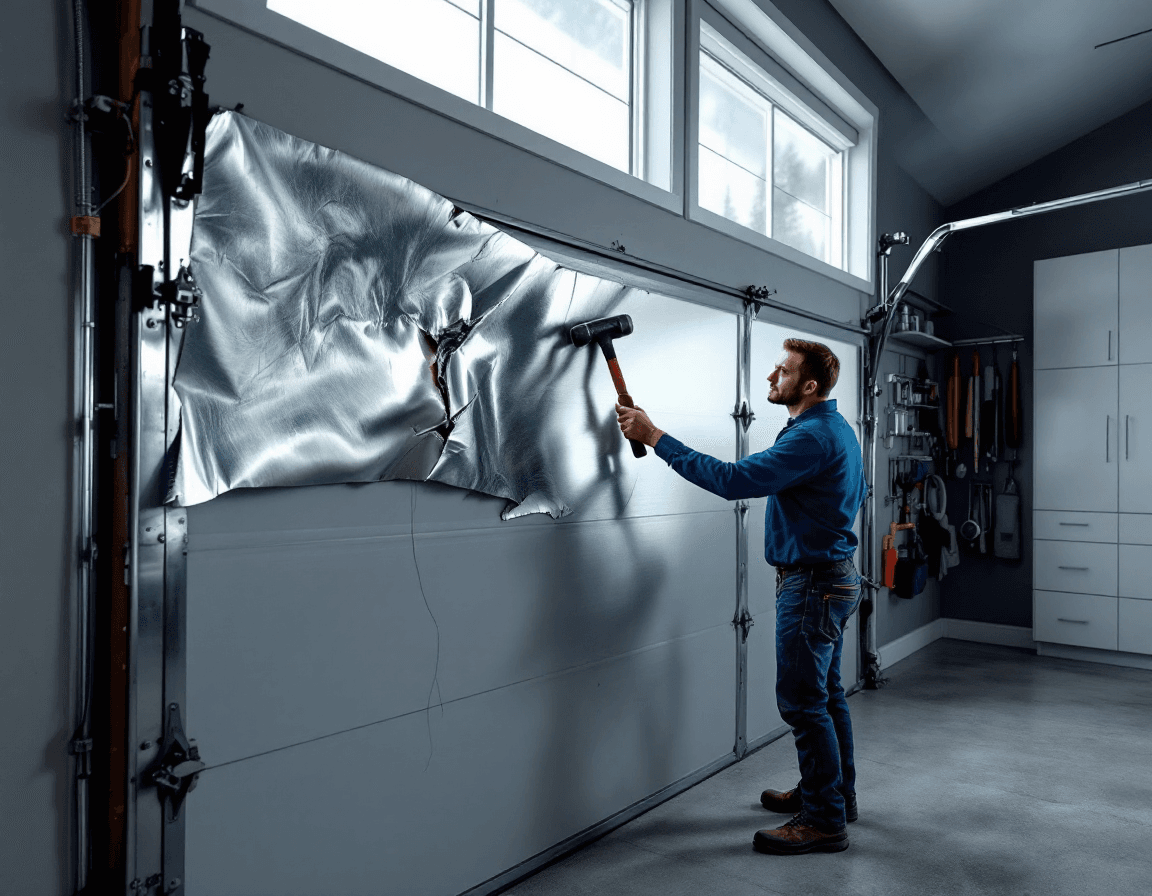
Garage door panel replacement in Sammamish, WA is often the most sensible fix when one section of a door is damaged but the rest still works well. Many homeowners on the plateau and along the lakeshore notice a dent, a crack, or a warped bottom section and assume the whole door has to go. In most cases that isn't true, because garage doors are built in modular sections, and a single damaged panel can usually be swapped out without touching the springs, tracks, or opener. Our technicians serve homes across 98074 and 98075 and see these repairs every week.
Sammamish sits in a region where the weather rarely lets a garage door rest. Winters bring long stretches of rain, cold mornings that leave moisture on steel, and the occasional windstorm that pushes branches and debris against the door. Those conditions wear on panels gradually, and the damage often starts at the bottom edge, where water pools and road grime collects. Understanding how a panel fails, and what it will cost to fix, helps you make a clear decision instead of a rushed one.
This page explains when a damaged panel is worth replacing, how to tell a cosmetic problem from a structural one, what affects the price, and what to expect during a service visit. Every door is different, so the numbers and options here are general guidance rather than a quote. A licensed technician can inspect your specific door in person and tell you exactly what it needs.
Why Panels in Sammamish Take a Particular Beating
Panels on Sammamish homes face a mix of forces that differ from drier parts of the country. Wet months keep the lower edges of steel and composite doors damp for long periods, and that moisture finds every scratch, seam, and weak spot in the paint. Trees are common throughout the area, so falling needles, sap, and pine debris settle on the top panels and stain the surface. Driveways on sloped lots can channel runoff directly toward the garage threshold during heavy rain.
Temperature swings add another layer of stress. A door that sits in a cool, damp garage overnight and then warms up in the afternoon expands and contracts slightly, and over years that movement can open seams or cause a panel's edges to lift. Older insulated doors are especially sensitive, because the foam core and the outer skin do not always move together. When water gets between the layers, the damage can look minor from the outside while the inside of the panel is already deteriorating.
Impact is the third factor. Delivery trucks, kids on bicycles, landscaping equipment, and the occasional backing accident can all put a dent in a section. Because many homes in Sammamish have two-car garages with limited turning room on shared or narrow driveways, a bumper or side mirror can easily reach a lower panel. These incidents are often easy to overlook at first, which is why a panel that looked fine last month may now show a crease that is starting to crack the finish.
Telling a Cosmetic Scuff From a Panel That Needs Replacing
Not every mark on a door calls for a new panel. Light surface scratches, chalky oxidation, and small paint chips can often be addressed with touch-up paint, a gentle cleaner, or a protective coating. A panel that needs replacement usually shows damage that changes its shape or breaks the material beneath the surface. The difference matters, because replacing a panel costs more than refinishing one, and you want to spend money on the problem that actually exists.
Look at the panel from a low angle, ideally in the morning when light rakes across the surface. A dent that catches light differently, or a ridge that interrupts a straight line of embossed grooves, indicates the metal or composite has deformed. Press gently along the edges and corners with your fingertips. If the panel flexes more than its neighbors, or if you hear a hollow crack, the internal structure may be compromised. A panel that feels loose in its channel or sits unevenly against the section above it should also be checked.
Keep in mind that a panel can be dented and still function well. Some homeowners live with a shallow dent for years without any change in how the door operates, and that is a reasonable choice if the appearance does not bother them. The concern grows when a dent is accompanied by cracking, paint loss that exposes bare metal, or a section that no longer sits flush with the rest of the door. Those signs suggest the panel is losing its ability to protect the interior, and they tend to get worse with each season of rain.
Dents, Cracks, and the Problem at the Bottom Rail
The bottom section of a garage door carries more abuse than any other part. It takes the brunt of splashing water, rolls over debris when the door closes, and sits closest to the impact zone of vehicles. When the bottom panel is dented, the bottom weather seal may also be pushed out of alignment, which lets rain and cold air enter the garage. For that reason, a damaged bottom panel should be evaluated together with the seal and the bottom bracket rather than replaced in isolation.
Cracks deserve particular attention. A hairline crack in a steel panel may look harmless, but moisture gets into the crack, freezes during cold snaps, and widens it over time. On insulated composite doors, a crack can let water reach the foam core, which then loses its insulating value and may begin to smell musty. Cracks along panel seams are especially common, because the joint is where the two halves of the door meet and flex the most. If a crack reaches the edge of the panel, the section may no longer hold its position in the track.
When we inspect a bottom section, we check the panel itself, the rubber seal along the base, the mounting hardware, and the condition of the rollers that sit nearest to the damage. Sometimes a dent in the bottom panel has bent a bracket or shifted a roller slightly out of its track. Fixing the panel without addressing that alignment problem would leave the door noisy and uneven. A complete inspection prevents a second visit for the same problem.
Water Damage and Rust Creeping Up From the Floor
Rust and rot are the quiet problems of Western Washington garages. Steel panels that sit close to a damp floor can develop rust along their lower edges long before the top of the door shows any sign of trouble. Sometimes the first clue is a brown stain on the concrete below the door or a faint flaking of paint near the bottom hinge. Once rust breaks through the coating, it spreads steadily, especially in areas where condensation collects during the colder months.
Composite and wood-look panels have their own vulnerabilities. Moisture can swell wood-composite material, cause it to delaminate, or allow fungus to grow in the seams. These problems are harder to see because the surface may look intact while the material beneath has softened. If a panel feels spongy when pressed, or if the paint is blistering in a band across the lower third of the door, the damage is likely deeper than it appears.
Replacing a water-damaged panel is worthwhile when the rust or rot has passed through the skin and reached the structure behind it. Surface rust on a sound panel can often be treated and sealed. A panel that has rotted through, cracked along its core, or lost its shape from long-term saturation usually cannot be restored to a reliable condition. Addressing the source of the moisture, such as a grading issue, a clogged gutter that drains toward the garage, or a bottom seal that has hardened, will protect any replacement panel you install.
When a Single Panel Is Left Behind After a Backing Accident
A backing accident often leaves one panel bent while the rest of the door looks untouched. This is common because a vehicle usually contacts a specific spot on the door, often near the lower third or at the corner where the panel meets the track. The surrounding sections may be fine, but the impact can still stress the hinges, the roller brackets, and the track directly beside the damaged panel. A careful inspection after any collision is more important than the cosmetic damage alone.
Start by making sure the door still operates safely. Run the door slowly by hand from the inside only if the opener is disconnected and the door is fully closed, or better yet, have the opener checked by a professional. Listen for grinding, watch for the door sitting crooked in the track, and look for any gap that has opened between sections. If the door binds, pulls to one side, or refuses to close fully, stop using it and arrange service. Forcing a damaged door can turn a single-panel repair into a larger job.
Insurance may cover accidental damage to a garage door, depending on your policy. Take photos of the damage from several angles before anyone makes a repair, and keep any notes about when the incident happened. If you plan to file a claim, check with your insurer about the approved process and any requirements before the panel is replaced. A licensed technician can document the damage and provide a written description of the needed work.
Matching a Faded or Mismatched Panel to the Rest of the Door
Matching is often the hardest part of a panel replacement. A door that is ten or fifteen years old has usually faded unevenly, especially on the sun-facing side of the house, and a brand-new panel will stand out if it is not chosen carefully. Even when the color looks identical on the sample, the sheen, texture, and grain may differ, and those differences become obvious in daylight. Manufacturers also change finishes and embossing patterns over time, so an exact match is not always available.
The first step is to identify the door manufacturer, model, and panel profile. A label is often printed on the inside of a section or near a hinge. Once the model is known, we can compare the panel's style, thickness, insulation, and hardware to what is currently available. Sometimes the closest option is a slightly different color that blends better than an exact match would, especially when the door has faded unevenly. In other cases, the best approach is to refinish the adjacent panels so the whole door is brought into a closer match.
Setting expectations early helps prevent disappointment. A replacement panel that is clearly newer and brighter can be an acceptable result if the rest of the door is in good condition. Homeowners who plan to repaint the entire door, or who are considering a new door altogether, may prefer to wait and make one consistent change. The right choice depends on how visible the door is from the street, how much the color has faded, and what you want the house to look like in the years ahead.
A Practical Way to Decide Between Repair and Replacement
Homeowners often ask whether a damaged panel should be repaired or replaced. The answer depends on the type of damage, the age of the door, and how the rest of the door is performing. A simple decision framework can help you think it through before you call for service. The points below reflect the questions our technicians typically ask when evaluating a damaged section.
- Replace the panel when it is cracked through, bent out of shape, or no longer sits flush in its track.
- Replace the panel when rust or rot has penetrated the surface and reached the structure behind it.
- Consider repair or refinishing when the damage is limited to scratches, light oxidation, or shallow surface dents.
- Consider a full door evaluation when several panels are damaged, the door is more than about fifteen years old, or the opener is struggling.
- Consider a new door when the frame, tracks, or springs are failing, or when the panels are no longer available in a reasonable match.
Cost is part of the picture too. A single panel replacement is usually far less expensive than a new door, and it often makes sense for a door that is otherwise sound. However, if you find yourself replacing panel after panel, the cumulative cost may exceed the price of a fresh door with a warranty. A technician can give you a realistic comparison based on the condition of the whole system rather than just the damaged section.
What a Panel Replacement Visit Involves
A typical panel replacement begins with a walkthrough of the door in the closed and open positions. We check the damaged section, the neighboring panels, the hinges, the rollers, the tracks, and the bottom seal. We also note whether the door is balanced and how the opener is performing. This inspection tells us whether a panel replacement alone will solve the problem or whether other components need attention first.
The work itself involves securing the door safely, removing the fasteners that hold the damaged panel to its neighbors and to the hinges, and carefully separating the sections. Doors are heavy and can shift unexpectedly, so the work is done with proper supports and bracing. The new panel is then positioned, fastened, and checked for alignment, and the seal and hardware are adjusted so the door closes evenly. Where a panel is part of a wind-rated or insulated system, the connections must be installed precisely to keep the performance the door was designed for.
One important safety note applies here. Panel replacement should never involve the springs. Torsion springs and extension springs store enormous amounts of energy, and an improper adjustment can cause serious injury. If a damaged panel has shifted the spring assembly or if the door's balance is off, the spring work must be done by a licensed professional with the right tools and training. Please do not attempt spring adjustments yourself, and do not remove any part of the spring system in an effort to free a stuck panel.
What Drives the Cost Within the $250 to $800 Range
Panel replacement pricing in our service area generally falls between $250 and $800 per section, depending on the door. That wide range reflects real differences in the work involved. A simple steel panel on a standard door is less expensive than an insulated composite panel with decorative glass or a custom wood-look finish. Thicker panels, wind-rated designs, and specialty colors all add to the material cost, and some profiles must be ordered from the manufacturer, which can extend the timeline.
Labor varies as well. A panel in the middle of the door may be easier to access than one at the top, which may require more careful handling near the header and springs. A door that needs bracket or roller work at the same time will take longer than one that needs only a panel swap. Access to the garage matters too, particularly when the door is installed in a tight space with limited room to maneuver the old section out.
The following factors commonly affect the final price for a Sammamish home:
- Door type, material, and whether the panel is insulated
- Panel size, thickness, and any glass or decorative inserts
- Color match requirements and whether refinishing is needed
- Whether the damage is limited to one section or extends to hardware
- Access conditions, including the height of the door and the layout of the garage
- Manufacturer availability and lead time for the replacement panel
Because every door is unique, the most accurate way to determine your cost is an on-site inspection. We would rather explain the options clearly and let you decide than give you a number that doesn't reflect your actual door.
Scheduling Around Local Conditions Across Sammamish
Sammamish is a community of distinct neighborhoods, and access can differ from one street to the next. Homes near Sammamish Commons often sit on well-established lots with driveways that are easy to work around, while properties near Pine Lake may have sloped approaches, tighter turns, and landscaping that needs care during the work. In Klahanie, the layout of some driveways and shared access points can affect where vehicles and materials can be staged. Letting us know about these details when you book helps us plan the visit more efficiently.
Weather scheduling is another local consideration. Because the rainy season can stretch for many months, we often recommend booking panel work on a drier day when possible, especially if the old panel needs to be removed from an opening that is exposed to the elements. Panels can be installed in light rain with proper protection, but a dry window reduces the risk of water entering the garage during the job. If you have a hard deadline, such as a listing photo, a school event, or a move, tell us early so we can plan around it.
Parking and garage clearance also matter. If your vehicles are parked in the driveway, please move them before the appointment so the technician can open the door fully and work safely. If the garage contains stored items stacked near the door, clearing a path to the sections will speed the work and protect your belongings. A few minutes of preparation can make a noticeable difference in how smoothly the visit goes.
Keeping New and Existing Panels in Good Condition
Once a damaged panel has been replaced, a little regular care will help it blend in and last longer. Rinse the lower sections of the door periodically during wet months to remove road grime, salt residue, and mud that can trap moisture against the surface. Keep gutters and downspouts clear so water does not run down the face of the door or pool near the threshold. Trimming branches that drop needles and sap onto the top panels will also reduce staining and surface wear.
Inspect the bottom seal and the edges of each panel a few times a year. Look for cracks in the rubber, gaps where light shows around the perimeter, and paint that is beginning to chalk or peel. Small problems are much easier and less expensive to address than large ones. A quick touch-up with the manufacturer-approved paint can slow oxidation, and a timely seal replacement can prevent water from reaching the lower panels.
Finally, listen to how the door sounds and moves. Grinding, popping, or a door that seems to drift slightly out of line can point to a roller, hinge, or track issue that may be affecting nearby panels. Those components are best inspected by a professional, particularly if the door is under spring tension. Catching these issues early keeps your door looking good and operating safely for years.
If a dented, cracked, or water-damaged panel is making your Sammamish garage door look worse than it needs to, we are glad to take a look. Our licensed, bonded, and insured technicians can inspect the section, explain whether replacement or repair makes the most sense, and walk you through the options for matching your existing door. Call (888) 799-3819 to schedule a visit for garage door panel replacement in Sammamish, WA, and we will help you get your door back in good shape.