
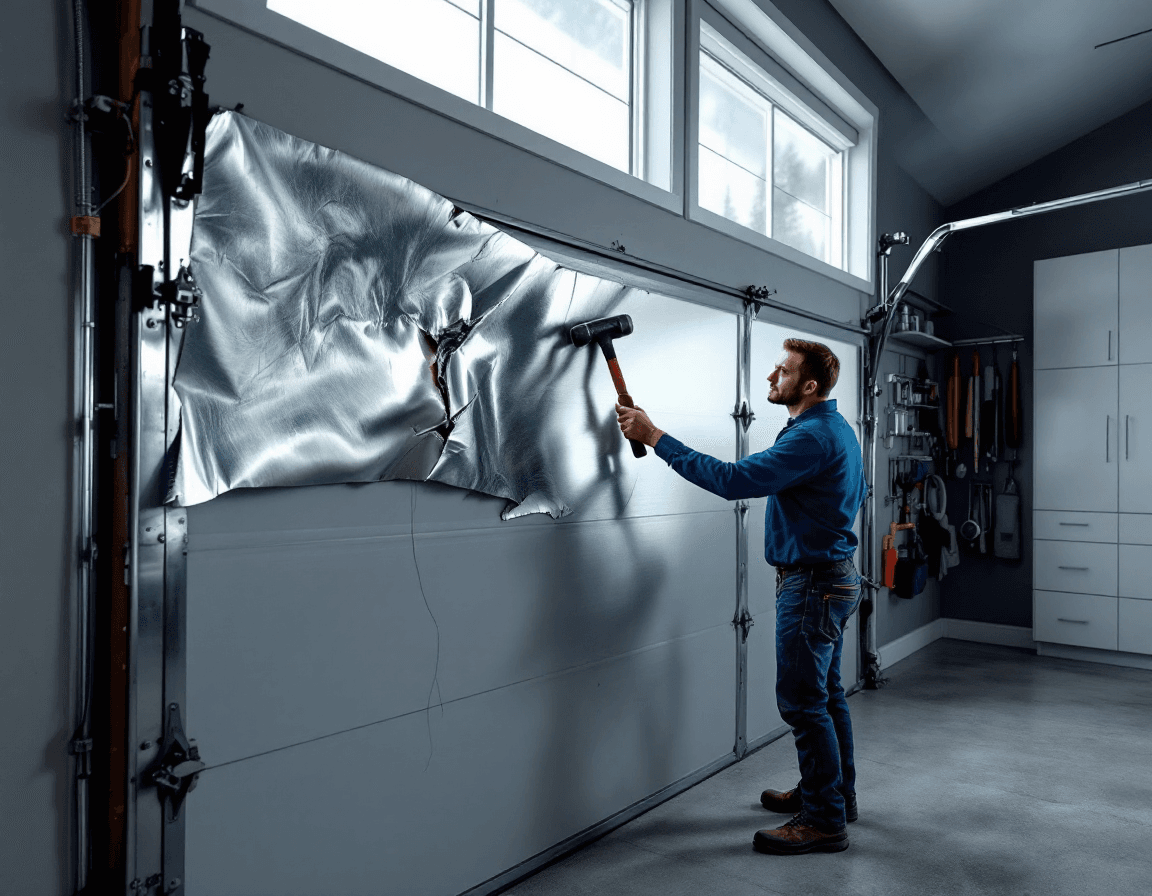
Garage door panel replacement in Carnation, WA is often a smaller job than homeowners expect. A single dented, cracked, or water-damaged section can usually be swapped out without replacing the entire door, and the rest of the mechanism can stay as it is. Carnation sits where the Snoqualmie and Tolt rivers meet, and the wet, mild winters and cool, damp springs of the Snoqualmie Valley put steady stress on garage doors. Many local homeowners first notice a problem when a bottom panel looks stained, a rib has bent, or a paint line has faded unevenly across one section. At Seattle Garage Door Fix, we work with these homes regularly, and we know that a clear, honest assessment matters more than a quick sale.
This page explains what panel replacement involves, how we decide between repairing and replacing a section, how we match panels that are no longer sold, and what a typical job costs. Panel replacement typically runs $250 to $800 per section, depending on the door's construction, insulation, size, and how difficult the section is to access. We also cover the situations where a panel swap is the wrong fix, along with the safety reasons that spring and cable work should always go to a licensed technician. If you have a damaged section and are not sure what to do next, the information below should help you decide where to start.
What Valley Weather Does to a Garage Door Panel in Carnation
The Snoqualmie Valley has a climate that is gentle on lawns and tough on steel and wood. Winters bring long stretches of rain and low cloud, and the air often stays humid even on dry days. Morning fog that rolls off the river can leave a film of moisture on metal surfaces that does not burn off until midday. Over years, that repeated wetting and drying works its way into scratches, chips, and seams, and the result is often corrosion starting from the inside of the panel where you cannot see it.
Homes near the rivers and the lower-lying parts of town can also see more standing water in the driveway during heavy storms. A garage door's bottom panel sits closest to that water, along with splash from tires and the grit that gets tracked in from gravel and dirt roads. When the bottom section stays damp against concrete, it often develops rust at the lower edge first, then blistering paint, then soft spots if the panel is wood or composite. Carnation's rural feel also means more mud, leaf debris, and moss that holds water against the door's base.
Sun is a separate concern. Even under cloud cover, UV exposure fades paint, especially on the south- and west-facing sides of a home. This is one reason a single new panel can look noticeably different from the rest of the door after only a few years. We will talk through color and finish options with you before we order anything, because a panel that was painted to match a door ten years ago may not match today.
Reading the Damage: What We Check Before Recommending a Panel Swap
Before we recommend replacing any section, we look at the whole door. A dent can be a cosmetic issue, or it can be a sign that the rollers, track, or hinges took a hit at the same time. Cracks in a panel can come from age and sun, or they can come from a strong impact that also bent a track or stressed a hinge. We want to know which parts are affected so the invoice reflects the real problem.
During an inspection, our technicians usually check the following items. These are the areas where a panel problem often hides a second problem that needs attention:
- Panel edges, seams, and the joints between sections for cracking, separation, or looseness
- Hinges and the bracket points where the damaged panel connects to its neighbors
- Track alignment and any bends near the impacted area, which can affect how the door travels
- Rollers and bearings in the sections next to the damage, looking for flat spots or wear
- Bottom seal and weatherstripping, which can be torn or compressed after a bottom-panel impact
- Signs of moisture or rust beneath the surface, checked by pressing gently along the panel and looking at the inside face where accessible
This inspection takes some time, but it prevents the common situation where a homeowner pays for a new panel and then discovers the bent track is the real reason the door keeps jamming. Once we have the full picture, we can explain what the damage means for the door's safety and performance, not just its appearance.
Repair or Replace: Deciding Whether a Single Section Is Worth Swapping
Not every dented panel needs to be replaced. Shallow dents in steel panels that have not cracked, creased, or lost their coating can sometimes be straightened and touched up. This works best when the dent is small, when it is not at a seam, and when the panel is not thinning from rust. A dent that sits on a rib or near a hinge line often weakens the panel more than it looks, and replacement is usually the safer choice in that case.
Replacement becomes the better option when the damage is structural or widespread within one section. Cracks that run through the panel, rust that has eaten through the inside skin, soft or swollen wood or composite, and crushed insulation in an insulated panel all point toward swapping the section. A panel that has been hit hard enough to pull loose from its neighbors may also need replacing, along with a check of the adjacent panel's fasteners. If more than one or two sections show rot or rust, it may be time to talk about the whole door rather than piecemeal fixes.
Age matters too. A door that is more than about twenty years old may have discontinued panels, mismatched finishes, and worn hardware that makes a single new section look out of place or hard to fit. In those cases, we will compare the cost of one replacement panel against the cost of a new door, and we will be honest if a new door makes more sense. Our goal is to give you a clear recommendation based on the condition of your door, not to push a larger project.
Matching Panels Across Model Years and Discontinued Designs
Matching a replacement panel is often the most frustrating part of this job. Garage door manufacturers update their profiles, rib spacing, colors, and insulation over time, and some styles are no longer in production. A panel that looks identical from across the driveway may differ in thickness, groove depth, or the placement of hardware holes. We take matching seriously because a mismatched section affects the look of the house and the way the door operates.
To find the closest match, we gather information from the door itself. Manufacturers often place a label or model plate on the inside of a panel or near a track, and that information can narrow down the correct replacement. We also check panel height and width, the number of ribs, the groove pattern, the insulation type if present, and the window or glass configuration if the door has inserts. Photos from several angles help us compare against current catalogs and, when needed, against the stock we can source.
Color is the other half of the match. A fresh panel will be the original color when it arrives, while the rest of the door has been aging for years. Depending on the finish and the door, we may recommend painting the new panel to blend, or we may recommend leaving it alone if the sun has changed the existing door in a predictable way. Being upfront about this matters, because a homeowner should know whether a visible difference is possible before the work is done.
- Bring or photograph the manufacturer name and model number, usually found on a label inside the door
- Note the panel height, number of ribs, and whether the section has insulation or glass inserts
- Look at the color on the sunniest side and the shadowed side, since fading is often uneven
- Let us know if the door was recently painted or refinished, since that changes the color match
Rot, Rust, and Water Damage Along the Bottom Panel
The bottom panel takes the most abuse in a Carnation garage. It is closest to the driveway, it collects splash and grit, and it often sits where a damp floor keeps moisture against the metal or wood for long periods. Rust on the lower edge of a steel panel usually starts at the scratches or paint chips near the bottom seal. If the damage is caught early, the rust can sometimes be cleaned and treated, but once it has eaten through the skin or weakened the panel's edge, replacement is the reliable fix.
Wood and composite panels present a different challenge. On wood doors, rot tends to show up as soft spots, paint that bubbles or cracks, and a dark staining that does not wipe away. Water seeping into the end grain near the bottom often causes the worst damage. Composite panels can swell or delaminate, and the damage may spread into the insulation core if it is not replaced promptly. We check these areas carefully because a soft bottom panel can also cause the bottom seal to fail, letting more water and drafts into the garage.
Prevention helps here as well. Keeping the garage floor clear of standing water, trimming vegetation so it does not hold moisture against the door, and rinsing off road salt or mud during the wet season can extend the life of a bottom panel considerably. When we replace a bottom section, we also check the seal and the threshold so the new panel is not immediately exposed to the same moisture problem.
Backing Accidents and Impact Damage on Carnation Driveways
Many Carnation properties have long driveways, turnarounds, and gravel approaches where it is easy to misjudge a backing distance, especially when the garage is partly hidden by a hedge or a fence. A car, truck, trailer, or even a bicycle can leave a dent, crack, or crushed corner on a single panel. The damage often looks localized, but the force can also bend the track, shift the rollers, or stress the hinges on the adjacent sections.
After any impact, we recommend a few simple steps before the door is used heavily. Keep the door closed if the panel is cracked or pushed out of its channel, and avoid using the opener until the door has been checked, since a damaged track can let the door fall unevenly. Photograph the damage from several angles, including the inside of the door, and note whether the door moves smoothly. These details help us assess the problem quickly and can be useful if you need to file an insurance claim for the repair.
Insurance coverage varies, and we do not make claims on anyone's behalf or guarantee a particular outcome. What we can do is provide a written description of the damage and the parts involved, which many homeowners find helpful when talking to their insurer. Because impact damage can hide structural problems, we recommend having the door inspected even if the dent looks minor.
Price Ranges Per Section and What Changes the Number
Panel replacement is usually priced per section, with most jobs falling between $250 and $800 per panel. Where a section lands in that range depends on several factors. A standard steel panel on a common residential door sits near the lower end, while an insulated section, a panel with glass inserts, a carriage-house style with decorative detailing, or a wood section that requires custom work will generally cost more. Access also matters. A panel near the top of a tall door or a section that requires removing and reinstalling multiple neighbors takes more time.
Matching difficulty can affect cost as well. When a discontinued panel must be sourced from a limited supply, or when a custom paint match is needed, the labor and materials increase. In some cases, the panel itself is not the issue, but the work required to safely remove the damaged section and fit the new one adds time. We will give you a quote after we have seen the door, and the quote will explain what is included, what is not, and what could change if we find additional damage during the job.
We want you to know what you are paying for before you agree to anything. A good estimate shows the panel type, the reason for replacement, any finish work, and whether a related repair, such as a track adjustment or a seal replacement, is recommended. If we find something unrelated that needs attention, we will tell you separately rather than bundling it into the panel price.
Insulated Panels, Carriage-House Styles, and Glass Inserts
Many homes in the Carnation area have garage doors that go beyond a plain steel panel. Insulated doors are common in homes where the garage is attached to living space or where the owners use the garage as a workshop. Insulated panels have a foam core, and when they are dented or punctured, the core may be compromised. Replacing one section of an insulated door requires matching the insulation thickness and the panel's thermal performance so the door does not become a weak point in the garage's temperature control.
Carriage-house styles, with their decorative hardware, panel grooves, and sometimes faux hinges, add another layer of complexity. These doors often use a particular panel profile that is harder to find, and the paint finish can be more delicate. Glass inserts and windows are also common, and a cracked pane may be a simpler fix than a full panel replacement if the frame is sound. We will tell you if a window insert can be swapped on its own, or if the entire section needs to be replaced to keep the look consistent.
Because these doors are more specialized, we often need to look at several options before recommending a path. We are happy to explain the trade-offs between keeping an existing design and choosing a closer alternative if the original panel is no longer available. In every case, the goal is a door that operates safely and looks like it belongs to the house.
Our Replacement Process from First Call to Finished Door
Our panel replacement process follows a clear sequence so you know what to expect. It starts with a phone call or online request, where we ask about the door's make and model if you know it, the location and size of the damage, and any symptoms you have noticed, such as sticking, noise, or a visible gap. We then schedule a visit to inspect the door, measure the panel, check the rest of the mechanism, and review the color and profile with you in person.
Once we have the information we need, we provide a written estimate for the section or sections involved. If you approve the work, we order the panel, confirm the match, and schedule the installation once the part arrives. During the job, our technician removes the damaged section, checks the adjacent panels and hardware, installs the new section, and tests the door's movement, balance, and seal before leaving. We take care to protect the driveway and the surrounding area, and we explain anything unusual we find.
- Initial call to describe the damage and the door's make, model, and age if known
- On-site inspection covering the panel, hinges, track, rollers, and bottom seal
- Written estimate with panel type, finish plan, and any recommended related repairs
- Panel ordering and match confirmation before installation is scheduled
- Installation, operational testing, and a walkthrough of the finished door with you
Keeping the Rest of the Door Healthy After a Panel Swap
A new panel makes a door look better, but it does not solve everything. The surrounding sections, hinges, and rollers have been working alongside the damaged panel, and they may show wear that was hidden before. After a replacement, we recommend checking the door's balance, making sure the rollers turn freely, and confirming that the bottom seal makes full contact with the floor. These small steps help the new panel last and prevent the next problem from arriving in a few months.
Routine care also helps. Wash the door with mild soap and water a few times a year, especially during and after the wet season, and rinse off road grime and salt. Look over the panels at least twice a year for chips in the paint, because a small chip is far easier to touch up than a rusted patch. Keep the track clean and lightly lubricated with a product recommended for garage doors, and avoid using household oils that can attract dirt.
If you notice a new gap, a panel that bulges, or a door that feels uneven when it moves, schedule an inspection rather than waiting. Early attention usually means a smaller repair. We are glad to walk through your door and tell you what we see, including whether the rest of the door is in good shape for years to come.
Why Spring and Cable Work Should Always Go to a Licensed Technician
Panel replacement is generally a manageable job for a trained technician, but it can involve parts of the door that are under significant tension. Torsion springs and extension springs store a large amount of energy, and cables, drums, and brackets can release that force suddenly if they are handled incorrectly. Homeowners sometimes attempt to fix a damaged panel and end up working near a spring or cable without realizing the risk. For this reason, we always recommend that any work involving springs, cables, or door balance be handled by a licensed professional.
If your inspection reveals that a spring or cable is damaged, the door should not be operated until it has been repaired. A broken spring can cause the door to drop quickly, and a frayed cable can let one side of the door sag or separate from its track. Our team is licensed, bonded, and insured, and we carry the right equipment to handle these components safely. We would rather tell you that a spring needs attention than have you attempt to adjust it yourself.
If you are unsure whether your problem is a panel issue or a spring issue, call us at (888) 799-3819 and describe what you see and hear. We can help you decide on the safest next step, whether that is a simple panel replacement, a broader repair, or a visit to check the entire door system.
Schedule a Panel Replacement Assessment in Carnation
If a dented, cracked, rusted, or water-damaged panel is affecting your Carnation home, the right next step is a clear, honest inspection. Our technicians will look at the damaged section, the surrounding hardware, and the door's overall condition, then give you a straightforward recommendation on whether to repair or replace. Panel replacement typically runs $250 to $800 per section, and we will confirm the exact figure for your door after we have seen it. Call Seattle Garage Door Fix at (888) 799-3819 to schedule your visit and get a written estimate before any work begins.