
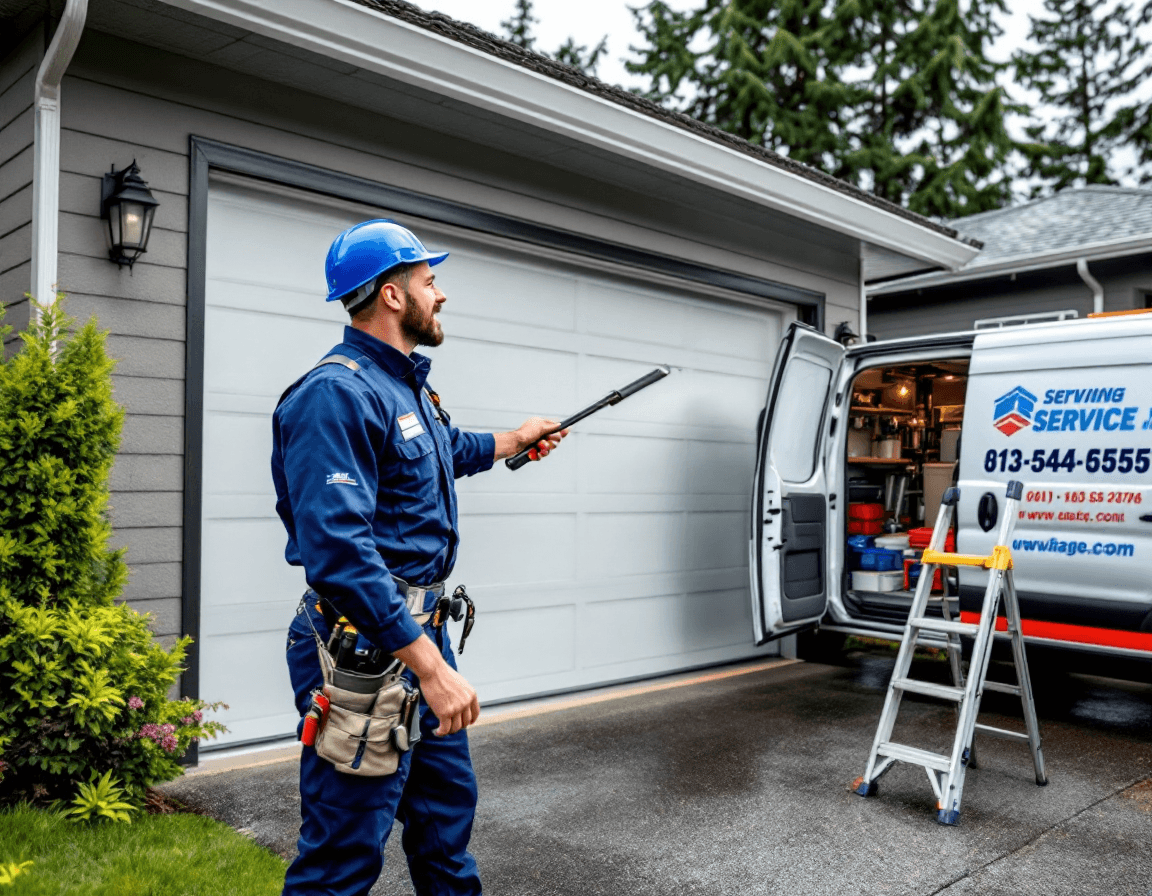
Garage door repair in Carnation, WA is usually a matter of getting a stubborn door back to work safely, whether it stopped mid-cycle, refuses to respond to the remote, or started making a noise you can't ignore. Carnation sits in the Snoqualmie Valley where the Tolt River meets the Snoqualmie, and the damp, cool conditions that define King County living show up in the hardware on your garage door. Our technicians serve homes across 98014 and the surrounding valley, and we arrive ready to diagnose the real cause rather than just swap a part and leave. Most residential repairs in this area fall between $95 and $450, depending on what has failed and how much access the work requires.
Many homeowners here wait longer than they should to call, hoping a door that sticks or groans will settle down on its own. It rarely does, and a small problem like a misaligned sensor or a worn roller can turn into a bent track or a cable that gives way under load. This page walks through the most common symptoms we see around Carnation, explains what usually causes them, and shows you which checks are safe to do yourself. It also explains where the line sits between a homeowner task and work that belongs to a licensed professional, because some parts of a garage door are dangerous to handle without training.
How Carnation's Valley Weather Shapes Your Garage Door
The Snoqualmie Valley collects moisture. Winters bring long stretches of drizzle and fog that settle over the low ground near the river, and spring rains keep the air heavy well into May. Those conditions are hard on steel. Galvanized tracks, hinges, and rollers can develop surface rust along the bottom edges, and the lubricant that keeps moving parts quiet can wash away or gum up over a wet season. If your home sits closer to the river or on a lot with heavy tree cover, the garage may stay damp longer than the rest of the property.
Temperature swings matter too. A cold snap in January can make the door's metal contract and stiffen the rubber weatherstripping, which can cause the door to drag or hesitate on its first few cycles of the morning. Once the afternoon warms up, the same door may seem fine, which leads many people to assume nothing is wrong. Carnation's older homes, along with the detached garages and shop buildings common on larger residential lots, often have doors that have been through many more seasons of this than a newer subdivision door. Age and exposure together explain why the same symptom can have different causes from one property to the next.
Humidity also affects wood doors and wood trim. If your door is a real wood panel style rather than insulated steel, expect swelling in wet months and shrinkage in dry spells, which can throw off the balance between the door and its tracks. Keeping the threshold clear of leaves, moss, and runoff goes a long way toward preventing the kinds of problems described throughout this page.
Warning Signs That a Door Needs Attention Now
Garage doors almost always give notice before they fail completely. The earliest signs tend to be subtle: a slight hesitation at the start of the opening cycle, a faint scraping sound near one corner, or a door that seems to rise a little more slowly on one side than the other. Catching these early usually means a simpler and less expensive repair, because the rollers, hinges, or sensors involved have not yet caused damage to the tracks or panels.
Use the checklist below to decide whether to schedule service now or monitor the door for a few days. Items on the first list are time sensitive, and the second list describes things that are worth noting but are not usually emergencies.
- Call promptly if the door moves unevenly, sits visibly out of level, or leaves a gap at one side when closed.
- Call promptly if you notice a cable fraying, a spring that appears loose or has gaps between the coils, or a panel that bows outward.
- Call promptly if the door stops partway and will not respond to the wall button or remote.
- Monitor closely if the door opens normally but is louder than it used to be.
- Monitor closely if the remote range has shrunk or the opener seems to take an extra second to respond.
- Monitor closely if the door sticks briefly at the start of the day during cold weather but then runs fine.
When the Door Reverses Before It Reaches the Floor
A door that starts down and then flips back up is one of the most common calls we handle in Carnation. Modern openers are designed to reverse when they sense an obstruction, and that safety feature is intentional. The sensors are a pair of small units mounted near the floor on either side of the opening, with one emitting an infrared beam and the other receiving it. When the beam is interrupted, the opener stops and reverses, which is exactly what it should do if a child, pet, or bicycle is in the path.
The most frequent cause of unwanted reversing is simple misalignment. Sensors can be knocked out of position by a broom, a trash can, or even a strong gust through an open garage. Spiderwebs and dust on the lenses are a surprisingly common culprit in rural garages, as are the low-angle sunlight conditions that sometimes wash out the beam in the afternoon. Wiring that has been chewed by rodents or worn at a staple point can also produce intermittent faults, which is why the door may behave for a while and then suddenly reverse.
You can check the basics yourself. Look for two small lights on the sensor units: one should be steady and the other should glow when the beam is aligned. Wipe the lenses clean, make sure nothing is blocking the path, and confirm that the brackets are tight. If the lights are off or flicker, or if the door still reverses after you have aligned the sensors, call a technician. Opener logic boards, force settings, and travel limits all require professional adjustment, and a door that reverses without a clear reason should not be forced open repeatedly.
Decoding Grinding, Squealing, and Banging Noises
Sound is the best diagnostic clue a garage door can give you, as long as you know what to listen for. A squeal that rises and falls with the door usually points to dry or dirty rollers, which is common after a wet winter has pushed out factory lubricant. A grinding noise, particularly one that comes from the opener itself, often means the drive gear or trolley is worn and needs attention before it strips completely. Banging, or a sharp thump as the door reaches the top or bottom of its travel, may indicate loose hardware, a worn stop, or a track that has shifted slightly out of its original line.
Rattling is a different situation that homeowners tend to ignore. Loose brackets, missing bolts, and worn hinge holes allow the door to vibrate as it moves, and over time that vibration can crack panels or pull fasteners out of the framing. Rattling is also a sign that the door may be carrying more weight than the balance system was designed for, so it deserves attention even if the door still works.
Because noises can come from several components at once, it helps to describe them accurately when you call. Note whether the noise happens when the door starts moving, in the middle of its travel, or at the end, and whether it occurs on the way up, on the way down, or both. Tell us if the sound came on suddenly or built gradually over several weeks. This information helps us bring the right parts to the first visit and often shortens the diagnosis.
Doors That Stall, Jam, or Sit Crooked
A door that stops halfway is one of the more unsettling experiences a homeowner can have. Sometimes the cause is an opener that has reached its force limit because of extra resistance, such as a frozen track, a bent section, or debris that has worked its way under the door. In other cases the problem is mechanical: a roller that has seized, a hinge that has pulled loose, or a cable that has slipped off the drum. Each of these needs a different fix, and forcing the door the rest of the way almost always makes things worse.
Crooked doors, where one side sits lower or travels faster than the other, have their own set of causes. Uneven spring tension, a worn cable, a track that has come loose from its bracket, or a broken roller can all tilt the door as it moves. When a door is badly out of square, it can bind against the frame and place uneven stress on the opener. Left alone, that stress can damage the opener motor or pull the top panel out of alignment.
If your door is stuck halfway, do not pull on the emergency release handle while the door is partly open, and do not attempt to lift a jammed door by hand from underneath. Keep people and vehicles clear of the opening. Disconnecting the opener and leaving the door in place until a technician arrives is the safest course. Our team can assess whether the door can be brought back to a safe closed position and then repaired in place.
Remote and Wall Button Troubleshooting Before You Call
When the remote or wall button does nothing, the cause is not always the door. Start with the simplest checks. Replace the remote battery, since many fobs use small coin cells that drain faster than people expect in cold weather. Make sure the remote is trained to the opener and that you are using the correct button. If the wall control has a light, check whether it glows when pressed, which tells you the switch is getting power.
Next, look at the opener's own indicators. Many units have a light on the motor housing that blinks in patterns to signal a fault, and the owner's manual lists what each pattern means. A power interruption, a tripped breaker, or a loose plug at the outlet can also make the opener appear dead. In rural properties and detached garages, a breaker or GFCI outlet may trip after a storm or when moisture gets into an exterior circuit, so it is worth checking the panel before assuming the opener has failed.
Radio interference can also make a remote unreliable, especially if nearby equipment or a new device has been added to the property. If the remote works from some locations but not others, or if it stopped working after a long period of disuse, the opener's receiver may need to be reprogrammed. Opener receivers, logic boards, and wall control wiring should be inspected by a professional rather than replaced through trial and error, because a faulty board can damage other components.
Off-Track Doors, Sagging Panels, and Visible Gaps
A door that has come off its track is among the most serious situations we encounter. When a roller leaves the track, the door can hang at an angle, lose its balance, and drop unexpectedly. This is a problem that should be left entirely to trained technicians, because the tension stored in the springs and the weight of the panels can cause serious injury during reinstallation. Do not try to lift the door back onto the track yourself, and keep everyone away from the opening until the door has been secured.
Sagging panels and visible gaps are slower developing problems, but they are equally important. A panel that bows downward or outward often means a section has lost structural support, whether from a broken hinge, a damaged track, or worn springs. Gaps along the bottom or sides let water, cold air, and pests into the garage, and they can also indicate that the door is no longer seating correctly when closed. In a region with heavy seasonal rain, those gaps can allow standing water to reach stored items and interior walls.
Good maintenance reduces the risk of all of these. Inspect the tracks twice a year for loose bolts, check the weatherstripping for cracks, and look at the panels for dents or separation at the seams. If you find any of these conditions, call us before the problem spreads to other parts of the door.
What a Typical Repair Costs Around Carnation
Most residential garage door repairs in the Carnation area fall between $95 and $450. The final price depends on which component has failed, how difficult it is to reach, and whether the door needs adjustment or a full replacement part. Simple sensor realignment or a minor adjustment usually sits at the lower end of that range, while a broken spring assembly, a replacement opener logic board, or multiple rollers and hinges will land toward the higher end.
Several factors influence the total. The door's size and weight matter, as do its design and the type of opener installed. Older doors may require discontinued parts that take longer to source, and detached garages or shop buildings can add time for access. The condition of the surrounding hardware also plays a role, since a seized bracket or corroded bolt can extend the job. We will explain the options before doing any work, so you can decide how to proceed with full information.
- Sensor alignment, cleaning, or wiring check: typically on the lower end of the range.
- Roller, hinge, or bracket replacement: often mid-range, depending on how many components are involved.
- Opener repair or logic board replacement: generally mid to upper range.
- Spring or cable replacement: usually upper range, and always performed by a licensed professional.
- Off-track recovery and track realignment: priced individually after assessment, because the damage varies widely.
Why Springs and Cables Belong to a Licensed Professional
Garage door springs store enormous amounts of energy, and that energy is what makes a heavy door feel light when it moves. Torsion springs and extension springs can release that tension suddenly if they are handled incorrectly, and the injuries that result are severe. Cables carry the load from the springs to the bottom of the door, and a frayed or broken cable can allow the door to drop without warning. For these reasons, spring and cable work should always be performed by a licensed, bonded, and insured technician with the proper tools and training.
Homeowners sometimes attempt to replace a spring using online videos or borrowed tools. This is one of the most dangerous decisions a person can make around a garage door. Winding bars can slip, the spring can release, and the door can fall, causing injuries that are often life changing. Even experienced do-it-yourselfers should not attempt this work. If you see a broken spring, a cable that has come loose, or a door that will not stay balanced, keep it closed, disconnect the opener, and call us.
There are simpler maintenance tasks you can safely handle yourself. Wiping down the tracks, cleaning the sensor lenses, tightening visible bolts with the door fully closed and the opener disconnected, and applying a silicone-based lubricant to hinges and rollers are all reasonable homeowner tasks. Avoid petroleum-based lubricants on rollers and springs, since they can attract grit and break down rubber components. When in doubt, ask a technician before touching anything under tension.
What Happens When We Arrive for Your Repair
When a technician arrives, the first step is a safety check. We confirm the door's condition, look for any immediate hazards, and make sure the opener is disconnected if needed. Then we walk through the symptoms you described and inspect the components most likely to be involved, including the tracks, rollers, hinges, cables, springs, sensors, and opener. Diagnosis comes before repair, so you will know what is wrong and what it will take to fix it.
Once the cause is identified, we explain the options in plain terms. For smaller repairs, we often complete the work during the same visit, using parts we carry for common residential door types. For larger or more specialized jobs, we will outline the scope and the price before proceeding, so there are no surprises. We are licensed, bonded, and insured, and we take that responsibility seriously on every job, whether the property sits near the Tolt River, in a neighborhood close to Carnation Farms, or on a rural lot farther out the valley.
Our goal is to leave your door working smoothly and safely, with a clear explanation of what was done and what to watch for in the coming months. We are happy to answer questions about maintenance, weather-related wear, or upgrades that might make your door more reliable through the wet season.
Getting Your Carnation Garage Door Back on Track
A garage door that will not open, close, or move smoothly is more than an inconvenience. It can be a safety hazard, a security concern, and a sign that a larger problem is developing. The good news is that most issues affecting Carnation homes are repairable within a single visit, and early attention usually keeps costs in the $95 to $450 range for typical residential work. If your door is reversing, grinding, stuck, crooked, off its track, or unresponsive to the remote, do not wait for it to fail completely.
Call Seattle Garage Door Fix at (888) 799-3819 to schedule service for your Carnation garage door. Describe what the door is doing, mention any noises or gaps you have noticed, and we will help you determine how quickly it needs attention. Our licensed technicians are ready to diagnose the problem safely and get your door moving again.