
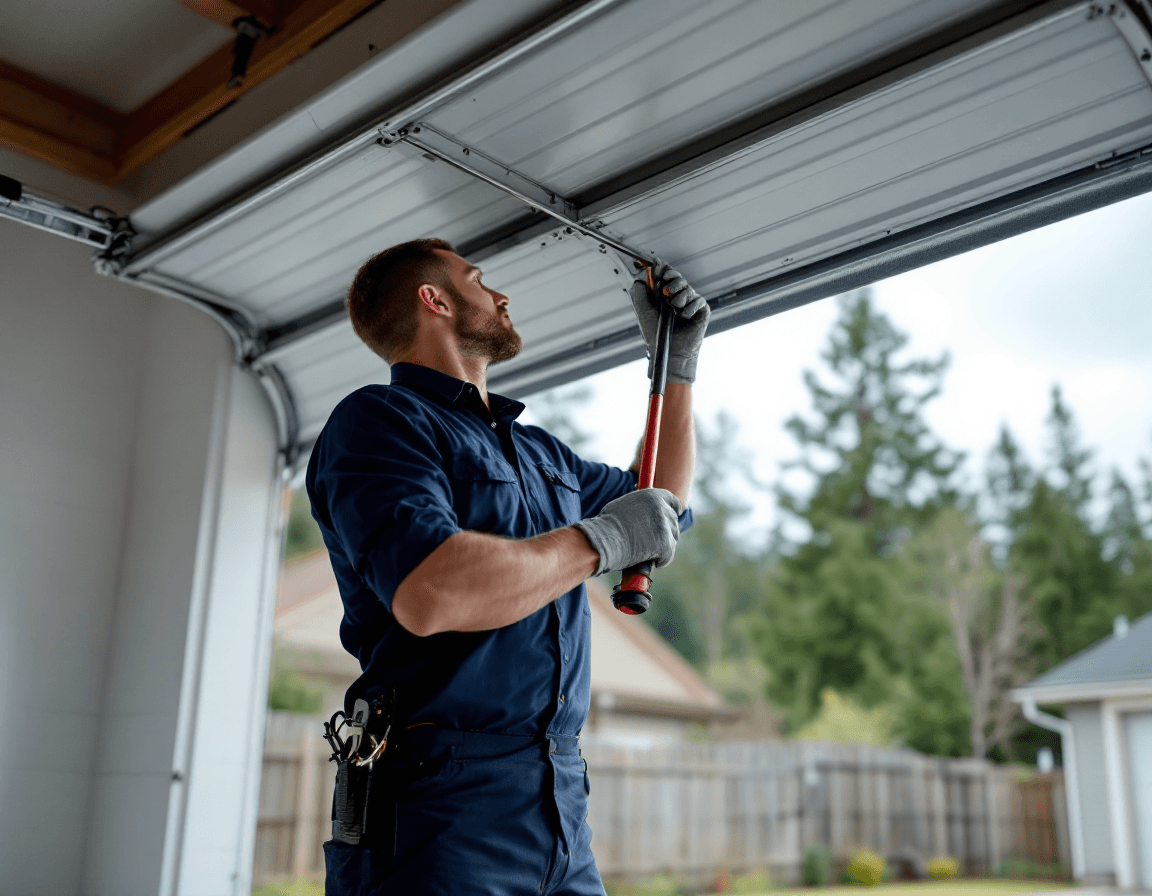
Garage Door Spring Replacement in Carnation, WA is one of the most common repairs we handle for homes in the Snoqualmie Valley, and it is also one of the most urgent. The springs carry most of the weight of a garage door, so when one fails, the door can go from working normally to stuck halfway up in a single moment. Homeowners in Carnation (ZIP 98014) often notice the failure as a sharp bang in the garage, followed by a door that will not lift at all. Knowing what that sound means, what the early warning signs look like, and when to call a licensed technician can save you from a damaged door, a bent track, or an injury.
Carnation sits where the Tolt River meets the Snoqualmie River, and the surrounding land is a mix of farmland, wooded lots, and older homes with detached or attached garages. Many of the doors we see here have been running through decades of damp winters, cool springs, and summers that can still bring dry, dusty days. Those conditions are hard on steel, and steel is what your springs are made of. This page explains how spring failures happen, what to look for, what the repair involves, and what you can expect when you schedule service with Seattle Garage Door Fix at (888) 799-3819.
The Loud Bang That Means a Spring Has Snapped
A broken garage door spring usually announces itself with a loud crack or bang that sounds much like a gunshot or a heavy object dropping inside the garage. Because the sound is so sudden, many homeowners assume something has struck the door or that a vehicle has backed into a wall. In most cases, a torsion spring mounted on the steel shaft above the door has let go, releasing the stored tension all at once. The noise can be startling enough to wake people in the house, and it often happens in the early morning when the door is closed and the spring is under full load.
After the bang, check the door carefully but from a distance. Do not stand under the door or try to lift it manually, because a door without spring tension can drop quickly if its cables or drums shift. Look for a gap in the coils above the door, a torn or hanging cable, or a door that sits crooked on its tracks. If the opener is still running, it may strain without moving the door, which is a sign the counterbalance is gone. The safest move is to keep the door closed, keep people and pets away from the door path, and call a licensed technician to inspect and replace the spring.
Not every loud noise means a spring has failed, and it is worth being honest about that. Sometimes a loose roller, a worn hinge, or an opener that is slamming the door into its limit can produce a sharp sound. Still, a bang paired with a door that will not rise, or one that has dropped unevenly, should be treated as a spring emergency until a technician confirms otherwise. Quick, measured action protects both the equipment and the people in your household.
Warning Signs That Show Up Before the Spring Breaks
Springs rarely fail without warning, although the warnings are easy to dismiss. A torsion spring that is losing strength often lets the door drift down slightly when it is partly open, or it may make the door feel heavier than it did a few months earlier. Many homeowners notice that they now have to pull harder on the emergency release, or that the door seems to fight them on the way up. These symptoms develop slowly, which is why they often go unnoticed until the spring finally gives way.
Visual clues are also useful. Look at the torsion spring above the door for rust, flaking metal, or gaps between coils. Extension springs, which run along the sides of the track, may show stretched or uneven coils, or they may have a cable that is fraying near the anchor. Some springs develop a slight tilt or lean, which means the tension is uneven and the door may begin to rack or bind in its tracks. None of these signs guarantees an imminent failure, but each one is a good reason to schedule an inspection.
- A door that feels noticeably heavier when lifted by hand, or that drops a few inches when left partly open
- Visible gaps between torsion spring coils, or rust that looks like it is eating into the metal
- Extension springs that appear stretched, uneven, or loose at their anchor points
- A door that closes too quickly, slams, or lands crooked on one side
- An opener that runs longer than usual or sounds strained when it starts the door moving
If you notice any of these, avoid the temptation to adjust or tighten anything yourself. Springs store a large amount of energy, and even a small adjustment can cause a serious injury. A licensed technician can measure the tension, determine whether replacement is needed, and tell you honestly whether the door can keep running for a while or should be serviced right away.
How Valley Weather and River Moisture Wear Down Springs
The Pacific Northwest climate has a real effect on garage door hardware, and the Snoqualmie Valley is no exception. Winters bring long stretches of rain and high humidity, and garages are often the first place where moisture settles because they are less insulated than the rest of the house. Water running off a roof or pooling near a driveway can drift into a garage through gaps at the bottom of the door, and the damp air can sit against steel springs for months. Over time, that moisture encourages surface rust, and rust reduces the strength of the wire that makes up each coil.
Temperature swings add another layer of stress. A cold morning can make a spring feel stiffer, and a warm afternoon can make it looser, so the tension that keeps the door balanced is never perfectly constant. Repeated expansion and contraction gradually fatigues the metal, especially on springs that have already been in service for many years. Homes near the rivers may also see fog, dew, and cool night air that linger in the garage, which adds to the wear cycle.
Carnation's rural character brings its own factors. Many properties have garages that are used for storage, workshops, or vehicles that come in with mud and damp from fields and gravel roads. Doors in these spaces may be opened and closed more often than the homeowner realizes, especially if the garage serves as a main entrance or a workspace. All of that activity adds cycles to the springs, and each cycle counts toward their eventual end. Choosing springs rated for higher cycle counts can help, which we discuss in a later section.
Torsion and Extension Springs: Knowing Which You Have
Before you can understand a repair estimate, it helps to know which type of spring your door uses. Torsion springs are mounted on a steel shaft above the opening, and they wind and unwind as the door moves. They are the more common choice for modern residential doors because they distribute the load evenly and tend to last longer than extension springs when properly maintained. A broken torsion spring usually leaves a visible gap in the coil, and the door may stay down or lift only slightly.
Extension springs run parallel to the horizontal tracks on each side of the door, typically with a safety cable running through the center of each spring. They stretch as the door is lowered and pull the door back up when it opens. Extension springs are common on older doors and on some lighter residential setups, and when one breaks, the door may drop or sag on that side. Because they operate under a different load pattern, they need to be replaced and balanced differently from torsion systems.
- Torsion springs sit on a shaft above the door and show a visible gap when broken
- Extension springs sit along the horizontal tracks and typically have safety cables running through them
- Doors with two extension springs often have one on each side, and both should be replaced together for balance
- Torsion systems usually require winding bars and specialized tools, which is one reason DIY attempts are dangerous
A licensed technician will identify your system during the visit and explain whether the existing hardware matches the door's weight and size. If the door has been modified over the years, such as with heavier insulated panels or a new opener, the springs may need to be sized differently than the originals. Never assume that a replacement spring of any type will work simply because it fits; the rating must match the door.
What Happens When the Door Opens a Few Inches and Stops
One of the most common calls we hear from Carnation homeowners is that the door rises a few inches, pauses, and then refuses to go farther. This symptom often points to a spring that is no longer providing enough lift to balance the weight of the door. The opener may keep trying, and the door may hang in an awkward position with a noticeable gap at the top or a slight lean to one side. In some cases the door will stop and then drop back down when the opener releases.
Partial lift can also come from a spring that has lost some strength but has not fully broken. The door works until it reaches the point in its travel where the weight is greatest, and then the weakened spring cannot keep up. In other situations, the spring has broken, but the door is still held partly up by the cables and drums, which creates a false sense that the problem is minor. Either way, the door is no longer properly balanced, and continuing to run the opener can strain its motor and gears.
If your door behaves this way, stop operating it and keep the area clear. A technician can check the spring condition, measure the tension, and determine whether the opener, cables, or tracks are also involved. Ignoring the symptom can turn a simple spring replacement into a more expensive repair that includes a damaged drum, a bent track, or a burned-out opener motor.
Opener Strain, Humming, and a Door That Barely Moves
Many homeowners first blame the garage door opener when the door will not lift properly. The opener may hum loudly, click, or strain in a way that sounds like it is working hard, yet the door barely moves. This is often a sign that the springs are not carrying their share of the weight, so the opener is trying to lift a door that is far heavier than it was designed to handle. Continued operation under those conditions can wear out the gears, the drive belt or chain, and the motor.
A humming opener with little movement is a good time to stop using the system and schedule a service call. Running the opener repeatedly can overheat the motor and damage internal components that are not covered by simple spring repairs. Many people also notice that the door feels heavy when they use the manual release, which is another clue that the spring tension is the real problem. Checking the opener alone without addressing the springs usually leads to a repeat failure.
A good technician will test both the opener and the spring system together. The balance of the door determines how hard the opener has to work, so replacing a broken spring often restores normal opener performance. If the opener shows signs of damage from prolonged strain, the technician can recommend appropriate repairs or replacement based on what they observe, rather than guessing from the sound alone.
Loose Cables and Drums After a Spring Break
When a torsion spring breaks, the cables attached to the bottom bracket and the drums on each side of the shaft can be affected in several ways. The cables may slip off the drum, become tangled, or hang loosely in the track. Sometimes the drum itself cracks or separates from the shaft, particularly if the break was violent. A loose cable is dangerous because it can snap under tension or pull the door unevenly, and it can make the door fall rapidly if the other components give way.
After a spring break, the door should be treated as unsafe until a technician inspects the cables and drums. Look for visible fraying, kinks, or sections that have come out of the drum grooves, but do not attempt to re-thread or tighten them yourself. Cables under spring tension can recoil with enough force to cause serious harm, and drums have specific positioning that must be set correctly during replacement. The correct response is to keep everyone away from the door and call for service.
During a professional repair, the technician usually replaces the broken spring, inspects the cables and drums, and replaces any damaged parts. Drums and cables are often replaced alongside the spring, since they operate under the same load and tend to wear out at a similar rate. A thorough visit also includes checking the bottom brackets, tracks, and rollers so that the new spring does not place unexpected stress on weak hardware.
High-Cycle Springs and Why Many Carnation Households Choose Them
Springs are rated by the number of cycles they are designed to handle, and a cycle means one full opening and closing of the door. Standard residential springs are often sized for a typical household, but many homes in rural areas use their garage doors far more often than expected. Farm-related traffic, frequent trips in and out for work or hobbies, and garages that serve as main entry points can all add cycles faster than the homeowner anticipates. Choosing a high-cycle spring can extend the time between replacements, although it does not change the need for proper installation and balance.
High-cycle springs are typically made from wire with a different treatment or diameter, and they are engineered to hold their tension through more repetitions. They cost more than standard springs, and the price difference should be weighed against how often the door is used and how long you plan to stay in the home. A technician can talk through the options after measuring the door, reviewing its weight, and asking about typical usage. Honest advice matters here, because an oversized or undersized spring creates its own problems.
Regardless of cycle rating, any new spring should match the door's specifications. Installing a spring that is too strong can cause the door to rise too quickly and create a hazard, while one that is too weak leaves the door unbalanced. Ask the technician to explain how the chosen spring relates to your door's weight and size, and to confirm that the rating is appropriate for your household's actual use.
Balancing the Door After the New Spring Goes In
Balancing is one of the most important parts of any spring replacement, and it is also one of the easiest to overlook. A properly balanced door should stay in place when you lift it partway by hand and release it, rather than sliding up or down on its own. The springs are supposed to carry most of the door's weight so the opener only needs to guide the door, not lift it. When balance is off, the opener strains, the door may race or drag, and the components wear faster than they should.
To check balance, a technician typically disconnects the opener and manually lifts the door to about the halfway point. If the door stays put, the balance is good. If it drifts up or down, the spring tension needs adjustment, and the technician will make small changes until the door holds steady. Extension systems and torsion systems each have their own procedure, and the technician should explain what they are doing and why.
Balancing also affects safety. A door that is too heavy or too light can behave unpredictably, especially if the springs are new and the cables are still settling. After the replacement, the technician should cycle the door several times, test the auto-reverse feature, and confirm that the opener limits are set correctly. These checks help make sure the new spring is working as intended and that the door will operate smoothly through the seasons.
What a Spring Replacement Typically Costs in Carnation
For most garage door spring replacements, our pricing falls in the range of $180 to $450. The final amount depends on several factors, including the type of spring involved, whether it is a torsion or extension system, the door's size and weight, and whether high-cycle springs are selected. Replacing a pair of springs, as is common with torsion systems, usually costs more than replacing a single extension spring. Additional parts such as cables, drums, or brackets may be needed if they are damaged during the break or are worn beyond safe use.
Because every door is different, the most accurate price comes from an on-site assessment. A technician will confirm the spring type, measure the door, and identify any related damage before providing a quote. This approach helps prevent surprises and ensures that the repair addresses the real cause of the problem rather than just the symptom you noticed. It also gives you a chance to ask questions about cycle ratings, warranties on parts, and the expected life of the new springs.
If you are weighing options, consider the cost of delay. Continuing to operate a door with a broken or weakened spring can damage the opener, cables, tracks, and rollers, and those repairs can add up quickly. Addressing the spring promptly is usually the more economical choice, and it reduces the risk of a more serious incident. Be cautious of any offer that seems dramatically cheaper than the typical range without a clear explanation of what is included.
Why Spring Work Belongs in Licensed Hands
Garage door springs are one of the most dangerous components in a residential home. Torsion springs store enormous amounts of energy, and the winding bars, cables, and drums used in replacement can cause severe injuries if mishandled. Even experienced homeowners who have watched a video or read instructions can underestimate the force involved. A single slip during winding can send a bar or spring into the face or body of the person doing the work.
For that reason, we strongly recommend that all spring replacement, cable repair, and tension adjustment be performed by a licensed professional. Seattle Garage Door Fix is licensed, bonded, and insured, and our technicians are trained to handle the specific tools and safety procedures required for these repairs. Working with a licensed company also gives you a clear point of accountability if something goes wrong during the service. Homeowners should never attempt spring work themselves, regardless of how simple it appears.
Safety extends beyond the technician's work. Keep children and pets away from the garage during the repair, avoid standing in the door's path while it is being tested, and do not operate the door until the technician confirms it is safe. If the door has already fallen or is hanging dangerously, leave the area and call for help. Protecting your household is worth more than trying to save a few dollars with an unsafe fix.
Scheduling Spring Service Across the Carnation and Valley Area
Seattle Garage Door Fix serves Carnation along with many nearby communities across the greater Seattle and Western Washington region, and we coordinate scheduling so homeowners can get timely help after a spring failure. When you call, tell the scheduler what you heard or saw, whether the door is stuck, and whether anyone has been near the door since the problem began. This information helps us prepare the right parts and tools before arriving, which can shorten the time your garage is out of service.
If your door has failed, the most helpful step you can take is to keep the area clear and avoid operating the opener. Take a few photos of the spring, the cables, and the door position if you can do so safely from a distance, since they can help the technician understand the situation. Note whether the door is level, whether any noises occurred during or after the break, and whether the opener has been running recently. These details help make the visit efficient.
For immediate help with a broken or unbalanced garage door spring in Carnation, call Seattle Garage Door Fix at (888) 799-3819. Our team can explain your options, provide a clear estimate in the typical $180 to $450 range for most spring replacements, and get your door back to safe, smooth operation. Please do not attempt the repair yourself, and keep your household clear of the door until a licensed technician arrives.