
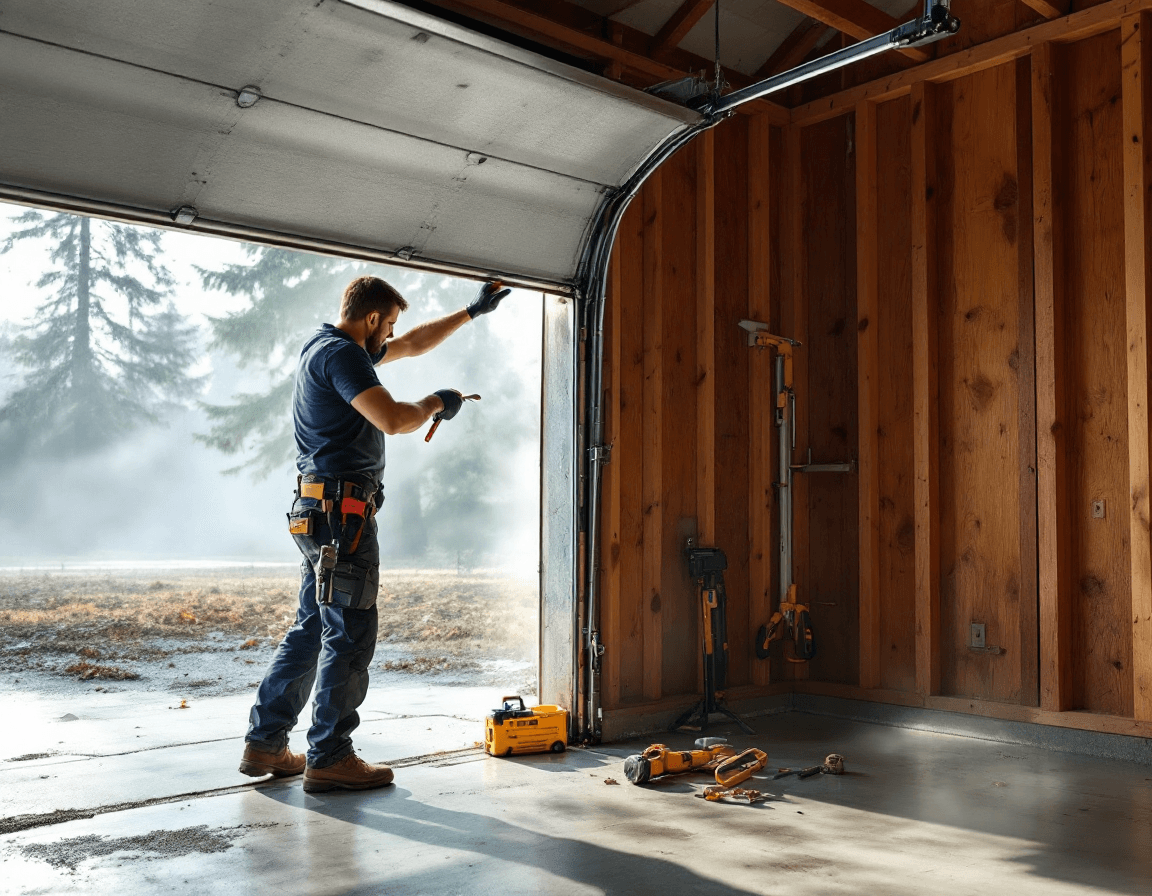
Garage doors in Carnation don't usually fail all at once. A door that has jumped off its track, a roller that has popped out of the channel, or a panel that sits crooked in the opening is often the first visible sign of a problem that has been building for weeks. Seattle Garage Door Fix handles off-track repairs across the Snoqualmie Valley, and most of these jobs come down to realigning the door, re-seating rollers, and straightening track sections that have shifted or been bent. For most off-track repairs, expect a price between $125 and $400, depending on how many components are involved and how much track needs attention. Our licensed, bonded, and insured technicians can usually diagnose the cause on the first visit, and you can reach us anytime at (888) 799-3819.
Carnation sits where the Snoqualmie and Tolt Rivers meet, and that setting shapes the garage doors you find here. Many homes on larger lots, including properties near Carnation Farms and along the rural roads leading out of town, have detached garages, older wood-framed openings, and driveways that slope or settle over time. A door that worked perfectly for a decade can start to drift when the ground beneath the garage shifts even slightly. The good news is that off-track problems are usually mechanical rather than structural, which means a skilled technician can often restore smooth travel without replacing the entire door. Knowing what to look for, and when to stop and call, can save you from a more expensive repair down the road.
This guide walks through why doors leave their tracks, how wet valley weather contributes, how to recognize the early warning signs, and what a realignment visit typically involves. It also explains why you should never attempt to force a door or touch its spring system yourself. Whether your door is sitting at an angle, binding halfway up, or has come completely off one side, the sections below will help you understand what is happening and what to do next.
What "Off-Track" Really Means for Your Door
When a garage door is described as off-track, the panels have usually left the vertical or horizontal channels that guide them. Each door section rides on rollers that run inside steel tracks, and the tracks hold the door square as it lifts and lowers. If a roller slips out of its channel, or the track itself bends away from its proper position, the door can wedge, tilt, or jump free. Some homeowners see a visible gap between the top panel and the track, while others notice that one side of the door sits lower than the other.
Off-track conditions fall into a few distinct categories, and each one affects how the repair is handled. A door may be partially off, with one side still seated and the other hanging loose. It may be fully derailed, with the bottom bracket or entire panel resting outside the track. In other cases, the door remains on its tracks but binds because a track section has been pushed out of plumb. Identifying which category applies is the first step toward a fast, reliable fix.
Because a door can look as if it's still working when it is actually stressed, it helps to pay attention to small changes. A door that tilts slightly toward one side when opened, or that pauses or shudders halfway through its travel, is already telling you something. Waiting for the door to fail completely often means more stripped hardware, more bent track, and a longer repair.
How Valley Weather Gradually Pulls a Door Out of Line
The Pacific Northwest climate is hard on garage door hardware, and the Snoqualmie Valley is no exception. Long stretches of wet weather keep door tracks and hinges damp, and that moisture can encourage surface rust on bolts and brackets. Rust may not look dramatic, but it can stiffen rollers and slow their movement, which puts uneven stress on the door as it travels. Over time, that stress can pull a roller partly out of its track.
Temperature swings add another layer of wear. Carnation can see cool, damp mornings in fall and winter, followed by warmer afternoons, and the metal in tracks and panels expands and contracts with each change. Those small movements can loosen mounting bolts that hold the track to the wall, the ceiling, or the header above the door. Once a track shifts even a fraction of an inch, rollers begin to ride on an angle, and the door starts to walk sideways.
Saturated ground matters too, especially on properties near the river or on lots where drainage around a detached garage is less than ideal. When soil softens and then dries, a slab or wall can settle unevenly, and the door opening can change shape slightly. A garage that was built square may no longer be perfectly square, and the door has to adjust to that. A knowledgeable technician will check the opening's geometry during every off-track visit, because correcting the track without addressing the underlying shift will only produce another derailment.
Diagnosing the Problem: Rollers, Tracks, and Gaps
A proper off-track diagnosis begins with a slow, careful look at the entire door system, not just the spot where the door came loose. The technician checks each roller for wear, cracks, or flat spots, and confirms that every roller sits fully in its channel. The track is measured for plumb and level, and the mounting brackets are inspected for loosened fasteners. The goal is to find the cause of the derailment, because a door can jump off its track for several different reasons.
Common findings during an off-track service include the items listed below. Many of them can be corrected in a single visit, though some may require replacement parts.
- Rollers that have popped out of the track because of worn or cracked stems
- Track sections that have been pushed out of plumb by repeated door impacts or loose mounting bolts
- Bottom brackets or hinges that have bent or separated, letting one side of the door sag
- Gaps between the top panel and the track caused by a loose or misaligned bracket
- Cables that have slipped off their drums, which often accompanies a derailment on one side
Gaps deserve special attention. A visible space between a door section and its track usually means that part of the door has been pulled out of position. Measuring that gap at several points along the track can reveal whether the problem is isolated or whether the entire assembly has shifted. If the gap is wider on one side, the door may be racked, and that condition should be addressed before the door is used again.
Dented, Bent, and Separated Track: Impacts on Rural Driveways
Carnation driveways often feature wider turning areas, gravel approaches, and occasional tight corners, especially on properties where larger vehicles, trailers, or farm equipment come and go. Even careful drivers can clip a garage door, and a single impact at the lower corner of a track can bend the steel out of its proper shape. Because tracks are thin, they can deform without looking dramatically damaged, and a dent may only show up as a slight wobble when the door moves.
When a track is dented or bent, the technician must decide whether it can be straightened or whether the section needs to be replaced. Minor bends are often corrected by carefully reshaping the track and re-securing it to the wall at the correct spacing. More severe damage, such as a track that has separated at a joint or cracked near a bracket, typically calls for replacing the affected section. Forcing a damaged track back into place without proper tools can make the problem worse, so this is one repair where patience and experience matter.
Vehicle impacts also tend to disturb the door's springs and cables, even when the visible damage seems limited to the track. A hit that pushes a panel sideways can shift tension to one side of the spring system. For that reason, any door that has been struck by a vehicle should be inspected from top to bottom, and the spring system should be checked only by a licensed professional who can assess tension safely.
What a Typical Realignment Visit Includes
A realignment visit usually starts with a conversation about what happened. Did the door come off during normal operation, after a windstorm, following a vehicle impact, or after a long period of sticking? The technician will ask you to describe any sounds, such as popping, grinding, or scraping, because each of those sounds can point to a specific component. Your answers help the technician plan the work and decide what parts to bring.
Next, the door is secured and checked for safety before anything is moved. The technician inspects the springs, cables, drums, and brackets to confirm that tension is stable and that no component is under dangerous load. Then the rollers are carefully re-seated in their tracks, and the door is worked through a slow cycle to confirm that it tracks evenly. Track sections are adjusted, tightened, or replaced as needed, and mounting hardware is torqued to the proper specification.
Most off-track repairs in the area fall within the $125 to $400 range, though the final cost depends on the parts involved and the complexity of the job. A straightforward roller re-seat with minor track adjustment usually costs less than a repair that requires replacing several rollers and a track section. Your technician will explain the scope of work before starting, and you can ask questions at any point. Transparency about pricing and the work performed is part of how a responsible garage door company should operate.
Why You Should Never Force or Lift a Derailed Door Yourself
It is tempting to grab a derailed door and try to push or pull it back onto the track. Please don't. A garage door is heavy, its springs store a large amount of energy, and a door that has come off its track can shift suddenly and without warning. Lifting or leaning on a panel can cause it to drop, twist, or release tension in ways that injure hands, backs, and fingers. Many serious garage door injuries happen during well-intentioned attempts to fix a door alone.
The springs and cables are the most dangerous components. Torsion springs and extension springs hold a great deal of force, and adjusting or removing them requires specialized tools and training. Even a spring that appears to be in good condition can release unexpectedly if it is disturbed. Any work involving springs, cable drums, or spring tension should be left to a licensed professional. The same rule applies to spring replacement and cable repair, which are not appropriate for homeowners to attempt.
Simple safety steps can protect you while you wait for a technician. Keep children and pets away from the door, and do not allow anyone to walk under a door that is partially off its track. If you need to use the garage, use a side entrance, and avoid operating the opener, since running the motor can strain a derailed door further. If the door is stuck in an open position, consider closing it manually only if it moves freely and safely, and otherwise leave it alone until help arrives.
Older Carnation Homes and Custom Door Hardware
Many properties in Carnation have garages that were built decades ago, and some carry older door systems that were installed before modern standards and components became common. These older setups may use hardware that is harder to source, or tracks and brackets that were custom-fit to a specific opening. When a door in one of these garages derails, the technician must work with what is already there and choose compatible replacement parts carefully.
Older doors can also show wear patterns that differ from newer installations. Wood panels, for example, may swell or warp during wet months, creating friction against the tracks and causing rollers to bind. Steel doors in older garages may have been retrofitted with openers or weather seals that change their weight balance. Even small alterations can shift how the door loads its tracks, which is why a complete inspection matters more on older systems.
If your garage has been modified over the years, let the technician know. Additions such as heavier insulation, decorative hardware, or a second opener can affect how the door moves. A knowledgeable technician will factor these details into the realignment and will tell you if a specific component is no longer serviceable. Honest guidance about whether a repair will hold, or whether an upgrade is the smarter investment, is an important part of responsible service.
Keeping a Door Tracking True Through Wet Seasons
Preventing off-track problems is largely about routine attention. Because Carnation's wet season can be long, it helps to inspect the door at least a few times a year, ideally before the heaviest rains arrive and again in late spring. Look at the tracks for visible gaps, check that the mounting bolts are snug, and watch the door during one full cycle to notice any hesitation or unusual sounds. Catching a loose bolt early is far easier than straightening a bent track later.
Lubrication matters, but it should be done correctly. Use a silicone-based or lithium-based lubricant on rollers, hinges, and the moving parts of the track, and avoid heavy grease that can attract dirt and grit. Wipe away debris from the tracks, since leaves, gravel, and mud from the driveway can build up in the channels and cause rollers to hop. Keep the area around the bottom of the door clear, especially during the fall when leaves and wet debris collect against the threshold.
Finally, pay attention to the garage's overall condition. Gutters that overflow near the door, soft soil around the foundation, or water pooling at the threshold can all contribute to movement in the door opening. Addressing drainage around the garage often reduces the strain on the door system. Your technician can point out these conditions during a service visit and suggest practical steps to protect the door.
Simple Checks Before You Call for Service
Some homeowners like to do a quick assessment before calling, which can help the technician arrive prepared. You can gather useful information without touching the springs, cables, or any part under tension. Take a few photos of the door from the inside and outside, noting which side is lower or where the gap appears. Make a short note of when the problem started and whether the door has been hit or struck recently.
- Stand back and look at the door from the driveway to see whether one side sits higher or lower than the other.
- Check the tracks for visible bends, dents, or separated sections, but do not try to push or pull them into place.
- Note whether the door makes popping, scraping, or grinding noises as it moves, and when those sounds occur.
- Look for loose bolts or missing fasteners along the track, and photograph them without tightening anything under load.
- Confirm that the door is not operating and keep the opener switched off until a technician has assessed the system.
Writing down these details helps the technician diagnose the problem faster, and it may reduce the time needed on site. It also gives you a clear picture of what happened, which is useful if the door was damaged by a vehicle or a storm. Remember that these checks are for information only, and any hands-on work should wait for a licensed professional.
When Binding and Jams Point to a Bigger Problem
Sometimes a door never fully leaves its track, but it binds, sticks, or refuses to move in either direction. This condition can be just as serious as a full derailment, because the door is under stress and the opener may be straining to lift or lower it. Binding can come from a bent track, a roller that has seized in its channel, a damaged hinge, or a spring system that has lost balance. The cause is not always obvious from the outside, which is why a professional inspection is important.
A jammed door that won't move either way deserves immediate caution. Do not keep pressing the opener button, since repeated attempts can strip gears, overheat the motor, or damage the cables. If the door is stuck closed, avoid pulling on the bottom panel or using tools to pry it open. If the door is stuck open, keep vehicles and people clear of the opening and wait for help.
Binding that comes and goes is also worth reporting. A door that sticks only in cold, damp mornings, or only after heavy rain, may be showing early signs of track misalignment or hardware wear. Addressing the issue when it first appears is typically more affordable than waiting for a full derailment. Seattle Garage Door Fix can evaluate intermittent problems, correct the underlying cause, and help you restore smooth, quiet operation. Call (888) 799-3819 to schedule an off-track inspection in Carnation, and let a licensed technician get your door back on its tracks safely and correctly.