
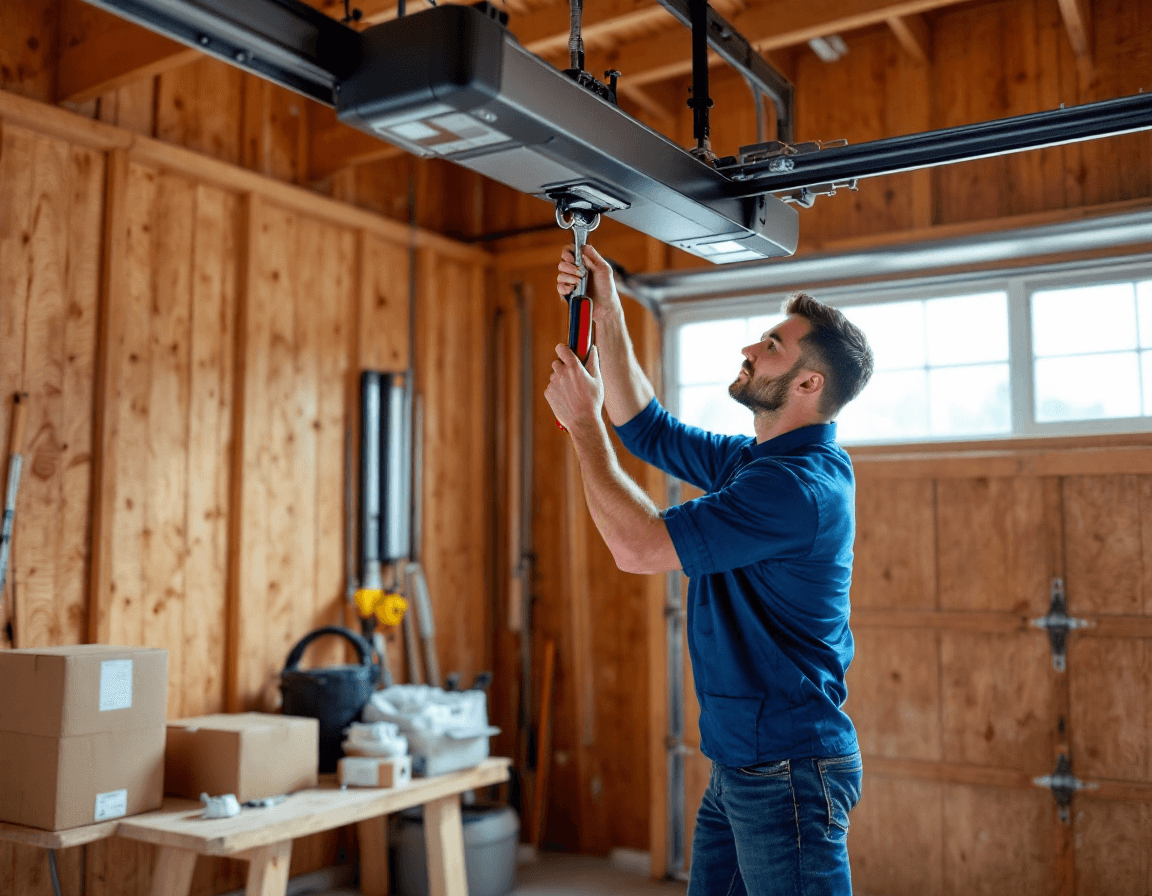
Garage Door Opener Installation & Replacement in Carnation, WA is one of the most practical upgrades a homeowner in the Snoqualmie Valley can make, because the opener does far more daily work than most people realize. It lifts and lowers a heavy door dozens of times a week, and it is the part of the system that controls your home's security at the curb. When it starts grinding, stalling, or ignoring the remote, the problem is rarely minor. Carnation homes often have attached two-car garages, detached shops, or older outbuildings with unusual ceiling heights, so choosing the right replacement takes more thought than simply grabbing the nearest box at a big-box store.
Our technicians work throughout Carnation and the surrounding King County communities, and we see the same pattern repeatedly. A homeowner notices the old opener running longer than it used to, or the door hesitating halfway up, and assumes it will last one more season. Meanwhile, the unit is pulling more current, the logic board is growing unreliable, and the safety reversal may not be responding the way it should. A planned replacement on your schedule costs far less than an emergency call on a cold November morning when the door will not close and you need to leave for work.
This page explains how we approach opener installation and replacement for Carnation households, from recognizing the warning signs to understanding drive types, security standards, battery backup, and smart controls. You will also find a realistic look at what the visit involves and where the work stops and a licensed professional takes over. If you are weighing a repair against a full replacement, or you simply want a quieter, more secure setup, the sections below will help you decide with confidence.
Reading the Signs That Your Opener Has Reached Its Limit
Most openers give warning long before they fail completely, and learning to read those signals can save you from an inconvenient lockout. A unit that runs noticeably louder than it did a few years ago, or that rattles and shudders at the start and end of travel, often has worn gears, loose mounting hardware, or a drive component that is beginning to fail. Slow operation is another clue, especially when the door seems to labor against the same counterbalance it always had. Intermittent behavior, such as working on the third press of the remote but not the first, usually points to a failing receiver board or a weak signal path rather than a bad remote.
Carnation's damp shoulder seasons make these symptoms more noticeable. Moisture that settles into exposed wiring, a corroded terminal at the wall button, or a photo eye that has been fogged by condensation can all mimic a failing opener even when the main motor is still sound. Before committing to a new unit, a trained technician should check the entire system, including the safety sensors, the door balance, and the track alignment. Sometimes a service visit reveals that the opener is fine and a minor component is the real culprit.
There are situations where repair simply does not make sense. If the motor has been replaced once already, the logic board is out of production, or the estimated repair approaches the cost of a modern unit, replacement is usually the better investment. Openers older than roughly a decade also tend to lack current safety and security features, which makes the decision easier. Common signs that replacement is the wiser path include:
- The opener makes a loud grinding or banging noise and the noise persists after lubrication and tightening
- The door reverses unexpectedly or stalls partway through travel
- The remote range has dropped significantly, even after new batteries
- Replacement parts are no longer available for the model
- The unit has no battery backup and you lose access every time the power flickers
Choosing Between Belt-Drive, Chain-Drive, and Wall-Mount Openers
The drive system determines how the opener moves the door, and it has a direct effect on noise, maintenance, and cost. Chain-drive openers use a steel chain running along a rail, which makes them durable and often the most affordable option. They also tend to be the loudest, because metal links striking metal produce a distinct rattle that carries through a house, particularly one with bedrooms above or beside the garage. For detached garages, workshops, or homes where noise is less of a concern, a chain-drive unit remains a solid, dependable choice.
Belt-drive openers use a reinforced rubber belt in place of the chain, and the difference in operation is immediately noticeable. The belt runs quietly and smoothly, which is why many Carnation homeowners who share a wall with a living space or sleep near the garage prefer it. Belts also avoid the metal-on-metal wear that can make a chain unit noisier over time. They typically cost somewhat more upfront, but many households find the quieter operation worth the difference, especially in an attached garage.
Wall-mount openers attach the motor to the side wall rather than the ceiling, which frees up overhead space. This matters in several common situations. A garage with a low ceiling, a tall door that needs extra clearance, or a loft or storage platform above the bay often cannot accommodate a standard ceiling-mount installation. Wall-mount systems are also useful in detached buildings where the framing or roof structure is not designed to carry the motor's weight. Our technicians evaluate the header, the wall structure, and the door's lift type before recommending a mounting style, because the wrong choice can lead to flexing, poor alignment, and premature wear.
Why Rolling-Code Security Matters More Than You Might Think
Older openers, particularly those manufactured before rolling-code technology became standard, transmit the same fixed signal every time you press the remote. That predictability creates an opening for anyone with inexpensive scanning equipment to capture and replay the signal, potentially gaining access to the garage and, from there, the rest of the home if an interior door is unlocked. Rolling-code systems change the transmitted code with each use, so a captured signal cannot be reused. For a home on a larger lot where the garage may be out of sight from the road, this difference deserves serious attention.
Replacing an older unit is the simplest way to upgrade security, because the new opener and its remotes will operate on a rolling-code protocol from the start. We also recommend reviewing the other entry points tied to the garage, such as a keypad, an interior door that is not locked, or a side door with a weak latch. An opener upgrade is most effective when it is part of a broader review of how the garage is secured. Our team can walk through those options during the visit so you understand exactly where your home stands.
It is also worth clearing out old remotes and keypad codes during the changeover. Many households accumulate remotes from former tenants, contractors, or family members who no longer need access, and they often remain programmed indefinitely on older systems. The new installation gives you a clean slate, and we will help you program only the devices you actually want to keep active. This small step does more for real-world security than many people expect.
Smart Control with Wi-Fi and myQ, Done Thoughtfully
Many homeowners in Carnation now want to check whether the garage door is closed from their phone, receive an alert when it opens, or let a delivery driver or family member in without handing over a remote. Wi-Fi-enabled openers and compatible myQ-style accessories make these features possible. Once connected, the system can report door status, support scheduled closing reminders, and allow you to operate the door from anywhere with a cellular or home internet connection. For households that travel or regularly coordinate with caregivers, this kind of visibility is genuinely useful.
The key to a reliable smart setup is the network itself. A garage on the far side of a larger home, or in a detached building, may sit at the edge of the Wi-Fi range, which leads to dropped connections and frustrating delays. We often recommend testing signal strength at the garage before choosing a model, and in some cases a mesh node or a dedicated extender placed near the opener solves the problem. Metal shelving, insulated walls, and the distance to the router all influence performance, and a few minutes of testing during the visit can prevent months of irritation.
Smart features should also be configured with care. Enable alerts you will actually read, set up user accounts for each household member, and review which people or services have access to the system. Remember that convenience and security are linked: an app login with a weak password can undo the benefits of a rolling-code opener. Our technicians will help you set up the app, verify that notifications work, and explain how to remove access if a phone is lost or a person no longer needs it.
Keeping the Lights On: Battery Backup for Rural Power Interruptions
Power outages in the Snoqualmie Valley are not unusual, particularly during winter windstorms when tree limbs can bring lines down across rural roads. When the electricity goes out, a standard opener becomes a heavy, immovable barrier, and you may be forced to use the emergency release cord to lift the door by hand. That manual release is essential for safety and access, but it is not always practical in the dark, in the rain, or when the door is heavy and the springs are under high tension. Battery backup allows the opener to keep working for a set number of cycles during an outage, which provides a far more convenient and secure alternative.
Battery backup kits are available for many modern openers, and they typically store enough charge to run the door several times before recharging. Keep in mind that battery capacity and cycle count vary by model and by battery age, and the battery itself will need replacement over time, usually after several years of service. We recommend checking the backup battery during routine maintenance and replacing it before it weakens, since a dead battery offers no protection at the moment you need it most. Some systems also alert you when the battery is low, which helps you plan ahead.
Battery backup does not replace the manual release, and it should not be treated as a permanent fix for an unreliable electrical circuit. If your garage repeatedly loses power or the outlet feeding the opener trips, that is a separate issue that a licensed electrician should investigate. We will test the outlet and dedicated circuit during installation and note any concerns so you can address them before they become a problem. A correctly installed backup system gives you a reliable way to leave and return home even when the neighborhood is dark.
How the Pacific Northwest Climate Shapes Opener Performance
The Pacific Northwest climate asks a lot from garage door equipment. Carnation's long wet season brings persistent humidity, cool temperatures, and frequent condensation, and the valley's position near the Tolt and Snoqualmie rivers means that moisture can linger for days at a time. Metal components corrode more readily in these conditions, and electrical connections that are exposed to damp air can develop resistance and intermittent faults. An opener installed in a garage that stays damp throughout the winter needs more attention to sealing, grounding, and placement than one in a dry climate.
Temperature swings also affect operation. On cold mornings, lubricants thicken and the door may move more slowly, which can strain a tired opener and expose weak spots that were hidden during warmer months. Our technicians select lubricants suited to the local climate and check the travel limits and force settings after installation, because a setting that works in July may need adjustment when the temperature drops. Keeping the garage door weatherstripping in good condition and sealing gaps at the bottom of the door also helps limit the moisture that reaches the opener.
Placement matters as much as equipment. We avoid mounting the power unit in locations where water can drip onto it from the door track or where a damp floor can wick moisture upward. Where possible, we route wiring so it is protected from direct spray and secure it away from moving parts. These small decisions do not look dramatic, but they are a large part of why a properly installed opener continues to perform reliably through many wet winters.
What a Carnation Installation Visit Typically Covers
A replacement appointment usually begins with an inspection of the existing system, the door itself, and the surrounding structure. Our technician checks the door's weight and balance, the condition of the tracks and rollers, the header and mounting surface, and the location of the electrical outlet. We also confirm the type of door and whether it is a one-piece, sectional, or other style, because that affects the opener's lift requirements and the mounting method. This assessment ensures that the new unit matches the door rather than forcing the door to fit the unit.
Once the plan is confirmed, the old opener is removed, the new unit is mounted, and the rail or arm is connected and aligned. The technician then programs the travel limits, sets the force adjustment, and tests the photo-eye safety sensors and the automatic reversal feature. Remotes, wall controls, and any keypads are programmed, and smart features are configured if you have chosen a connected model. Before the visit ends, we run the door through several complete cycles and verify that every safety function works as intended. Typical elements of the visit include:
- Inspection of the door, springs, tracks, and opener mounting surface
- Verification of the electrical outlet and grounding
- Removal of the old unit and installation of the new opener
- Programming of travel limits, force settings, and safety reversal
- Testing of photo eyes, manual release, and battery backup if included
- Setup of remotes, keypads, and smart app access with a walkthrough for your household
We also explain any issues we notice that fall outside the opener itself. A worn cable, a cracked roller, or a spring that has reached the end of its service life should be addressed by a licensed professional, and we will tell you clearly what we see and what it means for your schedule and budget.
Understanding the $275 to $650 Installed Price Range
Installed opener pricing in our service area generally falls between $275 and $650, and the spread reflects real differences in equipment and features. A basic chain-drive unit sits at the lower end of that range, while a belt-drive or wall-mount model with Wi-Fi connectivity and battery backup typically costs more. The installation labor itself does not change dramatically from one model to another, so the difference is mostly the hardware and the features you choose. We provide the specific price for your home after reviewing the door and the model you select, so you know the total before the work begins.
It helps to think about the price in terms of long-term value rather than the sticker number alone. A quieter belt-drive unit may cost more initially but makes a noticeable difference in a home where the garage shares a wall with a bedroom. A rolling-code system closes a security gap that an older unit leaves open. Battery backup adds protection during the outages that do happen in rural areas. Each upgrade has a clear purpose, and we will help you decide which features are worth paying for and which ones your household can reasonably skip.
We also encourage homeowners to ask about what is included. Some quotes cover only the opener, while others include the wall control, safety sensors, remotes, and the disposal of the old unit. Clarifying these details during the estimate prevents surprises on the day of installation. Our goal is a transparent quote that matches the work we will actually perform.
Where Licensed Professionals Must Take Over
Opener installation is a skilled task, but it is also one where safety boundaries matter. The garage door is under substantial tension from its springs, and those springs can cause serious injury if they are handled improperly. Spring replacement, cable repair, and any work on the torsion or extension system must be performed by a licensed, trained professional with the proper tools and experience. Homeowners should never attempt to wind, unwind, or adjust a spring, and they should not try to remove a broken spring or cable on their own.
During an opener replacement, our technicians check the springs and cables as part of the overall inspection. If a component is worn, cracked, or near the end of its service life, we will explain the condition and recommend the appropriate repair. We take the same approach with electrical work beyond the opener itself. Running a new dedicated circuit or repairing damaged wiring in the wall may require a licensed electrician, and we will tell you when that is the case rather than improvising a solution.
Keeping these boundaries clear protects your household. A properly installed opener with working safety sensors and correct force settings is designed to reverse when it encounters an obstruction, and that feature depends on everything else in the system being sound. Our role is to deliver that protection, and when a repair falls outside the opener itself, we will make sure you are connected with the right licensed professional for the job.
Keeping Your New Opener Quiet, Reliable, and Secure for Years
A new opener performs best when it receives simple, consistent care. Test the safety reversal every month by placing a flat object, such as a piece of wood, in the door's path and confirming that the door reverses when it contacts the object. Clean the photo-eye lenses so they are free of dust and cobwebs, and check that the sensors are aligned and still facing each other. These two checks take only a few minutes and confirm that the most important safety features are working.
Seasonal attention pays off in the Pacific Northwest. Before the wet season arrives, inspect the weatherstripping, look for gaps where water could enter, and confirm that the opener's wiring and connections remain dry and secure. Lubricate the moving parts of the door according to the manufacturer's guidance, keeping in mind that some components require a specific product and that over-lubricating can attract dirt. If you have battery backup, note the date of installation and plan to replace the battery on schedule.
Finally, review your remotes, keypad codes, and smart-app access once or twice a year. Remove devices belonging to people who no longer need access, and update passwords if you suspect a compromise. A little routine care keeps the opener quiet, dependable, and secure long after installation day, and it helps you catch small problems before they become expensive surprises.
If your Carnation garage door opener is loud, slow, unreliable, or simply past its useful life, call Seattle Garage Door Fix at (888) 799-3819 to schedule an inspection. We will help you choose the right drive type, security level, and backup option for your home, provide a clear installed price based on the model you select, and handle every part of the replacement with care. Let us help you get your garage door moving smoothly again.