
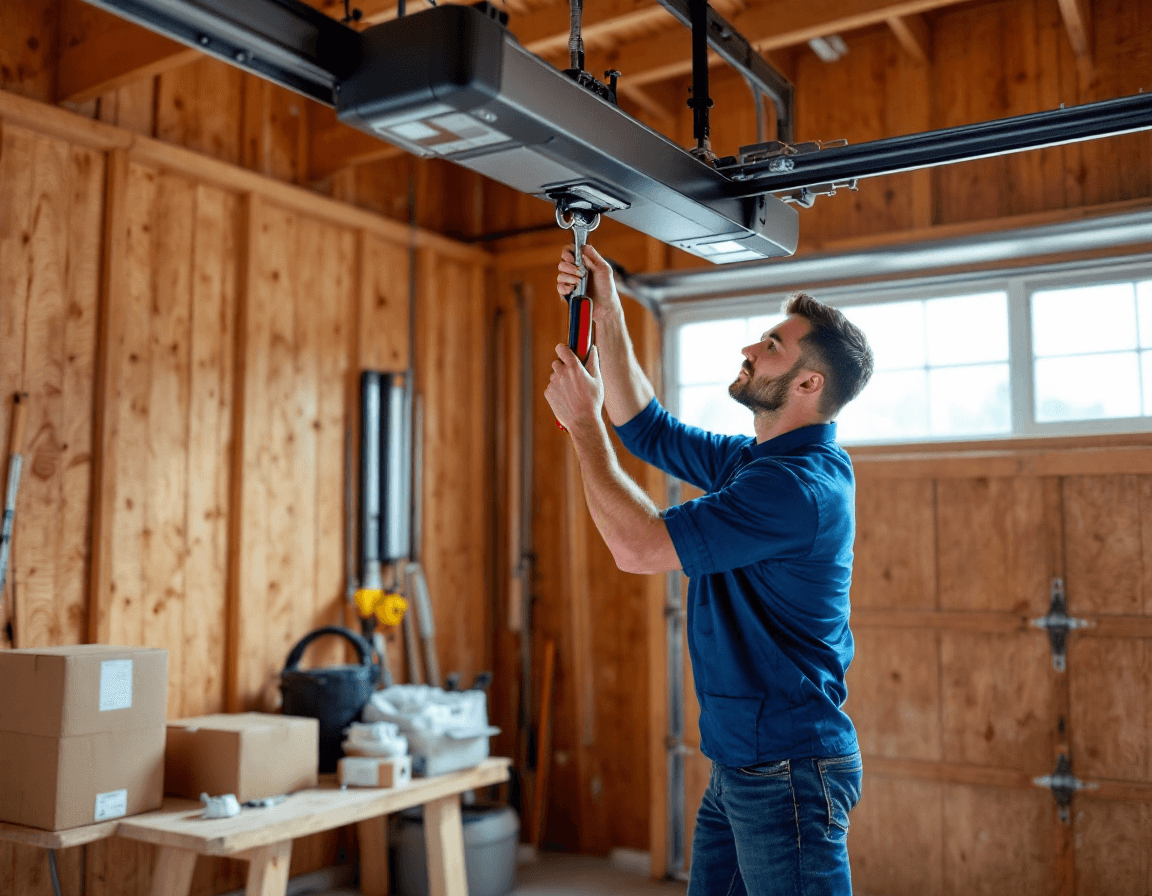
Garage door opener installation and replacement in Duvall, WA is one of the most practical upgrades a homeowner can make, and it often delivers more daily benefit than people expect. The opener is the motor that lifts, lowers, and locks your door, and when it starts to fail, the symptoms show up every morning and evening. Many Duvall households are still running units installed fifteen or twenty years ago, which means they may lack current safety features, rolling-code security, and any form of battery backup.
Our technicians work throughout Duvall and the surrounding parts of King County, including the 98019 ZIP code, and we see the same pattern again and again. A homeowner puts up with a rattling or sluggish opener for months, then one cold morning the door stops halfway and the whole household is stuck. This page explains how we approach opener replacement, what drive types make sense for different garages, what the smart and battery backup options actually do, and how pricing works. Our installed range runs from $275 to $650 depending on the opener model you choose and the work your garage needs.
Whether you are dealing with a loud motor, a unit that no longer responds reliably, or simply want to control your door from your phone, the goal is the same: a quiet, dependable, secure opener that fits your home and your budget. Read through the sections below, and if you would like a technician to look at your setup, call us at (888) 799-3819.
Why Duvall Garages Put Extra Strain on Openers
Duvall sits in the Snoqualmie Valley, where river air, long wet winters, and frequent cloud cover are part of daily life. Garages here are often attached to older farmhouse-style homes or built as detached structures on larger lots, and both can place unusual demands on an opener. Moisture settles into motor housings and wiring connections, and temperature swings from damp autumn evenings to cold winter mornings cause metal parts to contract and expand. Over time, that moisture can corrode contacts and make a once-reliable unit start to hesitate.
Many local properties also have longer driveways and heavier doors, particularly the insulated steel and wood-look doors that have become popular in King County. A door that is two inches thicker or considerably wider than the original can overwhelm a budget opener that was rated for a lighter panel. Trucks, trailers, and outdoor equipment stored in garages add more weight in some cases. When an opener is asked to do more than it was designed for, it wears out faster and gives less warning before it quits.
Wind is another factor that gets overlooked. Storms moving through the valley can knock out power for hours, and a garage that cannot be opened manually easily becomes a problem. Looking at your opener's age, the weight of your door, and the way your property handles weather gives you a far better picture of what you need than simply choosing the cheapest unit on the shelf.
Reading the Warning Signs That Your Opener Is Finished
Most openers do not fail without telling you first. The earliest signs tend to be subtle: the door pauses for a second before moving, the motor sounds strained when it starts, or the light on the unit blinks in a way you have never noticed before. Homeowners often assume these are normal quirks, but they usually point to worn gears, a weakening capacitor in the drive circuitry, or a limit adjustment that has drifted. Catching them early can sometimes lead to a simple repair, while ignoring them can leave you with a dead unit during the next rainstorm.
Noise is one of the most common complaints we hear. A chain-drive opener that clatters and rattles like a loose bicycle chain is not just annoying; it can signal worn sprockets and stretched chain links that will eventually snap. Grinding that changes pitch as the door moves usually means the gear train is wearing unevenly. If the opener runs noticeably slower than it used to, or the door reverses for no clear reason, the internal force sensing may be struggling, which is a safety concern as well as a convenience issue.
Some signs are more about outdated technology than mechanical failure. If you still carry a remote that uses fixed-code technology, or if your keypad is an old model that cannot be reprogrammed to newer protocols, your garage may be more open to unwanted access than you realize. Our technicians look at the whole system during a visit, so a symptom that seems minor, like a remote that works only half the time, often reveals a larger upgrade opportunity.
Choosing Between Belt-Drive, Chain-Drive, and Wall-Mount Openers
Choosing the right drive type is one of the most important decisions in any opener replacement. Chain-drive openers are the traditional workhorse. They are typically the most affordable, handle heavy doors well, and are a sensible choice for a detached shop or workshop where noise from the living space is not a concern. The trade-off is that they run louder, and the metal chain transmits more vibration into the door and the ceiling.
Belt-drive openers use a reinforced rubber belt in place of a chain, and the difference in operation is noticeable right away. They run far more quietly, which makes them a strong choice for attached garages beneath bedrooms or home offices. Belts also stretch less than chains and generally require less lubrication, which suits homes where the garage stays damp for much of the year. Expect a somewhat higher price for a belt-drive unit, and check that the model you select matches your door weight and track configuration.
Wall-mount openers attach to the side wall rather than the ceiling, and they are useful when ceiling space is limited. This is common in garages with a low ceiling, a storage loft overhead, or a ceiling that runs right up against a pitched roofline. Wall-mount units free up overhead room and often fit in situations where a standard ceiling-mounted opener simply will not clear. A technician will measure your header height, track radius, and clearance before recommending one.
- Chain-drive: most budget-friendly, strong with heavy doors, louder operation, best for detached or utility garages.
- Belt-drive: quieter, smoother, and well suited to attached garages and living spaces above or beside the garage.
- Wall-mount: ideal for low or sloped ceilings, saves overhead space, and fits many tight Duvall garage layouts.
Rolling-Code Security and Why Older Units Fall Behind
Security is an area where older openers have quietly fallen behind. Many units installed before the widespread adoption of rolling-code technology use fixed codes, meaning the signal sent from the remote is the same every time. A determined person with a simple device could capture that signal and replay it later to open the door. Rolling-code systems change the transmitted code with each use, so a captured signal becomes useless almost immediately.
Upgrading to a rolling-code opener is one of the most meaningful improvements you can make without changing your daily routine. The remote still works the way you expect, but the underlying communication is far harder to exploit. This matters for homeowners who store tools, bikes, or vehicles in the garage, and it matters even more for those who leave their garage door opener accessible through a side door or a shared driveway. We recommend checking your opener's manufacturing date and remote type when you first notice an issue, since an older unit may be more vulnerable than its mechanical condition suggests.
Keypads and wall controls deserve attention too. A keypad with a worn or easily guessed code, or one that has been left with a factory default, is a weak point regardless of how modern the opener is. During installation we set up new access codes and clear out old remotes that no longer belong to members of the household, so the system matches the people who actually use it.
Smart Control with Wi-Fi and myQ Compatibility
Smart openers have become popular for good reason. With a Wi-Fi-enabled unit and a compatible app, you can check whether the door is open from anywhere, close it when you realize you forgot, or let a delivery driver in with temporary access. Many homeowners appreciate receiving alerts when the door opens or closes, which is especially helpful when a teenager gets home late or a contractor arrives while you are at work.
Compatibility is the detail to think through carefully. Systems built around myQ and similar platforms rely on a stable connection between your opener, your home network, and your phone. In a home where the garage sits far from the router, or in a detached building with thick walls, signal strength can become the limiting factor. A mesh extender or a access point placed near the garage often solves the problem, and we will test the connection before finishing the installation so you are not surprised later.
Smart features are not all equally useful for every household. A retired couple who rarely leave the house may prefer a simple, reliable opener with a good remote and a wall control, while a busy family with two drivers and frequent deliveries may get far more value from app notifications and scheduled access. We will walk through the features that matter for your routine so you pay for what you will use rather than what sounds impressive on the box.
Battery Backup for Power Outages in the Valley
Power outages are a real part of life in the Snoqualmie Valley, particularly during windstorms that bring down lines along rural roads. When the power goes out, a standard opener cannot lift the door, and if you do not know the manual release, you may find yourself standing in the driveway waiting for the lights to come back on. A battery backup unit keeps the opener running for a limited number of cycles so you can get in, get out, or secure the house without struggling.
Battery backup capacity varies by model and by battery type, and the number of door cycles it provides depends on how much the door weighs and how well the opener is maintained. We will explain realistic expectations for the specific unit you choose rather than quoting a generic number. Many backup batteries also recharge automatically when power returns, so there is no routine maintenance beyond occasional checks.
Battery backup does not replace a working manual release, and every homeowner should know how to use it. We will show you where the release cord is located, how to disengage the trolley safely, and what to do if the door is heavy or misaligned. If your garage has no other exit and you rely on the door for access during emergencies, a battery backup is one of the most practical additions you can make.
What a Professional Installation Visit Covers
A proper opener installation is more than bolting a motor to the ceiling. Our technicians begin by inspecting the door itself, including the tracks, rollers, hinges, and balance. An opener can only do its job well if the door moves freely and is properly balanced, so we check those components before selecting a unit. If the door is binding or the tracks are out of alignment, we will explain what needs to happen before the new opener can perform as intended.
Next we measure the space. Ceiling height, the length of the track, the position of the header, and the route of the power outlet all determine which drive type and mounting style will fit. We also check that the outlet is properly grounded and located where the opener can reach it without an extension cord, since an unsafe temporary power source is a common problem in older garages. Once the unit is mounted, we install the safety sensors near the floor, adjust the travel limits, and test the automatic reversing feature to confirm the door stops and reverses when it meets resistance.
Finally, we program the remotes, keypads, and any smart features, then walk through the controls with you. You will leave with clear instructions for setting codes, adding remotes, and using the manual release. We will also explain basic maintenance, such as checking the sensor alignment and keeping the rail lubricated, so your new opener stays reliable for years.
Understanding the $275 to $650 Price Range
Our installed pricing for garage door openers in Duvall runs from $275 to $650, and the spread reflects real differences between models rather than arbitrary markups. A basic chain-drive unit sits near the lower end of that range, while a quiet belt-drive opener with smart features and a battery backup typically lands toward the upper end. Wall-mount installations and garages that need additional mounting hardware or outlet work can also shift the final cost.
Several factors influence where your project falls. Door weight and type matter, since heavier insulated doors may require a more powerful motor. The presence of an existing outlet, the condition of the tracks, and whether the old opener needs to be removed and disposed of also affect labor time. Homeowners who want Wi-Fi connectivity, a second remote, or an additional wall control should expect those extras to be reflected in the total.
We provide the price for your specific opener and installation before any work begins, so you know the numbers up front. There are no surprises once the technician arrives, and you are free to ask questions or consider a different model if the quoted option does not suit your needs. Being transparent about cost is part of how we earn trust in every neighborhood we serve.
Repair or Replace: Weighing the Practical Economics
Not every struggling opener needs to be replaced, and an honest technician will tell you when a repair makes more sense. A worn limit switch, a failed remote receiver, or a cracked sprocket may be inexpensive to fix on an otherwise sound unit. If the motor is strong, the drive is quiet, and the only issue is an outdated remote, a repair or accessory upgrade may be all you need.
Replacement becomes the better choice when the repair costs approach the price of a new opener, when parts are no longer available, or when the unit lacks modern safety features. An opener that has been repaired several times in a short period is usually a sign that the underlying components are tired. Add in the security improvements, quieter operation, and battery backup available on newer models, and the case for replacement often becomes clear.
Our goal is to give you a straightforward recommendation rather than a sales pitch. We will explain what is failing, what it would cost to fix it, and how long a repaired unit is likely to last compared with a new one. Many Duvall homeowners find that a modest upgrade now prevents an emergency call later, particularly during the winter months when demand for service rises.
Safety Lines We Hold Firmly: Springs, Cables, and Force Settings
Garage door safety deserves a clear word, especially in a region where people like to tinker with their own equipment. The opener motor is a powerful piece of machinery, and the door it moves is heavy and stores significant energy in its springs. Spring and cable work carries real risk of serious injury, and it should be performed only by a licensed, trained professional with the right tools. Please do not attempt to adjust, remove, or replace torsion springs, extension springs, or cables yourself.
Opener installation itself also involves safety-critical settings. The force adjustment determines how much resistance the door can encounter before it reverses, and the photo-eye sensors must be aligned so the door stops when something passes through the opening. An improperly set opener can fail to protect a child, a pet, or a vehicle in the doorway. We test these functions before leaving every job site, and we will show you how to check them yourself each month.
Homeowners should also understand that a door which is difficult to lift by hand is not a candidate for a DIY workaround. Adding a stronger opener to a door with a worn spring or a damaged cable can cause the components to fail more violently. When we see that situation, we recommend a spring and cable inspection by a licensed professional before any new opener goes in.
Booking Your Opener Upgrade Across Duvall and Cherry Valley
Whether your home sits on Main Street close to downtown or out in the quieter stretches of Cherry Valley, our technicians can bring a new opener to your garage with the same attention to detail. We schedule visits around your availability, and we arrive prepared to inspect your door, measure your space, and recommend the drive type and features that fit your home. Most homeowners can have a clear quote and timeline within a short phone call.
If you are ready to stop worrying about a noisy, unreliable, or outdated opener, the next step is simple. Describe what your current unit is doing, mention the age of your door if you know it, and let us help you choose the right replacement. We will explain your options in plain language and make sure you understand exactly what the installation includes before we start.
Call Seattle Garage Door Fix today at (888) 799-3819 to schedule your Duvall opener installation or replacement. Our licensed, bonded, and insured team is ready to help your garage run quietly, securely, and dependably.