
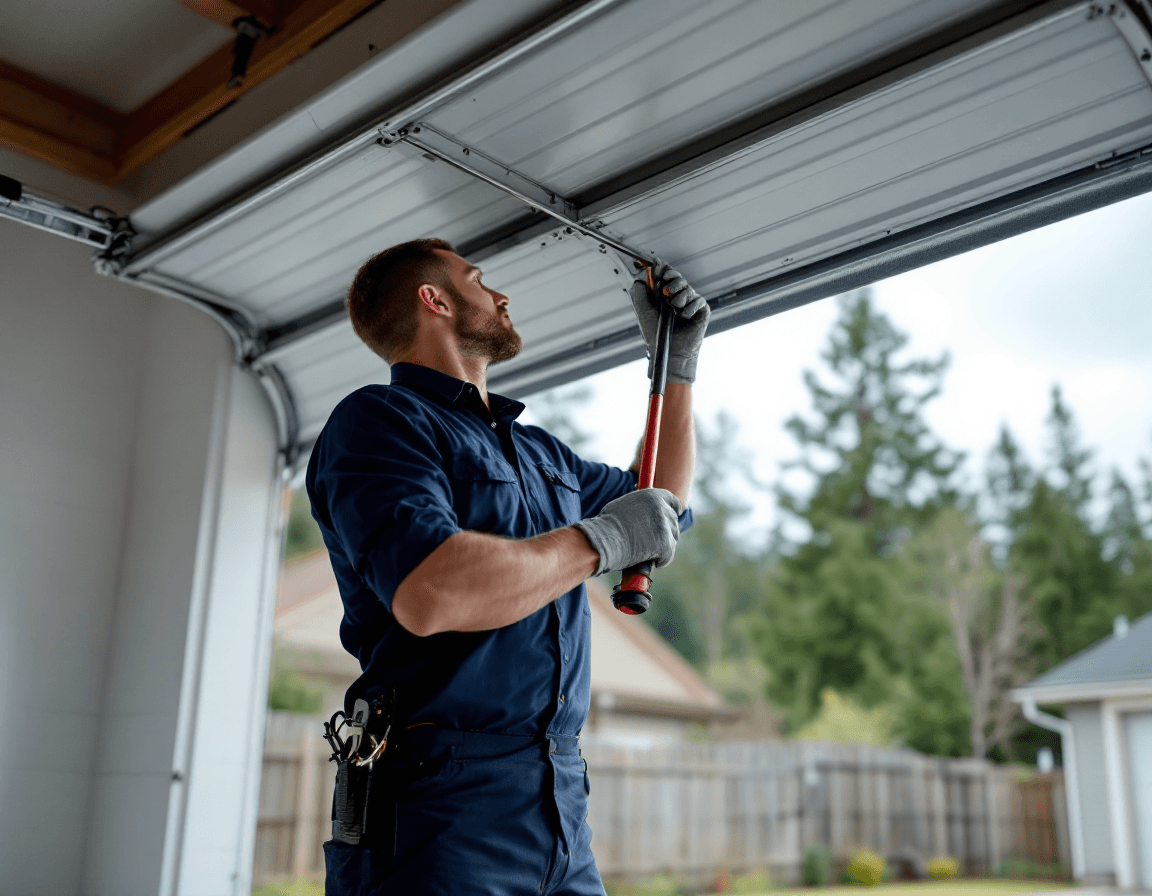
Garage Door Spring Replacement in Duvall, WA is one of the most common repairs we handle for homeowners in the Snoqualmie Valley, and it is also one of the most urgent. The springs are the components doing most of the work of lifting your door, so when one fails, the door usually stops working altogether. If your garage door has suddenly become difficult to open, won't move at all, or made a sound you won't soon forget, the spring is the first place a qualified technician will look.
Duvall's weather plays a real role in how quickly springs wear out. Long, damp winters, temperature swings in the shoulder seasons, and the moisture that settles in valley neighborhoods all add up over time. Metal fatigues faster under those conditions, and lubrication breaks down, which makes the spring more likely to fail without warning. Many Duvall homeowners first notice a problem on a cold morning when the door refuses to rise as smoothly as it did the week before.
This page explains what a failing spring looks and sounds like, how to tell torsion springs from extension springs, why local conditions matter, what a professional replacement involves, and what to expect for cost. It also covers the safety reasons this job belongs with a licensed, bonded, and insured technician rather than a do-it-yourself project. Read on for the details, and call us at (888) 799-3819 if your door needs attention today.
The Loud Bang That Means a Spring Has Let Go
Most homeowners remember the sound of a broken spring. It is usually a sharp crack or a bang that seems to come from inside the garage, and it can make you think something has fallen or been hit. Because the sound is so startling, many people assume the damage is far worse than it is, or they expect the door to be wrecked. In reality, a single snapped spring is a common failure, and it is typically repairable with a spring replacement and an inspection of the rest of the system.
After the bang, check the door carefully from a safe distance without touching the springs. You may notice the door sitting lower than normal, sagging on one side, or refusing to open when you use the opener or pull the release cord. Some households also notice that the opener seems to labor or hum without moving the door. Those signs, combined with the loud noise, strongly suggest a broken spring, and they are reason enough to stop using the door until it has been inspected.
- Do not attempt to open the door manually if it is sagging or crooked, because the weight can shift unexpectedly.
- Keep children and pets away from the door and the area beneath it until a technician has examined it.
- Disconnect the opener only if you can do so safely from the outside of the door, and do not try to force the door open.
- Take a photo of the damage and note the time it happened so the technician can review the situation quickly.
Telling Torsion Springs From Extension Springs on Your Door
Before anyone can replace a spring, the technician has to identify the type your door uses, because the two main designs behave differently and call for different parts. Torsion springs are mounted in a horizontal bar above the closed door, usually centered over the opening. They wind and unwind to create the lifting force, and they are the springs most homeowners picture when they think about a broken spring. Extension springs run along the horizontal tracks on each side of the door, stretching and contracting as the door moves up and down.
Many newer Duvall homes and many doors replaced in the last couple of decades use torsion systems, while some older garages still carry extension springs. You can often see which kind you have by looking above the door: a long bar with cones at each end points to torsion, while coiled springs alongside the tracks point to extension. The distinction matters because torsion springs store a great deal of energy under tension, and they can be dangerous to handle without the right tools and training. Extension springs also carry risk, especially when safety cables are missing or the springs are under strain.
A reputable technician will confirm the spring type, measure the door's weight and dimensions, and check the existing hardware before quoting a replacement. That step prevents the wrong part from being installed, which would leave the door unbalanced or unsafe. Matching the spring to your specific door is one of the main reasons spring work should be left to a professional who carries proper insurance and understands the load calculations involved.
Why Duvall's Damp Winters and Temperature Swings Wear Down Springs
The Pacific Northwest is known for its wet, mild winters, and Duvall is no exception. Rain can persist for weeks at a time, and the moisture that moves through the Snoqualmie Valley tends to linger in the air and settle on metal surfaces. Garage doors are exposed to that humidity every day, and the springs are no exception. Over time, moisture can invite surface rust, and rust weakens the steel that holds the spring's tension, making a break more likely.
Cold snaps add another layer of stress. When temperatures drop sharply, metal contracts and lubricants thicken, which increases the strain on the spring and the rest of the door system. A spring that has been quietly weakening over several years can give way on the first truly chilly morning, which is why many homeowners report a failure in the colder months. Seasonal swings between wet and dry, warm and cold, put repeated stress on the metal and the coils.
Lubrication is the other factor that local conditions affect. Dried or washed-out lubricant leaves the coils and bearings exposed to friction, and in damp environments it can break down faster than many homeowners expect. A regular inspection, performed by a professional who checks both the springs and the surrounding hardware, can catch the early warning signs before a sudden failure happens. Mentioning the local climate at the time of service is useful, because a technician who understands it can recommend a maintenance schedule that fits your home.
The Visible Gap, the Stalled Door, and What They Reveal
Some of the most useful clues about a spring problem are visual. A torsion spring that has broken often shows a visible gap in the coil, where two sections of the wire have separated. Homeowners sometimes spot this while looking at the spring bar from a safe distance, and it is one of the clearest signs that replacement is required. A gap should never be ignored, because a spring under uneven tension can fail suddenly, even if it still appears to hold the door.
Another common symptom is a door that opens a few inches and then stops. This usually means the spring no longer provides enough lifting force to carry the door's weight through its full range of travel. In some cases the door may stop when it reaches a particular height, while in others it may rise unevenly or lurch as it moves. Either pattern points to a problem with tension, and it deserves prompt attention rather than repeated attempts to force the door open.
Doors that feel extremely heavy when lifted manually, or that bounce back when released partway, can also indicate a spring failure. The door may seem to be fighting the homeowner, and the effort required can strain the back and the opener alike. If you notice any of these signs, avoid lifting the door by hand, and let a qualified technician evaluate the spring before the situation becomes more serious.
When the Opener Hums but the Door Barely Moves
Many Duvall homeowners first blame the garage door opener when the door fails to rise, but the opener is often working harder than it should because the spring has lost its lifting force. A motor that strains, hums, or stalls is trying to lift a door that is far heavier than it was designed to handle. Continuing to run the opener in that condition can damage the motor, the gears, and the trolley, which turns a manageable spring repair into a larger bill.
If the opener hums but the door barely moves, turn it off and stop trying to force the cycle. Repeated attempts can wear out components that were otherwise fine, and they can cause the door to shift unpredictably on its tracks. A technician will check whether the spring is the root cause, and in many cases the opener itself is undamaged once the spring has been replaced and the door balanced.
It is also worth noting that openers are not designed to replace the function of a spring. Some homeowners consider upgrading to a stronger opener to compensate for a weak spring, but that approach leaves the underlying problem in place and can put extra strain on the door's hardware. A proper spring replacement restores the balance the opener expects, which protects both the opener and the door over the long run.
Cables, Drums, and the Damage That Hides After a Break
When a spring breaks, the cables that work alongside it can be affected as well. Cables may come loose from the drum, become tangled, or fray where they were stressed by the sudden release of tension. Loose cables are a serious concern because they can allow the door to drop unevenly, and they can make the door rack or tilt as it moves. A technician should always inspect the cables, drums, and their connections as part of any spring replacement.
The drum on each side of the door is part of the same system, and it can crack or slip when a spring snaps. A drum that has moved out of position will not wind the cable correctly, which can cause the door to lift unevenly or stop partway. Inspecting the drum set, checking for wear, and confirming the cable is seated properly are all steps that help prevent a repeat failure soon after the repair is complete.
Some homeowners discover after a break that the rollers, hinges, or track sections have also been bent or damaged by the uneven movement. These parts may look minor, but they affect how smoothly the door travels and how evenly the weight is distributed. A complete inspection during the service visit is the best way to find these issues early, before they cause additional wear to the springs you just replaced.
Selecting High-Cycle Springs for a Busy Household
Not all springs are designed for the same level of use. Standard springs are typically rated for a set number of cycles, which means a certain number of opening and closing movements before fatigue becomes a concern. Households that use the garage door many times a day, such as families with teenagers, home businesses, or people who regularly leave for work and return during busy hours, may benefit from high-cycle springs designed to last longer under frequent use.
High-cycle options are generally made from carefully engineered steel and are wound to specific tolerances. They can cost more than a standard spring, but they may be a sensible choice when the door sees heavy daily traffic. A technician can talk through the number of daily cycles, the age of the door, and the climate exposure at your property before recommending a specific option. The goal is to match the spring to real use rather than to upsell a component you do not need.
Choosing the right spring also involves thinking about the door's weight and material. Heavier insulated doors, wood doors, and larger double doors place more demand on the spring system, and they often require a carefully calculated setup. A technician who measures the door and confirms the correct spring specification will help ensure the door operates smoothly and that the new spring performs as expected in Duvall's damp conditions.
What a Professional Spring Replacement Looks Like From Start to Finish
A professional spring replacement follows a clear sequence designed to keep the work safe and accurate. The technician begins by securing the door, reviewing the damage, and confirming the spring type and size. They then isolate the opener, remove the broken spring using proper tools and techniques, and inspect the surrounding hardware before installing the new spring. Each step is performed with the understanding that springs store significant energy, and that a mistake can cause serious injury.
Once the new spring is installed, the technician adjusts the tension to match the door's weight and tests the movement through its full range. They check that the door opens and closes smoothly, that the cables are seated correctly, and that the opener engages without strain. A well-run visit includes a walkthrough with the homeowner so they understand what was replaced, what was checked, and what routine care will help the new spring last.
Here is a simplified outline of what a thorough visit typically includes:
- Inspection of the broken spring, the spring bar, cones, and bearings
- Confirmation of the spring type and correct replacement specification
- Safe removal and installation of the new spring using proper winding and securing methods
- Inspection and adjustment of cables, drums, rollers, hinges, and tracks
- Testing of door balance, travel, and opener operation after the repair
- A brief discussion of maintenance and the expected service life of the new spring
Getting the Balance Right: Closing Speed, Travel, and Crooked Doors
Proper balance is the goal of every spring replacement. A balanced door should stay in place when partly open, lift with light effort, and close at a steady, controlled pace. When balance is off, the door may slam down, drift upward, or move crookedly along the tracks. Each of these symptoms can point to a spring that is wrong for the door or to a related problem in the cables, drums, or hardware.
A door that closes too fast is a safety concern, especially if children or pets are nearby. It can also strain the opener and place stress on the bottom seal and the tracks. A technician checks the tension and the door's movement under load and adjusts the system until the door travels evenly. Crooked or uneven closing often indicates that one side of the spring system is carrying more weight than the other, which is why both sides should be inspected together.
Balance can shift over time, even after a successful repair, as cables stretch and hardware settles. Homeowners who notice new drifting, uneven movement, or a change in closing speed should schedule a checkup rather than waiting for a second failure. Early adjustment is far less costly than emergency repair, and it helps protect the springs you have just replaced.
Realistic Cost Expectations and What Shapes Your Final Bill
Spring replacement pricing depends on several factors, and it is wise to understand them before you call. For most spring replacements in our service area, pricing typically falls between $180 and $450. Where a job lands within that range depends on the spring type, the size and weight of the door, whether the work involves one spring or a pair, and whether additional hardware such as cables or drums needs attention. High-cycle springs and specialty sizes may increase the cost.
The condition of the rest of the system also affects the final figure. If the cables, drums, or bearings are damaged, the technician may recommend replacing those parts at the same visit to prevent a repeat failure. Doors that need a full rebalance or that have additional issues with the track or rollers will reflect that additional work in the estimate. A clear, written explanation of each recommended part should be provided before any work begins.
Be cautious of any offer that seems dramatically lower than the market, or any company that will not provide the spring specification, warranty details, or proof of licensing and insurance. Reputable professionals explain what they are replacing, why it is needed, and what the expected results are. Asking for these details is a normal part of hiring a contractor for a job that involves high-tension components.
Staying Safe Around Garage Door Springs
Safety should be the first consideration in any spring repair. Torsion and extension springs store large amounts of energy, and when they fail or are released improperly, they can cause serious injury or property damage. Winding bars, stored tension, and heavy door sections all carry risk, and these hazards are the reason professional training, proper tools, and insurance matter so much in this trade. Homeowners should never attempt to remove, install, or adjust a spring on their own.
Certain actions are clearly off limits for homeowners. Do not stand beneath a door that is partly open or sagging, do not attempt to wind or unwind a torsion spring, and do not cut or release a spring to see what happens. Avoid using improvised tools, and never try to lift or hold a heavy door in an unsafe position. If your door is making unusual noises or moving unevenly, shut off the opener, keep the area clear, and call a licensed technician.
Our team works as licensed, bonded, and insured professionals, and we treat spring and cable work as the high-risk task it is. We recommend that every Duvall homeowner schedule spring service with a qualified technician rather than attempting repairs alone. Taking that step protects your household, your garage, and the long-term performance of your door.
For Garage Door Spring Replacement in Duvall, WA, the safest and most reliable path is a prompt inspection by a professional who can identify the spring type, replace the failed components correctly, and balance the door for smooth, dependable operation. If your door has a broken spring, a visible gap in the coil, or an opener that strains without moving the door, do not wait for the problem to worsen. Call Seattle Garage Door Fix today at (888) 799-3819 to schedule service and get your Duvall garage door moving safely again.