
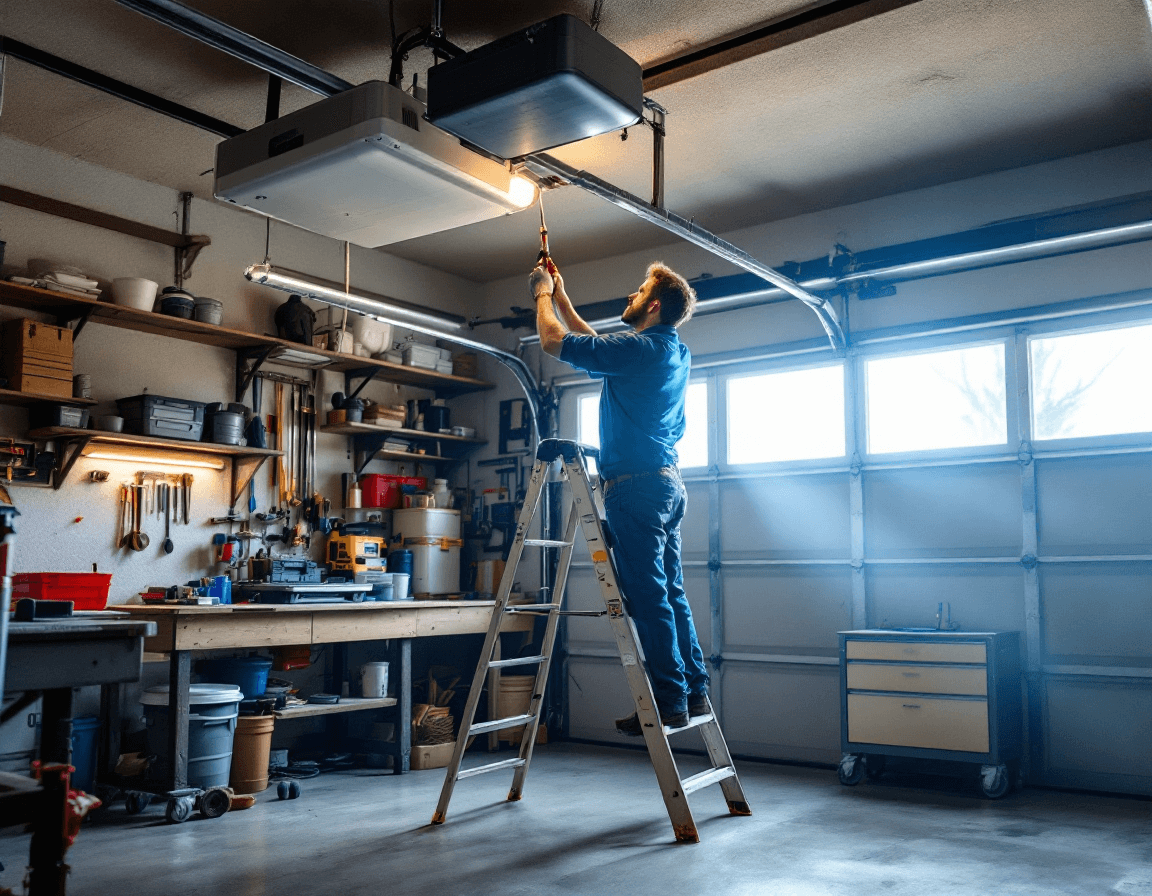
Garage door opener repair in Duvall, WA is one of the most common calls we take from homeowners between the Snoqualmie Valley farm roads and the neighborhoods near Main Street. A dead opener can leave you sitting in the driveway with groceries, a dog waiting inside, or a car that won't come out in the morning. Most opener problems, though, come from a handful of fixable causes: a worn gear, a tired circuit board, a travel setting that drifted, or a remote that lost its handshake with the receiver. A careful diagnosis usually points to the right part quickly.
Duvall sits in a part of King County where the weather shapes how garage doors behave. Winters bring long stretches of rain, saturated soil, and damp air that settles into metal and wiring, while summer afternoons can still be warm and dry enough to stress a motor that has been running hard. Many homes here have detached garages, older single-door setups, or converted outbuildings that were never designed for daily heavy use. Our technicians work with those homes regularly, and we know that a good repair starts with understanding how your specific door, opener, and property interact.
This page walks through the symptoms we see most often in Duvall and explains what they usually mean. It also covers what a service visit involves, what a typical opener repair costs, and how you can help your system stay dependable between service calls. Our work is licensed, bonded, and insured, and we are straightforward about what we can fix on the spot and what needs a closer look. If you are dealing with a problem right now, the phone number at the end of this page will reach a real person.
What Your Opener Is Doing Every Time the Door Moves
Before diagnosing anything, it helps to know what the opener is responsible for. The motor unit mounted on your ceiling turns a drive mechanism, which might be a chain, a belt, or a screw, and that mechanism pulls the door along its tracks. Sensors near the floor confirm that nothing is in the doorway, a logic board decides when to start, stop, and reverse, and travel limits tell the opener where "fully open" and "fully closed" sit. Each of these pieces can fail on its own, and they can also fail in ways that look alike from the driveway.
In Duvall, many openers have been running for ten years or more, and they accumulate a surprising number of cycles over that time. A household that uses the door three or four times a day, especially with teenagers coming and going or a home business run out of the garage, can rack up thousands of cycles a year. Lubrication that was adequate in year two may be thin by year eight, and the gears inside the head unit wear down gradually. A technician who understands that history can often predict which component is most likely to be the culprit before opening the cover.
The good news is that openers are designed to be serviced. Most repairs involve replacing a single board, a gear assembly, a sensor pair, a remote, or a set of travel limit adjustments, rather than a full system replacement. Knowing the basic layout also helps you describe the problem accurately when you call, which speeds up the diagnosis and keeps the appointment focused.
When the Motor Hums but the Door Refuses to Budge
A motor that runs without moving the door is one of the most confusing symptoms for homeowners, and it is also one of the most informative. You press the button, you hear the motor engage, and the door sits there as if nothing happened. The first thing we check is whether the drive mechanism is still connected to the carriage that pulls the door. A chain or belt that has slipped off its sprocket will spin the motor freely with no load transferred to the door, and that is a repair we can usually complete in a single visit.
If the drive is connected, the next suspects are the release mechanism and the gear assembly. Some openers have a red emergency release cord that may have been pulled or caught on a vehicle antenna, which disconnects the trolley from the drive. Inside the head unit, a worn or broken gear can spin without engaging properly, which often produces a whine or a grinding noise along with the failed movement. Duvall's damp winters can accelerate corrosion on the metal parts of older units, so we also look for rust or residue that might be binding the mechanism.
Sometimes the motor is working perfectly, but the door is binding in its tracks. A bent track, a roller stuck in a dried or dirty section, or a spring that has lost tension can make the opener strain against resistance it cannot overcome. Pushing the door by hand can reveal this quickly, but never attempt to adjust or release tension on the springs yourself. Torsion and extension spring work is dangerous and must be handled by a licensed professional, and a mismatched spring can cause serious injury.
Remote Silence and Wall Buttons That Stop Responding
When the remote stops working but the wall button still triggers the door, the problem almost always lies with the transmitter, its batteries, or its pairing. Remotes that have been left in a hot car in July, or sitting in a cold vehicle through a January frost, can lose range or fail outright. Replacing the battery is the first step, and many Duvall homeowners find that a fresh coin cell solves the issue on the spot. If the remote still fails, reprogramming it to the receiver is usually straightforward, though the exact steps vary by brand and model.
A dead wall button tells a different story. Wall controls depend on low-voltage wiring that runs from the opener to the switch, and that wiring can be damaged by staples, rodents, or moisture that has crept into a junction box. Duvall homes with older construction sometimes have wiring that was run through spaces prone to dampness, and a short or open circuit can silence the button completely. We test continuity, check the terminals, and verify that the control board is supplying the expected voltage before recommending a replacement.
Intermittent response is the most frustrating version of this problem. The remote works from the driveway at 8:00 in the morning, then fails when you are standing at the end of the lane in the evening. Interference from nearby radio sources, a receiver antenna that has been damaged, or a board starting to fail can all produce this pattern. These cases need patient testing rather than guesswork, and we are happy to take the time to pin them down.
The Grinding Sound That Signals a Stripped Gear
A grinding noise from the opener head, particularly one that appears at the start or end of a cycle, usually points to a stripped or worn gear. The gear teeth inside the drive assembly take a steady beating, and once they begin to chip or wear unevenly, the motor can continue to turn while the output shaft slips. Left alone, the damage tends to spread, and a small repair can turn into a full drive assembly replacement. Pausing use as soon as you hear the sound is a sensible precaution.
Stripped gears are more common than many homeowners expect, especially on older belt-and-chain combinations where the motor and gear assembly carry the full weight of a heavy wood or insulated door. Doors that have been upgraded with heavier insulation or decorative hardware put additional load on the opener, which shortens the life of its internal parts. Temperature swings across the valley also matter, because metal contracts and expands and the lubricant that protects the teeth thins out during heat and thickens during cold snaps.
When we diagnose a grinding opener, we inspect the gear teeth, check the shaft alignment, and evaluate whether the drive is binding elsewhere in the system. Often the gear is only part of the story, and a sticky roller or misaligned track is forcing extra strain onto the head unit. Replacing the gear without addressing the root cause will only bring the problem back, so we take that into account before quoting the job.
Doors That Reverse Right Away or Never Seal at the Bottom
A door that starts to close and immediately reverses, or one that stops a few inches short of the floor, is usually reacting to a safety feature or a travel setting. Modern openers include auto-reverse logic that responds to resistance, and it is designed to protect people and objects in the doorway. When the door reverses unexpectedly, the first question is whether the system is detecting a real obstruction or a false one. Leaves, a stray toy, or debris in the track can cause real obstructions, but so can a misaligned photo eye.
Photo eyes, the small sensors mounted near the floor on either side of the door, are a frequent source of false reversals. Sunlight streaming through a gap in the garage in late afternoon can confuse the receiver, and spider webs or road grime on the lens can interrupt the beam. Duvall's rain and mud can splash sensors and leave a film that blocks the signal. Realigning the sensors and cleaning the lenses resolves many of these cases on the spot.
If the door closes but does not seal at the bottom, the travel limit setting is the likely culprit. Over time, the door may have settled, the bottom seal may have compressed, or the opener may have drifted from its original calibration. Adjusting the close limit corrects the stopping point, though we also check the bottom seal and weatherstripping, since a worn seal can let cold air, moisture, and pests into the garage. Good sealing matters a great deal in a region where wet ground and cold drafts are a regular part of life.
What the Flashing Lights on Your Opener Are Trying to Tell You
Many openers use the light on the head unit or the wall control to communicate faults. A repeating blink pattern, such as a set number of flashes followed by a pause, typically maps to a specific error code listed in the manufacturer's manual. A slow, steady blink might indicate a normal startup or a sensor check, while a rapid flicker often signals a failing board or a communication problem between the wall control and the opener. Reading the pattern accurately is the fastest way to narrow the diagnosis.
Each manufacturer uses its own code system, which is why we keep reference material for the major brands we service. If your opener's light flashes three times, pauses, and then flashes again, the manual will tell you whether that code points to the safety sensors, the travel limits, or the force settings. Writing down the pattern before you call saves time and helps us arrive with the right parts. Taking a short video on your phone can also be valuable, since the timing of the blinks often matters as much as the count.
Some blink codes are simple to clear. Disconnecting power for a minute and reconnecting it resets many boards, though a repeating fault will return if the underlying cause is still present. Power interruptions are common in the Snoqualmie Valley during windstorms, and a brief outage can leave a board in an unusual state. If the flashing persists after a reset, that is a sign to schedule a diagnostic visit instead of repeatedly cycling the power.
Loose Chains, Belts, and Slack That Should Never Be There
A chain or belt that has come loose, hangs visibly in the track, or has jumped off the sprocket is both a mechanical problem and a warning sign. Chain-drive openers use a steel chain that runs along a rail, and sagging chains can slap against the rail, bind on the sprocket, or derail entirely. Belt drives are quieter and more common on newer systems, but they stretch over time and can slip if tension is lost. In either case, the door is no longer moving as the opener intends.
Slack is often caused by a combination of age, lubrication problems, and the cumulative stress of heavy use. A chain that has never been tightened or inspected may gradually work loose as the mounting bracket shifts. Belts can crack along their edges after many years of exposure to temperature changes, particularly in attics or sections of the garage that run warm during summer. Our technicians check the chain or belt tension, examine the sprocket and idler, and tighten or replace components as needed.
Tightening a chain or belt is a job that appears simple but has pitfalls. Overtightening can put stress on the motor shaft and the bearings, while undertightening invites derailment. If the chain has jumped the track, the rail may also be bent, and forcing the chain back into place without inspecting the rail can cause more damage. We recommend leaving this work to a technician who can verify alignment and confirm that the door balances correctly afterward.
Intermittent Operation in a Valley Shaped by Water
Intermittent operation is the symptom that most often frustrates homeowners, because it is hard to reproduce on demand. The door works fine in the morning, fails in the afternoon, and then runs smoothly again after dinner. In the Pacific Northwest, moisture is a leading suspect. Humidity can creep into wiring connections, corrode contacts on the logic board, and affect the performance of sensors. Condensation in the head unit can also appear overnight during cold, damp stretches and then evaporate once the garage warms.
Temperature changes add another layer. A board that operates perfectly at 60 degrees may behave differently at 35 degrees on a frosty morning, and the lubricant inside the gear train thickens in cold conditions. Homes in lower-lying parts of the valley can experience cooler, damper garages than homes on higher ground, which means the same opener can behave differently from one neighborhood to the next. We take the environment into account when diagnosing these cases, and we often inspect the connections and the board while the system is in the condition that triggers the problem.
Voltage fluctuations also deserve attention. Power outages and surges during storms can stress control boards, and an opener on an aging circuit may struggle when other appliances in the home are running at the same time. A surge protector designed for the opener's circuit, along with a check of the outlet and wiring, can help stabilize operation. Intermittent faults rarely fix themselves, so documenting when the problem occurs gives us a head start on finding the cause.
Brand-Specific Notes for Duvall Homeowners
Every major opener brand has its own quirks, and knowing them helps us diagnose faster. Common patterns we see include the following:
- Chain-drive models often show their first wear at the chain tensioner and the rail mounts, so checking those early can prevent later failures.
- Belt-drive models are quieter but are sensitive to tension and can need a tensioning adjustment after a few seasons of heat and cold.
- Older screw-drive systems depend heavily on lubrication of the screw and carriage, and dry screws produce a distinctive squeal under load.
- Newer units with smart features may rely on app connectivity and wireless modules, so a home network change or router replacement can sometimes look like a hardware fault.
- Units with integrated battery backup can lose capacity over time, which shows up as the door not operating during a power outage.
We service the major brands and can usually identify the model from the label on the head unit. Parts availability varies, and some older openers require sourcing components that are no longer stocked at big-box stores. Our technicians plan around that, and we will tell you clearly whether a repair is practical or whether a replacement opener makes more sense for your situation.
What a Duvall Service Visit Covers and What It Costs
A typical opener service visit begins with a conversation about the symptom, when it started, and whether anything changed beforehand, such as a power outage, a new remote, or a storm. The technician then inspects the door balance by hand, checks the drive mechanism, examines the gear assembly, tests the sensors, reviews the travel limits, and reads any blink codes. This step-by-step approach keeps the diagnosis grounded in evidence rather than assumption. Clear communication at each stage helps you understand what is being done and why.
For most opener repairs, pricing falls in the range of $95 to $375, depending on the parts required and the complexity of the job. A simple remote reprogramming or sensor realignment sits at the lower end of that range, while a gear replacement, board swap, or chain and rail repair typically lands higher. Every quote we provide is based on the actual diagnosis, and we explain the difference between a repair that addresses the root cause and a temporary fix that will bring the problem back. If we find a larger issue, such as a spring problem or a damaged door panel, we will describe the scope and the safety implications before moving forward.
Spring and cable work deserves special mention. Torsion springs and extension springs store enormous energy, and attempting to adjust, wind, or replace them without the proper tools and training can cause serious injury. We always recommend that spring and cable repairs be performed by a licensed professional, and our team follows safe procedures on every job. If your opener repair reveals a spring issue, we will tell you plainly and help you schedule the appropriate work.
Keeping Your Opener Dependable Between Service Calls
Routine care does not replace a professional inspection, but it does extend the life of your opener and reduces the chance of a surprise failure. Lubricating the moving parts as recommended by the manufacturer keeps the gears, rollers, and bearings running smoothly, and it is especially important during Duvall's wet season when moisture can wash away protective coatings. Checking the door balance once a year by lifting it partway and confirming it stays in place helps identify spring or track issues early. Tests of the auto-reverse feature, using a block of wood placed on the floor in the door's path, confirm that the safety system is responding correctly.
A few simple habits also make a difference. Keeping the photo eye lenses clean, trimming vegetation so it does not brush against the door or sensors, and keeping the track free of debris will prevent many nuisance faults. Replacing remote batteries on a schedule, rather than waiting for them to fail, avoids the frustration of a dead transmitter on a cold morning. Protecting the wall control wiring from staples or hanging objects helps preserve reliable connections.
Pay attention to the early warning signs: a new squeak, a slight hesitation at the start of a cycle, a faint grinding sound, or a door that seems to close a little differently than it used to. Acting on these signs while the problem is small usually costs less and avoids a sudden breakdown. If you notice any of these changes, call us to schedule an inspection before the issue grows.
Garage door opener problems can feel urgent, especially when your household depends on that door every day. If your opener hums but won't move the door, ignores the remote, grinds, reverses unexpectedly, blinks an unfamiliar pattern, or has a chain or belt that has come loose, we can help you sort out the cause and get it working again. Call Seattle Garage Door Fix at (888) 799-3819 to schedule service for your Duvall home. Our licensed, bonded, and insured technicians will explain the diagnosis clearly, give you honest options, and handle spring and cable work safely.